SOME THOUGHTS ON RELIGION AND SUPERHEROES…

SOME THOUGHTS ON RELIGION AND SUPERHEROES…
             My gaming group was playing the RPG DC Superheroes, which the GM set during WWII.  Some of us played original characters while others played established golden age DC folks: Dr. Mid-Nite, Green Lantern, Phantom Lady, etc. I played the Shining Knight.
            During the game Nazis stole a book by one of Copernicus’ protégés and in the course of the adventure I asked if I could read it. I said my character could probably read or understand Latin because as a knight of King Arthur’s Round Table he would have been at mass at least once per day!
            “He’s Catholic?” someone asked.
            There was no Catholic Church back in the seventh century; there was only “the church”. Sir Justin (the Shining Knight’s real name) lived during King Arthur’s reign. Whether he wanted to or not, if he lived back then, he probably attended mass in Latin.
            That got me thinking about superheroes and religion: what religion would our favorite superheroes be? In what faiths were they raised, if at all?
            I read the Fantastic Four graphic novel of Marvel’s Civil War where the Thing talked about being Jewish. This was the first reference to the Thing’s religion I knew of (not being up on Marvel over the past decades I don’t know when they first mentioned that).
            There are some superheroes (scant, but some) whose religion is central to their character. The current Dr. Mid-Nite, for example: in the pages of the last version of JSA he used his Catholicism to help Mr. Terrific deal with the loss of his wife (see my previous blog regarding good and bad deaths of comic book characters…).
            Religion is (was) strongly emphasized with the X-Men. Magneto’s Jewish-ness (is that a word?) and Nightcrawler’s Catholicism has been used well for story fodder.
            Like they did with the Thing, Marvel may have established religions for all their characters. I will freely admit if I am wrong. So this is a purely objective list subject to only my whims and generalizations! Feel free to argue! And note this gets sillier as it goes along (as said: if a character’s religion has reallybeen established in the comics, let me know!).
            Also this is from a Silver and Bronze Age fan. The post-Crisis and post-New 52 (for DC) and post annual reboot (for Marvel) have changed the personalities and backgrounds of all these characters thus making my generalizations questionable, haha:
            SUPERMAN: raised in a Kansas farm town? Baptist. Maybe Methodist. Currently, not attending a church. Rao was a Kryptonian god and Superman would sometimes shout out “Great Rao” in times of shock and stress, but otherwise the comics never showed Supes really worshipping him per se.
            BATMAN: I imagine his unbelievably rich and isolated childhood (pre-Crime Alley obviously) to be much like Teddy Roosevelt. “Gotham City – home of high crime and the cod, where the Ryders talk only to the Waynes, and the Waynes talk only to God.” Episcopalian.  Currently? … oh c’mon! Agnostic is being kind.
            WONDER WOMAN: Pagan. Pretty obvious there.
            FLASH (Barry Allen): Solidly set in the Midwest. Methodist or Lutheran. But with the last name Allen being of Irish extraction, I would guess Presbyterian or Catholic. Same with Wally West. However, the various weddings of family and friends throughout the 60s and 70s do not show the usual Catholic trappings (I don’t mean that in a bad way), so I would guess Protestant.
            Jay Garrick? What is Garrick? If a German name, Lutheran; if Irish, Presbyterian.  I would believe all Flashes would still be attending church, it fits their characters.
            GREEN LANTERN: father was in the military. I’d say non-denominational if he was given any religion at all as a child. More likely with his cavalier attitude toward life; he probably wasn’t taken to church much at all as a youngster.
            GREEN ARROW: Oh, please, with his intense hatred/aversion/suspicion over authority figures? Lapsed Catholic.
            BLACK CANARY: No opinion. Any religion (or none at all) would fit. When she married Green Arrow it wasn’t in a Catholic Church. But then GA may have vetoed a Catholic wedding. I’d bet she went to church well into adulthood and may still go on major religious holidays.
            TEEN TITANS: By this I mean the original teen sidekicks – Batman would raise ROBIN to be as irreligious as he is.
            Ditto SPEEDY.
            Probably only KID FLASH would have gone to church.
            AQUAMAN/AQUALAD: Pagan. Interesting that with his worship of Neptune he and Wonder Woman haven’t argued over the similarity/assimilation of Greek and Roman mythos.
            ATOM: Northeast Ivy Leaguer? Episcopalian. And was a regular attender until his life fell apart with the split with his wife.
            HAWKMAN/HAWKWOMAN: I think Thanagar’s religion was established, but I can’t see Katar and Cheyera being very religious.
            The original Carter Hall? Well, I suppose with his hundreds of reincarnations he has been many religions. But I suspect his worship of Horus the Hawk (really a falcon) headed god still lurks underneath.
            ELONGATED MAN: United Church of Christ. Just seems right.
            MR. FANTASTIC: He probably eschewed religion early on, but what about his heritage? If Ben Grimm is Jewish, I’ll bet Reed Richards is, too.
            INVISIBLE WOMAN AND HUMAN TORCH: Their last name Storm is probably a derivative of Strom, western German/French. Tight family with a large age disparity. I’d guess Catholic. Any brothers and sisters in between?
            ANT MAN/GIANT MAN/YELLOWJACKET: What kind of a last name is Pym? Welsh? Anglican or Catholic. Dutch? Danish National – a type of Lutheran.
            WASP: With a maiden name like Van Dyne? Danish National again – which would help explain the initial attraction of a wealthy socialite and a bookish scientist.
            THOR: Rather obvious. Is it narcissism to worship yourself if you really are a god?
            SPIDERMAN: He was probably irreligious as he got in his teens, but what denomination were Ben and May Parker? Where would they have taken Peter as a youngster? Methodist.
            X-MEN: (Other than as professed in the introduction)
            Professor X: Jewish;
            Colossus: Russian Orthodox;
            Wolverine: In Canada, Catholicism and Anglican make up 81% of the religions, so I guess lapsed Catholic – he has that distrust of authority-thing going, too;
            Storm: well, herself… (she was worshipped as a god in her tribe before joining the group);
            Kitty Pride (whatever her moniker is this week): I believe in the comics she has said she is Jewish;
            Cyclops: tough one, but I would guess a very Orthodox conservative Catholicism;
            Marvel Girl: Catholic (if only because of imagining her in the schoolgirl outfit… oy…)
            DOCTOR DOOM: Latverian Orthodox, what else?
            LEX LUTHOR: Russian Orthodox. Can’t you see that?
            THE NEW GODS: well, each other I guess.
            THE JOKER: Scientology.
            Except for the last one, none of these were meant to be for the sake of a joke or to be insulting. If I have insulted anyone, I apologize for doing so, even if unintentional. But if Marvel & DC decide to announce that most of the X-men are Catholic or that Superman was raised a Baptist, it wouldn’t surprise me. Keep in mind – if I didn’t know the Thing was Jewish, I would have guessed Catholic with his inner-city-street-gang-past-coming-straight-out-of-“Angels-with-Dirty-Faces”.
            So what do I know?
            JWhat do you think? Who would you add?
Copyright 2013 Michael G. Curry
Robin the Boy Wonder – the Spinal Tap drummer of comic books…

Robin the Boy Wonder – the Spinal Tap drummer of comic books…

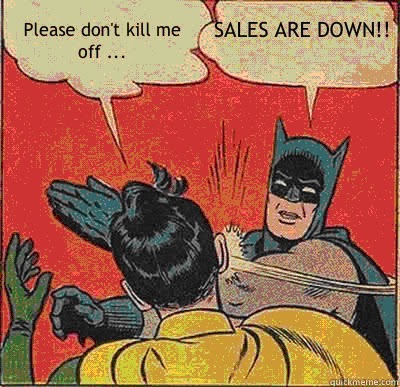
            DC Comics is killing off Robin the Boy Wonder.
            Happy 1988 everyone!
            No wait, it’s happening AGAIN. NOW!
            This isn’t the first Robin to be killed off. The first Robin killed wasn’t even the first Robin.
            Robin the Boy Wonder, the Spinal Tap drummer of DC Comics. The first Robin was Dick Grayson, Bruce Wayne’s ward. This was the Robin from the 1960s TV show and the cartoons up until about 1990 or so. When his character grew into manhood, he was replaced by Jason Todd. Jason was killed by the Joker as a gruesome publicity stunt. We the people called a 900-number and voted whether to off the Boy Wonder. We the people responded with a resounding yes.
            Then came Timothy Drake – a more likable character who was eased into the role. Dick Grayson was shown in the comics mentoring Tim, so that we the people would learn to like him in case of another telephonic publicity stunt.
            Tim Drake also grew up and became Red Robin – he was replaced by his fiancé.
            Then came Damian Wayne. He is the child of Bruce Wayne and Talia Al-Ghul, Ra’s Al-Ghul’s daughter. I didn’t read many comics with Damian Wayne as Robin. What little I read of him came from his appearances in other comics. Much like his father (or at least the personality of his father over the past 20 years or so), he was a smart-ass dickwad. He told Wonder Woman to put on some clothes, called her a “harlot”. That sort of thing.
            Lots of other people have dressed as Robin over the years – including Bruce Wayne’s girlfriend Julie Madison and Superman’s pal Jimmy Olsen.
            According to the DC press machine, Damian grew from a brat into a noble and honorable hero.
            So, of course they kill him.
            Is it a sales boost in a bottle? You bet. Will Damian be back? Sure, Jason Todd came back, Damian will to. “No, sorry,” say the DC press machine, “this one is permanent.” They lie.
            My friend Clyde Hall discusses his frustration at this publicity stunt in his blog here: http://playmst3kforme.blogspot.com/2013/03/dc-marvelstop-before-you-kill-again.html
            I applaud his letter and would sign on to it as well! But killing off Robin got me thinking in a different direction.
            Death has been a part of comic book history since the explosion of Krypton. Death can create a hero and mold their personalities and motives just as it can in a traditional story. The trouble is it can also be a cheap way to boost sales and a shortcut for real storytelling and character development.
            It hasn’t always been that way. The three most familiar characters in comic books had their origins mired in death. Superman was orphaned twice. “With all my powers,” he would opine at the gravesite of his adopted parents, the Kents, “I couldn’t save them.” His first parents, along with the billions of inhabitants of Krypton, didn’t give him the moral base that Jonathan and Martha Kent did. In later years, when the powers-that-be retconned his mother back to life, it did not seem the same. His internal moral compass became an external one. Superman would save the world from Throgg the Omnipotent, then have a slice of pie at his mother’s farm.  Eh…
            Imagine if someone retcons Batman’s origins so that his parents lived. The murder of Thomas and Martha Wayne (by Joe Chill, the future Joker, or anyone – personally I preferred it to be always unknown – a random killer; the one case Batman couldn’t solve) is vital, VITAL, to Batman’s origins, motives and personality.
            Likewise the murder of Ben Parker, Peter’s uncle, was vital to Spiderman’s origins, motives and personality. Had Ben Parker lived, Spidey would have been a sideshow attraction/stuntman. After his uncle’s death, Peter had his now-famous epiphany, “with great power comes great responsibility.” This is more dry-eyed then Superman’s epiphany, and more famous, but just as effective. “Thus a superhero was born.” Can’t you hear that in Stan Lee’s voice?
            Sometimes a death mid-series can be done without shock value or for the sake of a sales boost. And that death can affect motive and personality as much as the death of the Kents, Waynes and Ben Parker.
            Gwen Stacy was Peter Parker’s main squeeze and was killed in a battle between Spider-Man and the Green Goblin. Her death shadowed the Spider-Man books for decades.
            The most famous example was Bucky. When Captain America came back from post-WWII obscurity into the 1960s in the pages of the Avengers, we learned that his side-kick Bucky had been killed in an explosion just before Captain was frozen for nearly twenty years. Bucky’s death permeated everything Captain America did for the next 45 years. They brought Bucky back eventually, which (although well done) diminishes Cap’s mortality. During the excellent JLA-Avengers miniseries, Captain America and Batman worked together in the Batcave to find a solution as to what is causing all the other heroes to thrash each other. Cap stared at a mannequin of Robin’s outfit. “You lost a partner too?” Batman replied with something like a “let’s concentrate on our work” or some such. It would have been worth a panel or two later to show them drinking coffee and each discussing losing their sidekicks.
            Which brings us back to Robin. It seems most deaths in comics over the past three decades have been publicity stunts and sales boosts. Once in a great while, though, the stunt grows into an interesting few years of comic book tales.
            Take the death of the first Robin, for example. A stunt? Sure, some fan-boys probably maxxed out their credit cards calling the “kill Robin” number. But over the next few years the death of Jason Todd haunted Batman. Tim Drake’s taking over of the Robin mantle developed slowly – Batman did not want to lose a partner again.  Oh sure it was also done slowly to ingratiate him with those same fan-boys with the 900-number on their speed-dial, but it wasn’t BAD…
            Bringing Jason back to life, however, nullified any literary gains made. It turned the whole thing into the old chestnut – “No one stays dead in comic books.”  We used to say, “except Bucky.” Not even THAT is true anymore.
            I give DC comics the benefit of the doubt over the death of Superman twenty years ago. I believe DC planned to make this a year-long line-wide event.  Looking back, it was very well done after all. It created some new villains and heroes that are still around today. But even the creators admit that when the mainstream news got a hold of the story on a slow Friday and ran with it – they saw money signs flash before their eyes. “Superman dead!” screamed headlines and newscasts, as if he were an actual person. The powers-that-be knew they had a publicity blitz on their hands and milked it. Oh yes, he’s dead! No doubt about it! This is for real!
            Yeah right.
            Within days the powers-that-be were backsliding. “Well, death for a Kryptonian isn’t the same as death for we earthlings.” Ah, he’ll be back. It WAS all a stunt…
            And the bloodbath didn’t stop there. Within a few years we saw the deaths of Greens Lantern and Arrow after big build-ups. They came back eventually too.
            So did the Flash. He was killed in 1985 along with Supergirl and a few secondary characters by a universal threat that enveloped the entire line of DC comics (the “Crisis on Infinite Earths” to you comic book-types).
            The original heroes of DC/National comics – the members of the Justice Society – were DC’s whipping boys all through the 1990s and on. Golden Age heroes were killed nearly annually. Dr. Midnight, Dr. Fate, the Atom, the Sandman, the original Superman, all were killed off for its shock values.  Whereas, the original Batman was killed off in the 1970s in a well-done (if not widely read) series of stories that still affected the characters involved for the next eight years (until the “Crisis…”).
            How many times has Spider-Man’s Aunt May been killed?
            So I roll my eyes when I hear news of “the Human Torch is to be killed off!” Remember that a few years back? It’s okay if you don’t… because they will all be back.  Maybe not within the year, but soon. It’ll happen when the editor runs out of ideas and needs another sales boost. After killing everyone off – the only thing left to do is bring them back.
            Marriage in comics is the same way. Superman and Lois Lanemarry. Spider-Man and Mary Jane marry. OK, what next? Umm, un-marry them. It never happened. That’s what they did. To both marriages.
            “Robin is to be killed!” Mmm-hmm. He might not be Robin when he comes back, but he’ll be back. If Bucky and Martha Kent can come back, so can Damian.
            Will anyone care? Well, was his death and eventually resurrection a good story ala Bucky? Did his death make a difference in the Batman universe? And will his return make an equal difference? If so; if it makes for quality reading and enthralling entertainment, then the answer will be yes!
            In other words, no.
Copyright 2013 Michael G. Curry

A Brand New Day, Part 4

A Brand New Day, Part 4:
                Yorday – a new day to be placed between Saturday and Sunday. A true day of rest, recuperation, relaxation and reflection.
                The reasoning for creating our new day is sound – weekdays are for work. For some of us, weekends are for work too. Saturday is for catching up on the shopping, laundry and other work that we can’t do on weekdays. Most of the time this bleeds into Sunday too (throw in the church-going for the religious types and there goes Sunday). And somewhere along the way we need to make time for fun.
                So we have Yorday, named after you and Uranus, in which to relax and take easy.
                The rules are simple: do whatever you wish to do that day as long as it does not interfere with the rest, recuperation, relaxation and reflection of others. This means get your grill-out ready, fill your gas tank and/or get your supplies the day before. Don’t eat out on Yorday – a waitress and a chef will have to work. Don’t go to a movie – ticket operator and projectionist will have to work. Don’t go to a ball game – millionaires will have to entertain you while earning one-hundredth of what they make, not counting the concession workers who will have to do real work.
                Get a group of friends together to play games at a table or sports in your back yard. Get some fellow musicians together and play in a park. Sleep in. Vow not to shave or shower. Read a book. Write a book.  Rest.
                Fundamentalists (who are usually anything but fun), be at ease. “You can’t take away Sunday!” It is THE day of rest! The day we dedicate to the Lord!”  No one is saying you can’t dedicate Sunday to the Lord. No one is saying you can’t dedicate Yorday to the Lord. What I am saying is that Sunday is not really the day of rest. Not anymore, that is. Even as (not-very-much-fun) fundamentalist, your Sunday can hardly be restful. Up at dawn, to church early, stay until well past noon, prayer lunch, group meetings, evening services, more prayer.  You are probably more in need of a true day of rest than most of us.
                Yorday will have its problems that will need to be ironed out. What if I have a heart attack while playing catch football? What if I break my leg? Or someone else’s leg?  “Thank you for calling 9-1-1. It’s Yorday, so no one is available to take your call. Please leave a message.”
                With no one working, the Emergency Room will be closed. The radio station will be silent, as there will be no one there to mind the satellite feed (hmm, come to think of it, that one’s not such a bad thing…), there will be no television programming for similar reasons (and that’s not such a bad thing either …).
                Some services will HAVE to be active on Yorday. Police, infrastructure, medical.
                Perhaps those jobs can be worked volunteer only. Whosoever worketh on Yorday will get a special day off later in the week and/or get extra pay. Perhaps the pay received will not be considered as taxable income (there’s an incentive to volunteer)…
                So there we have it. Yorday.
                How do we begin? Small and slow – otherwise it will be chaos and that would be anathema to Yorday. Start with yourself. Declare one day next month as your Yorday. Then get your family to join in another Yorday later in the year. Then some friends.
                Can you see it happening? Some town will declare Yorday. Then the next year the neighboring towns, then a city. Then a state. After a decade or so, the nation. Then the world.
                The people of earth dedicating one day to rest, recuperation, relaxation and reflection.  This is Yorday. Enjoy it.

A Brand New Day, Part 3

A Brand New Day, Part 3:                                                                          What shall we call it?
                A new day has been created – to be placed between Saturday and Sunday. A true day of             rest, recuperation, relaxation and reflection. We’ve radically restructured the calendar for the first time in nearly half a millennium to make access for our day.
                But what shall we call it?
                Days have been named since there have been people to name them. Babylon named their days based on the phases of the moon. Ancient Greeks and Romans named them after their gods.
                Some of the origins of our days’ names are obvious and some not. Here’s the break-down: the sun, the moon, Tyr (really? I thought it was named after Zeus), Odin/Wotan, Thor, Freya or Frigg and Saturn in that order. A nice mix of natural bodies, German/Norse and Roman gods.
                Should we name our new day after a cosmic body?  Venus or Mars? Marsday sounds good. The ancient Romans and Greeks named Tuesday after Mars, so there is a precedent. Likewise they named what we call Friday after Venus or Aphrodite. The trifecta of sun, moon and stars would give us Starsday. Starsday?  That sounds better! And it fits in between Saturday and Sunday. Say it out loud – Saturday, Starsday, Sunday. Nice!  That goes on the list.
                Perhaps we can go back to the Norse gods.  Heimday?  Sifday? Baldurday (balderdash)?  Hmm, maybe the Norse mythos has been mined for all it’s worth.
                The days of the week were named more for the similar Teutonic gods than the similar Norse. Donar, Irmin, Ostara, Rind; none of these seem to make good days. I like Njorday, though.
                OK then, any Greek gods we can use to name our day? Poseiday? Heraday (sounds like a vitamin supplement)? Apolday?  These do not seem to work. Hestia?  Hestday? Hesterday? Nothing seems to be working here.
                Roman, then. Trouble is, most of the Roman gods are already named after the planets – we have already sounded out Marsday and Venusday. Jupiterday? Or shortened to Juday? Oh, no, no…
                Neptday?
                Uranus?  Would you like to have a day named after Uranus? I certainly would. Wouldn’t most people like to have a day named after their anus?  Don’t give me this “it’s pronounced YER’-uh-nus”. No it’s NOT! It’s “Yer-ANUS”. Learn to live with Yer-ANUS.  You don’t have to love Yer-ANUS, but you must accept Yer-ANUS.  Face facts. Face Uranus.  It’s the only one you’ve got!
                Stick with me through this stream-of-consciousness here… Uranusday.  Urday.  Yourday. This is your day.  Hey, that kind of fits. Don’t like the spelling though. Yorday. Re-spelling and re-figuring the days are traditional (Tuesday from Tyr, Wednesday from Wotan, and when was the last time you looked up and howled at the full Mon?).  Yorday, like days of yore…
                That settles that! Yorday! Happy Yorday! Enjoy Yorday!
                Next: All is not well…

A Brand New Day, Part 2

A Brand New Day, Part 2
Finding the Time
                Monday through Friday is for working. Saturday is for working too, for some. For others it is a day to catch up on errands inside and outside the house. Sunday is for working, catching up on errands and/or getting up at nearly the same time as the work week to go worship. Some churches take all day with their fellowship meetings and evening services.
                And let’s not forget Saturday night worship is not just for Hebrews and Catholics anymore. Some churches – even Protestant churches – have Saturday night services, and Friday services.  Wednesday services are traditional, but there’s another evening spending time worshipping when I need to be vacuuming the basement rug!
                That’s not to poo-poo those who feel the need for worship outweighs the need to vacuum. “My God is more important to me than my rugs!” I can respect that. I will never take off my shoes in your house, but I can respect that. But you see my point about the lack of time.  Remember this day is for rest, recuperation, relaxation and reflection.
                Where do we put this new day? I suggest between Saturday and Sunday.  This way we won’t break up anyone’s work week. Saturday can be used to prepare ourselves for the new day – get all the shopping done, fill up the gas tank, etc. So the next day can be totally about rest, recuperation, relaxation and reflection.  Then back up early for Sunday.
                This would give us eight days in a week. Beatles homage aside, how will that affect our calendar?  Stay with me on this as I crunch the numbers.
                Eight days will get us 45 weeks with 5 days left over. This does not count what we not call leap year – when we would have 6 days left over. This would give us 3 months with 3 weeks and 9 months with 4 weeks.
                This is assuming we do not do away with 12-month years. I have no preference there – I’ll let whatever conference or committee in charge of this new calendar make that decision.
                What about the extra five days?  Those can be free days attached to the calendar. We can have one day for a seasonal celebration – going back to our pagan roots here.  A spring vacation day (we can still call it Easter), a summer (we can use that for July 4th – we can still observe the specific day too), autumn (where we can place Halloween – it has long since lost any vestige of its being on a specific date), or Fall Festival or whatever the scaredy-cats decide to call it) and winter (which we can set for Christmas or whatever you want to call it – a rant for another day — “I’ll start saying Merry Christmas instead of Happy Holidays when you start calling it Halloween instead of Fall Festival”).
                The fifth day can be used for a New Year’s celebration. These won’t be days of rest as proposed – if businesses, theaters, restaurants, etc. want to be open those days that is their decision.  It won’t affect the proposed eighth day.
                Not that it hasn’t been done before.  In 1582 some of the world switched to the Gregorian calendar from the Julian calendar. This reduced the calendar by 10 minutes; and the Gregorian calendar adds three more days every four centuries.
                This is why your Orthodox friends show up on January 7th for Christmas dinner. After 400+ years, some of the Julian calendar dates are still being observed.
                There are 365.2425 days in a year. Adding a day to the calendar will result in a 0.65+ overage. This means that every third year we will have to add two days to the calendar. Sort of a leap-year plus. We can add these days to two of the three months that only have three weeks in them. And then every one hundred years we’ll have to subtract four days to keep the calendar in balance – otherwise eventually December will be a summer month. Perhaps we can subtract a day in each year ending in 25. Or we can add one other day every 30 years then yet another day every 100 years. There – 365.2425. Simple, no? (Rhetorical…)
                It makes as much sense as what we have now – 2000 was a leap year, but 1900 was not! Did you know that?
                This whole thing is a math nerd’s wet dream, I grant you, but the point is – it’s been done before, we can do it again! As said in Part 1, it might not be in our lifetime, but we can get in this extra day!
Next: What will we call our new day?

A Brand New Day, Part 1

A Brand New Day, Part 1
                When did Sunday stop being a day of rest?  We used to attend a church that had small group meetings in the late afternoon and early evenings. They called it fellowship, I called it more church. Except we had to also bring food enough for fifteen people.
                On a typical Sunday we would get up, bathe, go to church, go to lunch, get home, get ready for the small group meeting (which meant cooking something), go to the small group meeting and finally get back home just in time to go to bed.
                We don’t go to that church anymore. Not because of the hectic Sundays it created; it was because they started telling us how to vote and the junior minister told the congregation that I, specifically, was just going through the motions and did not really have Christ in my heart.  But that is a rant for another day…
                Needless to say we ran from that political cult.  Rest assured it did not start that way, but soured slowly. Unlike frogs in boiling water, I realized what was happening and wanted out. Not-so-oddly my wife and I came to the same decision about the same time. Mine was after the minister said what he said about me. My wife came home from their Wednesday service three days after the insult and said, “We’re not going to that church anymore.”
                “Well, you’ve just save us a BIG argument next Sunday morning…” I said. We found a much better and more Christian church.  But that is another rant for another day…
                This should have freed-up our Sunday afternoons and evenings. But like any hole it got filled. At that time both of us work on most Saturdays, so Sunday meant catching up the shopping and errands we couldn’t do during the week.
                Then we had the baby. Our weekends are back to being filled again. One of us shops while the baby naps (afternoon) or sleeps (evenings). As she gets older … who knows what the future holds? When she gets too old for a nap (foolish child – naps are precious!), she’ll be old enough to help with the chores; or at least self-entertain so WE can get the chores done!
                But it’s not just us – the lack of time is pandemic.  Since Sunday has morphed into a Day-We-Get-Done-Things-We-Can’t-Get-Done-the-Rest-of-the-Week day, we need another day of rest, recuperation, relaxation and reflection.
                We cannot use an existing day. The weekdays are for working – the days for which we need a day of rest. Saturday is out.  That’s the day for which we need a day of recuperation. And some of us work on Saturdays, too.
                We need a brand new day. A true day of rest. A day in which no work is done.  A day in which we do not force others to work.
                The day would take some preparation – you would have to buy your food or fill up your gas tank the day before. Remember, we do not force others to work. Eating out? No, you’d force some waiter/waitress and a cook to work on your day of rest. It would be a day to grill outside, or cook together as a family at home. Or cook a frozen pizza and sit in your favorite chair and catch up on all those recorded TV shows you never get around to watching.
                Camp out. Stay inside. Lay a blanket on the grass and read a book. Stay home and play with your child. Relax.  Mellow. Chill.
                “Don’t give me that hippie crap,” you snarl, “I’ve got trains to catch and bills to pay!”
                Our new day of rest will take some time.  It will take the changing of mind-sets. We may not see it in our lifetimes; this will be for the benefit of future generations. But we can begin now. If not one day a week, maybe one day per season, or one day per month. C’mon, if we can add an extra day every four years, we can add more! (I know, I know, we have leap day because of the rotation of the earth is slightly more than 24 hours; but it just proves we can add days to our calendar. As quoted in the Yardbirds song “Glimpse”: “time is just a human limit, which with one glimpse, can overcome.”  There I go with that hippie crap again…)
                My next few blogs will discuss how we can make room in the calendar for the day, names for the day and some logistical problems with our day.
                But our brand new day starts now!

Next: Finding the time …

The Hobbit: An Expected Movie…

The Hobbit: An Expected Movie…
               Today being the 121st anniversary of the birth of JRR Tolkien, I thought it appropriate to have a brief review of the latest movie based on “The Hobbit”.
               My wife and I saw “The Hobbit: An Unexpected Journey” New Year’s Eve morning.  Although the film was in its third week as the #1 movie, there were only about twenty others in the theater – including one family we knew from the local library’s monthly Game Day.
               I enjoyed “The Hobbit” more than “Lord of the Rings”. Purists are spitting at me and preparing their flaming responses. True purists are angry that I enjoyed either (that does not upset me – if there is still anyone that, after a century of movie-making, still expects a film to follow the novel on which it is based; that person is a fool and should avoid movies altogether).
               I love the Lord of the Rings trilogy. Love it! But I enjoyed the Hobbit more and for different reasons.
               Note that during this little review I am referring to all three movies comprising the “Lord of the Rings” trilogy as one, whereas I will only be discussing “The Hobbit: An Unexpected Journey” by itself. I suspect I will have trouble keeping the names of the three Hobbit movies straight – the names of the individual LOTR movies in the trilogy are named from the books. When I refer to “The Hobbit”, I am talking about the first movie, “An Unexpected Journey”.
               My first thoughts after watching the Hobbit:  LOTR is looking at Michelangelo’s paintings on the ceiling of the Sistine Chapel; The Hobbit is looking at my three-year-old attempt to write her name. LOTR is viewing the Grand Canyon; The Hobbit is watching kittens and puppies play. LOTR is listening to a first-class symphony perfecting a complicated piece; The Hobbit is listening to and watching a ceilidh.
               LOTR filled me with awe and I spent most of the movie with my jaw dropped; I spent much of The Hobbit giggling. I laughed more during the first Hobbit film than I did during the entire LOTR trilogy. LOTR was the epic and apocalyptic battle that ending an era and ushered in the Age of Men. The Hobbit was about leaving home and going home.  There and back again.  The characters in LOTR were weary and wary. “Why did this have to happen during my time?”  The characters of The Hobbit wondered what was in their pockets.
               Both movies dealt with the very small. This was done in LOTR under the umbrella of an epic. It showed that even the least of us can make a difference – sometimes a big difference. The Hobbit has the same lesson but on a more accessible scale. Here are dwarves – themselves admitting that with one exception they are not the mightiest warriors – fighting to get their home back. They are aided by a mighty wizard (at this point we are not supposed to know Gandalf is an immortal Istari), and (for reasons yet to be explained) a burglar.
               The main character is a man at ease in his skin. He enjoys a good book in a good chair in his good home; that is until a strange visitor whisks him off and changes his life forever.  I am talking about Bilbo Baggins. I am also talking about Dr. John Watson of “Sherlock” and Arthur Dent of “The Hitchhiker’s Guide to the Galaxy”. All three have been played by Martin Freeman – who has by now perfected the art of incredulousness.  Ironically his partner in “Sherlock” – Benedict Cumberbatch – will play the Necromancer. I wonder if they will have any scenes together. Cumberbatch also does the voice of Smaug – who shares many a soliloquy with Bilbo, but voiceovers don’t count.
               The scenery and score were as majestic as LOTR. In that respect, the bar placed so high with the first trilogy was met.
               I was expecting some of the critiques of “The Hobbit” – overlong scenes not in the book, scenes taken from Tolkien’s other works to pad this greed-machine into its three films:  things like the character of Azog, a passing name in one line of the novel but given the role of chief villain of this first movie (Smaug and the Necromancer being the other two baddies to come, presumably); the meeting of the White Council – another line or two from the novel given a long but important (yet not vital) scene, etc.
               These did not bother me so much. Who wouldn’t enjoy spending more time in this vision of Middle Earth? If this represents the quality of added scenes, by all means add them! Add more!
               The trolls in LOTR were near-mindless brutes; in the Hobbit they could have been extras from “My Fair Lady”. I expected them to start singing “Any Old Iron” or “My Old Man Said to Follow the Van”. The AD&D player in me screams, “But these were mountain trolls, not cave trolls – an intelligence of 10 as opposed to 7…”  The truth is “The Hobbit” was written for children and the trolls’ names and actions were done for comic, although still scary, effect.
               Ditto the Great Goblin, played by Barry Humphries – more famous as Dame Edna. In LOTR goblins and/or orcs were vile and brutal beast-men.  In the Hobbit they are not as bestial.  Silly, in fact, as in the case of the Great Goblin. Think Jabba the Hut (the resemblance is notable) as the villain of the piece compared to Darth Vader (from the first two movies, not the wuss from the later trilogies…). Being used to the snarling cannibals of LOTR, his wise-cracks were off-putting (“did he just say that?”). I would not have been more surprised if he addressed Thorin as “dude”.
               Sylvester McCoy was just as silly as Radagast the Brown – mentioned but never seen in the novel (he has a cameo in the LOTR novels but not the film trilogy) and given an important role in the movie. I think if the two blue wizards (Alatar and Pallando) appear I might join in the protests – but McCoy as Radagast?  More giggly fun!
               The only criticism that resonated with me was the “sexy dwarves”. I realize the producers’ problem – you can’t have thirteen characters with paper-thin personalities take up nine hours of a movie. In fact, the only ones with any traits at all in the novel were the gluttonous Bombur (and that was his trait – gluttony) and Thorin (epitomizing greed).  And even if every dwarf is given a personality (which the producers try to do with some effect), it is difficult when they all look like Santa Claus or members of ZZ Top. So the dwarves are given smaller noses and little if any facial hair – as opposed to the hirsute dwarves spotted in LOTR. In fact, when they meet and argue at Bag End they resemble Klingons more than dwarves.
               It will be interesting to see if they continue to expand on the lives and lifestyles of dwarves. LOTR certainly showed us the way of elves. Maybe we will see dwarves as more than sidekicks (one can hope, unlikely as that may be). I did enjoy them saying they were a homeless race – they were tinkers, toymakers, smithies, but not a united peoples. Nice touch. I want more of that.
               I was pleased to see cameos by Elijah Wood and Ian Holm. I doubt these were outtakes from LOTR or we would have seen them in the hours-could-be-measured-in-days extra scenes from the various DVDs. I was worried when that started announcing the returning cast of “The Hobbit” – Orlando Bloom as Legolas, Cate Blanchett as Galadriel. “Great,” I said, “is there any character from LOTR that was actually IN ‘The Hobbit’ going to be in the film?” Yes, Gandalf, Elrond and Gollum all played – and played well – by the original cast members from LOTR (Ian McKellen, Hugo Weaving, and Andy Serkis respectively).  Christopher Lee is still sinister as Saruman – I had known the White Counsel was part of the movie, so why was I so surprised he reprised his role?
               Do not worry about the movie being too long and being padded to make even more money. Relax. Enjoy it.  Rather than be miffed, relish this visit with some old friends. “The Hobbit” was a joyful treat – how can that be a bad thing?

Three Scrooges, Part 12 (the last): Leftovers, a potpourri of Carol adaptations and one final thought…

Three Scrooges, Part 12 (the last): Leftovers, a potpourri of Carol adaptations and one final thought…
                I was lucky to have caught “Carol for Another Christmas” when it aired on TCM. It had only aired once before on ABC in late December of 1964. It was a politically-charged version of Carol starring Sterling Hayden as Scrooge (he played the police chief Michael Corleone shot in “Godfather”).  He played the Scrooge-ish Daniel Grudge – a multi-millionaire whose son was killed on Christmas Eve during WWII.  He was against all foreign entanglements (paraphrase: every twenty years or so we send our boys ten thousand miles across the planet to help solve other people’s problems”) as well as any aid to the poor and oppressed (“tell the poor and oppressed that the hand-out box is closed for good and you’ll see less poor and oppressed” – paraphrasing again). His son, named Marley, appears but does not speak.
                Grudge is visited by the Ghosts of Christmas Past (played amazingly well by Steve Lawrence), Present (Pat Hingle – I remember him as Commissioner Gordon in the 80s and 90s Batman movies) and Yet to Come (played by Robert Shaw, who as usual steals every scene he is in).
                Directed by Joseph Mankiewicz, it was his only television work, and written with Rod Serling’s usual heavy hand; the movie is a 90-minute lecture against isolationism. In a post-apocalyptic future, Grudge’s Butler Charles was put on trial for “treasonous Involvement” by Imperial Me (played with sinister glee by Peter Sellers).
                Probably the rarest “Christmas Carol” adaptation of all! And no wonder – it was hard to sit through even with the objective eye of looking at rare television. In today’s politically charged air it is almost unwatchable.
 
***
 
                “Bah, Humbug! The Story of Charles Dickens’ A Christmas Carol” from 1994, This was a dramatic reading based on Dickens’ own scripts ala Patrick Stewart’s one-man shows. This was performed at the Pierpont Morgan Library in New York. Ironically named after JP Morgan – the very embodiment of Scrooge later in the century.
                Robert MacNeil introduced the reading. James Earl Jones performed all of Scrooge’s lines and Sheen all others. Very commendable job by both actors – I think both would make great Scrooges in their own productions. I chanced upon this on PBS one afternoon and had not seen it since.
***
                Laurence Olivier’s reading of “A Christmas Carol” aired on the radio in the early 1950s. It is not a reading – the consummate actor plays every part except the ladies (Mrs. Cratchet) and Tiny Tim. Echo chambers are used for the ghosts.
                Scrooge is played straight, but the ghosts, particularly the Ghost of Christmas Past, bring out the old ham in Lord Olivier…
                It lasts 30 minutes and races through the story. Nothing is added and much omitted (youthful Scrooge, Belle, Fred’s party, etc.), but it’s Laurence Olivier! A good, quick listen.  Available on CD, I found it on YouTube.
 
***
 
                Thought of the blog: So whatever happened to Tiny Tim. I have a theory; stay with me here.
                Despite his salvation, Scrooge likely had about ten years left to live. During that time, his financial support nursed Tim to health. Tim’s gentle nature and history led him to wish to work with children or even aspire to be a physician.  His second father would have encouraged it.
                Unfortunately, when Scrooge died, all his estate would have gone to Fred. Scrooge would have made some provision for the Cratchets, which makes sense. But Bob isn’t known for his financial acuity. Likely by the time Tim comes of age the money is long gone to establish Peter and provide dowries for his sisters.
                Tim takes his fate with stoic grace and takes a job at a local clerk or shopkeeper.
                By the 1870s Tim will have lost his parents. The charitable giving of Fred has likely stopped – he supported the Cratchets but now it is their descendents and extended family. Fred helps when asked, but not to his detriment. Fred has a kind soul, but money only goes so far. Tim hears that a lot lately, especially from Peter and his brothers-in-law.
                Tim is alone. He remains unmarried – potential brides are put off by his poverty and his physical condition.  Although cured, he still walks with a cane and his hand is still withered. The local east-end streetwalkers have sympathy on his sweet nature and offer him solace. “I do declare, there were times when I was so lonesome I took some comfort there.” 
                That is how he caught syphilis.
                Tim was nearly fifty when the last stages of the STD rampaged through his system – a system still weak from the malady of his youth. Like his second father, a cold bitterness set in. Added to his coldness came the mental imbalance from the STD.
                At least Scrooge had the solace of being a “good man of business” and sat on a sufficient, albeit unused, accumulation of wealth. Tim had no such solace. His financial future was taken by his many sisters four decades ago, just as his health was taken by fallen women. What does his Bible, his only refuge, say? “…the men of her city shall stone her to death because she has committed an act of folly in Israel by playing the harlot in her father’s house; thus you shall purge the evil from among you. “
                His father’s house is gone. His second father’s house is gone. All that are left are the harlots…
                Purge the evil, he thinks, yes, they must die. This is why in the late 1880s, Tiny Tim, his senses marred and warped by his bitterness and disease, committed some of the most heinous crimes still reviewed and examined to this day.
                Thus, it is my belief that Tim Cratchet was, in fact, Jack the Ripper.
Copyright 2012 Michael G. Curry

Three Scrooges, Part 11: Personal Best (my favorite versions)

Three Scrooges, Part 11: Personal Best (my favorite versions)
               Thought of the blog: How much do you think Scrooge donated to the solicitors that Christmas morning? In George C. Scott’s Carol movie, it is obvious they are mouthing “a thousand pounds” that would more than likely have been just over $150,000 US. Back payments indeed!
WELL KNOWN SCROOGES
               “A Christmas Carol” starring George C. Scott as Scrooge was a made-for-television film shown on CBS in 1984. It was the first serious attempt at a Carol movie in thirty-three years. All previous adaptations were animated features, musicals or a spoof/homage from current television programs.  As such it was the first serious adaptation to be filmed in color.
               This is without question my favorite version. The acting and characters are superb. The scenery is beautiful. Its flaws are small and insignificant compared to the majesty of the film.
               Uniqueness: it’s loyalty to the original story makes for very few scenes that are not in the book, but they exist. Changes were had because of Scott’s tinkering with the character to reflect his “motivation”. They make sense: borrowing from 1951’s “Scrooge”, he was the younger child, Fen the older (Scrooge’s mother died in childbirth and his father holds him a-grudge).  We get to see Scrooge’s father for the only time in any other adaptation (Scott standing defiantly behind his younger self sends a shiver down the spine – staring down at the man who made him what he was.
               Missing: not much. No trip to the miners/lighthouse/ship is the only part I can recall missing other than Dickens’ asides. The debate between Scrooge and the Ghost of Christmas Present about closing the bakeries on the Sabbath is missing (only “Disney’s …” includes it to date). Too bad, it would have given the Ghost played by Edward Woodward another reason to snarl at Scrooge.
               There is so much to love about the movie – not just the beauty of the settings. The Ghost of Christmas Present’s verbal bitch-slapping of Scrooge to mind his tongue when discussing the poor and destitute was the dramatic highlight. Rather than cringe, Scrooge smirked and nodded, conceding the point.
               Scrooge meeting Fred’s wife for the first time says, “I was in love once, can you imagine that?” “Yes, yes I can,” she says quietly. Scrooge then addresses his nephew, “You will forgive me but I see the shadow of my sister in my face.  … God forgive me for the time I’ve wasted.” A moving scene.
                Cratchet, mourning Tiny Tim, holds his youngest daughter and cries, “my child; my little, little child”. If that does not bring a tear to your eye, you have no soul.
               Scenes of poor families living under a bridge and cooking scraps found on the street is not from the novel, but aptly placed.
               His descent into coldness was realistic; his conversion was realistic. That was Scott’s point in tinkering with the “motivation” of Scrooge – these were not caricatures or archetypes, these are (or at least should be) real people.
               The book says Scrooge was not a man of humor, but Scott imbues Scrooge with a sharp intelligence and humor, wicked though it may be. “You’re devilishly hard to have a conversation with,” he tells Ghost of Christmas Yet to Come.
               The cast is perfect – although Bob Cratchet could have looked a bit less robust. Tiny Tim looked, well, tiny. And cute as a button.
               The film is a joy to watch. A joy.
RARE SCROOGES
                The television show “WKRP in Cincinnati” aired for three years on CBS. It was a documentary about the inner workings of a radio station disguised as a sit-com.  IMHO it was the best thing ever to air on TV.
               They did two Christmas shows – one was a Carol spoof. Mr. Carlson played the Scrooge character refusing to give out Christmas bonuses. He is visited by cast members Jennifer (Loni Anderson never looked more beautiful than in this episode), Venus Flytrap (Tim Reid having contagious fun) and Johnny Fever (Howard Hesseman’s genuinely creepy Ghost of Christmas Yet To Come).
               The humor was, as always, character-driven, well-written and funny.
               Ironically I find the third visit the most melancholy. Fever shows Carlson the future of the radio station. There was Herb Tarlek sitting at a desk while the automated computer behind him broadcasting generic music (Christmas music) with presumably generic DJs.
               If you’ve listened to the radio lately, you’ll know that despite Carlson’s conversion, the dark future happened anyway. Most radio stations nowadays are composed of the sales staff and a computer tech.  It was the only Christmas Carol in which Scrooge did NOT change the future…
UNSEEN SCROOGES (version I have not seen but will review anyway, oh like that’s never been done by professional critics…)
               “A Christmas Carol” – an Australian 1982 animated feature. I have not yet seen the movie, but it received glowing reviews. It is called the most complete and accurate depiction of the novel done to date. Wow! I’ve got to YouTube THIS…
Next: Leftovers (a potpourri of Carols that didn’t quite fit…)
Copyright 2012 Michael G. Curry

Three Scrooges, Part 10 (of 12): The Big Guns

Three Scrooges, Part 10 (of 12): The Big Guns
               What would Scrooge’s reaction had been if it were August and Fred invited him to church instead of a Christmas party? Would he have still called it a “humbug”? Would he consider church an excuse for picking a man’s pocket every week?  He attended a church service on Christmas morning after his conversion, but would he have been so vitriolic to Fred’s invitation?
WELL KNOWN SCROOGES
               “Scrooge” was released in 1951 by a British company named Renown Pictures. The milestone. The one all Carol adaptations before and after are compared. It was so influential and successful it was 33 years before another serious movie was made of the novel – others being cartoons, spoofs and TV episodes adapting the plot.
               How I disliked this film for many years. Overly dramatic; Scrooge mumbled his lines so quickly as to be inaudible. Over the years I have warmed up to the film and, although not my favorite, it’s not so bad.
               It includes most of the standard Carol scenes. Scrooge states that swallowing a toothpick would haunt him with goblins for the rest of his days. When showing the toothpick, Scrooge says “you are not looking at it”. Marley says, “but I see it nonetheless.”  Those lines have not appeared in any other version of the tale I have seen.  The miners are shown during the Ghost of Christmas Present’s visit, but not the lighthouse keepers or the ship at sea.
               What makes this movie unique is what it adds: a long and very interesting segment showing Scrooge (and Marley’s) financial rise; the death of Scrooge’s sister giving birth to Fred; Scrooge’s fiancé Alice (Belle in the novel) working at a home for poor children; Scrooge at Marley’s deathbed; and a comic scene during Scrooge’s redemption with the charwoman Mrs. Dilber (in the novel Dilber was the laundress).
               The effects are standard – lots of double exposures to make for see-through ghosts.
               Despite my warming to the movie, I still laugh at an obviously health Tiny Tim. I can’t help but think of the great quote for “Black Adder’s Christmas Carol”: “Tiny Tim is 15 stone and built like a brick privy.”
               A nice bit is Scrooge’s genuine scream of terror on meeting the Ghost of Christmas Yet to Come.  It is a little harsher than the MGM 1938 film, but still a good movie to watch with plenty of popcorn and family.
               Note that I do not go on too much about this (and the 1938 version) if only because by the time you read this you will likely have seen it already this season – or will find it and watch it yourself.  I enjoy discussing some of the more obscure adaptations and encourage you to find them online or (rarely) on cable.
RARE SCROOGES
               Actor Fredrick March has appeared in two TV versions of Carol.  One was under the umbrella of his own show “Tales from Dickens” from 1958 and the other a musical version in 1954.
               1958 version stars Basil Rathbone as Scrooge with March narrating. Rathbone’s profile under his long white wig makes him look like an elderly Geddy Lee.
               Despite its running time of twenty-five minutes, it packs in scenes usually excluded from other short productions. It does omit the solicitors and the married-with-children Belle discussing Scrooge with her husband.
               The special effects are nearly non-existent with the exception of Marley’s double-exposure-produced etherealness.  Otherwise the only other effect was dry-ice mist on the floor of most scenes. It does not lessen the production.
               I was tickled to see they added the line about (I paraphrase) Scrooge expecting anything from a baby to a rhinoceros for his second ghostly visit. I have never seen or heard that in any other version.
               The 1954 version starred Frederick March as Scrooge and Basil Rathbone, this time, as Marley.  Fred was played by Ray Middleton, who played Col. McKean in “1776”, a Cardinal on MASH and Ted Knight’s father in the sitcom “Too Close for Comfort”. He doubled as the Ghost of Christmas Present.
               Although called a musical, the “music” was mainly choirs singing between scenes. Belle and the young Scrooge do sing, as does the Ghost of Christmas Past & Present. Tiny Tim sings. Tiny Tim always sings. But it does not deter from the plot (ie – “oh another song, time to get some more Fritos…”)
               This was produced for the anthology series Shower of Stars. March received an Emmy nomination and the show was filmed in color, although only the black and white version are known to still exist.
               Coming in at under 60 minutes it includes all of the standard scenes except for Fred’s party (the ghostly visit and the actual visit).
               The Ghost of Christmas Yet to Come is never shown, and they imply he is played by a crow barking over Scrooge’s grave. That’s never been done before. Nice touch. One other VERY commendable casting was making the other ghosts people from Scrooge past and present. The same actor plays Fred and the Ghost of Christmas Present.
               The same actress plays the Ghost of Christmas Past and Belle. Scrooge comments on it to the Ghost when they meet – “You look so like …” She was played by the fall-on-my-knees beautiful Sally Fraser. I looked her up on IMBD, but did not recognize her other roles than a bit part on “North by Northwest”. I think if I ever did a version of Carol, I would make Belle the Ghost of Christmas Past, too. I would have added much more pathos to the encounter than they did here.  Another nice touch!
               The effects were good for its time – double exposed see-through ghosts. Rathbone makes a better Marley than Scrooge; his final lament of “Oh God, oh God, there is so little help for me…” as he leaves the scene was spooky…
               Scrooge was missing a front tooth – upper left side just before the canine. Yet another nice touch – one of many for this version of the novel. This has become one of my favorites.
UNSEEN SCROOGES (version I have not seen but will review anyway, oh like that’s never been done by professional critics…)
               “A Diva’s Christmas”, “A Carol Christmas”, “It’s Christmas, Carol” and “It Happened One Christmas” – I have never seen either of these movies – the twist being the Scrooge character was played by a female lead (Vanessa Williams, Tori Spelling, Marlo Thomas, etc.). I saw about ten minutes of “A Carol Christmas” and may have seen “Happened” when it first came out, but I have no memory of that movie. I wasn’t too impressed with “A Carol Christmas”. Are the others any good?
NEXT: Personal Best
Copyright 2012 Michael G. Curry