The DC Comics Adventure Line!

The DC Comics Adventure Line!

DCfantasyadv

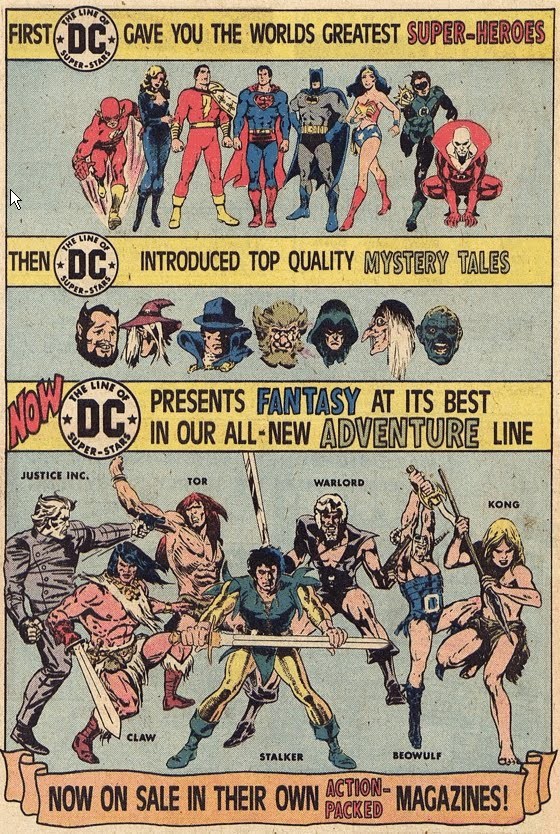
In late 1975 issues of DC comics had the following full-page house ad:

“First DC gave you the World’s Greatest Super-heroes” and a line-up of some of their most-popular characters: Flash, Black Canary (an odd choice, but the line-up needed a hot blonde), Captain Marvel (another odd choice since his comic was about to go on hiatus for 1976 – but would soon be revived as a Saturday morning cartoon, hence his inclusion), Superman, Batman, Wonder Woman, Green Lantern (another odd choice as at the time he was relegated to Flash as a back-up feature) and Deadman (perhaps the strangest choice of all – his solo feature, although legendary, was long-since cancelled by then).

“Then DC introduced top quality mystery tales” and a line-up of characters from their horror line – the one genre DC can truly say they did better than Marvel (perhaps war titles, too, but Marvel didn’t release many war or horror comics that weren’t reprint titles by this time and you will ALWAYS get an argument from the more ardent Marvel zom-er-fans about ANY genre): Abel of House of Secrets, Mordred of The Witching Hour, The Phantom Stranger, Cain of House of Mystery, the Spectre, Eve of Secrets of Sinister House and Swamp Thing.

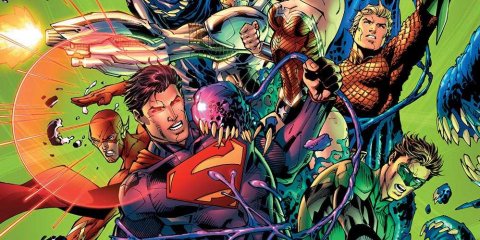
“NOW DC presents fantasy at its best in our all-new ADVENTURE line” and a rendering from each of the seven new comics available: Justice Inc., Claw, Tor, Stalker, Warlord, Beowulf, and Kong. “Now on sale in their own ACTION-PACKED magazines!”

These comics were published under the DC banner and weren’t really part of a “line” or “imprint” – a unique subspecies of comic from the same publisher. That sort of branding wouldn’t become popular for many years to come – Milestone,  Epic, Vertigo, etc. Even the X-Men were given its own line of comics under the Marvel banner.

DC did do a branding of sorts in the next year or so with its DC/TV line – Superfriends, Isis, Shazam and Welcome Back Kotter all published with a variation of the DC logo in the upper left-hand corner to mark these comics as unique in the line-up. No such variation was seen in these so-called “Adventure Line” comics.

Only two characters that debuted under the Adventure Line had any staying power – that is, new adventures could still be found in comic books years after their debut: Warlord and Claw. The Avenger in Justice Inc is and always shall be a strange exception to the mix – his pulp adventures began when Superman was only “a year old” and Batman had only been around for four months (can you imagine if Batman only lasted for four issues as the Avenger did…). His comic book adventures have been published by various companies to this day (Dynamite’s Justice Inc is on the stands right now) and the odd inclusion of a gun-toting crime killer in a group of sword/spear/club-wielding Conan clones will be discussed in the blog reviewing those issues.

That’s not to put the line down. DC put their A-list talent on these comics. The credits read like a list of who’s who in comic-book-dom: Jack Kirby, Joe Kubert, David Michelinie, Ernie Chan, Alfred Alcala, Gerry Conway, Keith Giffen, and of course Mike Grell. The stories and art were well done!

Oh at times there was garbage too, particularly with the last few issues of a run, but overall the quality was good to fair (sometimes great!) compared to other comics released at the time.

I’ve loved all these comics since their debut and I hope you enjoy the next seven blog posts reviewing them!

Original Material copyright 2015 Michael G Curry

Dean Cain: a National Adoption Month Spotlight!

November is National Adoption Month! Throughout the month I’ll feature famous folk who have been adopted!  


Today’s Spotlight: Dean Cain. Wait, didn’t you already do Superman? Shut up…

 DeanCain

Culled mostly from Wikipedia:


Dean Cain was born on July 31, 1966 as Dean George Tanaka in Mount Clemens, Michigan, the son of Sharon Thomas, an actress, and Roger Tanaka. In 1969, Cain’s mother married film directorChristopher Cain, who adopted Dean and his brother (musician Roger Cain); they became his sons and the family moved to Malibu, California.


Be sure to visit Abby’s Road on Facebook for more Spotlights!

 The cover of Abby's Road

The cover of Abby’s Road

 “Abby’s Road, the Long and Winding Road to Adoption and how Facebook, Aquaman and Theodore Roosevelt Helped” leads a couple through their days of infertility treatments and adoption. It is told with gentle (and sometimes not-so-gentle) humor from the perspective of a nerdy father and his loving and understanding wife.

Join Mike and Esther as they go through IUIs and IFVs, as they search for an adoption agency, are selected by a birth mother, prepare their house, prepare their family, prepare themselves and wait for their daughter to be born a thousand miles from home.


Winner, Honorable Mention, 2014, Great Midwest Book Festival


Abby’s Road is available at Amazon here: 
http://www.amazon.com/Abbys-Road-Long-Winding-Adoption/product-reviews/0692221530/ref=cm_cr_pr_top_recent?ie=UTF8&showViewpoints=0&sortBy=bySubmissionDateDescending


at Barnes and Noble here: 
http://www.barnesandnoble.com/w/abbys-road-the-long-and-winding-road-to-adoption-and-how-facebook-aquaman-and-theodore-roosevelt-helped-michael-curry/1119971924?ean=9780692221532


and at Smashwords here:
 https://www.smashwords.com/books/view/457270


Copyright 2014 Michael Curry


The Most Famous Adoptee of All! National Adoption Month Spotlight on…

November is National Adoption Month! Throughout the month I’ll feature famous folk who have been adopted! Today, in honor of my Fiftieth Birthday – the most famous adoptee of all!

 supers2

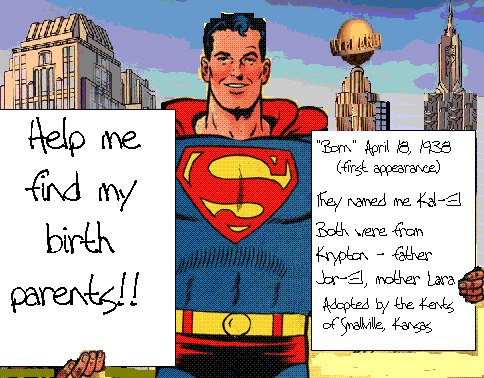
Born Kal-el on the planet Krypton, he was rocketed to earth by his birth parents, Jor-el and Lara just before Krypton exploded into radioactive rubble.

Landing on earth in the mid-western United States, his ship was discovered by Jonathan and Martha Kent, who adopted the foundling and named him Clark, Martha’a maiden name.

 supes

Imbued with powers and abilities far beyond those of mortal men, Superman fights a never-ending battle for truth, justice and the American Way against the most ruthless of villains hell-bent on their quest for his destruction; including Lex Luthor, Brainiac, and Zak Snyder!


The cover of Abby's Road

The cover of Abby’s Road

“Abby’s Road, the Long and Winding Road to Adoption and how Facebook, Aquaman and Theodore Roosevelt Helped” leads a couple through their days of infertility treatments and adoption. It is told with gentle (and sometimes not-so-gentle) humor from the perspective of a nerdy father and his loving and understanding wife.

Join Mike and Esther as they go through IUIs and IFVs, as they search for an adoption agency, are selected by a birth mother, prepare their house, prepare their family, prepare themselves and wait for their daughter to be born a thousand miles from home.

 Winner, Honorable Mention, 2014, Great Midwest Book Festival

Abby’s Road is available at Amazon here: http://www.amazon.com/Abbys-Road-Long-Winding-Adoption/product-reviews/0692221530/ref=cm_cr_pr_top_recent?ie=UTF8&showViewpoints=0&sortBy=bySubmissionDateDescending

at Barnes and Noble here: http://www.barnesandnoble.com/w/abbys-road-the-long-and-winding-road-to-adoption-and-how-facebook-aquaman-and-theodore-roosevelt-helped-michael-curry/1119971924?ean=9780692221532

and at Smashwords here: https://www.smashwords.com/books/view/457270


Copyright 2014 Michael Curry


A Late Review of the Latest Superman Movie

            This is the last review you will read of “The Man of Steel”, I would guess. It has been out for several weeks, but I saw it during the July 4th week. And yes this contains spoilers. If you haven’t seen this movie yet and are still concerned about reviewers ruining the movie for you … then go see the damn thing before reading any more reviews.
            I was off work; the wife was not. So I spent the day shopping and thought an afternoon in a theater would be nice.
            But what to watch? “Giant Whoredog Corporate Blockbuster CGI Slagheap 3” (to quote artist Stephen Bissette on the latest batch of pornographically violent films)? There was not much else to select at the nearby multi-temple.
            I decided on the new Superman movie, called “The Man of Steel”. I’ve read many reviews raving for it and ranting against it. Most of the people whose opinions I trust did not like it.
            I expected to hate the movie. I even brought a pen and paper to write down my thoughts while watching; not having my lovely wife next to me to act as Crow to my Tom Servo.
            I liked it very much. I didn’t love it.  I wasn’t gaga and oohed and aahed at the prospect of this igniting a multi-movie franchise. But it wasn’t as bad as I expected.
            Comparisons to previous Supermovies is not fair, but it IS expected nowadays. I liked MoS (as it shall be hereinafter called in this little treatise) as much as I hoped to have liked “Superman Returns” from 2006 – the last big-screen treatment of the character. I was so hoping that movie would do well and be a wonderful experience. “Returns” had its moments – some wonderful moments – but it ended up being a forgettable movie. What was considered a “sequel” to the first two Christopher Reeve-Superman movies ended up being a rehash of the first Reeves movie.
            Before seeing MoS, I considered it a rehash of the second Reeves movie. Zod and his gang of Kryptonian thugs are bent on conquering the earth. MoS was a little more than that, but that is the plot in a nutshell.
            In the meantime we get a retelling of Krypton’s last days, Zod’s relationship with Jor-El, Kal-El’s life as a youngster on earth and his first few experiences as Superman.
            Reviews of MoS said the flick was dark and brooding, Batman-ifying the Big Red “S”. I bristled at the thought. I still bristle at the thought of Batman being turned into Brooding Sociopath Man. I didn’t want to see Superman turn into a dick.
            One of the first lines in the film has Jor-El speaking to Zod, who was leading a Kryptonian coup d’etat. “I will honor the man you were, not the monster you have become.” I wrote that down. What a perfect line to describe the dark Superdick I will spend the next two hours with…
            But I was happily surprised. Is the film dark? Yes. Is Superman himself dark? No. Here is Superman the way he should be, and the way he has always been portrayed on film so far – our honest and noble protector.
            When Zod threatened the earth with destruction if Superman (at that time a mysterious super-powered benefactor) did not reveal himself, Superman did so.
            When he protected the soldiers who were firing at not only him but Zod’s militant thugs, Colonel Hardy (played by Christopher Maloni with the same unlikeableness with which he infused Detective (un)Stabler in Law & Order: SUV (sic) said “this man is not our enemy”. Superman was grateful.
            (Incidentally, Maloni’s best moment was the look on his face when he realized he was getting in a knife-fight with a Kryptonian but still did not back down. His sacrifice to destroy the terraforming machine was canny. Well done, but expected. I was saddened that the sacrifice also had to include the woefully underutilized Richard Schiff. I would have loved to see him as a regular in the franchise.)
            In between all the explosions and CGI destruction were Superman’s relationships with both sets of parents. His birth-mother Lara was given more lines and emotions than in any previous movie or even the comics. She came this close to refusing to allow Kal-El to go to earth. It was very moving, especially to this new parent. I can barely imagine what she must have gone through.
            Superman got to speak to a simulacrum of his birth father Jor-El, rather than a pre-recorded Marlon Brando made up to look like Charlie Rich. Superman got to actually speak with his birth father.
            For the past two decades Jor-El was portrayed as cold, emotionless and on the cusp of evil – all of Krypton was. This Jor-El, played by Russell Crowe, was noble – a hero that a son could emulate.
            And although this Krypton was portrayed as a dystopia, it was still sad to see its inevitable end. It’s message of conservation seemed forced; although the skyline view of Krypton’s moon in pieces was, well, kinda cool.
            In the Bronze Age of comics (and before) – Superman’s adoptive parents, the Kents, were dead by the time he became Superman. It was a sober moment and reflected in Superman’s persona. “Despite all my powers, I couldn’t save them.” Superman will do his best to protect us, but there are times when he cannot. It is a basic tenant of his personality.
            Since 1985, when the Modern Age began, comic lore has ordained that his mother has survived. In MoS, Martha Kent has also survived to see his son become Superman. I have mentioned in previous blogs this is not necessarily a bad thing, but his moral compass is now external, not internal. Why would you need a Fortress of Solitude when you can go to Mom’s house for a slice of sympathy and apple pie after defeating Throgg the Omnipotent?
            His relationship with Jonathan Kent was more complex here – Kentwas played quite well by Kevin Costner. Rather than encourage Kal-El (or ClarkKent) to use his powers nobly for the benefit of mankind, Kenttells his son to be wary – people will be afraid of him. This is more a reflection of today’s society, I think. During the Reeve’s movies and before, Jonathan Kent and Jor-El would be in agreement: you have tremendous powers, you must prepare yourself to use those powers to benefit mankind. This Jonathan Kent would have preferred Clark wear a mask and hide his tracks. I was pleased to see him proven wrong. “This man is not our enemy.”
            Jonathan Kent’s death was the second most controversial part of MoS. My impression from other reviews fed into the “dark” Superman – callously allowing his father to die to prove a point. It wasn’t that way – Jonathan Kent prevented his son from saving him. Kent knew his son was not ready to reveal himself. It was a powerful scene and well done – it showed Superman doing what a superhero is supposed to do. He obeyed his father.
            This led to a period of wandering – I was led to believe this; I don’t know if that is the case or not. Wouldn’t that make a wonderful TV series? Sort of like the 1970s “Incredible Hulk” – a lone stranger wanders into town, resolves a crisis and wanders off again. A “Smallville” on the road…
            I expect he came home frequently. His mother’s reaction to seeing him is hardly that of a mother who has not seen her son in 15 years. She was almost casual about him walking down their driveway. “Why didn’t you tell me, you could have picked up a gallon of milk on your way…”
            There were a few undeniable religious symbolisms and comparisons. Superman-Moses parallels are something of a joke nowadays, but MoS” went a bit further.
            Superman was 33 years old during the film. Like Jesus, he spent 30+ years in the world as one of us before revealing himself. When Zod makes his threat to destroy the world unless the son of Jor-El surrenders, Clark takes solace and advice from a minister in a church. Presumably this was the church he went to in Smallville. As he talks to the minister, his headshot is framed with Jesus to his right facing away from him slightly above and praying with his face and arms pointing upwards. It makes a stair-step: right to left going up – Superman, Jesus, God. If you’re going to do a shot like that – that is the way to do it. Any other way would be awkward or raise eyebrows and create a controversy Warner Brothers did not need. What if Jesus was “below” Superman? What if he was above but praying in the direction over Superman’s head – making a strange triangle (Superman directly below God and Jesus off to the side?).
            My friend Clyde, whose blog about recent superhero movies can be read here, http://playmst3kforme.blogspot.com/, told me WB sent MoS study guides to churches. It would be interesting to see them. I googled the subject and found a few …
            The most controversial part of the movie came at the end in the final confrontation with Zod. Superman had to break the general’s neck to stop his killing civilians with his heat vision. Superman begged Zod to stop (I don’t recall if he used the magic words “please”) and screamed in frustration when the deed was done. It was overlong – to show us how much Superman agonized over the decision. I didn’t mind that – if the scene was done quickly one could argue Supes’ callousness in killing. The argument came anyway, but at least the callousness wasn’t obvious. Batdick, Punisher or Lobo would have snapped his neck an hour ago…
            “Superman doesn’t kill,” critics of the scene wrote. True. Very true. As with the death of Jonathan Kent, I was expecting Superman to be indifferent or even gleeful as shown by the brooding sociopathic “heroes” mentioned above and other so-called “heroes” DC, Marvel and independent comics have been vomiting up since the 1990s.
            Superman could have thrown Zod into the Phantom Zone or tricked Zod into entering the Zone or destroying himself or his powers (remember how that was resolved in Reeve’s Superman II?), but that is not the way for the fans of “Giant Slagbag Bucket of CGI Ticks 6” (another Bisette-ism) who the producers of MOS need to attract to make money.
            A few minutes showing Superman’s regret would have resolved this. The trouble is, the filmmakers couldn’t linger on such regret. They would need to balance Superman’s facing his decision with his wallowing in pathos. “Oh woe is me.” Rend, rend…
            Perhaps a short scene with General Swanwick … “Have you ever had to kill?”
            “Yes, many times…”
            “How do you think about that?”
            “I don’t think about the people I had to kill, I think about the people I protected.”
            Or something like that.
            Or a brief flashback with his father. Jonathan Kent would have been old enough to serve during Viet Nam (Costner was born in 1955, just a bit too young, but his character could have been five years older…). Perhaps his war experience is what infused his fear of humanity.
            So that is my view of the film. I liked MOS as much as I was hoping to like “Superman Returns”. I was as disappointed in “Superman Returns” as I was expecting to be disappointed in MoS. Will it be as iconic as the Reeve’s movies? No, but that is hardly fair to compare it to those films. Well, the first two at any rate.
            Now, what about a sequel?
            I hope to god they stop with Reeve’s “Superman II”. If “…Returns” was a remake of Reeve’s I and MoS was a rehash of II … well, let’s stop there. Let’s get some new ideas, shall we?
            “Luthor in the sequel! Luthor in the sequel!” So scream the corporate-boot-licking-uberwonks from their parents’ basements.
            No. Luthor is as overused as the Joker.
            The trouble is, who else is there? Braniac? All during the CGI destruction shown in MoS I imagined how these effects could have also been used to show Braniac trying to shrink and “steal” Metropolis. The Lovecraftian-mechanical tentacles would have fit Braniac’s machinations too. A pity. The last thing a franchise needs is such repetition for its second film.
            Clyde came up with a wonderful idea. Bizarro. And in between slugfests we could see ClarkKent interact with his coworkers. We’ll get to know and understand the cast. Perhaps empathize with them.
            What am I saying …
            Some final thoughts:
            1) I like the idea of Lois Lane knowing Clark is Superman from the beginning. She could even help protect his identity. I got tired of the constant toying around with this even as a kid reading the comics. She’s an investigative reporter. She should know. I always felt that way about Commissioner Gordan and Batman.
            “How did you find out I was Bruce Wayne?”
“I’m a detective, too. A good one.”
            “Obviously…” 
            “Are you going to use your Bat-Amnesia Spray on me?”
            “I’m not that Batman; I’m the Batman that will break every finger until you swear not to tell anyone.”
            “I’ve known for years and haven’t told anyone yet … OW! You dick! OW! Stop it! Ow! Shouldn’t you be killing off another Robin? Ow!”
            2) Perry White is now a black man?  “What’s his middle name – ‘Ain’t’?”
            Well, why not? Lawrence Fishburne did a wonderful job and fits the role well. As with most comics, especially those created in the Golden and Silver Age, the lack of non-caucasian characters is embarrassing… Comparisons with Samuel L. Jackson’s Nick Fury are unavoidable. Tokenism?  Maybe, but as with Fury, it didn’t seem to be a case of “Quick, Africanize someone! Anyone!” Perry White is black. Okay, let’s move on…
            3) Near the end we saw a flashback of a young Clark Kentplaying along the laundry-line posing in a cape.  Um, who was he supposed to be emulating?
            In this Superman-less world without superheroes, who was there to pretend to be? I imagine a “Watchmen”-like world where comic books were horror, war, teen and funny animal books only.
            Where else would he turn for imaginary heroes?
            Comic strips? The Phantom? He didn’t wear a cape.
            Pulps? Doc Savage? Ditto. Crime-fighters who wore capes were of the Shadow and the Spider mold – and they were hardly Good Guys. I doubt young Clarkstood there, puffed out his chest and said “The seed of crime bears bitter fruit…”
            I avoided getting into arguments about this issue on Facebook with children born after the Modern Age in 1985. DC declared that Superman had only been around ten years while the other heroes of WWII (and before) existed before. The Golden Age Wonder Woman and Black Canary were the mothers of the “current” heroines.
            “He could have been pretending to be members of the Justice Society of Americaor All-Star Squadron.” They forget their history – if not for Superman, there would have been no JSA or, um, ASS.
            Besides, if there WERE superheroes in this MoS continuity; then why was Superman’s existence such a surprise?  “Who saved the children in the school bus?” “It was probably Hourman passing by.”  “Who was the mysterious stranger at the oil rig?” “Neptune Perkins, I guess.” “Oh, okay, case closed.”
            Now that Superman “exists” in this MoS world, it will be interesting to see how his presence affects this world. Which of Superman’s fathers will be proved right? It will make the upcoming sequels interesting.  In between scenes of CGI Pop Slough (thank you again Mr. Bissette …)
Original material copyright 2013 Michael G Curry
 

Cover Charges: My favorite comic book covers…

Cover Charges: My favorite comic book covers…
               Recently Facebook pages and groups devoted to comic books have listed “Top Ten Comic Book covers” from professionals and fans.
               My friend Clyde and I discussed this topic one Saturday night and resulted in his blog post that you can view here. http://playmst3kforme.blogspot.com/2013/06/weve-got-you-covered-10-great-comic.html
               I stand by what I said. It would be very hard to do. But as I flogged my memory it became easier. I ended up with quite a long list. I could either go with comic book covers that have become iconic – Brave & Bold #28, Amazing Fantasy #16 and Action Comics #1 …

I could have gone with comics that I love as a work of art, such as this beauty – Batman #241 with
art by Neal Adams. It’s a comic I do not own, but is definitely one of my favorite covers. Wow!

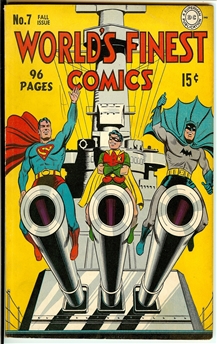
               Or this famous cover from World’s Finest #7 from the 1940s. It’s another comic I do not own, but it IS one of my favorite covers. If only because it never fails to elicit a sophomoric giggle. Hee-heehee-

hee…

               Robin does look quite proud, doesn’t he?


               I wanted to do something more personal. These are ten comic book covers that made me want to buy the comics. Something about the cover attracted me enough to say, “Oh I’ve got to get that.” Some are iconic, some are beautiful pieces of art; some just pressed my buttons (in a good way). If a comic book cover is supposed to entice you to purchase and/or read it, these worked … for me …
               You may notice the distinct lack of Marvel comics. This is because I did not read much Marvel growing up. I got most of my comics for free from Sparta Printing – who printed National Comics (they officially changed their name to DC Comics in 1976), Harvey and Archie. So Marvel comics were only picked up in the grocery store.
               And all of the comics were from the 1970s. This was when I was a boy into my very early teens; comic book covers mattered more to me than they do now. I haven’t been excited by a comic book cover in many decades. Maybe older and wise, maybe not.  A cover may intrigue me but it is the interior art or story that catches my imagination. That is too bad, I suppose, but it helps keep impulse buying in check…
                Someone might say, “How could this cover excite you? It’s silly! Now Spiderman #28 – THAT gave me the willies!”  Really? Tell me more about it! I’d love to read your lists!
               So these are personal favorites only. Maybe someday I’ll do my favorite list of “iconic” or “classic” covers, but for now, this is all about me! Haha!
               These are in no particular order:
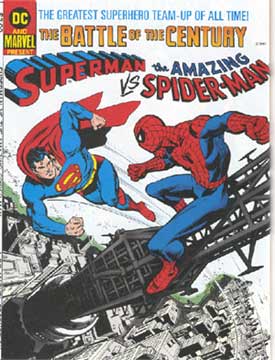
Superman vs Spider-Man: the Battle of the Century. 1976.  What comic book fan did not soil themselves upon seeing this cover? Even the house ads in other DC and Marvel comics brought a chill. It was this iconic cover with the words, “THIS … SAYS IT ALL!!” It helped that it was a rollicking good read that lived up to the hype! The cover was by Carmine Infantino (layout), Ross Andru (finishing and pencils) and inked by Dick Giordano – all hall-of-famers.
               Occasionally a comic cover lives up to its hype. This is one of them.


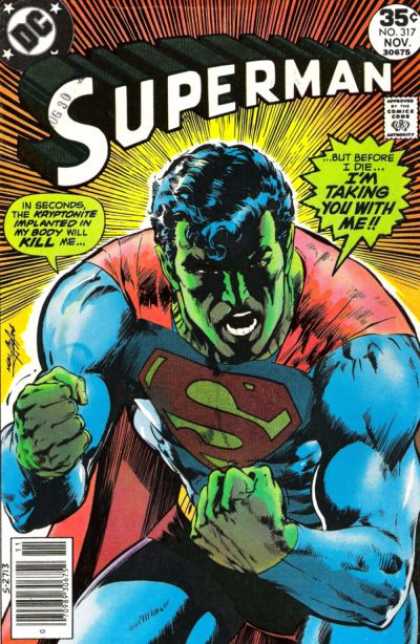
Superman #317. 1977? Neal Adams art. A later part of a multi-part issue, which was a better-than average story; so I would have gotten the issue anyway.  , but I was so wooed by the cover! An angry Superman!?  Wouldn’t you run away, too?
               Adams is a wonderful artist. Look at those muscles.  You can almost hear the cords creak as Superman flexes…
Superman vs. Muhammad Ali (All-New Collectors’ Edition #C-56). 1978. How can you look at this and NOT say, “Oh, I’ve got to see what the hell this is about…”. Iconic cover by Neal Adams. He was asked to redo this for a millennial-end issue of “Sports Illustrated” with the 20th century’s greatest sports legends. Muhammad Ali and Michael Jordan boxed in that one. Babe Ruth was in the forefront. In the audience were Sandy Koufax and a legion of others.
 
 
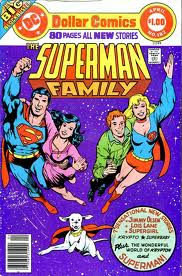
Superman Family #182, 1978? Neal Adams art. Are you sensing a theme here? This was DC’s first “Dollar Comic”. A dollar? For a comic book? Yeek! It would blow the budget of any teenager, but I couldn’t resist the cover. The stories inside ranged from great to mediocre. Neal Adams draws Supergirl.  Ooo-la-la. Plus it had Krypto on the cover.
               You gotta love Krypto!


Marvel Team-Up #74. 1978. “Is this a joke?” Talk about a cover that

screams “I’ve GOT to get this one.” Art by Dave Cockrum & Marie Severin. A fun issue that never wallowed in silliness.

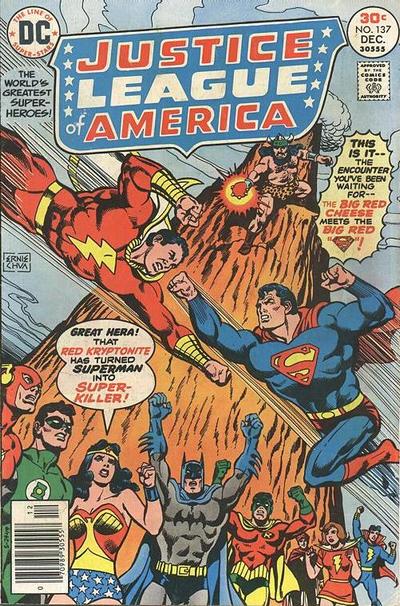
Justice League of America #137. 1977. Ernie Chua (Chan) pencils and Frank McLaughlin inks.
               Nowadays Superman and Captain Marvel (Shazam) fight each other annually. But this was the first time they shared a story – how could I resist it? It was also the first time they “really” shared a cover (earlier comics had Supes “introducing” Cap or their posters were hanging side-by-side, that sort of thing…).
This was part 3 of the traditional JLA/JSA team-up with Cap and other Fawcett characters appearing and fighting alongside our favorite heroes. It was the first time I had heard of or read about Spy Smasher and Ibis the Invincible – who have gone on to become two of my favorite comic book characters!

Batman #253. 1973
Oh.
My.
GOD!!!
Mike Kaluta art (no one – NO ONE – would have been able to do this better).


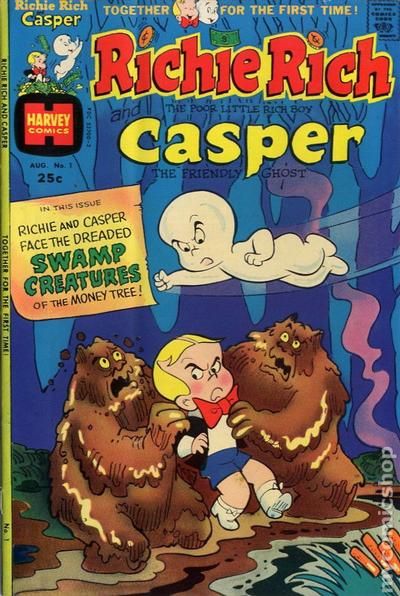
Richie Rich and Casper #1. 1974. Artist unknown. Oh, wow! Together! Oh, WOW, said my nine-year-old self!
               The story was fun and the artwork well done. Surprised to see a non-superhero comic on the list? Me too. But I still remember how thrilled I was seeing this and reading it. Forty years later I still remember the entire series with fondness.
 
 
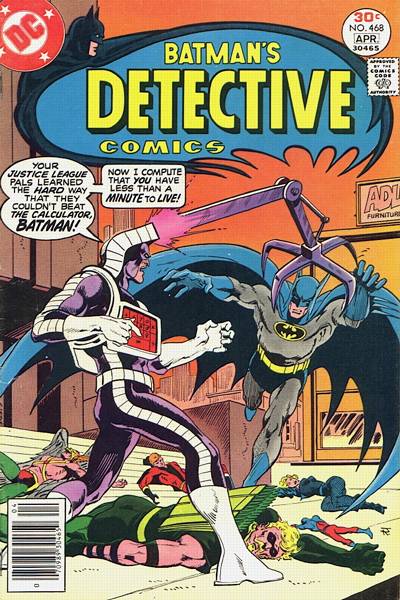
Detective Comics #468. 1978? It’s hard to believe this is the only comic on this list drawn by my beloved Jim Aparo, inked by Tatjana Wood.
               The Calculator! Over the past five issues this villain fought other DC heroes in the back-up feature (Green Arrow, Hawkman, etc. – all of them beaten and lying unconscious on the cover) and NOW he’s fighting Batman in a book-length battle! I was so excited seeing this cover when it came out! Great conclusion to a fun story line! It is in no way an iconic cover or a legendary story – but this youngster loved it!


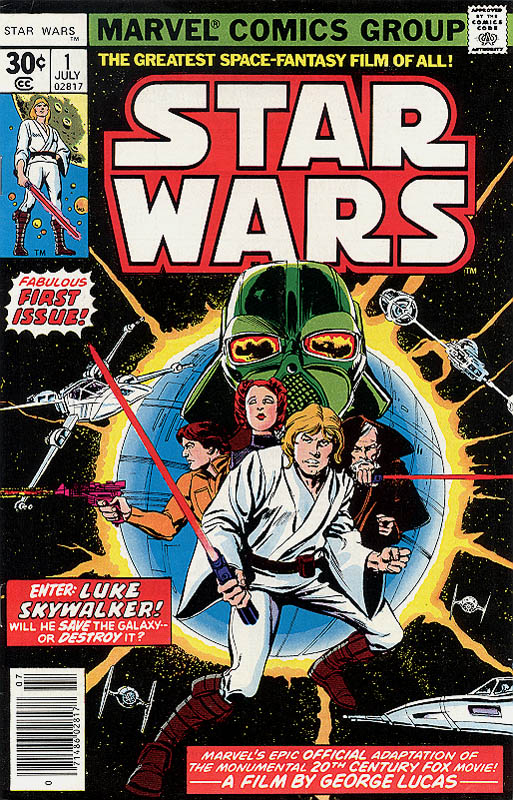
Star Wars #1. 1977. Cover by the legendary Howard Chaykin, inked by Tom Palmer.
               Great cover as always by Chaykin, especially considering the flood of Star Wars comic art to come. But imagine the impact of this cover on this 12 year old kid …
               Star Wars? As a comic book? Star Wars! As a comic book! STARWARSASACOMICBOOK!! “Earl to Aisle 3, Earl to Aisle 3. We have another boy passed out in front of the book stand. Earl to Aisle 3.”
Oh, ok, one more.


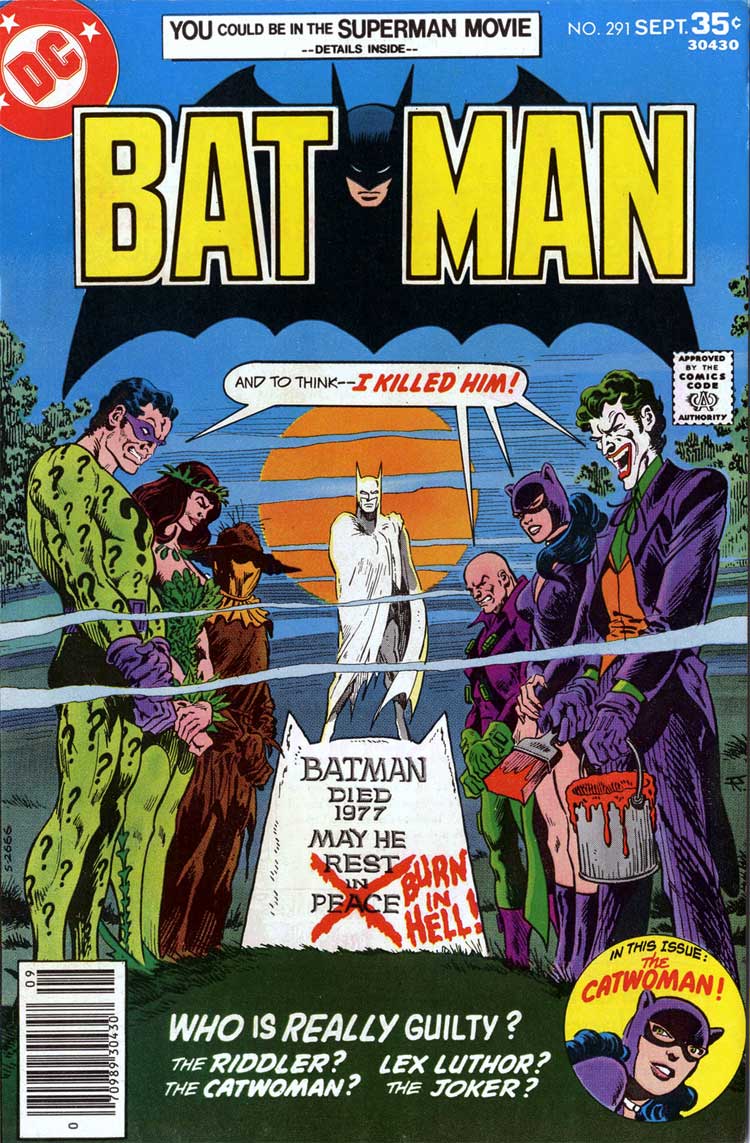
Batman #291. 1979 or 1980? Look at this beautiful Jim Aparo art (I felt bad about only having one other Aparo cover on the list and this issue immediately sprang to mind…). Tatjana Wood again inked.

               The cover made me snap this up – only to find out it was part one of four! Rats! Even so, it was a great story arc. I wish it would be released in a graphic novel. The Bronze Age gets a bad rap nowadays and that is too bad. There were some wonderful stories that a lot of fans missed during that late-1970s era. This is one of them!
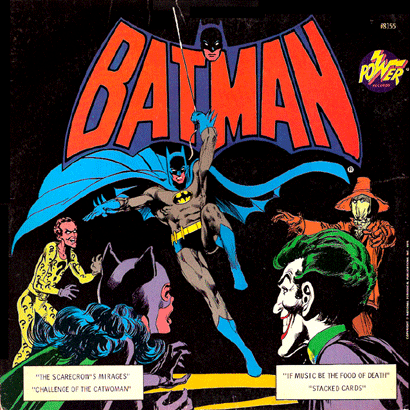
Honorable Mention:  Power Records, 1975. This is not a comic book, but dig the cover! Another Neal Adams classic. When I saw this album I had to have it! It took the Beatles (or my discovery of them in 1979) to knock this off of my record player once and for all. I still have it!
                If this were a comic book cover it would rank in any Top Ten!
 Honorable Mention #2 – the entire run of Marvel’s “What If…” 1978?  The whole point of this comic series – tales of alternate endings to the various Marvel Universe mythos – was to goad the reader into buying this anthology series. “Ooh, aah,” was often heard at the newstands when a new issue came out – What if Spider-Man joined the Fantastic Four? What if Captain Ameria had not “disappeared” after WWII? What if Shang Chi served Fu Manchu? What if Bruce Banner had always kept Bruce Banner’s intelligence? What if the New X-Men never formed? What if someone else had been bitten by that radioactive spider?
               Others will muse over “great” covers and “iconic” covers, but these captured by heart and imagination more than the others. There have been better covers – there have certainly been better stories on the inside. But just looking at the covers on my list brings back good memories.
               Isn’t that the whole point?

Hey Comics! Kids!

Hey Comics! Kids!
  d113b-batslap-bmp
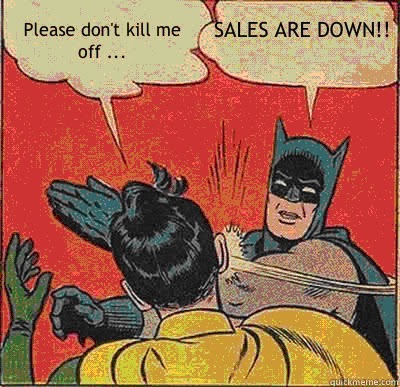
              The recent death of Robin the Boy Wonder got me thinking about superheroes and children. This Robin was the illegitimate love child of Batman/Bruce Wayne and Talia al-Ghul, the daughter of his enemy Ras Al-Ghul.
                My favorite comic book eras were the Silver Age and the Bronze Age, roughly comics released from 1956 – 1985.  During those eras, superheroes did not have children; with only two exceptions. The end of the Bronze Age saw the end of that – but more of that later. “World’s Finest” brought us the sons of Superman and Batman; and Superman and Lois seemed to have a super-powered kid every few issues; but these were imaginary stories (as opposed to the “real” stories), not canonical progeny.
                And during those years we had the adventures of Superbaby and Wondertot (no lie), but those were our beloved heroes as toddlers, not the children of an existing superhero.
                Why no kids?  It was probably because of the readership – oh, yes, some comic book readers enjoyed romance comics. Also, at this time Archie was always pining over Betty or Veronica. But to actually marry? And have a baby?
                No. Keep your reality out of my fantasy.
                Did we want to see Superman changing a diaper? Did we want to see Flash literally racing to the store to buy more formula? Probably not.
                The two exceptions signify the two extremes why such things did not happen otherwise in those eras…
                In the “Fantastic Four”, Reed Richards (Mr. Fantastic) married Sue Storm (Invisible Girl/Woman). An entire special issue (an Annual) was made of their wedding. The birth of their first baby, Franklin, was on the blurb of their comic a few years later. It wasn’t an event on par with Lucy and Ricky’s on early television, but in comicbookdom it was big stuff. It was a superhero’s (and thus comic books) first baby. Every few issues the child was threatened; or he and his babysitter were kidnapped or disappeared. The stories always turned out well, but the easy plot devise was used again and again.
                Aquaman was not so lucky.
                He married Mera and had Arthur Jr. Sometimes Junior would be called Aquababy.
                 In the mid-1970s, some years after the cancellation of his own title, Aquaman was revived in “Adventure Comics”. The creators kept the cast intact: Mera, Vulko, and Arthur Junior.
                 Like Franklin Richards, Arthur Junior was shown at the beginning and ending of most tales playing with Mommy and Daddy or their friends/partners/sidekicks. But Aquaman wasn’t the Fantastic Four. He was a secondary character in a low-selling magazine. Writers could get away with things here they couldn’t elsewhere.
                Baby Arthur was kidnapped. Ho-hum. Aquaman vows vengeance. Yeah yeah.
                Aquaman smacks the shit out of Black Manta and opens up the pod in which Manta put Arthur.
                He was too late. Arthur Jr. was dead.
                Whoa.
                What? He’s a baby! Well, a toddler. That can’t be. This is a comic book for chrissakes!
                That’s the trouble with children in comics even today.  I’ll be frank: putting children in life-threatening jeopardy should be off-limits. Isn’t it bad enough I have to see talking heads blather about the children of Sandy Hook on the idiot box? I don’t want to read about this stuff in my comics.
                Maybe I’m just turning into a crabby old man, but that’s my stand on that subject. Superheroes having kids can make for wonderful stories and great personal drama – but once born, leave them alone.
                Was the death of Arthur Junior done for shock value or publicity or a sales boost? Probably not. It was a second-string character in a second-tier comic book. The cover gave no indication as to what would happen. It wasn’t hyped in other comics in the line or other media (such hype was non-existent then anyway…). The next issue’s cover showed Aquaman in mourning at the gravesite of his son with a furious Mera in the background.
                As mentioned in a previous blog, death in a comic book is not always a bad thing. Most of the time, yes, but occasionally it can make for a great story. Arthur Junior’s death shadowed Aquaman for the next thirty years. It was even part of Aquaman’s legacy in the Batman TV cartoon “The Brave and The Bold”.
***
                By 1980 or so – the end of the Bronze Age – a child of a superhero was not such a rare thing.
                The Batman from the 1940s had a daughter. By the time we meet her she was a grown woman and fighting crime on her own as the Huntress. We saw more and more children of superheroes, but not as infants ripe for kidnapping. These were adults fighting crime on their own. Either flesh-and blood progeny, step-children or foster kids put on the cowl and became the next generation of crime-fighters.
                Green Lantern, Wonder Woman, Hawkman, even the Atom all had kids. They formed their own group called Infinity Inc.
                This was all DC Comics. The other big comic book producer took a different tact.
                Their children came from the future – alternate futures. The comic book based on the upcoming X-Men movie “Days of Future Past” featured a grown Franklin Richards. Scott Summer/Cyclops has so many children-from-alternate-futures-who-now-live-in-the-present they could form their own comic book line.  He has five at last count – if you count the clone of one of his sons.  And why wouldn’t you count the clone of one of your sons as your own?  I managed to say that with a straight face…
***
                In the Modern Age – the past twenty-plus years – our comic book heroes have lots of babies. Franklin Richards has a sister. “Astro City” featured a story arc with superhero Jack-in-the-Box and his pregnant wife. And more and more superheroes find their children taking up the trade – the aforementioned Robin, Green Arrow has a son in spandex, so does Plastic Man.
                Yes, Plastic Man … I expect that was one satisfied woman…
***
                Looking back at the later Bronze Age, I wonder why they didn’t tinker more with the caped ones having children? Especially so-called second-stringers?  Hawkman and Hawkgirl/woman were one of the few married comic book characters around. They were married when introduced! Why didn’t they have a baby? Granted they didn’t have a regular feature of their own at the time, but it could have been done in the pages of “Justice League of America” or “Detective”.
                Same with the Flash. He and his wife Iris exemplified the white-picket-fence existence. Their parents appeared frequently, as did other family members. Kid Flash was Iris’ nephew. A child would have been a perfect fit in that book. Then again, they did (temporarily) kill off Iris at the end of the Bronze Age … I wouldn’t expect a comic book editor to be merciful to their child …
                I am surprised a young man didn’t walk up to the Silver-Age Green Lantern and say, “Hi, I’m your son.”  It could have been from the days Hal Jordan was a truck driver or an insurance salesman when he and his original/current paramour Carol Farris were broken up.
                I think they would have made for some great stories. But with “The New 52” rebooting the entire line, the Silver Age/Bronze Age characters and their characteristics are gone, perhaps for good.
                A son for Hal Jordan would still make a good story though – make him a late teen or older. The power ring could check his DNA.  The son could be the reader’s link to GL’s world. We could see it through his eyes.
                Jordan would have to hide his identity again. The son would look for him in the months GL was away on a space mission. Jordan could start to feel … worried? Is that the phrase? Fear? Me?
                The conversation with Batman would make for an iconic scene, especially with the slight animosity between the two (which is getting better – the subject of another blog):
                This could take place in Justice League HQ.
“Are you sure he’s yours?”
                “Yes, the ring (taps at his ring) and Clark verified it.  Well, see you at the next meeting, Batman.”
                “Jordan…”
                “Here we go”, GL thinks. “Yeah?”
                “Hal.  Don’t give him a ring. Don’t let him put on a mask. Make him go to school, go to work. Make him get married, give you a grandson or granddaughter. Don’t turn him into one of us.”
                Trouble is, nowadays, within three or four years someone would kill him off. Or make him yet another Green Lantern. Or a different hero altogether. But it would make for some fine issues if done well; if they respected the characters and the genre.
                Aye, there’s the rub.
Copyright 2013 Michael G. Curry

Superman turns 75 …

Superman turns 75 …
Happy Birthday to comic book’s greatest creation and to one of comic book’s greatest creators…
            Seventy-five years ago today thousands of children (the vast majority of them boys) went with their parents (the vast majority of them the mothers) to drug stores, to grocery stores and past magazine stands.  There they spotted a new magazine, published on that very day (the vast majority on the northern east coast of the United States).
            It wasn’t a new type of magazine – it was a comic magazine. There have been magazines featuring comic strips as long as there have been magazines and comic strips.
            This one featured new comic strips – never published anywhere else. This WAS fairly new. Comic magazines featuring new material had only been around a few years. Most of them were comical, had funny animals or reprinted adventure strips – retreads of the popular pulps of the day.
            On the cover of this magazine was a man in blue tights and a red cape lifting a car over his head and smashing it to the ground while other men ran in panic. He was called Superman and his 14-page story was the first feature.
            Other stories in Action Comics #1 were boxer Pep Morgan, Marco Polo, ace reporter Scoop Scanlon, two stories of crime-fighting cowboys – one set in the Wild West and one in modern times in England, and master magician and crime fighter Zatarra – whose daughter is still around in the comics.
            Nearly all the stories were serials – part one of who-knows-how-many.
            The comic book was a hit. It marked the birth of the superhero.
            Happy 75thbirthday to Superman.
            Superman was created by Jerry Siegel and Joe Shuster. In their mind they created a comic strip along the lines of pulp hero Doc Savage; they had similar powers and even a Fortress of Solitude. An early advertisement for Doc Savage called him a “superman”.
            They did not know they created an new literary archetype.
            The superhero is one of only two purely American archetypes – the other being the cowboy. The superhero is also the last archetype to have been created. Well, with any lasting power, that is. You could argue the hippie was also a lasting archetype. At one time it was, true, but now the hippie is used for laughs or otherwise has a negative connotation.
            Look at the upcoming summer movie schedule to see what affect Superman has had on our culture. Look at the cartoons on television; even sit-coms. Do you think there would have been a “Big Bang Theory” without him?
            I have written in a previous blog about the rotten treatment of Siegel and Shuster and their heirs – receiving hardly a penny from the Superman franchise. Many comic book professionals are making very valid points about this on their blogs and on their Facebook pages today. I join in their chorus. But I still wish Superman a happy birthday.
***
            It is also Carl Burgos’ birthday. 75 years ago he turned 22. At this time he was drawing backgrounds and panel borders while working for Harry Chesler, a comic book magazine publisher. Did he pick up a copy of Action Comics #1 on his birthday? Probably not. Did he ever read Superman comics? I don’t know for sure, but I would suspect the answer is “Oh yes!”
            Some time before October 1939 Burgos sold a character he created to Timely Comics, a rival of National Comics – Superman’s company. It was another superhero of the Superman archetype, but different enough to avoid being a mere copy of Superman
            The character was the Human Torch. While not as popular as Superman at the time, it was still a success.
            So much so that there is still a Human Torch (albeit with a different origin and identity) to this day.
            So much so that the company, Timely, is still around (albeit with a different name – Marvel Comics, home of Spider-Man and the Avengers; you might have heard of them…).
            Except for the 1950s, the Human Torch has been a published character since its creation. Only Batman, Wonder Woman and, oh yes, Superman, have been published longer and/or more continuously.
            75 years ago a character was published that created an industry and through it America’s last great literary archetype.  97 years ago a man was born who would help launch one of that industry’s biggest publishers.
            And on a personal note, happy birthday to my friend Don – born some time after Burgos and Superman – whose infectious love of comics and pulp magazines is greater than anyone I know!
            Happy Birthday to them all!

SOME THOUGHTS ON RELIGION AND SUPERHEROES…

SOME THOUGHTS ON RELIGION AND SUPERHEROES…
             My gaming group was playing the RPG DC Superheroes, which the GM set during WWII.  Some of us played original characters while others played established golden age DC folks: Dr. Mid-Nite, Green Lantern, Phantom Lady, etc. I played the Shining Knight.
            During the game Nazis stole a book by one of Copernicus’ protégés and in the course of the adventure I asked if I could read it. I said my character could probably read or understand Latin because as a knight of King Arthur’s Round Table he would have been at mass at least once per day!
            “He’s Catholic?” someone asked.
            There was no Catholic Church back in the seventh century; there was only “the church”. Sir Justin (the Shining Knight’s real name) lived during King Arthur’s reign. Whether he wanted to or not, if he lived back then, he probably attended mass in Latin.
            That got me thinking about superheroes and religion: what religion would our favorite superheroes be? In what faiths were they raised, if at all?
            I read the Fantastic Four graphic novel of Marvel’s Civil War where the Thing talked about being Jewish. This was the first reference to the Thing’s religion I knew of (not being up on Marvel over the past decades I don’t know when they first mentioned that).
            There are some superheroes (scant, but some) whose religion is central to their character. The current Dr. Mid-Nite, for example: in the pages of the last version of JSA he used his Catholicism to help Mr. Terrific deal with the loss of his wife (see my previous blog regarding good and bad deaths of comic book characters…).
            Religion is (was) strongly emphasized with the X-Men. Magneto’s Jewish-ness (is that a word?) and Nightcrawler’s Catholicism has been used well for story fodder.
            Like they did with the Thing, Marvel may have established religions for all their characters. I will freely admit if I am wrong. So this is a purely objective list subject to only my whims and generalizations! Feel free to argue! And note this gets sillier as it goes along (as said: if a character’s religion has reallybeen established in the comics, let me know!).
            Also this is from a Silver and Bronze Age fan. The post-Crisis and post-New 52 (for DC) and post annual reboot (for Marvel) have changed the personalities and backgrounds of all these characters thus making my generalizations questionable, haha:
            SUPERMAN: raised in a Kansas farm town? Baptist. Maybe Methodist. Currently, not attending a church. Rao was a Kryptonian god and Superman would sometimes shout out “Great Rao” in times of shock and stress, but otherwise the comics never showed Supes really worshipping him per se.
            BATMAN: I imagine his unbelievably rich and isolated childhood (pre-Crime Alley obviously) to be much like Teddy Roosevelt. “Gotham City – home of high crime and the cod, where the Ryders talk only to the Waynes, and the Waynes talk only to God.” Episcopalian.  Currently? … oh c’mon! Agnostic is being kind.
            WONDER WOMAN: Pagan. Pretty obvious there.
            FLASH (Barry Allen): Solidly set in the Midwest. Methodist or Lutheran. But with the last name Allen being of Irish extraction, I would guess Presbyterian or Catholic. Same with Wally West. However, the various weddings of family and friends throughout the 60s and 70s do not show the usual Catholic trappings (I don’t mean that in a bad way), so I would guess Protestant.
            Jay Garrick? What is Garrick? If a German name, Lutheran; if Irish, Presbyterian.  I would believe all Flashes would still be attending church, it fits their characters.
            GREEN LANTERN: father was in the military. I’d say non-denominational if he was given any religion at all as a child. More likely with his cavalier attitude toward life; he probably wasn’t taken to church much at all as a youngster.
            GREEN ARROW: Oh, please, with his intense hatred/aversion/suspicion over authority figures? Lapsed Catholic.
            BLACK CANARY: No opinion. Any religion (or none at all) would fit. When she married Green Arrow it wasn’t in a Catholic Church. But then GA may have vetoed a Catholic wedding. I’d bet she went to church well into adulthood and may still go on major religious holidays.
            TEEN TITANS: By this I mean the original teen sidekicks – Batman would raise ROBIN to be as irreligious as he is.
            Ditto SPEEDY.
            Probably only KID FLASH would have gone to church.
            AQUAMAN/AQUALAD: Pagan. Interesting that with his worship of Neptune he and Wonder Woman haven’t argued over the similarity/assimilation of Greek and Roman mythos.
            ATOM: Northeast Ivy Leaguer? Episcopalian. And was a regular attender until his life fell apart with the split with his wife.
            HAWKMAN/HAWKWOMAN: I think Thanagar’s religion was established, but I can’t see Katar and Cheyera being very religious.
            The original Carter Hall? Well, I suppose with his hundreds of reincarnations he has been many religions. But I suspect his worship of Horus the Hawk (really a falcon) headed god still lurks underneath.
            ELONGATED MAN: United Church of Christ. Just seems right.
            MR. FANTASTIC: He probably eschewed religion early on, but what about his heritage? If Ben Grimm is Jewish, I’ll bet Reed Richards is, too.
            INVISIBLE WOMAN AND HUMAN TORCH: Their last name Storm is probably a derivative of Strom, western German/French. Tight family with a large age disparity. I’d guess Catholic. Any brothers and sisters in between?
            ANT MAN/GIANT MAN/YELLOWJACKET: What kind of a last name is Pym? Welsh? Anglican or Catholic. Dutch? Danish National – a type of Lutheran.
            WASP: With a maiden name like Van Dyne? Danish National again – which would help explain the initial attraction of a wealthy socialite and a bookish scientist.
            THOR: Rather obvious. Is it narcissism to worship yourself if you really are a god?
            SPIDERMAN: He was probably irreligious as he got in his teens, but what denomination were Ben and May Parker? Where would they have taken Peter as a youngster? Methodist.
            X-MEN: (Other than as professed in the introduction)
            Professor X: Jewish;
            Colossus: Russian Orthodox;
            Wolverine: In Canada, Catholicism and Anglican make up 81% of the religions, so I guess lapsed Catholic – he has that distrust of authority-thing going, too;
            Storm: well, herself… (she was worshipped as a god in her tribe before joining the group);
            Kitty Pride (whatever her moniker is this week): I believe in the comics she has said she is Jewish;
            Cyclops: tough one, but I would guess a very Orthodox conservative Catholicism;
            Marvel Girl: Catholic (if only because of imagining her in the schoolgirl outfit… oy…)
            DOCTOR DOOM: Latverian Orthodox, what else?
            LEX LUTHOR: Russian Orthodox. Can’t you see that?
            THE NEW GODS: well, each other I guess.
            THE JOKER: Scientology.
            Except for the last one, none of these were meant to be for the sake of a joke or to be insulting. If I have insulted anyone, I apologize for doing so, even if unintentional. But if Marvel & DC decide to announce that most of the X-men are Catholic or that Superman was raised a Baptist, it wouldn’t surprise me. Keep in mind – if I didn’t know the Thing was Jewish, I would have guessed Catholic with his inner-city-street-gang-past-coming-straight-out-of-“Angels-with-Dirty-Faces”.
            So what do I know?
            JWhat do you think? Who would you add?
Copyright 2013 Michael G. Curry