Come and Watch Us Sing and Play – The Monkees Live in St. Louis

Come and Watch Us Sing and Play

          The Monkees at the Fabulous Fox Theater, June 5th, 2014

St. Louis, Missouri

Part One

 monkees2014

This was my sister’s fourth Monkees concert – two with Davy and now two with Mike. This was my first. I was a Monkees fan before I was even a Beatles fan – the pre-Fab Four’s TV show reruns on Saturday mornings helped their songs to be as familiar to me as the theme songs to HR Pufinstuf or Scooby-Doo.

With some exceptions I have retired from concert-going since 1992. Shows were expensive even back then and my poor ears were suffering from enough tinnitus I didn’t need to aggravate it. I wore earplugs to my last shows – even Bob Dylan. During one, ZZ Top, I pulled out an earplug just to see how bad it was. I winced. Not at the music – they were in good form and supporting a great album – but at the volume.

I’ve come out of retirement twice not counting this show – Ringo Starr playing free at the VP Fair in St. Louis (a Beatle for free? Yes, I will come out of retirement to see a Beatle for free) and Rik Emmett playing a solo show in San Antonio (do I want to see the founder of Triumph for ten bucks? Oh yes…). I’ve not attended any other concerts. Rock concerts … the Wiggles and the St. Louis Symphony Orchestra notwithstanding…

Until now.

The Monkees concert was a gift from my sister in exchange for purchasing some DVDs for her at Comic Con. She took her ten-year-old son and asked if I wanted to go.

They’ve toured extensively over the past eleven years; but I had to ask myself: “when am I ever going to get to see the Monkees again?”

Their story is familiar: NBC wanted a TV show to cash in on the success of the Beatles and capture the fun of their movies “A Hard Day’s Night” and “Help”. The execs thought about getting an actual group – legend says the Loving Spoonful was considered – but decided to cobble together a group from actor/musicians. Stephen Stills tried out and convinced his friend Peter Tork to do likewise. Mike Nesmith was another budding musician. Davy Jones appeared on the famous Ed Sullivan show featuring the Beatles’ first appearance along with his fellow cast-members of “Oliver”. Mickey Dolenz was also child actor.

The plots of the show dealt with an up-and-coming band playing gigs and getting into various zany antics – spies, monsters, gangsters, and mistaken identities – the gamut of 1960’s sitcom fare.

But the music set it apart. During this show the band showed their admiration for the many wonderful song-writers they used and named them – Goffin/King, Neil Diamond, Neil Sedaka, Harry Nilsson, etc. And rightly so…

At the time the songs and the Monkees – although very successful on the music charts – were written off as bubblegum music. Well, that term came a few years later, but the criticism was the same.

The Monkees were mocked for not playing their own instruments on their songs and albums. The band members complained about this too, and were allowed to do so beginning with their Headquarters album.

Eventually the show was cancelled, their movie and TV special each bombed and their albums and singles failed to chart. One by one they left the group to do their own thing.

Their popularity grew as new fans discovered their show’s reruns on Saturday Morning (me) and in the 1980s on MTV (my sister). Their detractors were silenced over time as their music aged well. Very well.

They would reunite throughout the decades, usually Mike being the hold-out as his career was moving along and his participation was not necessary.

I am a big fan of Nesmith’s solo music and a subscriber to his video ranch productions. Check it out: http://www.videoranch.com/

Nesmith appeared on stage with the other three on occasion and helped with the album and TV special for their last album “Justus” in 1996. But otherwise, when the members were not doing solo shows or participating in “Teen Idol” festivals, the Monkees toured as Davy, Mickey and Peter.

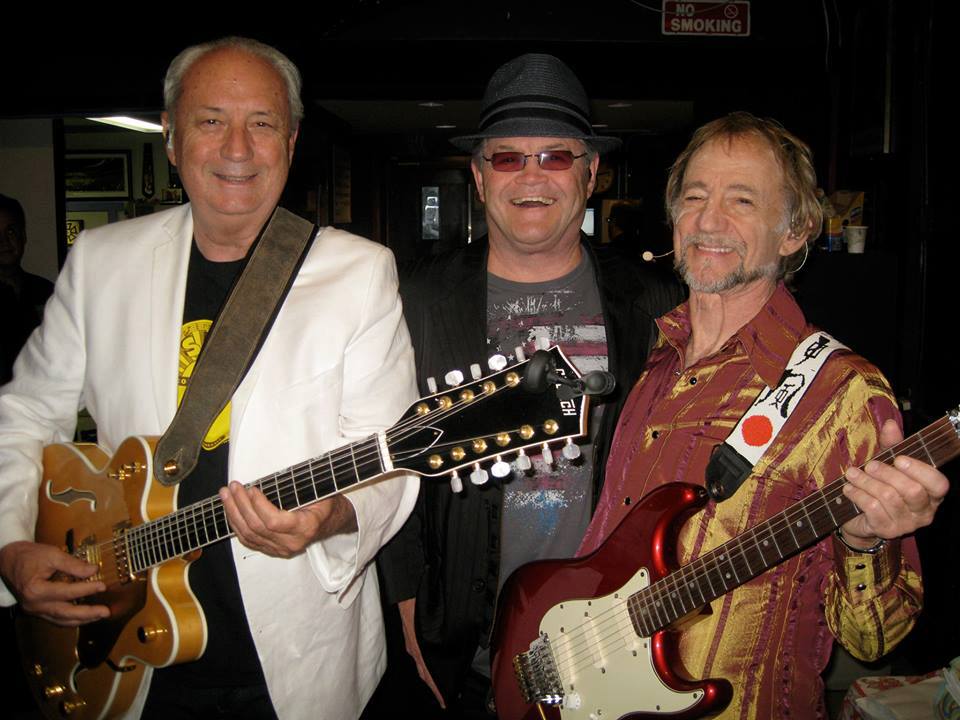
Davy Jones died in 2012. Mike agreed to tour with Peter and Mickey in 2012 and again this year. Among the excellent band members were Mike’s son Christian on guitar and Mickey’s sister as one of the back-up singers. The other back-up singer, Circe Link and Christian are in a band called “Circle Jerks” and the bass player is their manager – so there was a lot of family up on the stage.


The musicians were wonderful. They rocked even during the more poppy numbers. Throughout the show I was amazed at how well these songs have aged.

And the Monkees themselves have also aged well. Mickey can still hit the high notes – particularly on “Words” and “Randy Scouse Git” and only rarely being unable to hit the higher ranges – most notably on “She”. Mike still sang with a caramel smoothness. Peter suffered the most from comparison, but then, he was never known for his strong vocals.

Recommendation: the Monkees should think about making a studio album of their live set to show off their musicians and the new, wonderful arrangements of their classic songs. Their version of “Daydream Believer” will likely make the charts, or at least be a popular download.

A video screen above the band showed constant clips of the TV show, their movie and TV special. At times I found it distracting. I’m there to watch the show, not clips from “The Monkees’ Paw”. But it helped give the band a break during sets and keep the audience cheering.

Next: Part 2 – the set list!


Copyright 2014 Michael Curry

Captain America 2: The Winter Soldier and Agents of Shield Cause and Effect, Part Two

Captain America 2: The Winter Soldier and Agents of Shield
Cause and Effect, Part Two
            Agents of Shield has two more episodes to go before its season finale as of this blog post. The last few episodes have gained a lot of buzz among the nerdy types – more buzz than it had since before the first episode aired.
            All because of the events of Captain America 2: The Winter Soldier that opened last month to good-to-great reviews.  Here is my blog about the movie: http://michaelgcurry.blogspot.com/2014/05/captain-america-2-winter-soldier-and.html
            I was unaware of the events of the Captain America movie and was as stunned as the characters from Agents of Shield about its effect on the show. It was a complete game-changer. The show had to adjust accordingly and move into a completely different direction. I wonder when the producers were told. I wonder how the writers and other cast and staff reacted.
            I can’t recall any television program in which such a change to its very premise happened mid-season. A few Doctor Whos have changed Doctors mid-series, but the show was still about a time lord fighting bad guys. Characters move or change jobs at the beginning of a new season all the time; and Bob Hartley awoke in his apartment in Chicago after a long dream about running a New England motel; but that doesn’t count. What if Hawaii-Five-Oh decided to move the show to Seattle and they become private detectives? What if they followed George Clooney’s character when he left ER instead of staying with the … er … ER? What if the war REALLY ended in the middle of season one of Hogan’s Heroes (they had that hilarious show where they fooled the Nazis into thinking the war had ended, but you get my point)?
            Back to Agents of Shield; honestly, Hydra’s take-over was a good thing. Agents of Shield has finally achieved the glowing reviews most shows only dream of getting – including (except for the awe-inducing first episode) Agents of Shield. The reviews before that were fair at best; even from Marvel front-facers (that’s what we old folks used to call fanboys). Since Winter Soldier, the internet is lit up with gleeful fanboys, fangirls and professional gushing about the show. For example: http://observationdeck.io9.com/agents-of-shield-huh-1569666169
            The ratings are still in question – although it is #3 for the year with young adults and one of the top shows with men 18-49; overall it is not doing well – the last episode as of this writing came in fourth of six with its lowest ratings to date.
            Is all the hoopla too little, too late? One thinks if it were not for the Marvel connection the show would not have made it past Christmas. ABC has not (to date) announced the renewal of ANY of its shows.  Whether Agents of Shield will see a second season is up for grabs. And I can see arguments for both. Current events would make a canny place to finish the series. Then again, a group of loose-cannon-former-agents working outside of the law without a strong backing has worked in the past. As long as one of the Agents doesn’t grow a Mohawk and starts saying, “No way you getting’ me on no plane!” “Drink this, Fitz…”
            But I’m getting ahead of myself…
            When the new shows for the 2013 television season were announced – only two shows intrigued me. Among the shows glorifying gore-porn, bad singing and white trash were Sleepy Hollow and Agents of Shield. I thought I would enjoy Sleepy Hollow for the three weeks it would air before cancellation; but it ended up being a hit and was already renewed by October. I like it; didn’t love it. Its premise intrigued me but by the last show I was a bit lost in the huge back story it developed (I missed an episode, god help me).
            Agents of Shield started with a bang and lots of buzz in its first episode. Then the fans sat back down as their eyes started to glaze. The show was created as a spin-off of The Avengers movie. The shows main character is Phil Coulson – who Loki killed in the movie. Now he was feeling much better and assembled a team to help find and fight trouble through-out the world. Fans were ecstatic! Non-fans rolled their eyes.
            The producers made a wise choice – they DIDN’T appeal to the fans. Remember Enterprise? When it debuted the producers said if they came out as a straight Star Trek show only Star Trek fans would watch it. If they keep it quiet it will build up a larger base and by the time the non-fans realize their watching a Star Trek show it will be too late! Mwhah-hah-hah!  It worked, a little. It gained the fanboys as well as non-fans.
            Same with Agents of Shield. Didn’t work, though. Fanboys were alienated and non-fans still didn’t buy it. A cameo by Samuel L. Jackson as Nick Fury and name-drops of our favorite Avengers didn’t help.
            But they weren’t BAD stories. I enjoyed Agents of Shield more than Sleep Hollow. I see the detractors point, though: by the Christmas break, the shows were suffering with a villain-of-the-week syndrome (being comic book-y that made sense to me…) OR we wallowed in a character’s dark, hidden past. Meh. The show tried to intrigue us with a secret organization determined to ferret out Shield’s secrets. It started as “The Centipede” but then we discover it was run by a mysterious super-villain called “The Clairvoyant”. I hate continued stories like that. I enjoy story progression; I’m old fashioned that way: give me a beginning, middle and an end, please. I usually don’t return to TV shows that provide no resolution. Soap operas are for afternoon TV viewers…
            The agents themselves were a pretty canny mix: Coulson – the fan favorite from Avengers, two typical brooding loners with deep, dark secrets, two young social-skill-less techies and a non-agent who starts out bad but we quickly find out has a heart of gold and joins the good guys.
            In an early episode, we call into question her (Skye’s) real loyalty (boy, would they come to visit THAT plotline again in the future); but she’s solidly in Shield’s corner.
            As were the others; although the two brooders (and Coulson) had pasts they didn’t discuss. Those were eventually revealed. Meh.
            Coulson’s secret was he was resurrected through alien technology.
            May’s secret was she suffers PTSD of a sort after killing an entire warehouse of bad guys (I think). She kept another secret revealed later.
            Ward’s deep, dark secret …
            And here where the fun begins.
            As discussed in my previous blog, Captain America 2: The Winter Soldierreveals that Hydra had infiltrated Shield since the beginning. The rot was so bad Shield was dissolved until Hydra could be put down once and for all.
            Who was good? Who was evil? A great scene in the movie shows agents of both stripes holding guns on one another in a control room. “You shoot him, I’ll shoot you.” “Oh yeah? I’m evil too! You shoot him and I’ll shoot YOU!”
            It reminded me of those great paranoia films from the 50s. Who is a body snatcher? Is your wife really your wife or a commie spy – er – alien?
            Bill Paxton had a recurring role as an agent on equal level to Coulson named John Garrett. He was once Ward’s commanding officer. Paxton played the role well – eschewing his usual method of acting-through-lethargy.  After Winter Soldier he reveals himself as Hydra. Ward and Coulson’s higher-up Agent Hand personally escort Garrett to lock-up.
            But wait! Ward kills Hand! He rescues his former boss and they join other Hydra minions to raid a Shield prison and weapons cache – releasing all the bad guys (including some villains from previous episodes). Hail Hydra!
            Ward returns to his buddies. Skye finds out about his Hydra-ness and tries to coax him back to the good guys based on their growing relationship.
            So all this time we are wondering – is Ward a triple agent? Is he really Shield pretending to be Hydra after being Hydra pretending to be Shield? He’s killed Shield agents, sure, but he’s also killed Hydra agents. He’s hurt his fellow co-stars but caused no real permanent damage. How will it go?
            Will his love for Skye change him back? “My mind says Hydra, but my heart and dick say Shield!”
            In the meantime, Coulson discovers May has been spying on him all along (her second deep dark secret much more interesting than her first deep dark secret) – to make sure his alien-aided resurrection had no quirky side-effects. She was working for Nick Fury. “Yeah right!” Coulson says. And for a time we weren’t sure where she stood. She may have even been Hydra; but that plot was laid to rest.
            It brings another interesting sub-plot in the show: knowledge of Fury being alive or dead. Agent Maria Hill from Winter Soldier appeared in this last episode. She tells Coulson that Fury is dead. Coulson was told Fury is alive. I watched Soldier to see if Maria Hill knew Fury was still alive and it was left unclear.
            The pause when Maria told Coulson Fury was dead was well done. Was he going to tell her? Did she know? Did she not know Coulson knew? We are still left wondering.
            We have two more episodes to go before the season (series?) finale. We will probably get plenty more surprises.
            The back and forth of who is Hydra and who is Shield may still surprise me. But there are times – especially trying to guess the outcome of Ward’s alliances – which I feel like Wallace Shawn in The Princess Bride. Which glass has the poison – yours or mine?
             
            We have two possibilities regardless – what will the show do if it continues to a second season and what if it ends next week?
            I vote for letting the show end this spring. Kill off Ward and Garrett and let the troupe go their separate ways. Everyone is happy where they end up except Coulson – doing security for Stark Industries or some such. Perhaps at the end Samuel L. Jackson will approach Coulson in the same way he did at the end of the various Marvel superhero movies over the past several years. “We’re getting the band back together…” A cliffhanger worthy of the Marvel movies.
            If it continues we are faced with, as I said, an A-Team-like show of people not-necessarily on the run but still fighting bad guys –whether or not that includes Garrett and Ward. I have a feeling that, even if done well, since Agents started off on the wrong foot in the ratings at inception, it will not carry over into a full second season. But then I thought Sleepy Hollowwould flop. And if Ward ends up being a bad guy after all, or even killed at the season finale – we have a dandy replacement in Agent Sitwell, Wade’s equal and another Garrett protégé.
            Unless he is a Hydra double-agent as well. Vizinni’s voice is in my head again: If he IS I fell victim to one of the classic blunders – the most famous of which is “never get involved in a land war in Asia” – but only slightly less well-known is this: “Never go in against a Sicilian when death is on the line”.  And even less well-known: “Never second guess the producers of a low-rated show when a billion dollar franchise is involved”.
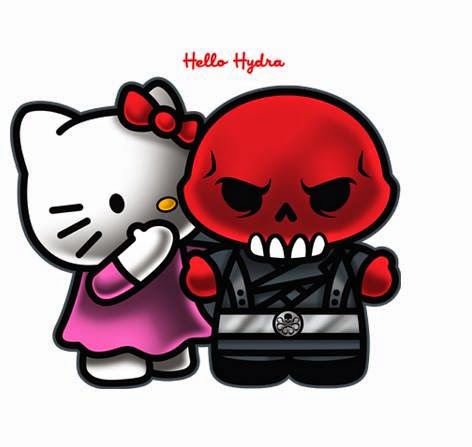
            Hail Hydra.
Copyright 2014 Michael G Curry


(adsbygoogle = window.adsbygoogle || []).push({});

Captain America 2: The Winter Soldier and Agents of Shield Cause and Effect, Part One

Captain America 2: The Winter Soldier and Agents of Shield
Cause and Effect, Part One
            This little review contains lots of SPOILERS – not just for the movie but for the ABC television program Agents of Shield, which, since the release of Cap 2, has continued the story.
            But the movie has been out now for several weeks, and its events have rippled – more like ripped – through Agents of Shieldever since. So I’m not revealing anything you could not find out elsewhere. If you REALLY want to wait to know what is going to happen until you see the movie and TV show during your own time … frankly I think it is past your being able to do that by now. But go back to your sensory deprivation tank and you can come back and read this afterward.
            I enjoyed the first Captain Americamovie. I saw it when it came out on DVD and thought it similar to The Rocketeer – another World War II-based superhero movie. I mentioned that to my friend and fellow comic-book enthusiast Clyde and he told me they were both directed by the same man. This would explain why they both had the same hue. They would make a fun double-bill on a cold Saturday night with friends.
            The story is well-known in comicdom: weakling Steve Rogers wanted to fight for his country during WWII-the-Big-One, but was labeled forever 4F. He volunteered to take an injection of an experimental super-soldier formula. It worked: he grew ten inches and gained a hundred pounds of pure muscle. He also developed beyond-Olympic level strength, endurance and athletic (fighting) ability as well as supreme mental/tactical abilities. The inventor of the formula was killed by Nazi spies and the secret died with him.
            Captain Americaand his best friend Bucky (and an elite troop called the Howling Commandoes) fought the Axis Powers. Bucky died in a fall and Cap crashed in an experimental Nazi bomber in the Arctic.
            The bomber was found 70 years later. Cap’s super-soldier-infused metabolism left him alive but frozen. He was thawed and found himself in modern Manhattan. That’s where the first movie ended. A deleted scene from The Avengers shows Cap wanting to call his still-alive girlfriend Peggy Carter, but that was the only non-action character-development he had in that tremendous film. His character development in that movie was showing the audience his leadership and tactical abilities were enough to impress a Norse god and a narcissistic genius).
            Captain America 2 opens with Steve Rogers meeting Sam Wilson as they jog. Sam recommends a great Marvin Gaye song to help Rogerslearn about modern times. Steve adds it to his list – a very brief shot of the list reveals, for example, “Star Trek/Wars”. I only caught a few more: Steve Jobs/Apple, Thai food, disco, etc. This was the movies only nod to the “man out of time” aspect of Steve’s character. It had bigger plots to move …
            True to the Mighty Marvel Way there are co-stars from the Marvel Universe: Black Widow and Nick Fury are given more than cameos but less than equal roles to Cap – it’s his movie after all. Name drops abound: Tony Stark, Bruce Banner, even Stephen Strange – the yet-to-be-seen Dr. Strange!
            Cap, Black Widow and an elite Shield troop fly to a research ship hijacked by pirates in the Indian Ocean. The pirates are led by Batroc – one of Cap’s earlier and sillier villains. In the movie he was a terrorist and expert martial artist; enough to take on Cap one-on-one for several minutes. As with the recent spate of Marvel movies – Batroc was taken seriously – hee wuss meeseeing hees seelee cahstoom, narrow moostash-eh and out-ray-jee-uhs aksent!  
            During the battle, Black Widow was downloading files onto a flash drive. In a confrontation with her and later Nick Fury, Cap expresses his outrage at someone under his command having alternate orders of which he knew nothing. Nick explains compartmentalization – a concept alien to Cap. No one under his command should have alternative agendas other than the task at hand. That’s the (Captain) American way!
            And it was … in the 1940s. Times change.
            Nick Fury learns of something incoherent going on in the Shield hierarchy. So much so he sees his superior – played by Robert Redford – and asks him and the international Shield council to delay deployment of three helicarriers armed with the latest weaponry and technology. “You don’t want those things in the air if this is as bad as I think it is.”
            It is. Nick Fury is attacked by an unknown organized group of terrorists. He escapes to tell Cap what he knows (well, he gives Cap the flashdrive and warns him to trust no one) and is shot by the Winter Soldier. Cap gives chase but fails to catch him. Black Widow recognized the Soldier’s m.o. and tells us and Cap what she knows about this 70-year-old-Soviet assassin.
            Nick Fury dies of his wounds on the operating table while Cap, Black Widow and Maria Hill watch. We later learn he faked his death to allow him to ferret out who is infiltrating Shield.
            It is Hydra! Hydra was an eeeee-vil organization formed by the Red Skull in the first movie.  But it eeled it’s way into Shield and penetrated into it’s every level. Who is a good guy? Who is a bad guy? Cap and Black Widow high-tail it out of HQ with the bad guys armed to the teeth with Shield goodies!
            Through information on the flash-drive, they discover a hidden Shield/Hydra base in which hides Arnim Zola!
            Zola (who was also featured in the first movie) is one of comic-book-Captain-America’s stranger villains. His rendering in the comics is quintessential Jack Kirby – looking something like a malignant Teletubbie.  
            But in this movie Zola moved his mental essence into a bank of computers. He explains Hydra’s motives and how they manipulated their way into Shield. Anyone who could have (or did) discover their presence was eliminated – it is implied that Tony Stark’s father was killed for that reason.
            Anrim Zola created an algorithmic program that found the perfect recruits – family history, emotional and genetic outlook and attitudes are evaluated. To paraphrase a line in the movie: it uses your past to accurately predict your future. They pick recruits who will NOT say no to joining them.
            Hydra spent the next 70 years creating terror. I expected to see the Cigarette Smoking Man from the X-Files in the montage. And now finally, America, nay, the world, is ready to embrace Hydra – happily giving up their freedom in exchange for safety. If you think the anal-cavity searches of the TSA in airports is bad … mwhah-hah-hah!!!
            Hydra will launch the three helicarriers, but will use Zola’s algorithmic program to find not bad guys, but good guys.  People genetically inclined to fight them. The helicarriers will take them out. Thousands at a time. Hydra will kill millions to “save” billions.
            Cap, Widow and Fury have a plan: switch around the hard drives of the carriers and their plan is forever foiled!
            Boy, is that a simplistic way of putting it!
            Cap and Widow are aided by their only friend – the only one they can trust: Sam Wilson (from the jogging scene, remember?). Sam digs out his old uniform – by the way, he wasn’t just a soldier, he had a flying suit! Enter the Falcon – who was Cap’s partner in the 1970s comic.
            This is all done better than it sounds, by the way.
            Meantime, the chief bad-guy is revealed (this isn’t ALL spoilers, you know) and the Winter Soldier attacks! Cap discovers the Soldier is … Bucky? How is that possible? How can Bucky still be Cap’s age unless … Zola!!!
            This leads to the climactic fight in Shield HQ and a helicarrier.
            The movie was comic-book fun with the action and effects on par with previous Disney/Marvel productions. If you liked the previous Thor, Iron Man and Avengers movies, you’ll like this one, too. The special effect and CGIare top-of-the-line.
            Characterization is lacking – except for Captain America’s outrage as to the assault on his black-and-white sense of good and justice in a grey world. But you take his side and in the end believe him – right is right, wrong is wrong.
            Still, the movie poses some interesting questions: if a terrorist is going to kidnap your family tomorrow and you could stop him today, would you? If you could stop him before he even formulates his plan? It goes back to the old question of would you kill Hitler’s parents?
            The small attempts of characterization are brief but well done. Widow niggles Cap about asking staff-members of Shield out on dates (the nurse-neighbor Widow frequently mentions ends up being Sharon Carter – Caps’ girlfriend in the comics … and when I say comics I mean the 1960s and 1970s, god knows what Sharon Carter is now; if she’s even in the current canon).
            Steve Rogers finally meeting up with Peggy Carter after 70 years was moving and sad.  I would have liked more of this, but in a movie of this type I knew it wasn’t possible. Ordinary People this isn’t, Redford’s presence aside…
            I came away from the movie enjoying it. If you are a huge fan of the Marvel movie/TV franchise, go see it (if you are huge fan you already have). Wait to see it on DVD otherwise, it’s a great popcorn movie.
            I may be alone in this criticism – and it’s not really a criticism – but I had one nagging problem with the movie.
            Calling Captain America 2’s subtitle “The Winter Soldier” was, to me, akin to subtitling Lord of the Rings with “A Trip to the Prancing Pony”. The titular villain of the movie was an incidental character. They played on his Bucky-ness: provided an origin, showed a bit of his mental anguish and sowed the seeds of his reformation – particularly at the end saving Cap and the now-mandatory after-credit tease.
            But for me the fall of Shield and the rise of Hydra were the focus of my attention; particularly because of the effect of this story-line on Agents of Shield.  I will discuss that in my next blog …
            To be continued!
                       
Original Material Copyright 2014 Michael G Curry


(adsbygoogle = window.adsbygoogle || []).push({});

A Visit to Wizard World 2014 Comic Con St.Louis Part Two

A Visit to Wizard World 2014 Comic Con St.Louis
Part Two
                I, my sister, her husband and their son went to Wizard Con on April 5, 2014 in St. Louis. By early afternoon I got all the autographs I wanted and had some comics and album covers signed by two of my favorite artists: Neal Adams and Mike Grell. I could not think of any other comic book artists still alive that I would like to meet. Maybe Joe Staton.
                Well, Steve Ditko of course. And Murphy Anderson. And Jim Steranko. And George Perez. And Jose Luis-Garcia Lopez. Okay, there are LOTS of artists I would still like to meet. 
                Were I able to go back in time the list of artists I would love to meet is quite long: Jim Aparo, Gene Colon, Curt Swan, Dick Giordano, Dick Dillon – all gone now.
                And I’m not talking writers – just artists here.
                But anyway, back to Wizard Con. When we last left our adventurers…
***
                My brother-in-law met, bought a print from, and got the autograph of The Crow creator James O’Barr.
                My sister got the autographs of various guests of the con:  John Bernthal (Shane from Walking Dead), Summer Glau and Alan Tudyk. Sean Astin said she looked like Juliette Lewis.
                My nephew is the only boy in a Tae Kwon Do class of adult men. They call him “Daniel-san”. Ralph Macchio was tickled to hear this and posed for a photo.
                Most thrilling of all for him was meeting Jason David Frank (a Power Ranger). My nephew did some moves for him and Jason put it on his Facebook page as one of the highlights of the Con.
                Adam Baldwin made my sister cry – in a nice way. She was (and is still) a big fan of “My Bodyguard” and Adam was so touched by her story he autographed a headshot from the movie for her at no cost.
                All of them were very kind and courteous to my sister and her son. Good for them.
                Some sad news though – the autograph tickets for Nathan Fillion and Bruce Campbell were already sold out. If they wanted to wait at the end of the line and there was still time they could ask for autographs. My family decided it was easier to wait and come back the next day. Maybe they should put this photo on some nice cardstock and have Nathan and Bruce sign it together.
 
 
                (This is a Wizard World photo taken during of of their photo ops.)
                While I waited for my family to get Sean Astin’s autograph a familiar face approached – it was my cousin from Peoria and his brother. Let me explain: my cousin is actually his father-in-law. My cousin’s daughter married JP. So he is my first-cousin-once-removed-in-law. But he’s still my cousin. And his son and my daughter are nearly the same age and like to play at family reunions. Yes, my cousin’s grandson and my daughter are only six months apart. The age-span between my oldest and youngest cousin is 33 years. My oldest cousin had two children before I was born. A long-lived family are we.
                His brother is no blood relation to me whatsoever, but I remember him from the wedding. It was fun to talk to them for a few hours.
                They got some photos taken with Sean Astin and William Shatner. I was very disappointed in the photos – Shatner’s especially. You can tell it was done in a rush and it could have been a cardboard cut-out as un-animated as it looked.
                Now granted Shatner is in his 80s and sat on a stool for an hour as a parade of fans stood next to him for a photo. I’d be a little weary, too. But if it were my picture I would hope for a smile or something…
                But then again, when are you ever going to get your picture taken with Bill Shatner? I really am torn between saying this is quite cool and being aggravated at his lethargy!
                My family and I walked through the artists’ alley. This was when my brother-in-law got his print from James O’Day. We found ourselves at Mike Grell’s booth (my second visit with him). He was drawing a commission and my nephew and I discussed his technique as we did with Neal Adams.
                Mike said, “The most important tool you have is the eraser!” He held up a well-used piece of rubber. “Not just for mistakes! Look…” Mike opened up his portfolio and showed my nephew eraser marks made to look like speed lines and clouds and leaves.
                “He uses the side of his pencil and the eraser to create the illusion of texture,” I said. I used to draw a comic strip … so I know of these things, you see…  Thanks again Mike Grell, for your time and patience encouraging a young child to practice the art!
                We met more friends before we left: the local comic store (Fantasy Books – their wepage is (http://fantasybooksinc.com/) had a booth and one of the workers recognized me. I’m either very recognizable or I buy too many comics there.
                As with last year, the Best in Show for Cosplay went to my friend who does a pitch-perfect Captain Jack Sparrow. He NEVER breaks character, but his smile when he saw me was heartening. My nephew (who had never met him and didn’t know I knew “Jack”) wanted a picture and Jack grabbed my sleeve and pulled me into the picture. Great fella – he deserved to win.
                My nephew turned 10 this past autumn and I wanted to hire Jack (I hesitate to use his real name without his permission) to entertain at the birthday party. He agreed, but we cancelled when my brother-in-law hired his co-worker Chadto entertain.
                Chadis a member of the 501st Legion Midwest Garrison www.501stsithlords.comand does cosplay all around the mid-west. He does a great Darth Maul and let my nephew pose with him in battle-ready stance! When we left there were other youngsters waiting for their pic with the evil Sith Lord!
                Here is a photo I found on “Jack’s” Facebook page of him and Chris together. I would have loved to have been there. I wonder if they know each other?
 
                Cosplayers abounded at the Con – of course that night was the contest, so everyone was parading around the booths. Were there that many players on Friday and Sunday?
                Lots of Doctor Whos in fezzes and lots of Star Trek, Star Wars and comic book characters. There were also lots of people dressed in costumes from video games. Even my sister had to ask what some of them were dressed as.
                One delight was watching two little girls taking their picture with Batman. “Thank you Batman,” one of them said and hugged the solemn dark knight. Both of the girls had “Hello Kitty” backpacks. Were my daughter there she would have been more interested in the backpacks.
                My wife asked if she would have found anything interesting there. Probably not, unfortunately. There was not much in the way of musicians performing and the panels probably weren’t to her liking. She doesn’t shop nor cares much for autograph-hunting.
                I would love to take my daughter to “meet” Batman and others. But not now. There were other children at the con – four years old and younger – but my daughter doesn’t like scary costumes. Hopefully by the time she is old enough to enjoy watching the cosplayers the zombie fad will have passed and there won’t be too many people drenched in blood with axes sticking out of their faces.
                One of my complaints from last year was my having no knowledge of even the existenceof panels during the con! I assume that is because it was the Con’s first year in St. Louis and it was not well organized. Not so this year. Although their website still did not mention panels, they were included in the program booklets. And another change this year was that we attendees were provided program booklets with which we may peruse the various panels. See how such little details like that can escape a Con organizer?
                Clydeattended some panels and so did JP; and they enjoyed them. I did not attend any panels. Most of the guests had Q&A sessions, there were movie previews and panels celebrating the anniversary of the Voltron franchise. None of this was my cup of tea. Not that I have anything against panels – I spent the first two days of Gen Con doing nothing BUT panels. See my blogs on Gen Con for details: http://michaelgcurry.blogspot.com/2013/08/prose-and-cons-agencon-2013-report-day.html
                But the panels at Wizard Con … meh. If the panels were subjects you enjoyed – I hope you enjoyed them! One I did not attend that piqued my interest was one featuring Bill Finger’s granddaughter. It would have been nice to meet her.
                St. Louis Wizard Con 2014 was more of a success than in 2013 – which in itself was very successful! Will there be one next year? I’d bet so.
                Will I go? Probably. It’s a good place to find old and rare comics. Expensive, but I can’t find them anywhere else – even online. If Neal Adams and other comic artists are there I will get their signatures on my favorite comics. I might even pay to commission some original artwork.
                If there are no big stars that make me ooo and aah; that’s okay.
                This year was much more fun than last year – probably because I met more friends there and knew more people as guests, artists, cosplayers and even exhibitors. Here’s hoping for many more successful years for Wizard Con!
                I’ll see you next year!
Copyright 2014 Michael G Curry

The Years of Robert Caro – A review of his Lyndon Johnson biographies Part Three

The Years of Robert Caro – A review of his Lyndon Johnson biographies
Part Three
 
           The Passage of Power is Robert Caro’s fourth book in his Years of Lyndon Johnson series (Alfred A.Knopf, 2012; ISBN # 978-0-679-40507-8). This volume covers the 1960 presidential campaign to the passage of the Civil Rights Act of 1964.
            By now Caro’s style is firmly enmeshed:
            The book opens with a tease of things to come. In previous volumes it was the beginnings of his quest for financial stability or his speech on civil rights legislation. Here we are on Air Force One in the late afternoon on November 22, 1963 after …
            The next 20 (or so) pages of its 805 pages (not counting index, bibliographies and end notes) repeats the relevant facts from the previous three books – LBJ’s desire to be president since his hard-scrabble teens, his election to the House and the Senate and his rise to power to become the most powerful man in Washington second only to President Eisenhower.
            These recaps are necessary for new readers. It is possible to read one of the four books without the others. If one is only interested in LBJ’s time in the Senate, you can skip the first two volumes. Caro recaps enough information and provides enough back-story to avoid confusing the readers with Johnson’s motives. Reading the books together can make that redundant. But for a reader like me, who would put each of the books down for several weeks (or months) before resuming, the recaps are helpful.
            I must admit Caro cheats a bit in Passage of Power. He hypes his previous work in footnotes (“for an example of how Johnson could ruin another politician’s career, see Master of the Senate, pages x-xx”). Having read through the previous Years… series I remember the reference. Someone picking up Passage as the first book of the series may be frustrated. I advise the new reader go to the library and read the selected passage. If he or she is intrigued enough – check out the book and then buy your own copy!
***
            After the “In our last episode” reminders the biography describes Johnson’s desire to run for president in 1960. Most of the candidates were other senators – senators who were beneath him during the past decade. He wielded more power, and could call in more favors, than they. The power brokers planned how he would get the votes – mostly from the south, the west and the big city bosses. There were only 16 primaries at that time and some of them – such as conservative Indiana and states promised to him (Robert Byrd’s West Virginia, for example) – he likely would have won the nomination.
            (I enjoyed reading this section and noting how alien the nomination process was compared to “modern times”.)
            Caro ignores speculation how he would have done against a Republican nominee. How would he have faired against Nixon?
            But Johnson delayed and delayed running for the Democratic nomination until it was time for the convention. Why?
            Caro is as confused as Johnson’s aids. Was Johnson so scared of losing – as he did in 1956 – that he did nothing? That doesn’t sound like the opportunistic LBJ we’ve come to know in the past three books.
            In the end, LBJ hoped for a deadlocked convention and for the “smoke-filled room” to give the nomination to him as a dark horse candidate. That way he could avoid the campaign trail against the charm of Kennedy and the oratorical skill of Hubert Humphries – both traits he distinctly lacked. 
***
            After the intro and recap, we watch the race for the 1960 Democratic presidential nomination.
            But first, as with the prior volumes, we read a short but thorough biography of people important to this volume’s narrative. Previously we read about Sam Rayburn, Richard Russell, the Hill Country of Texas, LBJ’s father and Lady Bird. Here Caro gives us bios of John F. Kennedy. Not a complete bio – books on Kennedys could fill the libraries of an entire state – but on JFK’s political career and his history of poor health. Caro says if Johnson had known of Kennedy’s health struggles and determination to rise above his constant chronic pain, Johnson would have taken the scrawny playboy more seriously as a competing candidate for the presidential nomination.
            Caro also gives us a brief bio of Robert Kennedy. His and LBJ’s hatred of each other permeate the book as it permeated LBJ’s life and career throughout the 1960s. Ironically before Passagecame out I read Jeff Shesol’s Mutual Contempt (1998, Norton paperback, ISBN # 0-393-04078) – the only book I could find that dealt exclusively with the Johnson-Kennedy feud. I disagree to Shesol’s critics that it is Kennedy-leaning. I find it even-handed. It enjoyed reading another view of the feud along with Caro’s in Passage – Robert Kennedy and LBJ’s convention fight, their interaction during JFK’s presidency, the assassination, the first year of LBJ’s presidency, etc.  I recommend it, not as a companion to Passage of Power but on its own merits.
            The LBJ-RFK feud hit critical mass at the convention – neither man forgave the other after their actions during the primaries and the convention. Robert Kennedy’s threats warning Johnson not to accept the vice-presidential nomination was wonderfully portrayed in both books.
***
            Caro reminds us of LBJ’s knack for taking a small, ineffectual position or office and turning it into a seat of power. He did it in college with fraternal organizations and with a small student body job. He did it as a congressional aide in the “Little Congress”. He did it with the Minority Whip, Minority Leader and Majority Leader positions in the Senate.  LBJ tried to do the same with the Vice-Presidency, but this time without success.
            Passage shows us Johnson going through the few duties, assignments and positions given as vice-president; but focuses mainly on LBJ’s dislike of the job. He went from being the second most powerful man in Washington to the least (to paraphrase the author) in a town where power means everything.
***
            Little was said of Lady Bird. Perhaps this was an unintentional allegory: this volume had as much to do with Lady Bird as LBJ had. One passage was telling – when the secret service met with her at the White House to discuss the needs of the First Family in the private quarters, Lady Bird said Lyndon’s needs come first (in this case it was about the size of their bed), then the children, then hers. Other than quotes from Lady Bird about Jackie Kennedy and other events, she was no more present in this biography than, say, Bobby Baker.
***
            I looked forward to Caro’s take on the assassination. There has been more written about the events of November 22, 1963 than any other – perhaps with the exception of Lincoln’s assassination – from the technically detailed to the laughingly paranoiac to politically-motivated hack jobs. I wasn’t disappointed here.
            We are shown LBJ’s and JFK’s Texas trip – speeches given, banquets attended and people met. We learn about the feud between Texas’ governor and one of its senators; who wanted to ride with LBJ; who refused to ride with LBJ.
            We are with LBJ in the motorcade.
            We are standing with LBJ in the hospital as he grimly awaits the news.
            We walk with him through the bowels of the hospital to his limousine and to Air Force One.
            More importantly, we see LBJ’s transformation from the sulky moping vice-president to the firm, decisive President of the United States.
            Bravo to Caro for his portrayal of this magnificent transformation.
            Caro doesn’t come right out and say it, but it is obvious Johnson had planned this moment from the minute he agreed to be the vice presidential candidate.
            Neither I nor Caro are implying Johnson had a hand in the assassination – the author strongly states that in all his research he found NOTHING to imply LBJ’s knowledge or involvement. The only acknowledgement the author gives to any conspiracy is to name Jim Garrison, author of On the Trail of the Assassins, a publicity hunter.  I must admit to being a fan of assassination conspiracy theories and Caro’s opinion on it was short and brief – LBJ was not involved. The author stopped his inquiry there. Any other opinion would be his alone and is not a part of this book. Good for him, I say. Caro does state that both Robert Kennedy and Johnson believed the assassination was a conspiracy and the Warren Commission Report was wrong, but went no further than that; because Johnson went no further than that.
            Back to the point – it is obvious Johnson knew what he would do the moment he became president should it happen. Perhaps JFK would die from his various illnesses or drown or be in a plane or automobile accident. An assassin’s bullet was likely the last scenario on LBJ’s list. But it happened. Johnson was president. What would he do first?
            He met with the country’s leaders; he begged, cajoled and pleaded with Kennedy’s staff and cabinet to stay on. He had to pass a budget and decide whether to run in his own presidential election less than one year away (not counting the convention only ten-or-so months away).
            He had to keep the Kennedy people – even Robert – as allies and in his White House. He did not want to ostracize or anger them lest they form their own kingdom in exile. Robert Kennedy had already made noises about running on his own after his brother’s presidency ended. LBJ’s spoke his famous phrase “my worst fear was Robert Kennedy running for president against me” from Day One. Johnson did NOT want to be known as “the mistake between the Kennedys”.
            And he kept the staff and cabinet. Well, the essentials: Salinger, MacNamara, Sorenson, even Robert Kennedy. By the time they did leave Johnson had shown enough muscle in the office to make it his own. The rest of Passage shows how he did it.
            He broke the logjam in the Senate – first with a small bill involving sending wheat to Russia, then his tax bill, then, finally, the Civil Rights Act of 1964.
            LBJ made sure to have the other bills passed before the Southern Caucus could filibuster Civil Rights – thus the Caucus’ extortion or holding hostage of the tax and budget bills until the civil rights legislation was withdrawn. LBJ called it getting all the kids into the basement before the storm hits.
            He did it through a series cajoling and influence-peddling that is alien to us now. “NASA is looking for a place to build”, “You want that water works, don’t ya?”
            He reminded the Republicans they were the party of Lincoln – that gave great weight during the Civil Rights Act debate. One of the Act’s most ardent opponents was the Republican from Illinois Everett Dirksen. A Republican. From Illinois. Dirksen didn’t stand a chance.
            At this point Passage of Powerbecomes glorious reading. The author himself beams with pride and admiration at Johnson’s accomplishments.
            The book leaves us with an LBJ nearing the peak of his power and influence. The election of 1964 will validate that. At the end of the book Johnson has a 77% approval rating. He was at the very top.
            … and when you are at the top there is only one place left to go.
           
***
            Passage of Power finally solves the mystery brewing over the previous million words. Well, a mystery at least to me: why was such a cruel, Machiavellian autocrat so concerned about civil rights, about educating and feeding the poor and providing them health care?
            Caro points to a few phrases: LBJ’s aids at the beginning of his presidency advised how difficult passing a Civil Rights Act would be. Should he waste his time on it? “What is the Presidency for?” he said. In another (and to me, more telling) he said he wanted to help the blacks of Mississippi and the Mexicans in California and the Johnsons of Johnson City.
            Johnsons of Johnson City? He was comparing his perceived shame in growing up destitute thanks to a “failure” of a father with the plight of the oppressed lower classes in America.  He saw the lower class’ humiliation and lack of respect and dignity mirrored in his own. Robert Caro makes us believe LBJ wanted sincerely to help – a sincerity that this reader did not believe existed in the prior volume.
            But LBJ was president now. Before, he cajoled his way to the top. He did EVERYTHING to reach his goal; and now that it was reached, he could afford to be munificent as well as magnificent.
            Some criticize Caro’s earlier books saying that Johnson was portrayed as a villain. That is because he was, in fact, a villain. With rare exception LBJ was unlikeable. If you could benefit him in some way (financially or politically), he could be your best friend. If you were a detriment, you were removed. If you were neither, you were ignored.
            But Caro transforms Johnson into a magnanimous champion of civil rights in a matter of a dozen pages. He compares LBJ to Lincoln. No president, Caro says, none of the 17 men between Lincoln and Johnson did as much for civil rights as Johnson. He was the 20th-century Lincoln, Caro concludes.
            Shocking hyperbole, but after reading Caro’s defense of the statement, I am inclined to agree. LBJ finally becomes the man he claimed to be in his campaign speeches. The author raises LBJ up to almost Kennedy-esque idealism. I happily joined the ride.
            Caro mentioned that the cruelty would return during his full term as president – the belittling of staff, the crushing of opponents and the ignoring of anyone else. He foreshadows Viet Nam withering the advancements made in civil and social rights; almost as if he were preparing us in case Volume Five is not finished.
            This book ends at Johnson’s height of power and popularity. It would make a good place to end the series if required. Fortunately, Caro promises a fifth volume.
***
            Robert Caro’s first book in The Years of Lyndon Johnson was released in 1982, the second in 1990, the third in 2002 and the fourth in 2012. Despite this once-every-decade schedule, he says he will publish the fifth and final volume in two or three years.
            I hope so. I’m looking forward to it. I also hope it will be in three years and not in the 2020s.
            Caro turns 79 this October: that he will be around to publish the fifth book after a decade-long wait is … well … unlikely.
            Can he finish the fifth book in one-third of the time it took him to finish the others?  To answer yes is not necessarily being optimistic.
            Most of the people he interviewed for the series are gone now – Connally, McNamara, Sallinger, Lady Bird – and he plumbed as much as he could from them. Bill Moyers still refuses to be interviewed, but Caro does a splendid job without Moyers’ input. Imagine the flavor of the book with Moyer’s viewpoint.
            Surely Robert Caro is smart enough to have asked McNamara, for example, all he wanted to know about Viet Nam and Johnson’s involvement before McNamara’s death in 2009.
            Additionally, of Johnson’s entire career, the topics fifth and final book has already been covered extensively by others. He can justifiably rely on secondary sources. I doubt there will be any surprises or bombshells.
            What there will be is the story of Johnson’s full term as President of the United States; the Great Society and Viet Nam told in Caro’s style. That is something to look forward to.
            But a personal plea, Mr. Caro – make copious notes of how you want this book to be. Have your estate ready to pick the person to complete the book if your health demands you cannot finish it. Find someone who can emulate your style – make sure it reflects your voice.
            With the fifth book we will say goodbye to Lyndon Baines Johnson; but also goodbye to you as his biographer. Thank you for 32 years of an excellent series. Thank you for helping us know our 27th President.
Original material copyright 2014 Michael G Curry


(adsbygoogle = window.adsbygoogle || []).push({});
The Years of Robert Caro – A review of his Lyndon Johnson biographies Part Two

The Years of Robert Caro – A review of his Lyndon Johnson biographies
Part Two
 
            Volume Two of Robert Caro’s The Years of Lyndon Johnson: The Means of Ascent(Albert A. Knopf, 1990; ISBN # 0-394-49973-5) was the first book of the biography series that I purchased. It was in the bargain bin of the Wal-Mart in Murphysboro, Illinoisduring the spring of 1992. I took it with me to read in the lobby of one of the law firms with which I interviewed (and got the job). It was snowing heavily and I dropped the book in my driveway when I got home. The dust-jacket was off (I always take off the dust jacket) and the black cover bled onto my hands and shirt. Good thing it happened after the interview.
            It is the shortest of the four volumes published to date – 412 pages not counting index, bibliographies and annotations – just over half the page-count of the previous volume (and the fourth) and 2/5th the length of Master of the Senate.
            That is because it covers the nadir of LBJ’s political career. It begins just after his defeat at the hands of Governor Pappy O’Daniel for Texas’ open US Senate seat and concludes with his successful second Senate run – from 1941 to 1948.
            The introduction is a masterful retelling of LBJ’s call to arms for civil rights as president in the 1960s.  The author tells us he intends to take us back to show the means that led to this noble end; means which were far from noble. We see a Lyndon Johnson beginning to amass his fortune, his ruthless style of running his Congressional office, and his do-or-die attitude in his second bid for the Senate. This is not the Lyndon Johnson of the introduction; this is a vicious opportunist at the start of his climb to power.
            What changed? Future volumes will show. In the meantime we the readers can watch his climb – and watch as he uses everyone he meets as an expendable rung.
            He had his plan to power: the House of Representatives to the Senate to the Presidency. He made no bones about the desire to become a Senator, but more-or-less kept his presidential ambitions secret. Occasionally the plan would slip out. The book mentions LBJ looking upon the House gallery muttering, “too slow, too slow…” Because of the unbreakable tradition of seniority of House committee chairmanships, he would be an old man before he achieved anything close to power in the House. And Congressmen rarely made it directly to the White House. He needed, NEEDED, to go to the Senate.            
            Challenging incumbents were futile; he had to wait for an opening as was the case in 1941 (and as was the case for his House seat in 1937). So what to do in the meantime?
            Amass his fortune.
            The introduction of Path to Power revealed the beginnings of his association with Brown & Root, a Texascorporation that helped finance his elections and begin his financial career in exchange for votes favoring their schemes. They were involved in construction, engineering and military contracts. LBJ’s influence in the House helped them get their contracts, and in exchange … well, LBJ didn’t get a kickback, but did get to ride their coattails in B&R’s financial ventures. Eventually Johnson bought a radio station where his new friends would advertise. In later volumes, we discovered that if anyone – anyone – wanted a political favor from the Congressman-then-Senator would require they buy advertising on his now-network of Texas stations. Even if the business was an insurance firm in North Carolina– they advertised in Texas in exchange for favorable passage of their pet projects.
            During WWII he finagles a commission in the Navy and, during a House junket, sees genuine combat, from which he was awarded the Silver Star.
            The other two-thirds of the book show the details of his 1948 Senate run.
            The author gives us a biography of his opponent – then-Governor Coke Stevenson. His last Senate run was against a sitting governor as well, showing the reader the importance of the seat.
            Coke Stevenson, Mr. Texas, is given all the respect that was his due (supposedly, he was a raging bigot). Caro also shows Johnson slowly, ever so slowly, chipping away at his huge lead.
            LBJ campaign used modern technology – using a helicopter to enter towns and villages in the most dramatic fashion, and using telephone solicitations and polls.
            And he cheats.
            Oh how he cheats.
            His moniker “Landslide Lyndon” came from this campaign and election. Caro vividly explains how politics work in the most southern counties in Texas. We learn about Alice, Texasand Jim Hogg County as well as short bios of “The Duke of Duval County”, his ilk and their fiefdoms. Caro shows how they work, and decide, elections.
            Johnson lost his last run for Senate by reporting their returns first. His opponent then reported their returns – not coincidentally reporting more votes for their candidate.
            He would not make that mistake in this election. He won by 47 votes. Some people voted in their precincts in alphabetical order.
            Caro discusses Stevenson’s challenge and his dislike of LBJ for the rest of his life (he supported Goldwater in 1964). But in the meantime Stevenson found the love of his life and retired from public life as a rancher. It was, after all, a happy ending for Mr.Texas.
            And a happy ending for LBJ. He was a Senator now, on the second rung of his ultimate plan for power. He was happy and rich. The scorched bodies he left behind are irrelevant.
            Aren’t they?
            Master of the Senate (2002, USBN # 0-394-52836-0) picks up immediately after the second volume. First, though, Caro gives us a superb history of the US Senate and its role in UShistory through its legislation as well as its lack of legislation. Caro shows us a history of the radical House as well as the Executive Branch proposing bill after bill reflecting the changing attitudes of the country. Civil rights, labor reform, environmentalism, care for the poor and aged. Wave after wave of legislation smashing against the unmovable dam of the US Senate – the keeper of the status quo – all to no affect.
            You shall not pass.
            Attaining power in the Senate would take almost as long as in the House, despite there being only 95 men to leap-frog on the way to power. Johnson would have to suck up to the committee chairmen; some of which had been chairmen for decades (during the times while the Democrats held the majority). Fortunately Johnson had a leg up here – most of the chairmanships belonged to the longest-serving senators. And all of them were from the south. They belonged in what was called the Southern Caucus – fiscally and culturally conservative Democrats. Put another way – the only black they like is the color of ink on a ledger; as opposed to the color of one’s skin.
            In Means of Ascent, Caro provided a thorough biography of Sam Rayburn – the Speaker of the House. Here are meet Richard Russell – the “head” of the Southern Caucus. Russell did not have a title equal to Rayburn, but he had equal power. Johnson sucked up to Russell in the same way he had Rayburn. LBJ became his sycophant; and then his second-in-command. Russell was priming Johnson to become the leader of the Southern Caucus. This was as high a position as a senator from the south can become.
            Right?
            So other than an informal position with nose firmly implanted in Richard Russell’s bottom, how can LBJ gain power not just over the Southern Caucus, but the rest of the Senate? How will that help him with his ultimate goal? Caro marks the parallels with Johnson’s first days in the Senate with his days in the House and before that as a Congressional aide. He takes a little-used office – Minority Whip – and transforms it into a title that brings him power; just as he did in college and in the “Little Congress”.
            He took command of the disbursement of funds for election campaigns. Those he instinctually knew would lose their seat either in a primary or general election got little money. Those who would win got more. Those who begged – those who kissed ass – got even more. He wielded his power with the strict purpose of gathering more power.
            He transformed the post of Minority Leader and, soon, Majority Leader. He brought the Senate to a level of power not seen since before FDR’s presidency. And with the rise in the power of the Senate, came a rise in his power and influence.  No bill passed that he did not want passed; no bill failed that he wanted to fail.
***
            Before becoming the second most powerful man in Washington, though, we learn about Johnson’s rise in the Senate. He firmly planted himself with the Southern Caucus with his “We of the South” speech. Before the senate and the nation he explained the unwritten mandate of the Caucus and showed that he firmly stood with them.
            And yet in the presence of northern liberals he stated he was in favor of their policies, too. All things to all people; keeping all options open; keeping your political aspirations multiple choice.  
            He enmeshed himself with his Texas oil benefactors by destroying the career of Leland Olds – painting him as a communist with a McCarthy-like precision. Caro spends more time than was probably necessary focusing on LBJ’s hatchet job. I became bored with it after a while.
            Speaking of McCarthy, Caro shows us an LBJ conspicuously silent during Tailgunner Joe’s red-baiting rampage. Johnson said he would wait to allow the Wisconsin Senator to self-implode. This would keep Johnson from taking sides. History proved LBJ right, fortunately for him.
***
            We focus next on LBJ’s 1955 near-fatal heart attack and recovery. Johnson lies to the press about relaxing at the Ranch and finally sitting back and reading books. He still controlled the Senate from his swimming pool.
***
            Johnson tried late in the campaign to run for president in 1956. He was soundly trounced.  But this paved the way for a possible run in 1960. He learned in 1956 that he must prevail over his magnolia taint. How can he as a southerner overcome (no pun intended) his segregationist associations? Did his “We of the South” speech doom his presidential aspirations?
            By passing a civil rights bill for the first time in 80 years.
            When it was time to finally address civil rights and pass the Civil Rights Act of 1957, Caro shows us how LBJ did it against all odds.
            So why, after thousands of pages of ruthless exploitation of some and the crushing of others for his own advancement (and seeming amusement), did LBJ support a civil rights bill?
            As mentioned in the prior blog, Robert Caro is the wonderful writer.  He has a novelist’s skill in inserting drama, cliffhangers and foreshadowing/foreboding in his work.  In addition his books are thoroughly researched and he uses direct quotes as much as possible.
            That being said, Master of the Senate is my least favorite book of this series. Here LBJ is still a ruthless opportunist. He’s still a sycophant, too; but that fades when he becomes Majority Leader. He is the Master now. He still needs the support of Russell and the Southern Caucus – the men that made him Leader. Although he is not as harsh to them as he is to the “northern liberals” – demanding they kowtow to him and treat him deferentially almost to the point of ludicrousness – he no longer completely demurs to them.
            Caro so succinctly shows us LBJ’s use of power offensively that when Masterfocuses on the passage of the first real Civil Rights bill since Reconstruction, I find LBJ’s support of the bill unconvincing and artificial.
            LBJ seemed so villainous and Machiavellian that his concern for passage of the bill rang false. What was his motive? Altruism? Surely not, how will the passage of the bill line his pocket or aid his career in any way?
            We discover it was a way to break out of his “We of the South” mold. How can he have a chance to become president by being associated with the Southern Caucus? Richard Russell’s run for the Democratic nomination in 1952 proved the futility of such hopes.
            LBJ hoped to show that although he may be southern; he was no Southerner. However, Caro’s skill at portraying Johnson made this reader not believe a word of it! If the phrase was around at the time, any speech or quote by LBJ in support of civil rights would have been met with a “Yeah, Right…” by this reader.  The “northern liberals” at the time agreed with me. Caro would change my mind in the fourth book.
            Regardless of his reason why LBJ supported the civil rights bill; we see how masterfully LBJ got the votes to pass it – by co-opting western conservatives into the fight by promising dams, water projects and other programs and by gutting parts of the bill that were found “offensive” by the Southern Caucus. The right to trial by jury was cut – effectively making it unenforceable by federal prosecutors trying to make their case in front of white southern judges.
            So now LBJ can claim to be a champion for civil rights while still being “of the South” – paving a path to a presidential run in 1960. He kept all his options open.
            To repeat: throughout Master, Caro showed LBJ’s ruthless, unquenchable desire for power as well as his ability destroy the lives of anyone in his way with such efficiency that it is hard to believe this is the same Johnson involved in Civil Rights during his presidency. I truly disliked LBJ at the end of this volume. Why did such a self-centered power-grubber later become the champion of civil rights? How is that possible?
            Caro will explain that in his next volume …
            The book more or less ends at the passage of the Civil Rights Act of 1957. The next three years are covered by a small chapter and sets the stage for the 1960 presidential campaign. There is also a small addendum of LBJ trying to transform his position as President of the Senate into something more powerful – as he had done with “useless” offices throughout his career. He fails. Senators no longer fawned over him as he entered the cloak room. They have no need to fear him now. 
            More power was yet to come thanks to scheming back-room negotiations during a party convention and, three years later, an assassin’s bullet.
           
Original material copyright 2014 Michael G Curry


(adsbygoogle = window.adsbygoogle || []).push({});
Years of Robert Caro – A review of his Lyndon Johnson biographies Part One

Years of Robert Caro – A review of his Lyndon Johnson biographies
Part One
            Lyndon Baines Johnson won the 1964 presidential election of the United States on November 3, 1964; two days before my birth.  Both events mark their 50thanniversary in 2014.
            Last night, March 22, 2014, I finished Robert Caro’s fourth volume of his masterful biography of the man who was president on the day I was born. The book, The Years of Lyndon Johnson: The Passage of Power (2012, Alfred A Knopf – all the books are by Alfred A. Knopf; the hardback volumes that I own at any rate), ISBN # 978-0-679-40507-8 covers his time as Vice-President until the passage of he Civil Rights Act of 1964 in July of that year. The book touches on later events, but more as a precursor of the fifth (and presumably final) book of the series.
            As with the prior volume, just before The Passage of Power (as with all his LBJ books, they are titles The Years of Lyndon Johnson: …; I will refer to the four books by their secondary title to avoid writer’s cramp), I read the previous books to get back into the subject and the writer’s style. I doubt I will do that with the fifth volume. Mr. Caro is already at, by my poor estimation, over 1.1 millions words. I may not live long enough to read through them again, particularly considering the Trollope-an lengths of most of the series.
            The first book was released in 1982 and the author’s style has not changed in the past 32 years. Robert Caro writes as a novelist – dramatic retelling of events and people that figure most prominently in LBJ’s life and surroundings. He quotes directly as often as possible. Although this “leads to … some” creative “sentence (structure) throughout … the book(s)” it does not distract. His chapters and sections sometimes end on the type of cliffhangers or ominous forebodings that would make Dan Brown jealous. That may annoy some people; I find it nail-biting fun! I am sucked into the drama Caro produces.
            An internet search shows Mr. Caro has written only one book other than his Years of Lyndon Johnson series – The Power Broker: Robert Moses and the Fall of New York – so I do not know if the author’s talent for drama (sometimes melodrama) is a talent of his own or based on his subject. Regardless, the style fits in perfectly with his subject. There are not many politicians and no presidents known more for their melodramatics than the 36thPresident. At least, according to this series.
            John Connally, LBJ’s key aide in the Senate, Governor of Texas (he was in the front seat of Kennedy’s limousine on that day in Dallas– he died with shrapnel from the assassin’s bullet still in his wrist, supposedly) and was in the field of Republican nominees for president in 1980, said LBJ …
… was generous and he was selfish, he was kind and at other times he was cruel; at times he was an earthy, crude, active fellow; at other times he was incredibly charming. He could be whatever he wanted to be.  He was a strange complex man who had basically almost a Jekyll-and-Hyde existence.  He was two different people.
(from the PBS program “The American Experience:  LBJ by David Grubin, 1991)
George Reedy, LBJ’s aide and press secretary, said;
What was it that would send him into those fantastic rages where he could be one of the nastiest, one of the most insufferable, sadistic, SOBs that ever lived; then a few minutes later really be a big, magnificent, inspiring leader? 
(ibid)
            Robert Caro’s one million words show us the answer by giving us glimpses of his family, the land that family came from, his triumphs and tragedies, and his public and private face.
            1982’s The Path to Power (USBN # 0-394-49973-5) is, to me, the most interesting of the volumes to date; if only because it covers the part of LBJ’s life of which I know the least: his upbringing and childhood.
            The book sets the tone for the rest of the series. It contains mini-biographies of the people and places that were vital to his life at the time; or in this case, to the development of his personality.
            The book begins with the “settlement” of the Hill County of Texas and the hard-scrabble life of anyone foolish enough to believe one could prosper there. The book looks at LBJ’s Bunton ancestry – the “Bunton strain” – the fierce eyes, the temper, the ambition, the shrewdness and toughness. But when Johnson blood was mixed with the Buntons, with the Johnson’s unrealistic idealism and dreams of success without the Bunton pragmatism, the family’s life slid into poverty and humiliation.
            In the fourth volume the author surmises this is the base for LBJ’s attitude on fighting war and poverty. He knew what it was like to have no money at hand; to have no credit with the local stores. In current terms he knew the sound of the collection agencies rap at the door and ring on the phone. He knew the neighbor’s disdain of those lazy, no-account, good-for-nothings, despite his father’s success in the Texaslegislature. His father was, by this account, a great man; a progressive visionary. But in the Hill Country, visions don’t feed the family. He had nothing to show for his success at the end of his political career. He was trapped and tricked into get-rich-quick schemes that always failed. He failed. LBJ never forgot – probably never forgave – that. Caro examines the father’s rise and fall politically, socially and economically.
            He also examines LBJ’s mother. By today’s standards she would be prissy and likely would have wanted to belong in the same circles as other presidential mothers Mittie Roosevelt and her distant cousin-in-law Sara Roosevelt. Her devotion to her eldest son is thoroughly verified.
            Thus, LBJ had to work on road crews – back-breaking work paving roads and leading mule teams in sweltering heat. He had to attend a small teacher’s college instead of the more prestigious universities in Austin. He taught the poorest of the poor children in the southern tip of Mexico– the vast majority Mexican children living in the kind of squalor he recognized. He helped them, and their parents, as best he could – such as teaching them English.
            But we also see the Bunton Strain reestablish itself in the family line. If he wasn’t loved by his college classmates, he was determined to make himself respected. In a trait repeated through his life, he ingratiated himself to the powers-that-be in the school. He took a useless elected position in school government and transformed it into a position of great power and influence. Barred from the influential clique of the college? He formed his own and quickly out-cliqued the clique.
            He considered becoming a lawyer and worked in a law firm. He did not like the slow pace to power and respect a career in the law parceled out.
            He was right about that. Trust me.
            He also took a mostly ceremonial group (the “Little Congress”) and transformed into a mover and shaker in Washington – with himself as its head.
            The index says it best: Under Johnson, Character the headings include “need for affection”, “need for attention/prominence”, “need for respect, need to win”, “pragmatism/practicality/realism”, “secrecy”, “self-criticism”, “sensitivity to criticism”, “story-telling ability”, “thoroughness” and “viciousness”.
            The Bunton Strain is strong in this one …
            We see LBJ enter politics as a congressional aide for a man in the next district. We see his election as a member of the House of Representatives for his own district (he had never ran against an incumbent – political suicide in those days (and usually these days, too), bringing electricity to the Hill Country. Along the way we view, for the first time, his absolute tyranny and cruelty to his underlings: the legend of his spouting orders while sitting on the toilet begins here. He would walk past an aid and bark, “I hope your mind isn’t as cluttered as the top of your desk.” When the aide caught up on his work the insult would change to “I hope your mind isn’t as empty as the top of your desk.”
            His mantra of “if you do everything, EVERYTHING, you will win” was proven.
            Until he tried to run for Senate.
            He ran against Pappy O’Daniel, a popular radio personality and current governor, and was taught a lesson of Texaspolitics. His people called in the votes too early – early enough for O’Daniel to call in HIS numbers – just high enough to overcome Johnson’s. It was a bitter defeat – one he vowed never to repeat. EVERYTHING also included out-cheating your opponent.
            The book ends with that defeat, but along the way we are provided biographies of O’Daniel, LBJ’s Texas and Washington benefactors – including Sam Rayburn and various Texas oilmen and, of course, Claudia Alta Taylor – Lady Bird.
            Caro sets the stage for the events of the rest of LBJ’s life – his gruffness and sincerity mentioned by Reedy and Connally above. Most of the history he researches has dimmed with time and LBJ’s own desire to mythologize his past. Caro chips and brushes the small fossils to reveal the truth –a little boy humiliated by his poverty and his father’s (perceived) failures determined – by any means – to do better than him. To show the people of the Hill Country that he will NOT be a failure just like his father. In the meantime, if he can help others in similar situations (in a later campaign speech he referred to the meek, the weak, the poor and the suffering) to “lift them up” and give them a chance to better themselves.
            As long as that “chance” did not conflict with his personal ambitions for wealth and power. For now they did. For the first twenty years of his political career it did. That was to come later. For now, he was still on the path to power.
Original material copyright 2014 Michael G Curry
 

(adsbygoogle = window.adsbygoogle || []).push({});

My Favorite Horror Films, or Why I Can’t Sleep at Night

MY FAVORITE HORROR FILMS
or, Why I Can’t Sleep at Night
                There is an interesting article in a recent Entertainment Weekly stating that January and February are now the prime time for horror movies to show in theaters.
                This is a complete reversal of the usual trope from decades before – horror movies belonged in October. January was the dumping grounds for trash on which the Oscar contenders and leftover holiday blockbusters sat.
                I suspect one or two horror movies made a splash in January and the trend caught on. October is now the dumping ground – a metaphoric breathing-in between summer and holiday blockbusters.
                I have been thinking about horror movies lately. I Tivoed a cheesy program called Monsters and Mysteries in America from the Destination America network. It is a step-child of the Discovery Channel family and airs mainly white-trashy reality shows. But amongst the Cracker TV fare are a few cheesy gems: UFOs over Earth, When Ghosts Attack and Alien Mysteries.
                Yes, these shows are mainly about rednecks discussing being anally probed by aliens after their sister/wives ran off with Bigfoot, but they also feature authors and … um … “scientists” taking this schlock seriously.
                I admit to being a sucker for anything about Bigfoot or aliens. I consume any book by Zechariah Sitchin or Erich von Daniken. I am a faithful viewer of Ancient Aliens on the “History” Channel.
                This episode of Monsters and Mysteries in Americafeatured Momo the Missouri Monster. I’ve heard of and read about Momo, so I wanted to watch the show. Momo was the first feature. The third (last) feature was about a bat-creature that terrorized a mining town in Iowa in the early 1900s. The middle feature was about the Shadow People in Maryville, Missouri.
                Here’s a good blog about the show: http://vulpesffb.wordpress.com/2013/12/30/momo-shadow-people-and-the-van-meter-monster/
                The Shadow People segment pushed all my buttons. Dark figures with glowing eyes standing next to your bed as you sleep; whispering …
                I was awake until two that morning afraid to open my eyes. I knew; I KNEW I would see one standing next to my bed. A “real” one? No, but my active imagination was going on all cylinders that night.
                I see figures standing in my room or next to my bed quite often. That’s been the case since I was a kid living with my parents. I frequently saw a lady in a red dress sitting in a chair across the room from my bed; I saw a winged creature hovering over my bed. The latter was my hat collection and other wall-hangings through my still-bleary-myopic eyes – my mind making sense of a blurred shape. The former … well, where did the lady in the red dress come from? A teenager with raging hormones imagining a woman in his room? Oh my goodness, someone call Dr. Freud…
                Just a few weeks ago I dreamt someone was grabbing me while I was in bed. I screamed so loud my wife was afraid I would scare our daughter in her bedroom. She slept through it. Once I dreamt I was lying in bed next to my wife as a vampire stood over me; keeping me hypnotically frozen. My wife said I was saying, very calmly, “Esther wake me up, Esther wake me up,” as I slept. When she nudged me I jumped up and out of the nightmare.
                It reminded me of a post-college nightmare when my roommate ran into my room after I screamed bloody murder when a vampire at the foot of my bed leapt at me. It was the ceiling fan.
                Before that, in college, I saw a man in a blue-and-red-striped shirt walking through my room. I called out the name of my roommate – “Scott, what are you doing?” – and the figure turned and walked toward me. By now my roommate (Scott) walked into my room. He heard me call his name and woke me up by asking me what I wanted. The figure disappeared as I gained consciousness.
                So the Shadow People were right up my fearful alley, if you know what I mean. Add to this my love of horror movies and stories and you can see why I was up most of the night. I could start quite a cause-and-effect argument here.
                My reading and viewing of all things horror have been curtailed by my marriage and my daughter. I don’t want either of them walking in during The Exorcist, for example.
                My wife is getting more accustomed to it: she’s become a fan of Sleepy Hollow … fairly light-weight in the horror department (although they’ve had some good shows) and just about at her tolerance-level.
                So I’ve missed out on a lot of horror-themed TV series and movies in the past decade.
                During my sleepless evening I compiled a list of my favorite horror movies. These aren’t the critically best (although some are) and not the most financially successful (although some are); these are mine. To repeat the phrase – the ones that press the right buttons; sometimes much to my regret.
                Except for the first on the list, these are on no particular order:
1.       The Haunting (1963). It’s a black-and-white movie with a plot that in these “modern” times is something out of Scooby-Doo (spending the night in a haunted house to see if it really IS haunted), but this fifty-one-year-old flick is the scariest thing I have ever seen. The scene in the girls’ bedroom where the ghost (or whatever it is) pounds on the walls, making pictures and plaster fly, and watching it head to the door that pulses and creaks … I get chills down my back just thinking about it.
2.       The Exorcist (1973). A very canny choice, I know, but that doesn’t mean it’s not a genuinely terrifying movie. The movie went straight for the throat (or vagina if we’re talking crucifix) – there was no doubt little Regan was possessed by the devil. If they remake it they should do more of the book – we were never sure if she was possessed or had a psychotic breakdown while the terror was merely a ruse by the housekeeper to cover up a murder.
3.       Prince of Darkness (1987). John Carpenter movies make up a quarter of this list. A priest finds a cylinder of swirling green liquid in the basement of an abandoned church. He brings in a team of scientists to examine the cylinder. The liquid is the anti-Christ’s ectoplasmic form. It squirts at the scientists one by one causing them to go insane in beautiful Lovecraftian fashion. It awoke in time to summon its father – the anti-god. A movie that includes scientific method, intergalactic elder things and Alice Cooper? How can it be bad?
4.       In the Mouth of Madness (1995). John Carpenter takes on an even more Lovecraftian-themed work. An insurance investigator looks into the disappearance of horror author Sutter Cane (a very thinly veiled Stephen King) and tracks him to a town that appears in one of the author’s horror books – a place that should not exist. Ends up the author was channeling real horrors from eldritch dimensions who are ready to take over the earth. Can Sam Neill (the investigator) stop the coming apocalypse? Are you kidding?
5.       Halloween (1978). Another John Carpenter movie. Another canny choice. But this is one of the scariest flicks ever made. Carpenter’s soundtrack alone brings chills – I usually cringe in horror when I hear cheap Casio music anyway, but this is genuinely scary music! And there’s not one startling moment in the movie – we see Michael approaching and stalking Lady Hadin-Guest (Jamie Lee Curtis) and we know where he is and what he will do at all times – it is all suspense in the best Hitchcockian style.
6.       Blair Witch Project (1999). Not the first movie of the “found footage” genre, but the one that put the genre on the map. A lot of people hate this movie, but I am a big fan. Creepy, scary and realistic. Movies like this HAVE to be realistic. The more founded it is in reality the scarier it is. I would put this movie above Cloverfield (2008) another found-footage movie only in a science-fiction vein based on a what-if-a giant-Godzilla-like-thing-REALLY-attacked-New-York story.  I think Blair Witch has aged well (as all of these movies have) and Cloverfield was creepy even on cable in between long commercial breaks and watched over three days (when the wife and daughter were elsewhere).
7.       Evil Dead (1981). Evil Dead II is one of my favorite movies, period. II combined spooky stuff with humor – humor and horror go VERY well together when done right – but the original was cheaper and scarier. This movie put Sam Raimi and Bruce Campbell on the movie map and rightly so. Very Lovecraftian – it includes an appearance by the Necronomicon – and the fact that it was made on a small budget only adds to the realism. True story: I saw this in college with assorted roommates, friends and girlfriends. Being college cool cats, we had our TV set up through the stereophonic hi-fi. In one scene a rescued victim (who had been maniacally giggling throughout a scene) stopped giggling. The surviving cast look at her. She looks up and sings “We’re going to get you; we’re going to get you…” We screamed and shuddered. I had enough and jumped up to turn the TV off. Trouble was, it was on VHS. I turned off the picture, but the tape was still rolling and the speakers were still playing. “We’re going to get you; we’re going to get you…” If the neighbors weren’t in the house watching with us, they would have called the police.
8.       Night of the Living Dead (1968). Speaking of small budgets adding to the realism … Do you REALLY need me to describe this movie? And its impact on the genre? Really? Turn on the TV or scroll through your Facebook wall for about two minutes. Did you NOT see something about zombies? You’re lying …
9.       Pandorum (2009). I saw this movie on the SciFi Channel and loved it so much I bought the DVD. You‘ve might not have heard of it. I’ve discussed the synergy between science fiction and horror in prior blog (http://michaelgcurry.blogspot.com/2013/06/thesynergy-of-science-fiction-and.html) and this one, to me, hits all the right notes. Something that Event Horizonsomehow missed.  The premise was a great one and almost made it. A two-man (originally three-man) crew was revived from their deep-space hibernation to take their shift in a generational/colony ship. We learn that in the meantime earth had been destroyed and these colonists are all that is left of humanity. Trouble is, our crew is revived to find their ship lost and out of power. Making their way out of their assigned department, they discover the ship is overrun with flesh-eating superhuman humanoids. Where did they come from? Is there anyone else alive on the ship? Can they escape or at least get the ship up and running so they can defend themselves? It is a claustrophobic and intense thrill-ride. I think the secret of the Hunters is disappointing when finally revealed. But the final twist at the end more than made up for it. The ending and final solution took me completely by surprise. It was meant to be a trilogy but was unsuccessful at the box office – although it has gained quite a cult following. Myself included.
10.   Alien (1979). Speaking of science fiction and horror … I go into a lengthy discussion of how this movie works so well in my blog about Event Horizon (hyperlink is above). I won’t repeat it here.
11.   The Thing (1951 & 1982). Both the Howard Hawks and John Carpenter versions are included here. The original is more cerebral and the horror is left off-screen. Carpenter’s gore is front and center. Both are excellent in their own way and both are scary-scary. Arctic scientists find a spaceship with a frozen alien inside. The alien thaws out and chaos ensues. Great stuff!
                Honorable Mention: Silence of the Lambs (1991). This could be better described as a police thriller rather than horror, but there are parts that are intense as hell and it won an Oscar for chriss’ sake! The early scene where Clarisse is walking past the inmates (including one played by the actor who also played Chef Brockett on Mister Rogers’ Neighborhood) until we see Hannibal Lecter for the first time – standing quietly and politely in the center of his cell; watching, as if he knew she were coming. Anthony Hopkins deserved his Oscar. He stole every scene he was in and his character cast his shadow over every scene in which he was not.  The serial killer Buffalo Bill was creepy; Lecter was creepier – and all he did (until his gruesome escape scene) was talk quietly. And stare blankly. And smile sweetly. And suck air between his teeth. The sequels lessened his impact. Forget them.
                Se7en (1995) compares favorably to Silence … it ups the gruesomeness ante, making it more horror than police thriller. A great cast helps – Kevin Spacey hasn’t been this sinister since he played Sonny Steelgrave.
                Movies I have not seen, but probably would be on the list include The Ring (2002) and Paranormal Activity(2007). I’ve heard lots of good stuff about these two in particular. Someday when I have three hours of uninterrupted TV or online-video-streaming time I will give these a chance.
                I feel bad not listing 28 Days Later (2002) and the classic Phantasm (1979), but the former and its sequel I consider more action films (great as they are) dressed as horror and the latter just weird, weird fun! “BOY!!!!”
                Then there are the classics – not as heart-pounding as those on my list, but classics! Without these movies, most of which have aged quite well, I wouldn’t have a subject to discuss. I’m talking about the Universal Monster movies (I include The Black Cat (1934) and White Zombie (1932) here), the American/International Poe pictures (and their ilk) and of course movies from the Hammer Studio. God love you, Hammer Studio.
               
                These movies are not the horror vein, but are damn scary and want to mention them: Jaws (1975) makes the list of course – you KNOW the plot to Jaws, come on…
                Look for Dead Again (1991) a Hitchcockian thriller that will keep you guessing until the end. I went with my friend Jon (who accompanied me to Event Horizon – see the aforesaid blog about that film) and Peyton to see Dead Again. Here were three fairly seasoned horror/thriller movie goers. Yet one scene was so intense I turned my head and lifted my legs from the theater floor. Jon did a face-palm and said, “Oh God.” Peyton said, “Jeee-sus” and gripped the arms of his seat. The rest of the theater shouted or gasped. It wasn’t gory, but it was the most intense part of the movie – you’ll know it when you see it. That single scene put the movie on this list.
                Some television shows have given me “the creepies” – to quote the character I play in the Sparta Community Chorus’ latest production “Murder in the Magnolias”. Doctor Who’s “Blink” won a Hugo. They don’t give Hugo’s to television shows (do they?). Aliens shaped like angel statues can only move (and attack you) while you are not looking at them. If you turn your head, you’re dead. Blink. The statues come closer. Blink. Closer. Blink. Closer. Absolutely creepy.
                Night Gallery’s “The Cemetery” scared me as a youngster and thrills me to this day. A man murders another to inherit his mansion. On a wall in the mansion is a painting of the house complete with cemetery next door. The killer (Roddy McDowell) walks past the painting (on the staircase landing) – the grave of the man he killed is open. Later, a figure is sitting in the open grave. He walks past the painting later – the figure is climbing out of the grave. Then it is standing next to the grave. Then it walks to the house. It is on the steps. It is at the door. It is knocking on the door. There is a real knock at the door. Is it…? I don’t know if this is intentionally based on a short story by M.R. James – but he wrote a similar tale seventy years before.
                The X-Files’ “Beyond the Sea”. Scully’s father dies and (in an unrelated matter) a shyster-medium is caught. He claims to be able to channel her father. Is he for real? The scene where Scully’s father appears in her house, staring into space and moving his mouth is quite creepy. She gets a phone call that he had died. “But he’s right here sitting on my …” but he is gone. X-Files has a lot of creepy moments like that.
***
                Maybe I can finally get some sleep tonight. But with all these movies and TV shows running through my head … I can expect another night where I don’t want to open my eyes.
Copyright 2014 Michael G Curry


(adsbygoogle = window.adsbygoogle || []).push({});

Oh God, Body Grease! Murder in the Magnolias Act Three

Oh God, Body Grease! Murder in the Magnolias, Act Three

                Some bad news this early in – the actor playing Lawyer Possum (Ernie) has left the show. Our director has replaced him – David will be our new Lawyer Possum (I am avoiding last names). I only saw Ernie at the block rehearsal for Act One, Scene Two and never got to meet him or introduce myself.
                Lawyer Possum is the smallest role in the play other than Colonel Rance Chickenwing; but as with the Colonel, it is an important one. They are both the first two victims of this murder mystery. Don’t be upset that I spoiled a “surprise”, c’mon, we’re adults here. It’s a murder mystery – people get murdered. And it is not as if I am telling you who did it. Please remember this is a spoof – even if I did tell you who did it, how and why; it wouldn’t make any sense. And it wouldn’t spoil the enjoyment of a very silly show.
                There is one victim whose death is unexpected, though; I won’t reveal that one. It would spoil some of the fun!
                The two blocking rehearsals went very well. The actors are still learning their lines and cues, but it is coming together. The nuances and ebb and flow of the conversations, arguments and (mostly) non-sequiturs are starting to gel. The physical cues will come after the dialogue is set in our minds. In other words, it’s hard to remember to walk to the fireplace mantel when you are still reading lines from the playbook.
***
                Let’s meet my characters. I am playing two separate people, one of which has split personalities. So I am playing two characters and four personalities. I believe I will be the only actor or actress in the play that will have a costume change – at least three! I haven’t spoken to the director about a possible fourth costume change for the fourth personality. I think it’s appropriate and I do not mind doing it – there will certainly be enough time in between my scenes to change – I just hope there is a place other than the public bathroom to change!
                Colonel Rance Chickenwing: the patriarch of this little group of misfits. By the time of the play he is seventy-six years old and appears to have emphysema, tuberculosis or some kind of breathing trouble. So far I have not done his voice with a wheeze – I shall have to discuss if the director even cares about that. He is from old antebellum money; but that money seems to have run out some time ago. His father grew lilacs. He was a US Senator for a very brief time. Whether he won an election or was appointed to replace a vacancy is unknown. I would guess the latter. The Colonel seems the type to keep to his friends and family – rarely if ever leaving his home or grounds. He doesn’t seem the type to want to travel the state meeting the great unwashed and kissing their babies.
                If his term was any shorter he would be in the Guinness Book of World Records, Jezebel the housekeeper said. His only activity in the Senate was his bill to make his home, Belle Acres, its own state. If he ran for the seat in an election, he would have made no bones about this being his primary aim. He would not stump about protecting and serving his constituents. He would not have been elected. Not back then anyway, nowadays …
                When his only piece of legislature failed he likely decided not to run for re-election or resigned from the Senate. At least he has his lifetime pension and insurance.
                He drinks at least once per day and chews tobacco.
                By now (and likely as a young man) he is crotchety and angry when not getting his way. He neither suffers fools nor does he like anyone speaking to him as if he were their equal. I doubt he considers very few people his equal.
                He is the lord of his manor and they are a reflection of each other. In these later days he and his manor are crumbling and fading toward its end.
                He loves and cares for his ditsy sister – his closest relative – although he can’t stand to be around her for very long. Jezebel is the only character that stands up to him and matches his wits, so obvious he cannot stand her. If she were a better housekeeper he may have a grudging respect for her and even secretly like her – but I am putting way too much depth in these characters.
                Although the script calls for him to be weak and wrapped in a shawl, I would rather play him as the snappy and snarling lion in winter – still able to slap down foolishness or anyone being too uppity for their station. He dies at the end of the prologue; and it is not until Act One we find out he was murdered.
                He looks like Colonel Sanders. I have the white suit for it and the thick reading glasses. I’ll likely be wearing a string bow tie or bolo and white wig, mustache and goatee. He also wields a cane.
                Thornbird Chickenwing III: a poet in the Tennessee Williams mold. The playbook says he is weak, frail and slightly effeminate. At six-foot-three and over two hundred and fifty pounds I doubt I can play weak and frail. I can do effeminate, but to play full-blown camp doesn’t fit. I think the director agrees with me. At least so far she hasn’t asked me to go all Waylon Flowers …
                He is a poet. Whether he is successful or not is unknown. He doesn’t do anything else for a living so he is either living off his family’s old money or able to live on his writing. How he developed his split personalities is unknown. The play does not say whether he is even aware of his mental illness, so I am playing as if he has no idea. He may be aware of the events witnessed by his “sister” and “great-great-grandfather” when his Thornbird personality returns, but that is unknown. Did he remember his “sister” learning about his inheritance or did he learn it from, say, Bubba? There are no lines in the play indicating what happens when Thornbird transitions from one personality to the next – and I realize I am putting WAY too much thought into this silliest of parts in the silliest of spoofs – but it’s important to me to know how Thornbird would react to things happening to his other personalities.
                Thornbird (mine at least) is dressed in a frock coat – I have a nice tuxedo coat that looks old-fashioned and with some pinning could be very Victorian/steampunk, black pants, spats, and my straw trilby (too big to be a real trilby/too small to be a panama hat). He will have a cane, too. It will have to be different from the Colonel’s. He will also have gold granny glasses with the small rope-like holder going around my neck. 
                I would like a mustache and a small patch betwixt lower lip and chin.
                Thornbird’s sister: They never give her name and she has only 5 lines. She’s done purely for shock value and the playbook says to use a deep (normal) voice. It’s hard not to do a high breathy voice in the scene. I always imagined those Benny Hill skits when he played the Southern Belle.
                I’ll wear a loud dress and carry a parasol and wear a wig. I’ll keep the mustache and beard patch. I hope I can still wear my pants, shoes and spats underneath.  They will be obvious from the audience, but it will work – Thornbird is supposed to be crazy, after all.
                Rufus T. Chickenwing: Amanda and the Colonel’s great-great-grandfather. We only know that Thornbird, Bubba and Blanche are distant, distant, distant cousins of Amanda and Rance. Whether they are all first cousins or some generations removed is unclear and intentionally so. I would guess the younger characters – Thornbird, Bubba & Blanche – are cousins or second cousins to each other, while the older folk – Amanda and Rance – are cousins to the younger set’s parents.
                Rufus is 205 years old and is a poet. One poem was written one line per year and is now up to 183 lines. If using modern dates (as opposed to 1980, when the play was written), this means he started his poem during the presidency of Andrew Jackson.
                Whether Thornbird actually had a sister is unknown, but Rufus was “real” and Thornbird is assuming his persona – as in the great tradition of Teddy from “Arsenic and Old Lace”. Is it normal to assume both real and non-existent people in a multiple personality case?  I’ll let the psychiatrists argue about that one…
                I don’t know what to wear as Rufus yet. Should I put back on the white suit coat of the Colonel’s? Keep the black pants and spats? Using the Colonel’s white wig would be funny – especially making sure it isn’t on correctly and twists and turns throughout the scene.
                Rufus carries, and is attacked by, a bird on his arm. My wife won a giant plush parrot some twenty years ago and we had it displayed in our house. I took it to the first blocking rehearsal as a prop. The director said it was perfect and we can use it in the play. At one point I am behind the couch being attacked by it. This is where twisting the wig around would work.
                But will I look too much like the Colonel? Will anyone think I am the same character but “in disguise”?
                Remember the great movie “Sleuth”? Michael Caine played a detective investigating the disappearance of the main character played by Michael Caine. It was obviously the first character in disguise. His moment of truth was not so thrilling. “Wyke, it is … ME!! Milo Trindle!!”
                “No. It. Cannot. Be. Say. It. Isn’t. So,” chews Laurence Olivier.
                You knew the detective was Michael Caine – you explain it by saying it’s a two-man show, so of course they play separate parts.
                So will people say, “It’s the Colonel” when Thornbird walks on?
                Yes, but I will try to make them separate people – their voices will be different. The Colonel’s voice will be a big-mouthed gruff mountain bark; Thornbird’s a tight-lipped Virginian drawl.
                Fortunately the Colonel does his entire scene sitting, so I don’t have to worry about how they walk or move about.
                I won’t worry about that if no one else does. If anyone says, “I was expecting you to take off your hat and say ‘I was the Colonel all along!’ we can rethink it in later performances.
                After the costumes are firmed up and the blocking done I hope to get some pictures here and on my Facebook page. More news as it develops!
Copyright 2014 Michael G Curry


(adsbygoogle = window.adsbygoogle || []).push({});

Oh God, Body Grease! Murder in the Magnolias Act Two

Oh God, Body Grease: Murder in the Magnolias, Act Two
            I was cast to play two roles in the Sparta (IL) Community Chorus’s production of “Murder in the Magnolias”, performed the weekends of February 21st and 28th. On January 2nd we had our first read-through. It was our first chance to meet each other and know who was playing what part.
            Well, first chance I had to meet each other. The rest of the cast knew each other from prior plays and musicals. I met all but two of the cast for the first time.
            There were a lot of chuckles during the read-through. Some of us were looking through the script for the first time – well, if not the first time, it was pretty close – and some of us knew our lines very well.
            I hope I knew most of my lines. I had been reading the script since Christmas day and have been memorizing the ebb and flow of my lines since then. The lines, particularly the Colonel’s, are repetitive. I am either calling something vicious, evil or nasty in every line. I tell my “sister Amanda” to hush up, shut her mouth and listen at various times.  It can be very easy to skip lines.
            When I was in “The Odd Couple” in 1982, we had similar problems. At the end of an act our director told us we were all over the script – even doing lines from other acts yet to come.  It sounded great and no one noticed the repeat performance some minutes later. I’d like to avoid that.
            For example: the Colonel has a line “there’s something in the night air” and later “I have a premonition that something is hovering over my head”. Not identical and barely similar – but the feeling is the same. I could easily get these mixed up.
            The character of Thornbird only has two small soliloquies and his other lines are comments and reactions to other characters. The play is full of things like that – one-up zingers. “Shut my mouth.” “Wish I could.”
            But Thornbird (and others) also have lines like “Are you ailing?” “What’s so unusual about that?”  These require learning the lines before mine to set up verbal cues. “I’ll move the stuffed pig” (don’t ask) is said before my line “what time is Lawyer Possum getting here?” The prior line has nothing to do with mine, so I have to remember when I hear “pig” to ask about Lawyer Possum.
            The insults and zingers are easier to remember because (1) those kinds of lines have a cadence and (2) I enjoy that kind of humor anyway – so the lines are natural to me. “Only a moron would consider that a compliment.” “I ain’t no moron.” “Then it ain’t no compliment.” Or “Black Widow spiders are deadly aren’t they?” “Only when they kill someone.”
            I try to remember certain mnemonics. One of my first lines contained “Whipped ‘em” or WPDM – “That weed pile of yours is a disgusting mess!” VD is vicious and despicable and “Sumsog” is “there’s something unnatural and morbid in that smelly old garden of yours.” I enjoy these memory exercises.
***
            This is the advertising copy of the play. Oddly, it contains some spoilers but they are necessary to describe the remaining play. Kind of like spoiling the beginning of”Citizen Kane” by saying Kane dies at the beginning.
            Yes, I just compared “Murder in the Magnolias” to “Citizen Kane” …
            What happens when you parody characters and plots from almost every Southern play imaginable, and sprinkle them with the flavor of Gone With the Wind? You get the hilarious Murder in the Magnolias. Colonel Rance Chickenwing has kicked the bucket, leaving the secret of his buried treasure for a houseful of demented relatives to discover. There’s Bubba Kamrowski, who juggles bowling balls in a luncheonette; the delicate Blanche De Blank, whose fiancé drowned in the quarry behind the Veronica Lake Casino; Thornbird, the flaky poet, whose personality is split so many ways, he’s fractured; the cartoonish Lawyer Possum whose only paying client is an alligator. There’s the movie queen, Princess Lotta Kargo, who claims she’s the Colonel’s wife. And Amanda Chickenwing, who attempts to sell subscriptions to the Tudball Tattler. Soon, there’s another death and the mystery at Belle Acres must be solved by Sheriff Billy Jerk. Toss in a prehistoric garden complete with murderous honeysuckle vines, yapping hound dogs, a Voodoo Woman, a menacing hurricane, a suspicious state engineer and a series of devastatingly hilarious “monologues,” and you’ve got a pretty good idea of the fun in this off-the-wall spoof.
“A funny and clever spoof.” – Texas Theatre Week
That’s the party line – er – official description from the playbook and the advertisements.
***
Some quick written thumbnails of the cast were also found online:
Colonel Rance Chickenwing: Once a US Senator, now aged and difficult
Amanda Chickenwing: His younger sister, daffy & devoted to her strange botanical garden
Jezebel: The housekeeper; slovenly, lazy, inept, outspoken
Voodoo Woman: The local witch
Pet Bogg: A state engineer who must dig up the old plantation
Thornbird Chickenwing III: A Southern writer whose personality is split so many ways he’s fractured.
Bubba Kamrowski: Juggles bowling balls in a luncheonette; en expert in Napoleonic law
Lorraine Carruthers: Social secretary to Princess Kargo; an intelligent young woman
Lawyer Possum: Has an alligator for a client
Princess Lotta Kargo: Flamboyant, theatrical and, maybe, off her rocker
Sheriff Billy Jerk: The biggest man in TudballCounty
Blanche Du Blank: A Southern belle, slightly cracked.

***
And now the cast – from the Facebook page of the director … (no last names ere used to protect the innocent – I know eventually our last names will be in programs and – hopefully – favorable reviews; but for now … )
Colonel Rance Chickenwing  – Mike (me)
Amanda Chickenwing – Erica

Jezebel – Mary 

Voodoo Woman – Heidi 

Pete Bogg – Brad

Thornbird Chickenwing III – Mike (me) 
Bubba Kamrowski – Ryan
Lorraine Carruthers – Amy  
Lawyer Possum – Ernest
Princess Lotta Kargo – Debbie
Sheriff Billy Jerk – John

Blanche Du Blank – Britney
 
            At the first read-through, some of the cast were absent either by permission or with the pandemic flu going around. I, Erica, Mary, Heidi, Brad, Ryan and Amy were there. Everyone read through their lines splendidly.
            Erica is the big kahuna of the Sparta Community Chorus – the president or board chairman, I can’t remember specifically. We have the most lines together.
            Mary was going to try out for a role in the 1982 production of “Oklahoma” I was in, but she was expecting a child at the time. She said she gave birth to her daughter on one of the performance dates. I said that was too bad. Imagine the laughs of a nine-month pregnant Ado Annie singing “I’m Just a Girl Who Can’t Say No”.
            Debbie was in “Oklahoma” with me back in 1982. Well, she didn’t perform, but did play the piano during rehearsals and was the “orchestra leader”. I recognized her and remembered her as the evening wore on. She’s already playing her part with hilarious zeal.
            Heidi and Amy are going to be an excellent Voodoo Woman and Lorraine. Heidi enjoyed the over-the-top cackling and Lorraine (if the read-through is any indication) will play it with a nervous fluster. She and the character Pete Bogg are the only sane characters in the play.
            Ryan is taller than I am (and I’m 6’3”) and will make a fine Bubba. I suspect he is less than half my age – a man young enough to be my son is playing my childhood bully…
            Brad grew up a few blocks north of me. I am older than him by four years – a geologic time when it comes to childhood. It was the first time I got to meet him as an adult. It was nice catching up with him even for only a few minutes before the read-through. Who would have thought three kids from the Cobbler’s Knob section of Coulterville would be part of a play thirty-plus years later? Must be something in the water.
            Fifteen more rehearsals to go. More news as it develops…
 
Original Material Copyright 2013 Michael G Curry


(adsbygoogle = window.adsbygoogle || []).push({});