Christmas reading: Letters from Father Christmas by JRR Tolkien

Christmas Reading: Letters from Father Christmas

tolkien cover

Did you know JRR Tolkien wrote a Christmas book? Well, he did and he didn’t. Taken from Wikipedia:

The Father Christmas Letters, also known as Letters from Father Christmas, are a collection of letters written and illustrated by J. R. R. Tolkien between 1920 and 1942 for his children, from Father Christmas. They were released posthumously by the Tolkien estate on 2 September 1976, the 3rd anniversary of Tolkien’s death. They were edited by Baillie Tolkien, second wife of his youngest son, Christopher. The book was warmly received by critics, and it has been suggested that elements of the stories inspired parts of Tolkien’s Lord of the Rings.

The stories are told in the format of a series of letters, told either from the point of view of Father Christmas or his elvish secretary. They documented the adventures and misadventures of Father Christmas and his helpers, including the North Polar Bear and his two sidekick cubs, Paksu and Valkotukka. The stories include descriptions of the massive fireworks that create the northern lightsand how Polar Bear manages to get into trouble on more than one occasion.

The 1939 letter has Father Christmas making reference to the Second World War, while some of the later letters featured Father Christmas’ battles against Goblins which were subsequently interpreted as being a reflection of Tolkien’s views on the German Menace.

The letters themselves were written over a period of over 20 years to entertain Tolkien’s children each Christmas. Starting in 1920 when Tolkien’s oldest son was aged three, each Christmas Tolkien would write a letter from Father Christmas about his travels and adventures.  Each letter was delivered in an envelope, including North Pole stamps and postage marks as designed by Tolkien.

Prior to publication, an exhibition of Tolkien’s drawings was held at the Ashmolean Museum. These included works from The HobbitLord of the Rings, and The Father Christmas Letters.  The first edition was by Allen and Unwin on 2 September 1976, three years after Tolkien’s death. The Houghton Mifflin edition was released later that year on 19 October. It was the third work by Tolkien to be released posthumously, after a collection of poems and the Guide to the Names in The Lord of the Rings. Edited by Baillie Tolkien, the second wife of Christopher Tolkien, it includes illustrations by Tolkien for nearly all the letters; however, it omitted several letters and drawings.

When the book was republished in 1999 it was retitled Letters from Father Christmas and several letters and drawings not contained in the original edition were added. One edition in the early 2000s featured the letters and drawings contained in individual envelopes to be read in the manner they were originally conceived to be.

The reception to the first two works published posthumously had been warm, which was subsequently thought to be due to Tolkien’s recent death. The response to The Father Christmas Letters was much more measured and balanced. Jessica Kemball-Cook suggested in her bookTwentieth Century Children’s Writers that it would become known as a classic of children’s literature, while Nancy Willard for The New York Times Book Review also received the book positively, saying “Father Christmas lives. And never more merrily than in these pages.” In 2002, an article in The Independent on Sunday described the work as rivalling “The Lord of the Rings for sheer imaginative joy”.

Paul H. Kocher, whilst writing for the journal Mythprint, suggested that the creatures in The Father Christmas Letters may have been a precursor to those which appeared in Tolkien’s later works such as the Lord of the Rings trilogy, a view which was shared by Laurence and Martha Krieg in the journal Mythlore.  For example, the 1933 letter features an attack on Polar Bear by a band of goblins.  The Kriegs suggested that the wizard Gandalf may have been developed from Father Christmas

***

tolkien-xmas-letters

I agree. Tolkien’s love of the fantastical and his Middle Earth mythology cannot be avoided in the book. Father Christmas even mentions giving copies of The Hobbit to the children as gifts in the 1937 letter. Elves become more and more prominent as the years progress and the battle with the goblins is an obvious dress rehearsal for things to come.

But the book is filled with whimsy and delight. Remember – this was meant for his children, not for publication.  You can feel the love and humor in every letter. The last letter is even quite sad – Father Christmas admitting that this is likely his last letter to the youngest child.

I did not even know of the existence of this book until a few years ago. I found a copy on Ebay and have read it every year. I found two copies actually – the first printing and a later one with more letters and even photographs of the envelopes he created.

It gives me great ideas for letters from Santa to my daughter!

This work is certainly not as dark and epic as LOTR or even the Hobbit, and the critics are correct – this book can stand proudly on the shelf with those classics!

This book is NOT in the public domain but can be easily found on Amazon or Ebay. Examples of a letter and artwork can be found here: http://www.openculture.com/2013/12/read-j-r-r-tolkiens-letter-from-father-christmas-to-his-young-children.html

tolkien-letter

Cliff House

Top of the World

Near the North Pole

Xmas 1925

My dear boys,

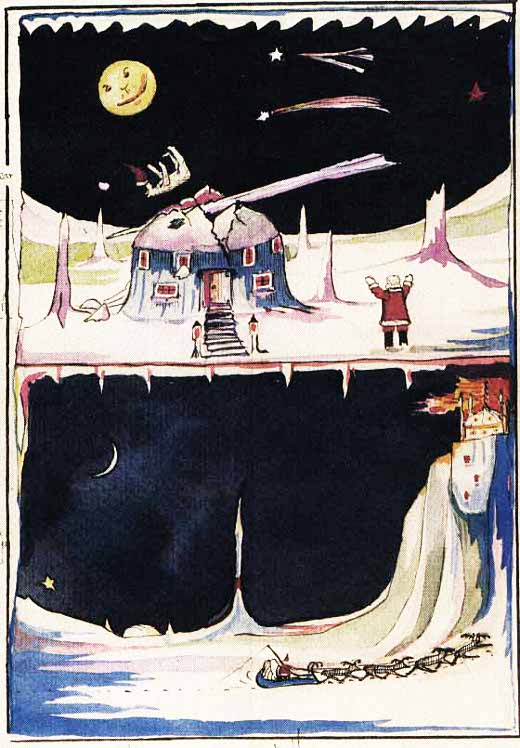
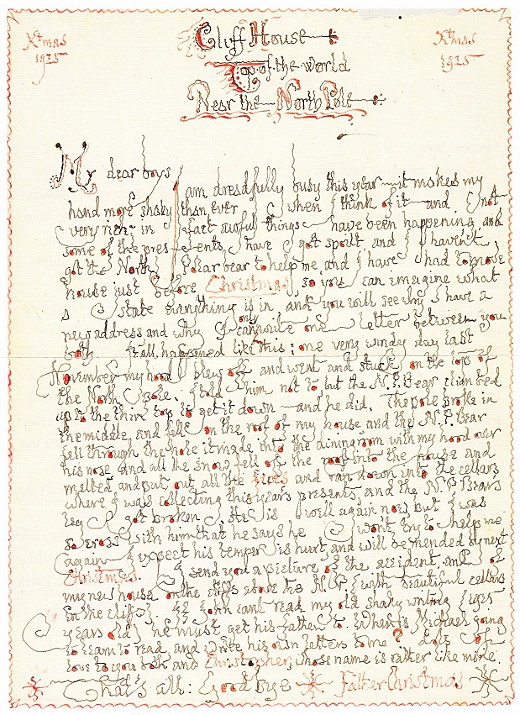
I am dreadfully busy this year — it makes my hand more shaky than ever when I think of it — and not very rich. In fact, awful things have been happening, and some of the presents have got spoilt and I haven’t got the North Polar Bear to help me and I have had to move house just before Christmas, so you can imagine what a state everything is in, and you will see why I have a new address, and why I can only write one letter between you both. It all happened like this: one very windy day last November my hood blew off and went and stuck on the top of the North Pole. I told him not to, but the N.P.Bear climbed up to the thin top to get it down — and he did. The pole broke in the middle and fell on the roof of my house, and the N.P.Bear fell through the hole it made into the dining room with my hood over his nose, and all the snow fell off the roof into the house and melted and put out all the fires and ran down into the cellars where I was collecting this year’s presents, and the N.P.Bear’s leg got broken. He is well again now, but I was so cross with him that he says he won’t try to help me again. I expect his temper is hurt, and will be mended by next Christmas. I send you a picture of the accident, and of my new house on the cliffs above the N.P. (with beautiful cellars in the cliffs). If John can’t read my old shaky writing (1925 years old) he must get his father to. When is Michael going to learn to read, and write his own letters to me? Lots of love to you both and Christopher, whose name is rather like mine.

That’s all. Goodbye.

Father Christmas

On Christmas Eve we are planning on seeing the final Hobbit movie. This will get you in the mood!

Original material copyright 2014 Michael Curry

Christmas Reading: Life & Adventures of Santa Claus

l&asanta

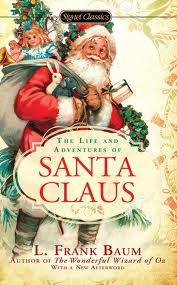
One of the three books I make a point to read during Christmastime is The Life & Adventures of Santa Claus by L. Frank Baum.  It was published in 1902. He had already published the first two of his books set in the merry old land of Oz and those, his books on nursery rhymes and this biography of Claus helped firm his reputation as a writer of children’s stories.

             I mentioned this book a bit when I did my last National Adoption Awareness Month Spotlight – a whimsical biography of Kris Kringle from this book and the animated classic “Santa Claus is Coming to Town”. It partly inspired me to do this blog …

            The book has an excellent Wikipedia page: https://en.wikipedia.org/wiki/The_Life_and_Adventures_of_Santa_Claus

            This is a condensed version from Wikipedia:

Santa Claus, as a baby is found in the Forest of Burzee by Ak, the Master Woodsman of the World, and placed in the care of the lioness Shiegra. The Wood Nymph, Necile, breaks the law of the forest and takes the baby because she desires to raise a child of her own as mortals do, convincing Ak that since he made the law, he can allow an exception, and agrees to have both Necile and Shiegra care for the baby. Necile calls him Claus, meaning “little one” in the old Burzee language.

necile

He becomes well known for his kind acts toward children, including given them presents of carved animals called “toys”. Soon, the immortals begin assisting him, the Ryls coloring the toys with their infinite paint pots (the first toy was not colored).

The Awgwas, evil beings who can turn invisible, steal the toys that Claus is giving to the children, because the toys are preventing the children from misbehaving. This leads to Claus making his journeys by night and descending through chimneys when he is unable to enter the locked doors.

awgwar

As his fame spread far and wide, he became recognized as a saint, earning the title “Santa” (“Saint” in most Romance languages). Rumors Claus would have disagreed with say that naughtiness will make him stop bringing toys, but Claus “…brought toys to the children because they were little and helpless, and because he loved them. He knew that the best of children were sometimes naughty, and that the naughty ones were often good. It is the way with children, the world over, and he would not have changed their natures had he possessed the power to do so.

“And that is how our Claus became Santa Claus. It is possible for any man, by good deeds, to enshrine himself as a Saint in the hearts of the people.”

***

            At the time there was no real lore about the jolly old elf – drawings by Thomas Nast and others and the poem “A Visit from St. Nicholas” by C. Clement Moore.  This was long before Rudolph and the various movies and children’s television shows, so Baum had a blank canvas with which to work.

            It is high fantasy and firmly set in the imagination of Baum’s style. It’s a beautiful and charming book to read to yourself or a young one. He may ask you where Topper the Penguin or the Winter Warlock are … you’ll have to explain this is another version of where Santa came from.  Odd that in both this book and the iconic TV show “Santa Claus is Coming to Town” the young Claus is a foundling waif taken in my a magical people…

            Ironically, the production company that made “Santa Claus is Coming to Town” – Rankin/Bass – known also for “Rudolph the Red-Nosed Reindeer”, “Frosty the Snowman” and their progeny – also produced a stop-motion version of “Life and Adventures…”. It was the companies last stop-motion holiday special.

            The book is in the public domain and can be read online or saved as a pdf file. I found a copy here: http://www.ibiblio.org/ebooks/Baum/Santa_Claus.pdf

It is good practice for people not used to ebooks. Then you can purchase one of my three books available online (crass commercialism is also a Christmas tradition!): 

Abby’s Road, the Long & Winding Road to Adoption and how Facebook, Aquaman and Theodore Roosevelt Helped;

Toddler TV: A Befuddled Father’s Guide to What the Kid is Watching; and

The Brave & the Bold: From Silent Knight to Dark Knight, an index to the DC comic book.

Original material copyright 2014 Michael Curry


 l&asanta

Christmas reading: A Christmas Carol

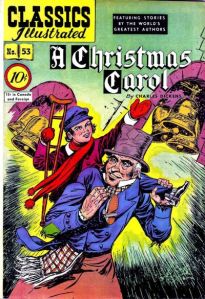
     carol comic book 

           Christmas is a time for tradition. I have many traditions when it comes to Christmas – I’ve hung up the same stocking that I was given as an infant; I usually hang up the Chhistmas decorations the weekend after Thanksgiving.

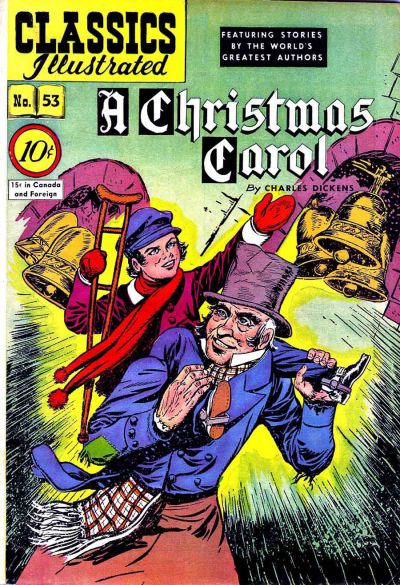
            One of my favorite hobbies is reading. No surprise there. And the week after Christmas my tradition is to read Christmas stories. Three in particular. I start off with Dickens’ “A Christmas Carol” – that takes only about a day or so. I’ve been reading “A Christmas Carol” every year for over a decade now.  Although now with a little one taking up most of my time I usually don’t finish it until after Thanksgiving weekend. The next several days is spent reading L. Frank Baum’s “The Life and Adventures of Santa Claus”. I started that tradition in 2006. And in the last four years I finished off by reading JRR Tolien’s “Letters from Father Christmas” – this book has been published in many titles variations, your copy may have a different title.  This takes me through to the next weekend. Next I may read a horror or science fiction anthology of Christmas-themed stories. Most aren’t very good – or at least if the story is good the theme of Christmas is incidental. It could take place on Valentine’s Day and not change the essense of the story.


            For Christmas-themed blogs I will discuss each of my three traditional Christmas books.


A CHRISTMAS CAROL.

 Charles_Dickens-A_Christmas_Carol-Title_page-First_edition_1843

This was from a blog I wrote/published on December 2nd, 2012:


            The plot is … well, if you don’t know, stop reading right now.

            The story behind the story is almost as interesting. (taken liberally from Wikipedia, but I did check the facts …) Dickens was concerned about the plight of poor children. In early 1843, he toured a tin mine where children worked. The conditions of theFieldLaneRaggedSchool he visited that year were equally appalling to him. In February 1843 a parliamentary report exposed the effects of the Industrial Revolution upon poor children; it was called Second Report of the Children’s Employment Commission.  Dickens planned to publish an inexpensive political pamphlet tentatively titled, “An Appeal to the People of England, on behalf of the Poor Man’s Child” in May of that year but changed his mind, deferring the pamphlet’s production until the end of the year.

            In a fund-raising speech on 5 October 1843 at the Manchester Athenæum (a charitable institution serving the poor), Dickens urged workers and employers to join together to combat ignorance with educational reform, and realized in the days following that the most effective way to reach the broadest segment of the population with his social concerns about poverty and injustice was to write a deeply-felt Christmas narrative rather than polemical pamphlets and essays. It was during his three days in Manchester, he conceived the plot of Carol.

            Dickens had already written a tale of Christmas redemption as part of “The Pickwick Papers” in 1837; Gabriel Grub was a lonely and mean-spirited sexton, who undergoes a Christmas conversion after being visited by goblins who show him the past and future. 

            Although Dickens made little money from it at first, it was an immediate success – stage productions and readings (some by Dickens himself) developed quickly. The first was February 1844 (it was published two months earlier). It has since become as much a holiday classic as “A Visit from St. Nicholas”.

            It has been called an indictment of 19th-century industrial capitalism and  Scrooge’s redemption underscores the conservative, individualistic, and patriarchal aspects of Dickens’s ‘Carol philosophy’, which propounded the idea of a more fortunate individual willingly looking after a less fortunate one. Personal moral conscience and individual action led in effect to a form of “noblesse oblige” which was expected of those individuals of means. I knew I liked the story for some reason…

            This idea would make some In this politically-charged atmosphere faint dead away. “Use our means to help the poor!? Why on earth would we want to do that?” Because Jesus told you to. And as of 1843, so does Charles Dickens.

            The current state of observance of Christmas is largely the result of a mid-Victorian revival of the holiday spearheaded by A Christmas Carol. Hutton argues that Dickens sought to construct Christmas as a self-centred festival of generosity, in contrast to the community-based and church-centered observations, the observance of which had dwindled during the late 18th and early 19th centuries. In superimposing his secular vision of the holiday, Dickens influenced many aspects of Christmas that are celebrated today in Western culture, such as family gatherings, seasonal food and drink, dancing, games, and a festive generosity of spirit.

            This simple morality tale with its pathos and theme of redemption significantly redefined the “spirit” and importance of Christmas, since, as Margaret Oliphant recalled, it “moved us all those days ago as if it had been a new gospel.” and resurrected a form of seasonal merriment that had been suppressed by the Puritan quelling of Yuletide pageantry in 17th-century England.

            I enjoy reading through the small bits and pieces you usually do not see during the films and plays – the many religious references for one (other than Tiny Tim’s hoping his being in church would remind others of who made lame men walk, etc.). “Carol” has turned into a secular Christmas tale, but I was surprised how many references to the birth of Christ, the visit of the Wise Men, and so forth, are peppered – lightly, but still peppered – throughout the story. I also enjoy Scrooge’s political debate with the Ghost of Christmas Present. Scrooge is thoroughly back-handed by the ghost, who all but says Scrooge is no Jack Kennedy.

            This was a nice bit taken from IMDB about the 1938 movie. It’s a good description of Scrooge: The word “humbug” is misunderstood by many people, which is a pity since the word provides a key insight into Scrooge’s hatred of Christmas. The word “humbug” describes deceitful efforts to fool people by pretending to a fake loftiness or false sincerity. So when Scrooge calls Christmas a humbug, he is claiming that people only pretend to charity and kindness in an scoundrel effort to delude him, each other, and themselves. In Scrooge’s eyes, he is the one man honest enough to admit that no one really cares about anyone else, so for him, every wish for a Merry Christmas is one more deceitful effort to fool him and take advantage of him. This is a man who has turned to profit because he honestly believes everyone else will someday betray him or abandon him the moment he trusts them. 


***
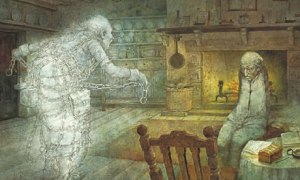
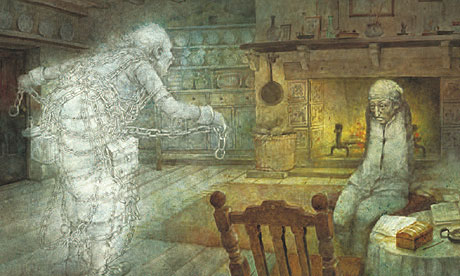
 marley

            I then blogged reviews of various “Carol” adaptations. Just type “Christmas” on my page’s search engine to read through them. In those blogs I included questions I had while reading the book and watching the various adaptations; I have copied and rearranged those questions here. They would make good discussion topics for a reading club…


            Dickens says that Bob Cratchet had only met Scrooge’s nephew once (this was in Stave Four in the future: “Mr. Scrooge’s nephew, whom he had scarcely seen but once” – an odd way of putting it if they had met more often than once). This was when Fred visited Scrooge at his counting house and invited him to Christmas dinner.

This, then, is the first time Fred had come to Scrooge’s counting house for any reason, let alone to invite him to his party (Stave Three says he WILL go by year after year but not necessarily HAS in the past. In “The End of It” Scrooge wishes Cratchet a Merrier Christmas “than I have given you, for many a year.” So Bob had worked for Scrooge several years – thus this was Fred’s first visit to his uncle to invite him to Christmas dinner – at his office. Fred may have visited Scrooge’s home – he talks about Scrooge not even making himself comfortable with his money. Can you imagine Scrooge’s reaction to Fred visiting his home!?


            What would Scrooge’s reaction had been if it were August and Fred invited him to church instead of a Christmas party? Would he have still called it a “humbug”? Would he consider church an excuse for picking a man’s pocket every week?  He attended a church service on Christmas morning after his conversion, but would he have been so vitriolic to Fred’s invitation?


            As a boy Scrooge attended an isolated boarding school in which characters in books come to life and illustrations move about independently. My god in heaven, he went to Hogwarts!


            Whither Dick Wilkins? Scrooges’ fellow apprentice who liked Scrooge very much. Is he still alive? In business for himself? Has he ever visited the man who thinks him his best friend?  How would Scrooge react of Dick, instead of Fred invited him to Christmas dinner? Would Scrooge have been so curt or glad to see him (glad for Scrooge that is)?

            Note how Belle, when asked by her husband to guess who he saw, immediately says “Ebenezer Scrooge”?  How often does she think of him? How many times does her husband walk past his office? Does she still have strong feelings for him? Is her husband stalking Scrooge? Does he bring up his wretched state often as a way of showing her she made the correct choice? What kind of control freak did she marry?


            Except for the Ghost of Christmas Present, neither of the other Ghosts show Scrooge any events of Christmas Day itself. They should be called the Ghost of Christmastime Past and Yet-To-Come. Ghost of Christmas(time) Past shows Fezziwig’s Christmas Eve party, and the novel does not specifically say the date when Fen visited Scrooge at the Boarding School or the day he broke up with Belle.

            As for the Christmas Yet to Come; if all that happened on Christmas Day itself, that Christmas of 1844 was particular busy – Tim Cratchet died, Bob Cratchet bought a plot of land, Scrooge died, the news of his death made it to the Exchange (which was open), his tombstone was prepared, his belongings were looted and sold at Old Joe’s (Old Joe being “open” Christmas Day was probably the one thing most realistically “open” that day…). As with Past, the events of Yet-To-Come were most likely events close to Christmas Day, without being on the day itself.


             If the Ghost of Christmas Past only lived during Christmas Day, and he supposedly visited Scrooge “the next night at the same hour”. That would have been 1:00 am December 26th – wouldn’t he have been dead for an hour by this time (of course a ghost cannot be dead, by that I mean he no longer existed… )? If Marley visited Scrooge after midnight (and the second stave seems to imply), then the Ghost of Christmas Present may have visited Scrooge on December 27th– and would have been dead for the prior 25 hours.


            So what exactly was wrong with Tiny Tim?  Here’s a great site with a logical explanation:   http://www.msnbc.msn.com/id/22359312/ns/health-health_care/t/what-was-ailing-tiny-tim/#.UMjDxdsYpwQ


            At Fred’s party, they played a guessing game called “Yes and No”. Fred thought of a thing and they had to guess with yes-or-no questions what that thing was: it was a savage animal that growled and grunted and lived in London. Someone asked if it were a horse.  Were the streets of Victorian London stalked by savage, growling horses?


            How much do you think Scrooge donated to the solicitors that Christmas morning? In George C. Scott’s Carol movie, it is obvious they are mouthing “a thousand pounds” that would more than likely have been just over $150,000 US. Back payments indeed!


            So whatever happened to Tiny Tim. I have a theory; stay with me here.

            Despite his salvation, Scrooge likely had about ten years left to live. During that time, his financial support nursed Tim to health. Tim’s gentle nature and history led him to wish to work with children or even aspire to be a physician.  His second father would have encouraged it.

            Unfortunately, when Scrooge died, all his estate would have gone to Fred. Scrooge would have made some provision for the Cratchets, which makes sense. But Bob isn’t known for his financial acuity. Likely by the time Tim comes of age the money is long gone to establish Peter and provide dowries for his sisters.

            Tim takes his fate with stoic grace and takes a job at a local clerk or shopkeeper.

            By the 1870s Tim will have lost his parents. The charitable giving of Fred has likely stopped – he supported the Cratchets but now it is their descendents and extended family. Fred helps when asked, but not to his detriment. Fred has a kind soul, but money only goes so far. Tim hears that a lot lately, especially from Peter and his brothers-in-law.

            Tim is alone. He remains unmarried – potential brides are put off by his poverty and his physical condition.  Although cured, he still walks with a cane and his hand is still withered. The local east-end streetwalkers have sympathy on his sweet nature and offer him solace. “I do declare, there were times when I was so lonesome I took some comfort there.”

            That is how he caught syphilis.

            Tim was nearly fifty when the last stages of the STD rampaged through his system – a system still weak from the malady of his youth. Like his second father, a cold bitterness set in. Added to his coldness came the mental imbalance from the STD.

            At least Scrooge had the solace of being a “good man of business” and sat on a sufficient, albeit unused, accumulation of wealth. Tim had no such solace. His financial future was taken by his many sisters four decades ago, just as his health was taken by fallen women. What does his Bible, his only refuge, say? “…the men of her city shall stone her to death because she has committed an act of folly in Israel by playing the harlot in her father’s house; thus you shall purge the evil from among you.”

            His father’s house is gone. His second father’s house is gone. All that are left are the harlots…

            Purge the evil, he thinks, yes, they must die. This is why in the late 1880s, Tiny Tim, his senses marred and warped by his bitterness and disease, committed some of the most heinous crimes still reviewed and examined to this day.

            Thus, it is my belief that Tim Cratchet was, in fact, Jack the Ripper.


            The book is in the public domain and the text is available online, just google “Christmas Carol full text” and you will find it in many places. It is good practice for people not used to ebooks. Then you can purchase one of my three books available online (crass commercialism is also a Christmas tradition!): 

Abby’s Road, the Long & Winding Road to Adoption and how Facebook, Aquaman and Theodore Roosevelt Helped;

Toddler TV: A Befuddled Father’s Guide to What the Kid is Watching; and

The Brave & the Bold: From Silent Knight to Dark Knight, an index to the DC comic book.

Original material copyright 2014 Michael Curry

One Last National Adoption Awareness Month Spotlight – an international icon!

santa

November is National Adoption Month! For this last Spotlight, we focus on a holiday icon!

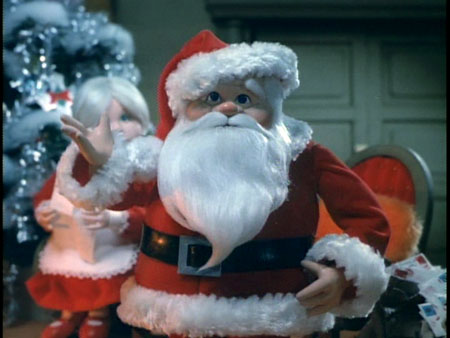
 Kris and topper

Culled mostly from Wikipedia:


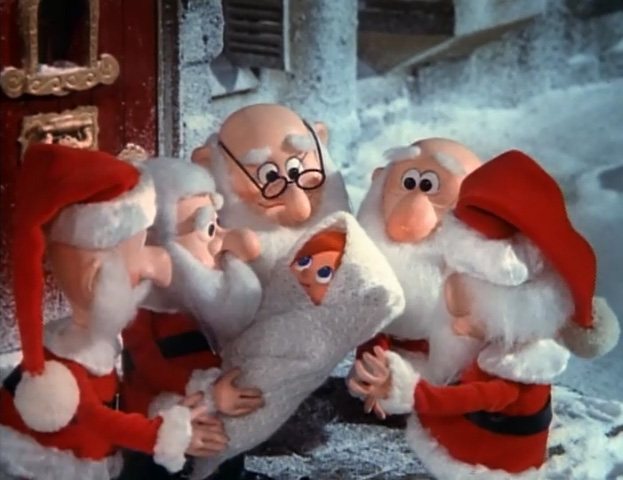
In the gloomy city of Sombertown, ruled by the ill-tempered Burgermeister Meisterburger (voiced by Paul Frees), a baby arrives on his doorstep, with a name tag reading “Claus” and note requesting that the Burgermeister raise the child as his own, despite the Burgermeister’s objections. He then orders his right-hand man and lawkeeper Grimsley (also voiced by Paul Frees) to take the baby to the “Orphan Asylum.” On the way there, a gust of wind blows both sled and baby far away, to the mountain of the Whispering Winds. There, the animals hide him from the Winter Warlock (voiced by Keenan Wynn), a powerful wizard who dislikes anyone trespassing his land. The animals then bring the baby to the other side of the mountain to an elf family by the name of Kringle. Led by Tanta Kringle (voiced by Joan Gardner), the elf queen, they adopt the baby and name him “Kris”.  The rest is a holiday classic!

elves

So put one foot in front of the other to get the DVD today!


In “serious” literature, L Frank Baum (does the name sound familiar – he wrote books about a certain land that lies somewhere over the rainbow) wrote in “The Life and Adventures of Santa Claus” that the foundling waif was instead adopted by the fairy/nymph Necile. It’s a great book and I read it every Christmas season (along with “A Christmas Carol”, too).

Necile 

Be sure to visit Abby’s Road on Facebook for more Spotlights including Lance Armstrong, Nancy Reagan, Steve Jobs and Gary Coleman (never thought you’d see those people in the same sentence, did you?)!


This is the last blog spotlighting famous adoptees for National Adoption Month! Next month I’ll have more news on Abby’s Road and my new books! Also lots of comic book reviews, a review of the last Hobbit movie and other nerdly goodness!


The cover of Abby's Road

The cover of Abby’s Road

“Abby’s Road, the Long and Winding Road to Adoption and how Facebook, Aquaman and Theodore Roosevelt Helped” leads a couple through their days of infertility treatments and adoption. It is told with gentle (and sometimes not-so-gentle) humor from the perspective of a nerdy father and his loving and understanding wife.

Join Mike and Esther as they go through IUIs and IFVs, as they search for an adoption agency, are selected by a birth mother, prepare their house, prepare their family, prepare themselves and wait for their daughter to be born a thousand miles from home.


Winner, Honorable Mention, 2014, Great Midwest Book Festival


Abby’s Road is available at Amazon here: 
http://www.amazon.com/Abbys-Road-Long-Winding-Adoption/product-reviews/0692221530/ref=cm_cr_pr_top_recent?ie=UTF8&showViewpoints=0&sortBy=bySubmissionDateDescending


at Barnes and Noble here: 
http://www.barnesandnoble.com/w/abbys-road-the-long-and-winding-road-to-adoption-and-how-facebook-aquaman-and-theodore-roosevelt-helped-michael-curry/1119971924?ean=9780692221532


and at Smashwords here:
 https://www.smashwords.com/books/view/457270


Copyright 2014 Michael Curry


A review of “A Mannheim Steamroller Christmas” with the St. Louis Symphony Orchestra

A review of “A Mannheim Steamroller Christmas” with the St. Louis Symphony Orchestra
 
 
            My wife and I went to Powell Symphony Hall to watch the St. Louis Symphony Orchestra perform “Mannheim Steamroller Christmas” on December 14, 2013.
            A college roommate introduced me to Mannheim Steamroller in 1982, one year after the release of their “Fresh Air IV” album. I was hooked.
            They combined classical music (particularly baroque) with jazz and rock into a light-progressive instrumental style. It featured Chip Davis, the founder, on drums, Jackson Berkey on the various keyboards – from piano to pipe organ to, particularly, harpsichord, and Eric Hanson on bass guitar.
            Their music avoids labeling – it has been called everything from New Age to Baroque-and-Roll (this label was first used on the group “The Left Bank” – a proto prog-pop band from the mid-1960s). The band does not embrace the New Age label, nor do most New Age enthusiasts embrace their inclusion into the genre.
             I am the exception. In the late 1980s and early 1990s I hosted “A New Age” at my local NPR station on Sunday nights. I happily included Mannheim’s music in addition to other artists outside the genre – Ravi Shankar, Isao Tomita and Blue Chip Orchesta along with stalwarts Kitaro, David Arkenstone and Enya. By this time there were surprisingly good so-called New Age music from the likes of even John Tesh and Barbie Benton.
            “Fresh Aire IV” combined medieval instruments on pop and rock arrangements of damnably catchy melodies. Ancient instruments playing tightly structured songs but with enough obtuse and unexpected variations on the melody to keep me listening.
            Four more “Fresh Aire” albums were to come – each album with a “theme”: the excellent “V” (a trip to the moon), “VI” (Greek Mythology), “7” (themes involving the number 7 – 7 seas, 7 chakras, Sunday, and “8” (infinity) – these last two reaching Number Two on the newly-created New Age charts; the only chart their music would seemingly fit.
            In 1984 Mannheim Steamroller released a Christmas album. For this ensemble known for its quirkiness and undefinability to enter the realm of Perry Como, Johnny Mathis and Percy Faith was the last thing one would expect – so of course it was a natural thing to do!
            Jazz musicians have released Christmas songs for decades, and there have been Christmas versions of electronic music; but for a still-obscure musical group to release a Christmas album was a substantial financial risk. Would those who enjoy traditional Christmas fare buy an album from this eclectic group? Would fans of this eclectic group buy an album of traditional Christmas fare?
            Fortunately for Mannheim Steamroller, both groups did. That first album “Mannheim Steamroller Christmas” was done in their unique style while still respecting the traditions of Yule. It spawned twelve other holiday albums with tunes ranging from original compositions to “You’re a Mean One Mr. Grinch”. They have sold in the millions and over the past thirty years the songs are considered Christmas classics.
            I saw Chip Davis and company perform their Christmas and Fresh Aire tunes in Chicago in 1987 on their first tour. They’ve toured at Christmastime regularly ever since – the band now down to Chip Davis, various session men and orchestras big and small.
           
            In October I was looking at what was happening in St. Louis during the Christmas season – perhaps we could see “A Christmas Carol” being performed, or a madrigal or a special concert. Perhaps the Nutcracker.
            “Elf” was playing at the Fox. Nah. No special individual Christmas shows were announced yet – not even Trans-Siberian Orchestra (another eclectic group – although firmly ensconced in the rock idiom – that had taken some of the thunder from Mannheim’s Christmas popularity). The St. Louis Symphony was going to perform a Gospel Messiah during the week of December 7th and their traditional Christmas program on the 21st. But the weekend of the 14thwas set for the Music of Mannheim Steamroller Christmas.
            I misread it at first and thought it was Mannheim Steamroller performing with the Symphony. Stop right there. We have a winner. My wife was excited too – especially since there were still front row seats available.
            A closer look shows it was not Mannheim Steamroller themselves (or himself – the “group” is now solely Chip Davis’s baby) but the St. LouisSymphony performing its music.
            Fine by me; fine with my wife, too. Would I like to go see one of the best symphony orchestras perform some of my favorite holiday music from one of my favorite performers from the front row? Sure, what the hell…
           
            The conductor/arranger of the concert program was Arnie Roth, the orchestral arranger for Mannheim Steamroller for many decades; so there was at least a connection with Chip Davis. He was there in spirit.
            I was interested in seeing how the orchestra would handle some of Steamroller’s electronic doodlings: the synthesizer intro to “Deck the Halls”, the mechanics of “Little Drummer Boy”, the swirling ending of “Silent Night”. 
            I needn’t have worried – the strings (cello and bass violin in particular) handled the “Deck the Halls” intro, for example. We sat right in front of the violins. I was enraptured by their ability and talents. Throughout the concert the violins played in the quiet, serene background. When they took the lead of a song – they were majestic and moving.
            There are no bad seats at Powell, but one unfortunate side effect of the front row is we could watch the violinists play masterfully at the cost of not seeing anyone else. The brass, percussion, harp and piano/harpsichord were heard but not seen. I could spot one trumpeter between the legs and feet of the viola section, but that was it. And unfortunately the brass, percussion, harp and piano/harpsichord were the main instruments in the concert. From the intro of “Hark the Herald Trumpets Sing” I knew I was missing watching professionals playing excellent music. I didn’t mind though – I got to observe the entire violin section. I have been tinkering with the violin for many years and, as with guitarists, I loved watching their playing techniques.
            So next time we’ll sit a little further back.
            There were only a few sour notes – twice from the brass section. A missed note and an early intro; I have already forgotten which songs because frankly, I didn’t care. The drummer did an excellent job keeping the beat, but there were times he lagged behind the rest of the orchestra; I think it was during “Joy to the World”. Again, who cares? It did not distract from a superb show!
The set list:
Hark Fanfare
Hark the Herald Angels Sing
Do You Hear What I Hear
Traditions of Christmas (an original Chip Daviscomposition)
The Little Drummer Boy
Greensleeves
We Three Kings
Cantique de Noel
Carol of the Bells
Hallelujah (a highlight of the concert)
Intermission
Deck the Halls
Pat-a-Pan/Fum Fum Fum Medley (another highlight)
Lo, How a Rose E’er Blooming
Joy to the World
Renaissance Suite: (my favorite part of the concert, a personal highlight)
            Gagliarda
            Il duci jubilo
            Wassail, Wassail
            Carol of the Birds
            I Saw Three Ships
            God Rest Ye Merry, Gentlemen
God Rest Ye Merry, Gentleman
Silent Night
encore Angels We have Heard on High
            During the 1987 concert, Mannheim performed the Renaissance version of “God Rest Ye …” and broke into “The William Tell Overture” between lines. I was hoping for the same here, but they did not. The smiles in this concert came not from humor but from enjoying superb musicianship playing superb arrangements.
           
            Here is another review of the concert from a classical radio station in St. Louis – another interesting view that touches on the differences between this orchestral performance and the original arrangements: http://kdhx.org/music/reviews/st-louis-symphony-a-mannheim-steamroller-christmas
            My wife and I enjoyed our evening at Powell very much! During the intermission the line to the rest rooms were in the dozens. I told my wife I would chance it and miss the beginning of “Deck the Halls”. Don’t worry, I said, we’ll hear it on the radio on the way home.
            Over the years the various Mannheim Steamroller Christmas albums have not been played on my stereo. They are played on the radio at Christmastime – a lot. A lot. But this concert gave me a new appreciation of the music from the albums and their quirky arrangements. Here we heard these quirky arrangements done in a very traditional way with a fine, fine orchestra. Loving this concert made me love the original arrangements as well. I even dug out my old Fresh Aire CDs to play in my car and in the 5-CD changer in the living room.
            Welcome back to the rotation, my friend. I had forgotten how much I missed you.
Copyright 2013 Michael G Curry


(adsbygoogle = window.adsbygoogle || []).push({});

The Ten Worst Christmas Songs of All Time

The Ten Worst Christmas Songs of All Time

                I finished my list of the best Christmas songs of all time (see prior blog). It is only natural to follow up with the worst Christmas songs of all time. My jaw is already clenching thinking about these overblown, overplayed and overdramatic pieces of tripe.
                Funny that, with a few exceptions, this list isn’t composed of individual performances but the songs in general – or at least in the way they are usually performed. So you won’t see individually bad tunes by New Kids on the Block (“Funky Christmas”), John Denver (“Daddy Please Don’t Get Drunk for Christmas”) or the Clay Aiken masterpiece of drivel “Merry Christmas with Love” on the list. And besides, those don’t get much airplay anyway.
                I’m sorry if you like any of the songs on this list. I am truly sorry. I am sorry for you and for the people sitting next to you as you play the tunes and sing along.
 
                These are in no particular order:
 
1.       Little Drummer Boy. What!? Two versions of this song made my Top Ten Best Christmas Songs. True. How then can the song also make my Top Ten Worst Christmas Songs list?  Excellent question. With two exceptions (the Crosby-Bowie duet and the Vince Guaraldi version) this song is performed in the most over-produced and pompous way possible: thick orchestration and operatic voices. Diana Ross’ version is particularly annoying. Even the iconic version by the Harry Simeone Choirale is overwrought at times – although the choir sings it softly and quietly, the “brum-brum” male singers in the background get a bit carried away. The story: a child plays his drum to the baby king. He didn’t bring gold or lavish him with other gifts. He played his drum for him. He played his best for him. It’s the widow’s mite story; it’s the sinful woman from the Book of Luke washing Jesus’ feet with her hair. A humble story should not have full orchestra and choir. Imagine watching a love scene in a movie and the theme from “Jaws” starts playing; or “Psycho” (I’ve been in situations where that is appropriate, though); or “Rocky” (ditto, I am proud to say…). But you get my point here. Pretention has no place in this song. That’s the point of the song.
2.       The Twelve Days of Christmas. The rock-concert-drum-solo of Christmas songs. When the song is on the radio or on a TV special it is a good time for a bathroom break or to go get a snack in the kitchen or vacuum the rugs or go visit a friend or head to the office or take a weekend vacation. It’ll be just wrapping up when you get back. Over long and the “five gold rings” part is usually over-dramatic. Not even the Muppets could salvage this one. Ray Conniff has a good version of the song – if only because his singers race through it and finish it in just under two hours, rather than the standard six. It’s the German opera of Christmas songs.
3.       Christmas Shoes. Things are looking up as to this tear-jerker and garment-render – some stations make a point of saying they will NOT play the song. If the boycott boosts their ratings enough we may never have to hear it broadcast again! The people who poo-poo the derision with arguments that it is a lovely story and shows the real meaning of the holiday are missing the point. Yes it is a wonderful story, but the rest of us think it is as melodramatic as a nineteenth-century vaudeville drama. The kid buying the shoes might as well cross a raging river on patches of ice. With hound dogs chasing him. And his mother’s cancer portrayed by a guy wearing a top hat twirling a long mustache. Videos of the song may as well come with placards telling us when to “Boo” and “Hiss”. Yet every year people talk about how bad the song is and yet every year it is played over and over. All I can say when it comes on the radio is “Curses! Foiled again!”
4.       Mary Did You Know. This isn’t played very often on commercial stations and not very often nowadays even on Christian stations, but it was played and played a lot a decade ago or so. Another song that is usually done with a high level of pomposity and over-production. It doesn’t even have the saving grace of “Christmas Shoes” by being a lovely story. “And the angel said unto her, Fear not, Mary; for thou has found favour with God. And behold, thou shalt conceive in thy womb, and bring forth a son, and shalt call his name Jesus. He shall be great, and shall be called the Son of the Highest; and the Lord God shall give unto him the throne of his father David. And he shall reign over the house of Jacob for ever; and his kingdom there shall be no end.” Luke 1: 30-33; King James Version – the only real version of the Bible, or as I like to put it, the version Jesus wrote. “Mary Did You Know”? “Yes, yes, I did. But thanks for asking…”
5.       Any Christmas Spoof. This is more of a category of songs rather than one in particular. And I’m talking spoofs, not novelty songs. “The Chipmunk Song”, “…Two Front Teeth” “I Want a Hippopotamus for Christmas” – these are novelty songs (although most novelty songs belong on this list too). Spoofs are pre-existing songs with different lyrics – presumably knee-slappingly hilarious lyrics. The most famous of which is “Jingle Bells, Batman smells, Robin laid an egg …” Two reasons this makes the list – with rare exception spoofs are 1) too long and 2) not that funny. Usually after the first line we get it. The secret to humor is not only surprise but brevity. The aforesaid “Batman smells” is a good example: four lines and done. But most spoofs go on with verse, chorus, verse, chorus. The reactions are as follows: “Ha! Ha! That’s hilarious!” (second verse) “Heh, heh! That’s great!” (second chorus) “Hmm-hmm, that’s funny.” (third verse) “Do you have any big plans for New Year’s Eve?” (third chorus) “Is that song still playing?” There are lots of spoofs to the tune of “Rudolph the Red Nose Reindeer” and “The Christmas Song” but the most popular song spoofed is “Twelve Days of Christmas”. It’s the perfect example of why spoofs generally suck: a song that goes on too long being made into a spoof that goes on too long.
6.        Grandma Got Run Over By a Reindeer. And speaking of novelty songs. This inbred ditty usually makes most Top Ten Worst Christmas Songs lists and yet it still constantly airs during the season. Yes, when it came out everyone hyucked it up, whistled between their missing teeth and tapped their web-toed feet. But after the first listen and the first (and last) laugh it is time to stop wallowing so gleefully in its ignorance.
7.       Baby it’s Cold Outside. Or as I like to call it, “The Date Rape Song”. The song has nothing to do with Christmas. Of course, neither does “Jingle Bells”. But then “Jingle Bells” isn’t a song about a misogynist who slips Zolpidem into a lady’s drink and traps her in his house during a winter storm. The song is performed as a dialog between the victim and the rapist, with the victim singing first. Some verses left out of the original version: “Uncuff me at once; Baby it’s cold outside. I’m not going down there; Baby it’s cold outside. Is that a pit?; Baby it’s cold outside. I’m dialing nine-one {whack}{thud}; Baby it’s cold outside…”
8.       Santa Baby is the flip side to “Baby it’s Cold Outside”. A gold digger seduces Santa into giving her diamonds and minks. Even Eartha Kitt’s version comes off as slutty. The male back-up singers sound like those old Warner Brothers’ cartoons where men turn into wolves and drool over pretty women. After the song airs I feel like I need a shot of penicillin. It reminds me of the cartoon character Jessica Rabbit – it’s not a bad song, it’s just written that way.
9.       Grown Up Christmas List is not as pompous as “Mary Did You Know” or as overproduced as “Little Drummer Boy” nor is it as laughably melodramatic as “Christmas Shoes”, but it combines the three into a canny and boring song. “But it’s a wonderful sentiment!” Ho-hum, let’s move onto the next song. It’s even bad at being a bad song.
10.   Wonderful Christmastime. Oh how it pains me to put any song by Paul McCartney on a “worst” list, but let’s face it, the lyrics are banal and the music is awful. McCartney was experimenting with synthesizers at the time (late 1970s) and this was his first attempt at a structured song. He would get MUCH better at it (the following album “McCartney II” with the hits “Coming Up” and “Waterfalls”). The telling factor here is listening to the remakes. They are not very good either. After 45 seconds the song is done and we have to listen to it repeated four or five more times – usually with lots of cheering in between by the back-up singers. “…a wonderful Christmastime.” {gleeful cheers) “Yea! The song it done! Oh, nope, here’s another reprise … the moon is right, the spirit’s up…”
11.   Oh what the heck, one more, after all, it’s Christmas. This Christmas. When it was only done by Wham, it could be duly ignored, but I’ve heard people remake this lame-o tune.  Listen to the lyrics, I mean listen to them. What the heck does this have to do with Christmas? Nothing! If the song included something about “why this time of year” or “being Christmas makes our break-up especially sad”, the song would … well, it would still suck, but it wouldn’t have made the list. There is one line about his love wrapped up and sent. But that connection to Christmas is pretty thin. Try this experiment: next time you hear this song, substitute the word “Christmas” with “Wednesday”. Has the song changed in any way? No.
 
                After listing these I now have to do something to lower my blood pressure. I know, I can go back and read my Top Ten Best Christmas Songs list. Ahhhh … that’s better.
Copyright 2013 Michael G Curry


(adsbygoogle = window.adsbygoogle || []).push({});

The Ten Best Christmas Songs of All Time

The Ten Best  Christmas Songs of All Time
 
                Despite what retailers have been telling you since before Halloween, the Christmas season begins the day after Thanksgiving.
                Now that has passed and the Christmas season is in full swing.  Some radio stations are playing holiday tunes 24/7. As is usual with radio broadcasting in its current state (see my prior blog titled “I Finally Bury a Long-Dead Friend”), you will likely hear the same ten songs over and over instead of a wide variety of cuts.
                Some songs you will undoubted be sick of by December 25th; some songs you are still sick of from all the airplay last year. Some songs will make you smile. And there are some songs you’d wish they play even just once.
                I used to say the holiday season doesn’t really commence until I hear two specific songs: “Happy Christmas (War is Over)” by John Lennon and “Snoopy’s Christmas” by the Royal Guardsmen.  The latter was hard to catch on the radio, if it was played at all; but now thanks to Youtube I can listen to the tune even on a hot August day.  Those two are on the list, by the way.
                I’m listing individual tracks. I could do another list just on general songs that I enjoy (although some versions are grating): “Holly & Ivy”, “Bring a Torch, Jeanette, Isabelle” and “I Saw Three Ships” would make that list.
                These are the songs that transcend the genre: the “He Stopped Loving Her Today” or “Layla” of holiday music. And these are in no particular order.
                I’d love to know YOUR list of favorites:

1.       Joy to the World by Percy Faith. The opening fanfare of this song makes you rise from your seat. It makes you want to march out in the snow with arms stretched outward and shout “Ho! Ho! Ho!” Listening to this makes you picture a bustling city street seen through swirling snow. This should be played when the Ghost of Christmas Present is showing Scrooge Christmas morning in Old London. It’s as majestic as it is iconic. It is the opening song of “A Christmas Story”.  It should be the first song played at the start of the season.
2.       Ring Those Christmas Bells by Fred Waring and his Pennsylvanians. I’ll bet you’ve not heard this one. If you have, you know how strange this song is – especially since it was produced in the 1950s. It has an early 1970s post-psychedelic feel to it. It starts off with the singers talking merrily and then break into a chorus of Jingle Bells. Someone chants “Merry Merry Christmas” and it is repeated by the singers as a mantra. That segues into “Ring Those Christmas Bells”; a song whose tune sounds vaguely like the theme to “Green Acres”. At the end the “Merry Merry Christmas” mantra returns. It’s a bizarre tune. I love it! It is on Youtube.
3.       Silent Night by Mannheim Steamroller. The first two tunes on the list are upbeat songs of celebration. This is a very quiet song, appropriately. You listen to this song sitting on the couch in the evening drinking hot cocoa and watching the snow fall. Being Mannheim Steamroller, this version of the song is filled with electronics tweets and whistles and notes that don’t quite sound like they fit, but eventually do. And the end is beautiful; a swelling crescendo followed by a wisp of the first four notes played as if by a child on a toy piano. Absolutely beautiful.
4.       All I Want for Christmas is You by Mariah Carey. A fun romping song that sounds like it came off of a Phil Spector Christmas album. Mariah has the chops to pull off the vocal acrobatics of the song and the sex-kittenish sensuality of the lyrics and her delivery (especially the introduction) makes the song a favorite. Ignore the remakes and stick to the original. You’ll thank me. The song is alluring, and not in the creepy sexiness of a “Santa Baby”. Whereas the latter requires a shot of penicillin after every listen, “All I Want …” is a wonderful upbeat happy song for the holidays. This song sometimes makes lists of worst Christmas songs, and there are some remakes that are pretty bad, but I like the original.
5.       Happy Christmas (War is Over) by John Lennon. I used to joke, “You know it is Christmastime when you hear Bing Crosby and Yoko Ono on the radio”.  Yoko sings the middle eight of this sweet song. Like “Imagine”, this is likened unto a children’s song. However, I always found it a sad song. Not only because Lennon was murdered in the month of December and this song was on the playlists at the time; but also because I hear the lyrics as an accusation or condemnation. A man looking at himself in the mirror – “so this is Christmas, and what have you done? Another year over, a new one just begun…” Another year passed with unfulfilled expectations.
6.       Snoopy’s Christmas by the Royal Guardsmen. The band hit big in 1966 with “Snoopy vs The Red Baron” and this is a sequel from 1967. Our man Snoopy is once again called upon to fight his arch enemy.  Without giving away the ending, I wonder if the band knew this is similar to an actual event – the Christmas Truce.  In 1914 German and British soldiers exchanged greeting and songs across “no man’s land” – even exchanging gifts such as food and souvenirs. At the end the opposing troops sang carols together and played football (that’s soccer for you mouth-breathers…).  But soon the unofficial truce was over and such fraternization was banned by the so-called superior officers and both sides went back to slaughtering each other over the next four years.
7.       My Little Drum by the Vince Guaraldi Trio. It’s a shame that Vince Guaraldi will be known for only his work on the Charlie Brown cartoons, as he should be remembered for the piano-playing genius he was. We are lucky we have his soundtrack to “Charlie Brown Christmas” available on CD. Every song on the album could be included in a Top Ten, but “My Little Drum” is a unique take on the traditional song (that being “Little Drummer Boy”). Once you hear it, you’ll want to hit the back button and listen to it again. Minor and major notes are hit on the beat and off; and the children singing and humming and prrrrr-ump-ump-ing make a sweet counterpoint to the jazzy beatnik arrangement. It’s the cat’s meow, man. One of the best songs from one of the best holiday albums of all time.
8.       Must Be Santa by Bob Dylan. Even at his best Dylan’s vocal “style” is an acquired taste. Now that he is older and his voice is scorched from too many tours, he sounds the way an oak tree would sound it if could sing. “Someone is vivisecting a wildebeest!” “No, it’s Dylan’s latest album.”  BUT, his voice fits this genuinely great, great version of the Christmas song. It sounds like a rollicking good party was going on while recording it (and the video accompanying the song plays that out to great effect. Mordant bleu, Bob Dylan dances in the video – dances!!). The song is a chestnut of Mitch Miller’s Christmas song chest, but here Dylan made the song fun without quite pushing it into novelty territory.
9.       Little Drummer Boy/Peace on Earth by Bing Crosby and David Bowie. The 1977 Christmas special from which this song aired is available on DVD. It is strange watching Crosby introduce the video of Bowie’s “Heroes” standing behind a Christmas trees and twinkling lights. The legend says that Bowie hated “Drummer” and did not want to sing it as a duet with der Bingle. So the writers whipped up “Peace on Earth” to act as a descant to “Little Drummer Boy” and also a middle eight for Bing and Bowie to duet. It worked. Bowie’s high vocals paired beautifully with Crosby’s baritone. Crosby sang the main song quietly. This is important. “Little Drummer Boy” is usually performed as a big production filled with artificial melodrama in complete contrast to the ideals within the song. Here the song is quiet and respectful – a small child presenting the only gift he could give to the infant king. Plus I like Crosby’s vocals in his later years. His voice deepened and rumbled. Water glasses vibrated when he sang. It’s a lovely song. And it was Crosby’s last Christmas single. That lends a sadness to it that it otherwise might not have.
10.   Jingle Jingle Jingle by Rudolph the Red Nosed Reindeer soundtrack. I have not heard anyone remake this song, but it is one of my favorite Christmas songs, perhaps THE favorite. Clocking in at just over two minutes, it is sung by Santa in a deep baritone. A predictable song of ascending and descending notes with staccato trumpets and strings. A simple song for children that captures the season in their eyes. A sweet and lovable song.
11.   OK, one more, what the heck, it’s Christmas. Plus, this list is pretty bare as far as Bing Crosby – only one? You might think I’m building up to “White Christmas” – the song is so iconic and I think the past two generations have forgotten how tremendously HUGE that song was and is. But I want to go with another song by Bing that brings a holiday smile – Melaka Leke Maka. I love singing along and imitating Bing’s low rumble. He sounds like he’s having a fun time with it too. The song is so much fun the Andrews Sisters tolerated each other long enough to sing backing vocals.  And by the way, “Melaka Leke Maka” is NOT the Hawaiian term for “Merry Christmas” – it is the phonetic spelling of a Hawaiian native trying to SAY “Merry Christmas”.

                And there we have the ten best individual songs! Are any of these already stuck in your head? Lucky you…

Thanks for reminiscing with me!
Copyright 2013 Michael G Curry


(adsbygoogle = window.adsbygoogle || []).push({});

Three Scrooges, Part 12 (the last): Leftovers, a potpourri of Carol adaptations and one final thought…

Three Scrooges, Part 12 (the last): Leftovers, a potpourri of Carol adaptations and one final thought…
                I was lucky to have caught “Carol for Another Christmas” when it aired on TCM. It had only aired once before on ABC in late December of 1964. It was a politically-charged version of Carol starring Sterling Hayden as Scrooge (he played the police chief Michael Corleone shot in “Godfather”).  He played the Scrooge-ish Daniel Grudge – a multi-millionaire whose son was killed on Christmas Eve during WWII.  He was against all foreign entanglements (paraphrase: every twenty years or so we send our boys ten thousand miles across the planet to help solve other people’s problems”) as well as any aid to the poor and oppressed (“tell the poor and oppressed that the hand-out box is closed for good and you’ll see less poor and oppressed” – paraphrasing again). His son, named Marley, appears but does not speak.
                Grudge is visited by the Ghosts of Christmas Past (played amazingly well by Steve Lawrence), Present (Pat Hingle – I remember him as Commissioner Gordon in the 80s and 90s Batman movies) and Yet to Come (played by Robert Shaw, who as usual steals every scene he is in).
                Directed by Joseph Mankiewicz, it was his only television work, and written with Rod Serling’s usual heavy hand; the movie is a 90-minute lecture against isolationism. In a post-apocalyptic future, Grudge’s Butler Charles was put on trial for “treasonous Involvement” by Imperial Me (played with sinister glee by Peter Sellers).
                Probably the rarest “Christmas Carol” adaptation of all! And no wonder – it was hard to sit through even with the objective eye of looking at rare television. In today’s politically charged air it is almost unwatchable.
 
***
 
                “Bah, Humbug! The Story of Charles Dickens’ A Christmas Carol” from 1994, This was a dramatic reading based on Dickens’ own scripts ala Patrick Stewart’s one-man shows. This was performed at the Pierpont Morgan Library in New York. Ironically named after JP Morgan – the very embodiment of Scrooge later in the century.
                Robert MacNeil introduced the reading. James Earl Jones performed all of Scrooge’s lines and Sheen all others. Very commendable job by both actors – I think both would make great Scrooges in their own productions. I chanced upon this on PBS one afternoon and had not seen it since.
***
                Laurence Olivier’s reading of “A Christmas Carol” aired on the radio in the early 1950s. It is not a reading – the consummate actor plays every part except the ladies (Mrs. Cratchet) and Tiny Tim. Echo chambers are used for the ghosts.
                Scrooge is played straight, but the ghosts, particularly the Ghost of Christmas Past, bring out the old ham in Lord Olivier…
                It lasts 30 minutes and races through the story. Nothing is added and much omitted (youthful Scrooge, Belle, Fred’s party, etc.), but it’s Laurence Olivier! A good, quick listen.  Available on CD, I found it on YouTube.
 
***
 
                Thought of the blog: So whatever happened to Tiny Tim. I have a theory; stay with me here.
                Despite his salvation, Scrooge likely had about ten years left to live. During that time, his financial support nursed Tim to health. Tim’s gentle nature and history led him to wish to work with children or even aspire to be a physician.  His second father would have encouraged it.
                Unfortunately, when Scrooge died, all his estate would have gone to Fred. Scrooge would have made some provision for the Cratchets, which makes sense. But Bob isn’t known for his financial acuity. Likely by the time Tim comes of age the money is long gone to establish Peter and provide dowries for his sisters.
                Tim takes his fate with stoic grace and takes a job at a local clerk or shopkeeper.
                By the 1870s Tim will have lost his parents. The charitable giving of Fred has likely stopped – he supported the Cratchets but now it is their descendents and extended family. Fred helps when asked, but not to his detriment. Fred has a kind soul, but money only goes so far. Tim hears that a lot lately, especially from Peter and his brothers-in-law.
                Tim is alone. He remains unmarried – potential brides are put off by his poverty and his physical condition.  Although cured, he still walks with a cane and his hand is still withered. The local east-end streetwalkers have sympathy on his sweet nature and offer him solace. “I do declare, there were times when I was so lonesome I took some comfort there.” 
                That is how he caught syphilis.
                Tim was nearly fifty when the last stages of the STD rampaged through his system – a system still weak from the malady of his youth. Like his second father, a cold bitterness set in. Added to his coldness came the mental imbalance from the STD.
                At least Scrooge had the solace of being a “good man of business” and sat on a sufficient, albeit unused, accumulation of wealth. Tim had no such solace. His financial future was taken by his many sisters four decades ago, just as his health was taken by fallen women. What does his Bible, his only refuge, say? “…the men of her city shall stone her to death because she has committed an act of folly in Israel by playing the harlot in her father’s house; thus you shall purge the evil from among you. “
                His father’s house is gone. His second father’s house is gone. All that are left are the harlots…
                Purge the evil, he thinks, yes, they must die. This is why in the late 1880s, Tiny Tim, his senses marred and warped by his bitterness and disease, committed some of the most heinous crimes still reviewed and examined to this day.
                Thus, it is my belief that Tim Cratchet was, in fact, Jack the Ripper.
Copyright 2012 Michael G. Curry

Three Scrooges, Part 11: Personal Best (my favorite versions)

Three Scrooges, Part 11: Personal Best (my favorite versions)
               Thought of the blog: How much do you think Scrooge donated to the solicitors that Christmas morning? In George C. Scott’s Carol movie, it is obvious they are mouthing “a thousand pounds” that would more than likely have been just over $150,000 US. Back payments indeed!
WELL KNOWN SCROOGES
               “A Christmas Carol” starring George C. Scott as Scrooge was a made-for-television film shown on CBS in 1984. It was the first serious attempt at a Carol movie in thirty-three years. All previous adaptations were animated features, musicals or a spoof/homage from current television programs.  As such it was the first serious adaptation to be filmed in color.
               This is without question my favorite version. The acting and characters are superb. The scenery is beautiful. Its flaws are small and insignificant compared to the majesty of the film.
               Uniqueness: it’s loyalty to the original story makes for very few scenes that are not in the book, but they exist. Changes were had because of Scott’s tinkering with the character to reflect his “motivation”. They make sense: borrowing from 1951’s “Scrooge”, he was the younger child, Fen the older (Scrooge’s mother died in childbirth and his father holds him a-grudge).  We get to see Scrooge’s father for the only time in any other adaptation (Scott standing defiantly behind his younger self sends a shiver down the spine – staring down at the man who made him what he was.
               Missing: not much. No trip to the miners/lighthouse/ship is the only part I can recall missing other than Dickens’ asides. The debate between Scrooge and the Ghost of Christmas Present about closing the bakeries on the Sabbath is missing (only “Disney’s …” includes it to date). Too bad, it would have given the Ghost played by Edward Woodward another reason to snarl at Scrooge.
               There is so much to love about the movie – not just the beauty of the settings. The Ghost of Christmas Present’s verbal bitch-slapping of Scrooge to mind his tongue when discussing the poor and destitute was the dramatic highlight. Rather than cringe, Scrooge smirked and nodded, conceding the point.
               Scrooge meeting Fred’s wife for the first time says, “I was in love once, can you imagine that?” “Yes, yes I can,” she says quietly. Scrooge then addresses his nephew, “You will forgive me but I see the shadow of my sister in my face.  … God forgive me for the time I’ve wasted.” A moving scene.
                Cratchet, mourning Tiny Tim, holds his youngest daughter and cries, “my child; my little, little child”. If that does not bring a tear to your eye, you have no soul.
               Scenes of poor families living under a bridge and cooking scraps found on the street is not from the novel, but aptly placed.
               His descent into coldness was realistic; his conversion was realistic. That was Scott’s point in tinkering with the “motivation” of Scrooge – these were not caricatures or archetypes, these are (or at least should be) real people.
               The book says Scrooge was not a man of humor, but Scott imbues Scrooge with a sharp intelligence and humor, wicked though it may be. “You’re devilishly hard to have a conversation with,” he tells Ghost of Christmas Yet to Come.
               The cast is perfect – although Bob Cratchet could have looked a bit less robust. Tiny Tim looked, well, tiny. And cute as a button.
               The film is a joy to watch. A joy.
RARE SCROOGES
                The television show “WKRP in Cincinnati” aired for three years on CBS. It was a documentary about the inner workings of a radio station disguised as a sit-com.  IMHO it was the best thing ever to air on TV.
               They did two Christmas shows – one was a Carol spoof. Mr. Carlson played the Scrooge character refusing to give out Christmas bonuses. He is visited by cast members Jennifer (Loni Anderson never looked more beautiful than in this episode), Venus Flytrap (Tim Reid having contagious fun) and Johnny Fever (Howard Hesseman’s genuinely creepy Ghost of Christmas Yet To Come).
               The humor was, as always, character-driven, well-written and funny.
               Ironically I find the third visit the most melancholy. Fever shows Carlson the future of the radio station. There was Herb Tarlek sitting at a desk while the automated computer behind him broadcasting generic music (Christmas music) with presumably generic DJs.
               If you’ve listened to the radio lately, you’ll know that despite Carlson’s conversion, the dark future happened anyway. Most radio stations nowadays are composed of the sales staff and a computer tech.  It was the only Christmas Carol in which Scrooge did NOT change the future…
UNSEEN SCROOGES (version I have not seen but will review anyway, oh like that’s never been done by professional critics…)
               “A Christmas Carol” – an Australian 1982 animated feature. I have not yet seen the movie, but it received glowing reviews. It is called the most complete and accurate depiction of the novel done to date. Wow! I’ve got to YouTube THIS…
Next: Leftovers (a potpourri of Carols that didn’t quite fit…)
Copyright 2012 Michael G. Curry

Three Scrooges, Part 10 (of 12): The Big Guns

Three Scrooges, Part 10 (of 12): The Big Guns
               What would Scrooge’s reaction had been if it were August and Fred invited him to church instead of a Christmas party? Would he have still called it a “humbug”? Would he consider church an excuse for picking a man’s pocket every week?  He attended a church service on Christmas morning after his conversion, but would he have been so vitriolic to Fred’s invitation?
WELL KNOWN SCROOGES
               “Scrooge” was released in 1951 by a British company named Renown Pictures. The milestone. The one all Carol adaptations before and after are compared. It was so influential and successful it was 33 years before another serious movie was made of the novel – others being cartoons, spoofs and TV episodes adapting the plot.
               How I disliked this film for many years. Overly dramatic; Scrooge mumbled his lines so quickly as to be inaudible. Over the years I have warmed up to the film and, although not my favorite, it’s not so bad.
               It includes most of the standard Carol scenes. Scrooge states that swallowing a toothpick would haunt him with goblins for the rest of his days. When showing the toothpick, Scrooge says “you are not looking at it”. Marley says, “but I see it nonetheless.”  Those lines have not appeared in any other version of the tale I have seen.  The miners are shown during the Ghost of Christmas Present’s visit, but not the lighthouse keepers or the ship at sea.
               What makes this movie unique is what it adds: a long and very interesting segment showing Scrooge (and Marley’s) financial rise; the death of Scrooge’s sister giving birth to Fred; Scrooge’s fiancé Alice (Belle in the novel) working at a home for poor children; Scrooge at Marley’s deathbed; and a comic scene during Scrooge’s redemption with the charwoman Mrs. Dilber (in the novel Dilber was the laundress).
               The effects are standard – lots of double exposures to make for see-through ghosts.
               Despite my warming to the movie, I still laugh at an obviously health Tiny Tim. I can’t help but think of the great quote for “Black Adder’s Christmas Carol”: “Tiny Tim is 15 stone and built like a brick privy.”
               A nice bit is Scrooge’s genuine scream of terror on meeting the Ghost of Christmas Yet to Come.  It is a little harsher than the MGM 1938 film, but still a good movie to watch with plenty of popcorn and family.
               Note that I do not go on too much about this (and the 1938 version) if only because by the time you read this you will likely have seen it already this season – or will find it and watch it yourself.  I enjoy discussing some of the more obscure adaptations and encourage you to find them online or (rarely) on cable.
RARE SCROOGES
               Actor Fredrick March has appeared in two TV versions of Carol.  One was under the umbrella of his own show “Tales from Dickens” from 1958 and the other a musical version in 1954.
               1958 version stars Basil Rathbone as Scrooge with March narrating. Rathbone’s profile under his long white wig makes him look like an elderly Geddy Lee.
               Despite its running time of twenty-five minutes, it packs in scenes usually excluded from other short productions. It does omit the solicitors and the married-with-children Belle discussing Scrooge with her husband.
               The special effects are nearly non-existent with the exception of Marley’s double-exposure-produced etherealness.  Otherwise the only other effect was dry-ice mist on the floor of most scenes. It does not lessen the production.
               I was tickled to see they added the line about (I paraphrase) Scrooge expecting anything from a baby to a rhinoceros for his second ghostly visit. I have never seen or heard that in any other version.
               The 1954 version starred Frederick March as Scrooge and Basil Rathbone, this time, as Marley.  Fred was played by Ray Middleton, who played Col. McKean in “1776”, a Cardinal on MASH and Ted Knight’s father in the sitcom “Too Close for Comfort”. He doubled as the Ghost of Christmas Present.
               Although called a musical, the “music” was mainly choirs singing between scenes. Belle and the young Scrooge do sing, as does the Ghost of Christmas Past & Present. Tiny Tim sings. Tiny Tim always sings. But it does not deter from the plot (ie – “oh another song, time to get some more Fritos…”)
               This was produced for the anthology series Shower of Stars. March received an Emmy nomination and the show was filmed in color, although only the black and white version are known to still exist.
               Coming in at under 60 minutes it includes all of the standard scenes except for Fred’s party (the ghostly visit and the actual visit).
               The Ghost of Christmas Yet to Come is never shown, and they imply he is played by a crow barking over Scrooge’s grave. That’s never been done before. Nice touch. One other VERY commendable casting was making the other ghosts people from Scrooge past and present. The same actor plays Fred and the Ghost of Christmas Present.
               The same actress plays the Ghost of Christmas Past and Belle. Scrooge comments on it to the Ghost when they meet – “You look so like …” She was played by the fall-on-my-knees beautiful Sally Fraser. I looked her up on IMBD, but did not recognize her other roles than a bit part on “North by Northwest”. I think if I ever did a version of Carol, I would make Belle the Ghost of Christmas Past, too. I would have added much more pathos to the encounter than they did here.  Another nice touch!
               The effects were good for its time – double exposed see-through ghosts. Rathbone makes a better Marley than Scrooge; his final lament of “Oh God, oh God, there is so little help for me…” as he leaves the scene was spooky…
               Scrooge was missing a front tooth – upper left side just before the canine. Yet another nice touch – one of many for this version of the novel. This has become one of my favorites.
UNSEEN SCROOGES (version I have not seen but will review anyway, oh like that’s never been done by professional critics…)
               “A Diva’s Christmas”, “A Carol Christmas”, “It’s Christmas, Carol” and “It Happened One Christmas” – I have never seen either of these movies – the twist being the Scrooge character was played by a female lead (Vanessa Williams, Tori Spelling, Marlo Thomas, etc.). I saw about ten minutes of “A Carol Christmas” and may have seen “Happened” when it first came out, but I have no memory of that movie. I wasn’t too impressed with “A Carol Christmas”. Are the others any good?
NEXT: Personal Best
Copyright 2012 Michael G. Curry