Our Army at War #294

DC SALUTES THE BICENTENNIAL

#1

Our Army At War #294

Our_Army_at_War_Vol_1_294

Published monthly, thirty cents, July

Cover artist and Editor: Joe Kubert

            Our Army At War premiered in August of 1952 and lasted 302 issues until February 1977 when the title was changed to Sgt. Rock to reflect the popularity of its main character. Sgt. Rock would last until July 1988 with issue #422.

            Our Army At War is known for its main character, Sgt. Frank Rock of Easy Company. Although a character nicknamed “The Rock” debuted in GI Combat, Sgt. Rock as we know him debuted in this comic in 1959. He was created by Robert Kanigher.

            Easy Company was the unnumbered regiment he commanded. It saw action in every European theater. Easy contained African-American members – an anachronism for more enlightened times. Some members were given nicknames such as Bulldozer (the second-in-command), Wildman, Jackie Johnson, Little Sure Shot, Ice Cream Soldier and Four Eyes.

            Our Army At War also earns its place in comic book history for the first appearance of Enemy Ace in #151 (February 1965) – the flying ace of WWI who proved very popular as an anti-hero.

            But by July 1976 the Enemy Ace feature was gone and Sgt. Rock and Easy Company dominated the comic.

***

“A Coffin for Easy”, Robert Kanigher ( w ), F. Redondo (a)

            Easy Company runs out of ammunition and prepares to face a troop of Nazis with bayonets. Monks in a hearse drawn by two horses approach – it is Mlle. Marie and her brother Jules, who bring ammunition in the coffin!

            Mlle. Marie, Rock and Easy fight off the Nazis. Rock reveals their mission – find and destroy the secret oil pipeline in the village of Aix. This is the village in which Mlle. Marie’s brother Jules lives! Her brother is a … er … brother in Aix’s church.

            While searching the church, Rock finds the oil pipeline following an underground river. Jules rings the church bells to warn the villagers to evacuate before Easy detonates the explosions. The Nazis investigate and Jules is killed in the battle.

            Rock, Easy and Mlle. Marie make it to the hills as the pipeline explodes, collapsing the village in the river and killing off the Nazis stationed there. The church bells ring one last time as if to honor Jules’ sacrifice.

***

Bob Kanigher’s Gallery of War: “A Pair of Boots”, Robert Kanigher ( w ), Ric Estrada (a).

            Near Warsaw, Pvt. Fritz Vorst Wermacht-is issued boots that are too painful for his feet. He stops to eat and shoos away two cardinals trying to eat his crumbs. He kills a Polish officer and steals his soft leather boots. He tries to assault a village girl and kills her when she tries to run away. He is killed hiding in a farmhouse during a mortar barrage. The two cardinals he shooed away nest in his empty boots (boots, shoos, get it?).


Take Ten (Letter page): comments for OAAW #289. Walter Green of Wading River, NY (positive), Terry Chadwick of Phoenix, AZ (positive), Wade Sears of Calgary, Alberta (mostly positive, but critical of the lack of Commonwealth soldiers – UK, Canada, Australian, etc. and questioning the accuracy of Nazi tank tactics.), James Parker of Clarksville, TN (negative – questioning the time setting of the story in #289 being only 8 months before the end of the war. The editor explains that the stories depicted are not chronological) and Robert LaChine of Chicago, IL (negative). E. Nelson Bridwell answered the letters.


Original Material copyright 2015 Michael Curry


            Images used are copyright their respective holders and and reproduced here under the “fair Use” doctrine of 17 USC 106 & 106a for the purposes of criticism and comment.


DC Comics advertisements (July/August 1976)

DC SALUTES THE BICENTENNIAL

Part Three: But First, a Word from Our Sponsor…


            There have been ads in comic books as long as there have been comic books. Some of the ads have become part of our pop culture – more memorable than most of the comic book characters themselves. Sea Monkeys, anyone?

seamonkeyscomicad

            During my prime-time comic reading, I quaked in fear at the Deadliest Man Alive – Count Dante’! 

Count Dante

             I wanted X-Ray Specs and to learn to throw my voice and go on the Tilt-A-Whirl at Palisades Park (free admission with my Superman coupon) and to win valuable prizes selling Christmas cards and what the hell is Grit?

            The 33 DC comics with the Bicentennial heading contained either 32 pages or 48 pages – not counting the covers (which would add four more pages). Counting those four, all the comics contained 17 pages of the same ads. They might not appear in the same places – an ad from page 12 of one comic would be on page 23 of another – and some reprint titles would have house ads at the bottom third of the page ending a chapter or a story. I will tell you about those variations when I talk about the specific issues. But otherwise the ads were all the same. The centerfold (the middle four pages) of the 32-page comics were all ads, which was traditional for DC at the time.

            I’ll use the first Bicentennial Comic – Our Army At War #294 as the template.

            Inside front cover: Hostess Cupcake ad: “Superman Saves the Earth” – there are websites dedicated to these classic Hostess ads. DC, Marvel, Harvey and Archie comics had dozens of them featuring every popular character you can think of – the Joker starred in three, Josie of “…and the Pussycats” fame? 19! This one is typical – aliens meet to discuss the fate of the earth. Because it is so primitive and backward, humanity must be destroyed! Superman takes the aliens to a grocery store and introduces them to Hostess Cupcakes. The aliens love the cupcakes and spare the earth (the aliens are obviously of great intellect – in this writer’s opinion the original Hostess Cupcakes are tangible proof of the existence of God…). A species that can create such spongy cake and creamy filling deserves a chance! Whew … good thing the aliens decided this in 1976 and not after Hostess went bankrupt … we’d be doomed!

superman saves the earth

            A few DC Comics exchange this Superman ad with one starring the Joker called “The Cornered Clown”. He is trapped in a building cordoned off by the police. He tosses them Hostess Fruit Pies to distract them as he escapes out the back. Despite such tasty treats, the police are not fooled and are waiting to arrest him. Now if he had only thrown glazed doughnuts he might have succeeded. I will let you know which comics feature the Superman ad and which feature the Joker ad.

cornered clown

            Page 5: a full-page ad for Charms Blow Pops.

            Page 6: two half-page ads for selling social security plates (checkbook-sized holders with your number and an American eagle emblazed above it) – this was before identity theft was prevalent, obviously; and an ad for Slim Jims.

            Page 11: a full-page ad for Grit. Grit is still around, you know. It’s not a newspaper anymore; it’s a glossy magazine, but still around. Did anyone out there sell Grit for big money and prizes?

            Page 12: a full-page DC house ad for its latest tabloid-sized Limited Collector’s Edition comics C46 (Justice League of America) and C47 (Superman Salutes the Bicentennial) – see Part Two – the Leftovers for more about these comics.

limited collectors ad

            Page 15: two half-page ads selling Isokinetics (an exercise technique – are they implying that readers of comic books are out of shape? Well, we ARE, but I resent the implication…) and another ad for the social security decorative plates/holders from page 6.

            Page 16: a full-page ad for NCG Merchandise’s comic book binders.

            Page 17: a full-page ad for Action Lure to catch more and bigger fish (comic book fans fish? Really?)

            Page 18: a full page of house ads – a half-page ad for the Amazing World of DC Comics #11 (the Super-Villains issue – I have this one!) and a half-page DC Comics subscription form

            Page 21: a full-page ad from the US School of Music – a self-taught guitar program

            Page 22: a half-page ad for New American Physique and a half page of 10 S. Schwarz & Company ads of various sizes: learn vehicle decor customizing, hobby coin company sales, Universal Inc. muscle growing technique, custom bicentennial t-shirts for sale, Jack Hunt (comic book back issues), the famous X-Ray Specs, Estell (comic book back issues), Abracadabra Magic Tricks, Debt Relief solutions, and Discount Comics (comic book back issues).

            Page 23: a full page public service ad for Justice For All Includes Children. This is #5 of the series. Superman instructs children on their rights and duties as citizens. Here he advises the kids not to crash a party. Trespassing is illegal and could be dangerous!

Justice for all includes children, 5

            Page 27: a full-page ad for “DC Salutes the Bicentennial” reproduced in Part One of this series.

            Page 28: 14 ads from S. Schwarz & Company of varying sizes: “Space 1999” models for sale, learn karate, Robert Bill (comic book back issues), Richard Alt (comic book back issues), Pacific Comics (comic book back issues), weight lifting techniques, stamps for sale, Howard Rogofsky (comic book back issues), muscle building techniques, baseball card holders (called “lockers” – now we would call them deck holders), CCCBA (comic book back issues), techniques to grow taller, live seahorses for sale, and then several small ads designed as “classified newspaper” ads for: earning money stuffing envelopes, selling t-shirt iron-on decals, secret agent pens for sale, gliders for sale, earn money addressing and mailing envelopes.

            Page 32:  a full-page ad for muscle building (from the same company as one of the smaller ads on page 28).

            Inside front cover: a full-page ad for Monogram flying airplanes.

monogram

            Back cover: Spalding gloves (with as-always-excellent Jack Davis art!)

spalding

***

            Eyes spinning yet? I haven’t even begun to review the 33 comics yet! I’ll start with #1: Our Army At War #294…

             All comic covers, advertising, characters and images are the property of their respective copyright holders and reprinted here for your entertainment and review under the Fair Use Doctrine as commentary, criticism and … sometimes … parody.

            Keep in mind the actual creators probably only received a fraction of their creative worth at the time of their creation … but that is a whole other story …


Original Material Copyright 2015 Michael G Curry

DC Salutes the Bicentennial (part two)

DC SALUTES THE BICENTENNIAL

Part Two: The Leftovers


            Collect 25 of 33 DC comic book headings with the special Bicentennial cover and a free Superman belt buckle will be yours all yours!

            Even back then I wasn’t too thrilled to get the belt buckle. But the comics? They, not the buckle, were the goal.

            These were comics cover dated July and August 1976, which meant they were released in April or May of that year.

            At my count there were 48 series released by DC those months. Earlier in 1976 DC cancelled some series that I loved (like Phantom Stranger and Stalker) and that fall they would release an explosion (I know, I know, I was uncomfortable using the words “DC” and “explosion” in the same sentence…) of titles – some of which sound familiar even to casual or modern fans (Welcome Back Kotter, Isis, Starfire, Superfriends, Ragman and the revival of Green Lantern). Warlord started its classic run in February 1976 but took a hiatus during the summer and was brought back that fall. Shazam and House of Secrets both released issues in March and then September – a six-month hiatus. Young Love had them all beat – releasing an issue that January and not another until December of 1976.

            In July and August (I will hereafter use the cover dates), along with regular-size comic books DC also released three of their Limited Collector’s Editions. These were large-size comics (tabloid-size: a regular comic unfolded and turned on its side). At that point these comics featured all reprints. They were #45 (Secret Origins Super-Villains), 46 (Justice League) & 47 (Superman Salutes the Bicentennial). #47 was particularly notorious for featuring Superman only on the cover. The interior stories featured reprints of the Revolutionary War character Tomahawk.

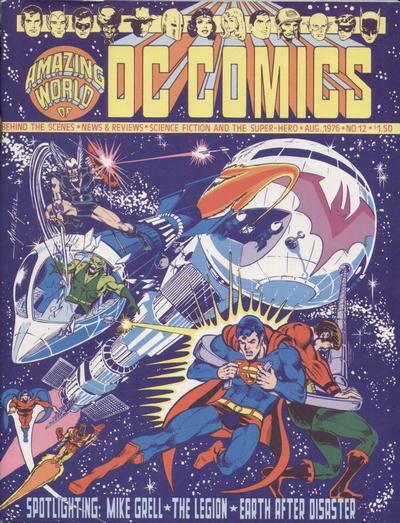
            In July 1976 DC released Amazing World of DC Comics #12, a “fanzine” featuring interviews and coming attractions. This issue focused on science fiction-ish comics (Green Lantern, the Legion, Earth After-Disaster, etc.) and featured a nifty Mike Grell cover.

Amazing_World_of_DC_Comics_Vol_1_12

            DC also released Charlton Bullseye #5 in July with art by Alex Toth and John Byrne (in separate stories), but it wasn’t really part of the DC pantheon. It being ignored made some sense. But still – why not? I guess they wanted to make collecting the headings easier, not harder.

            These larger comics and fanzines were harder to find for the average kid and I understand why DC did not include them in the 33.

            But why not the others? Why didn’t every issue of the line feature the Bicentennial heading? No amount of my internet trolling can find the answer. Does anyone know?

            It’s not because the issues missed were too expensive. Yes, some were fifty cents, but so were some of the 33. Some of the comics left out weren’t exactly the best-sellers, but neither were some of the 33.  Sales may have had a bigger impact than I let on – some of the comics left off the list were real stinkers.

            Which July and August 1976 DC comics did not have the Bicentennial heading?

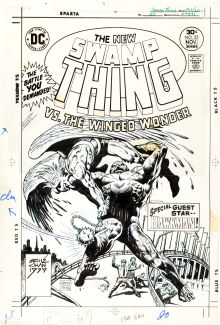
            Swamp Thing #23. This was the last issue of this iconic series. It was also the first issue I owned of Swampy’s adventures, ironically. It ended on a cliffhanger and Hawkman was touted to appear in #24, and even mentioned on DC’s “Daily Planet” – a one-page house ad made to look like a newspaper hyping upcoming issues. The cover and some page lay-outs of issue #24 can be found online. Is the complete story somewhere in DC’s dark basement?

sw24

            Witching Hour #64. Only the most die-hard Marvel troll would disagree that, although Marvel frequently out-did DC in the superhero department, DC did some fine horror-titles. Still, this was one of their lowest sellers.

            Flash #243. What!? Flash was third only to Superman and Batman back then – the concept of a “trilogy” with Wonder Woman was a modern-era creation – a poll of Justice League members in the late 1970s didn’t even place her in the top five. Why wasn’t Flash given a Bicentennial heading? Sure, it wasn’t their best selling comic, but … Flash no, Plop yes? Wha…?

            Perhaps it was because of DC Super Stars #5. It had a bicentennial cover and featured Flash reprints. Too much of the Scarlet Speedster, perhaps?

            Kobra #3. This was a great series, but sold dismally for its seven issues despite a unique premise (especially for DC) – twin brothers who shared a telepathic link. Injure one, the other feels it. Too bad one of them is the leader of a murderous cult bent on world domination. Great pulpy fun!

            DC Special #22. New stories of the Three Musketeers and reprints of Robin Hood from Brave & Bold.

            Star-Spangled War Stories #200.  Another baffling omission. Our Fighting Forces gets a Bicentennial banner but not SSWS? Featuring the Unknown Soldier, this book focused more on WWII spy thrillers than DC’s other war books (another genre at which DC arguably excelled over Marvel). The Unknown Soldier was (in my opinion, if not sales) second only to Sgt. Rock, with the Haunted Tank a close third (it was actually the other way around – Rock, then the Tank, then the Unknown Soldier).

            And the July 1976 issue was #200! Two. Hundred. Captain America #200 was published in August of 1976 and Marvel milked that for all it was worth.

            This issue featured not only the Unknown Soldier but also Enemy Ace.

300px-Star-Spangled_War_Stories_Vol_1_200

            Did its letter column even mention the wonderful synergy of cover date/issue number and content (what a better way to celebrate America’s birthday than by watching the Unknown Soldier cold-cock a Nazi on a moving train)? Boy did DC drop the ball on THIS one…

            Super-Team Family #5. Part of the “family” series of books – this one featured reprints of teams and team-ups with a few new tales scattered about. Soon they would change format to feature new tales of the Challengers of the Unknown. Later they would change formats again to feature new team-ups – the first four issues of the new format focusing on the Atom’s hunt for his kidnapped wife. An excellent story arc that needs to be gathered into a trade paperback! Issue #5 features all reprints, including the Batman-Eclipso team-up from Brave & Bold.

            Hercules Unbound #5. DC’s version of the man-god awoke after centuries to Earth-After-Disaster. Later issues had superb art by Walter Simonson.

            Metal Men #46. A series long past its prime that would limp along for another year or so, although I thoroughly enjoyed its last two years of issues. They featured Walt Simonson covers and interiors, with some interiors by current Dick Tracy artist Joe Staton and covers by legendary Jim Aparo.

            Plastic Man #13. Plas was originally a character with Quality Comics during the Golden Age and purchased by DC along with the Blackhawk, GI Combat, the heroes who would eventually become the Freedom Fighters, etc. Plas’ first DC comic lasted ten issues in the 1960s and this revival (beginning with issue #11) also lasted ten issues – folding in 1977. Great art by Ramona Fradon throughout this second run. This issue was written by Steve Skeates!

            Superman Family #177. All right, enough! They left out a Superman book. A. Superman. Book! With sales flagging, the Superman division of National combined three of their books – Superman’s Pal, Jimmy Olsen, Superman’s Girlfriend, Lois Lane and Supergirl into one book rotating the three stars. A new story for one of the stars and reprints for the other two. Of all the “family” books this was the most successful – publishing into the 1980s. 

            Wonder Woman #224. The (still) beautiful Lynda Carter-starring TV show was a big hit at this time, but despite that, until the mid-1980s, the Wonder Woman book was always a bit of a sales bomb – middling at best. National tried to boost her sales – just years before they stripped her of her superpowers and turned her into more Diana Riggs than Diana Prince, and in later years there were excellent stories featuring art by the legendary Gene Colon (in the issues before #300). But despite low sales they kept the series going so they wouldn’t lose their copyright on the character. DC eventually bought the character outright in the late 1980s which was also when her fortunes started to turn and the character become the iconic powerhouse it is now. Coincidence? Um, sure… Anyway, this issue features art by Curt Swan, doing a rare non-Superman-related title. The next issue is of more interest – Wonder Woman fights off “black lightning” on the cover. Not the inspiration for Tony Isabella’a character debuting within a year, but an interesting coincidence.

            Did I miss any?

***

            Why not put Bicentennial banners on all their books? And why decide on 33? What was the significance of that number or those particular issues?

            Choosing which of the 33 would have been a tough choice, and any book selected or rejected could have been debated and argued. I hope that was the case and the editors or whoever was involved didn’t just pick books from the top of the list.

            Why not include low-selling books to help its sales – like Swamp Thing? They had the next-issue blurb as the last panel; so why not boost sales for one last issue?

            Why not push up the publication of Starfire, or better still, Ragman – which debuted with a September cover date – and introduce them to new readers who may have otherwise passed on the books.

Why not move the publication of Green Lantern #90 up one month? The original run of the Silver Age Green Lantern ended with #89 – which was also the last issue of the iconic Denny O’Neil/Neal Adams “hard riding heroes” epic. This moniker was given to the “arc” much later. Denny O’Neil again wrote the revived title with Mike Grell as the new artist. The series lasted into the 1990s. You KNOW the issue was in the can by the time of the bicentennial promotion.  Its cover declared, “At Last! The Return of the Greatest Comic of Them All!” Not great enough to merit a Bicentennial heading obviously…

            Or would that be “too much” publicity? A big bicentennial promotion PLUS adding two new comics to the shelves? Oh, no, no, no, no…

            C’mon! If Marvel had done it, they would have done it better– as was usual with their business acumen of superhero books in the 1970s. Youngsters would be frothing at the mouth to get their hands on Kobra or Plastic Man and eagerly snapping up the new titles Starfire, Ragman and Green Lantern. Newsstand owners would be shooing kids off with brooms as the brats tore the headings off to GET THAT BELT BUCKLE!!!

            But these 12 comics above were not among the 33 chosen to represent DC’s Bicentennial celebration. We may not like it, but we have to accept it.

***

            My reviews of the chosen 33 will start soon, but first, a word from our sponsor…


            All comic covers, advertising, characters and images are the property of their respective copyright holders and reprinted here for your entertainment and review under the Fair Use Doctrine as commentary, criticism and … sometimes … parody.

            Keep in mind the actual creators probably only received a fraction of their creative worth at the time of their creation … but that is a whole other story…


Original Material Copyright 2015 Michael G Curry

DC Salutes the Bi-Centennial (part one)

DC SALUTES THE BICENTENNIAL

Part One: An Introduction


“DC Salutes the Bicentennial”. Does that ring a bell? July 4, 1776 is the most important date in our country’s mythos. Most people born before 1970 remember events on and around July 4, 1976 – the Bicentennial!

            I was 11 years old on July 4, 1976 – turning 12 that November. On the day itself we were out of town at a funeral, but I remember seeing plenty of fireworks in the distance as we drove through the night. CBS television had a “Bicentennial Minute” every evening through the first part of the year – a notable star or politician described what happened 200 years ago that day. President Gerald Ford had the honor of describing the monotonous – er – momentous events of July 4, 1776: our founding fathers voted approval of our Declaration of Independence (it wasn’t signed until several weeks later).

            By then I was already firmly entrenched in my nerdiness – I watched “Star Trek” and read the novelizations, my favorite TV shows were science-fiction-y and usually of the Saturday Morning variety. By this time next year “Star Wars” would dominate my culture. Can you imagine a world before Star Wars? Hardly seems possible, doesn’t it?

            Within two years my brother will join the Air Force and give me his record collection – including several albums by a British mop-topped quartet. This would start a love affair that has yet to diminish. Not just “With the Beatles” (heh-heh), but with rock music, too. In later years I discovered my beloved Badfinger and the Moody Blues.

            But in the first part of 1976 my loves were foremost comic books and related merchandise – superhero action figures, albums, etc.

            I lived near Sparta, Illinois, home of World Color Press. They printed DC, Harvey & Archie comics. So those were the comics my friends and I read – usually given to us free by World’s employees. Marvel was foreign to us – although World Color printed Marvel, they weren’t in the free bundles given out to employees. 

            My dad, by the way, did not word at World Color, but he did carpool with a lady whose husband worked there. “You have kids? Here!” Every few months we were in heaven when dad brought home a bundle of funny books.

            Marvel comics were available in supermarkets, though, but why buy comics when we can get them for free? Otherwise those characters were known only through their TV cartoons. By that I mean Spider-Man and the Fantastic Four. I was in my teens before I even knew who Iron Man or Thor was. I was in college before I knew what an X-Man was – hard to believe that, too, nowadays, isn’t it?

            So when I say I read comics as a kid – I mean DC comics. Archies went to my sister and Harvey (Casper and company) went to my youngest sister. A good division.

            National Comics (they wouldn’t officially call their releases DC Comics until cover-date February of 1977 – which means somewhere around November of 1976 – I’ll explain what that means later) celebrated our nation’s 200th birthday in a big way! Here is a house-ad that appeared in DC comics:

DC house ad

            In case it is hard to read:

            “DC Salutes the Bicentennial with a Great Free Offer! Look for our July and Aug(ust) covers which have the RED, WHITE and BLUE headings and are identified by a right-corner number 1 through 33.

            “If you send us at least 25 different cover headings, we will send, FREE, a METAL SUPERMAN BELT BUCKLE! (in antique silver finish!)

            “Example: … Cut and Send Top of Magazine!

            “Collect then, save them and then send them! Only these issues will be accepted!! Be the first on your block to collect the 25 headings!”

            And them the coupon with DC’s address and disclaimer (excludes wholesalers, employees and their families.)

***

            Note that we are talking about cover dates here, not release dates. Ever since there have been comic books the cover date is about two to three months after the release date. Once upon a time comic books were sold on newsstands …

            Let me back up; once upon a time there were such things as newsstands…

            A comic book with the cover date of July 1945 may have been released and on sale in April or May of 1945. This would “trick” the salesmen into keeping the comic on the shelf longer. “Eh? This-a Superman comic says July, ees-a only June-ah. I beddah not troh it away-ah.” It didn’t work – newsstand owners weren’t stupid – but the tradition sticks to this day.

            So the comics listed were on the stands and selling in April or May of 1976.

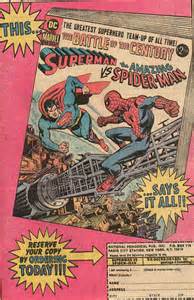
            These ads first appeared in the June issues – I checked three comics I had full runs of at that time World’s Finest, Brave & Bold and Justice League of America.  I checked the May issues and earlier and they had no ads for the Bicentennial; they each had ads for the Superman vs Spider-Man Tabloid-sized comic book out that year, however.

superspidey

             So this gave us only one month to save enough money to buy at least twenty-five comics while they were on the stands and then mail it all to DC Comics before the July 4th deadline. On top of saving for the Battle of the Century! Oh the pressure…

            This is nothing new. Kids have been collecting wrappers and box tops as long as there have been wrappers and box tops. This is not even a new thing in comics – ever since the first comics appeared in the 1930s kids were encouraged to cut out an ad or a symbol and cash in!

            But on this scale the only thing that I can think of as equivalent are the Marvel Value Stamps. In the letter pages of various Marvel comics were “stamps” of their characters on their letter pages. The stamps were only an two or three-inches-square and printed on the page as if it were any ad or text. Collect all 100 , purchase the handy-dandy Stamp book, paste the stamps on the inside and collect valuable prizes.

            The prizes consisted of discounts at various upper east coast conventions, free knick-knacks at said conventions, etc. A boy stuck in rural southern Illinois (a redundant term) didn’t find much use for such stamps.

            But a Superman belt buckle!? A Superman BELT BUCKLE!?

            Meh.

            Even at eleven years old … meh.

            It’s true – the prize didn’t thrill me. And twenty-five headings at thirty cents a comic (at the cheapest – some, like DC Super Stars #5 were fifty cents) was $7.50: a princely sum for a pre-teen.

            But forty years later it is another story. Collecting comics is now a fun hobby. They still entertain me – more so than modern comics. I want to read and review all 33 comics on the list. Maybe I’ll send in the tops (and ruin their value, true) and ask for my belt buckle. Oh sure the event ended on July 4th, 1976, but they might still have a few buckles lying around. Maybe DC will run across a box of them when as they pack for their move to LA.

            Writer Tony Isabella inspired me to do this series of reviews. For many years his blog contained reviews of comics released on the day of his birth. He now blogs about the comics released at the same time Fantastic Four Annual #1 was published – the comic that inspired him to want to be in the business. It was a day that changed his life.

            I considered doing comics released on the day of my birth, but nixed it. I don’t have that many and am not that interested in doing that much research. But DC’s Bicentennial issues – comics I have or can get for the price of a current comic? Why not?

            In past blogs I’ve reviewed the Adventure Line series of comics DC released in 1975 https://michaelgcurry.com/2015/01/02/the-dc-comics-adventure-line/, and released a companion/review of The Brave and the Bold comic as an ebook https://www.smashwords.com/books/view/497750. So I’ve had plenty of experience writing about and reviewing my favorite comics!

            So I decided to review the 33 comics with the Bicentennial headings in order of their number – regardless of issue number or release date. I will discuss the plot, art and creators of the particular issue and discuss the comic series itself. I will list the contributors of the letter columns and, if interesting enough, may sum up what they wrote. I will load each review with enough details to bore even the most ardent comic book fan.

            Will you join me on this trip back to July 1976? That’s the Spirit!

            Heh, see what I did there …


            All comic covers, advertising, characters and images are the property of their respective copyright holders and reprinted here for your entertainment and review under the Fair Use Doctrine as commentary, criticism and … sometimes … parody.

            Keep in mind the actual creators probably only received a fraction of their creative worth at the time of their creation … but that is a whole other story …


Original material copyright 2015 Michael G Curry


The Warlord: DC Comics Adventure Line’s Most Successful Failure

Enter the Lost World of … THE WARLORD!

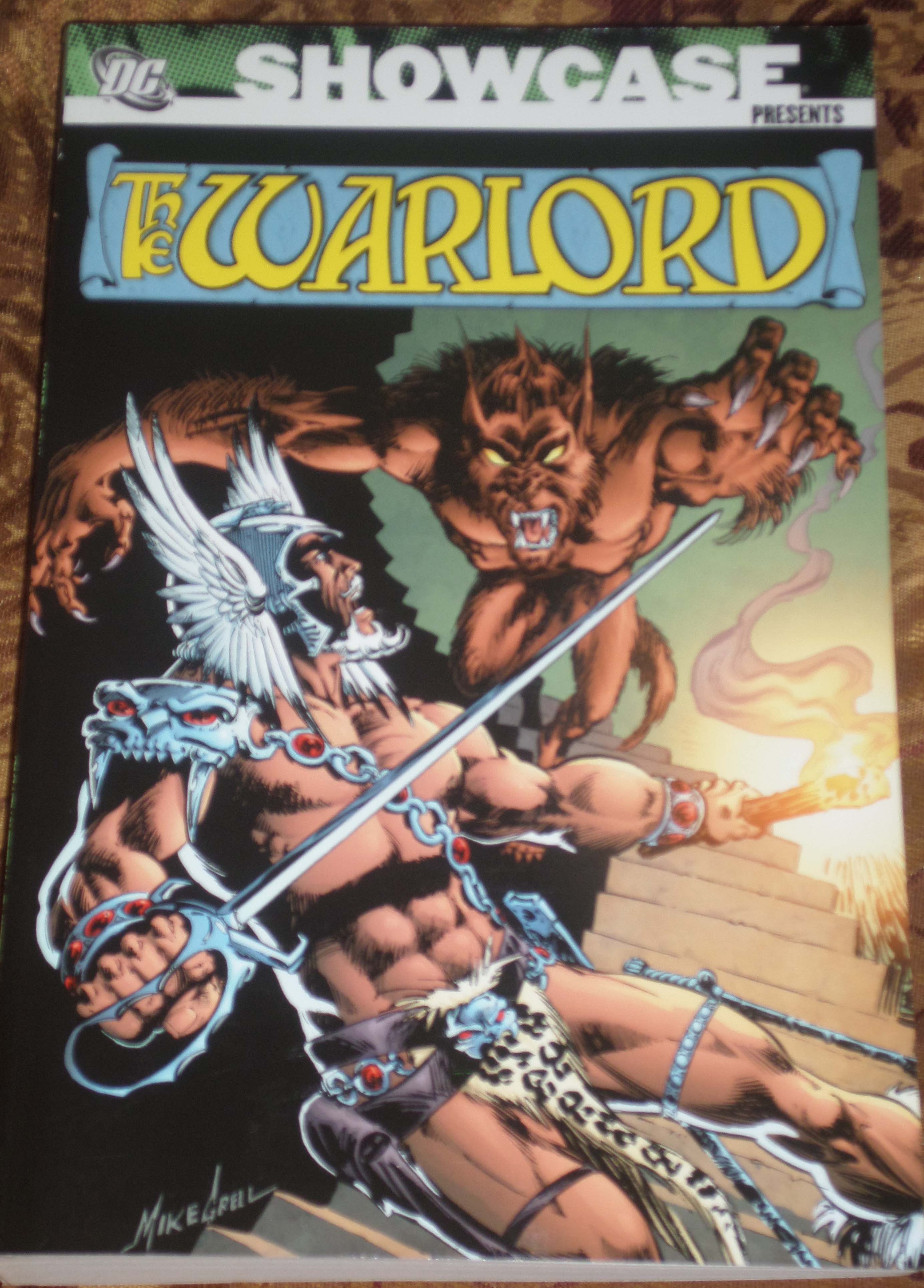
    SAMSUNG CAMERA PICTURES

            The one true success of DC’s Adventure Line was The Warlord.  His comic lasted until issue #133 in 1988 – despite a hiatus between issue #2 (April 1976) and #3 (November 1976) of nine months. The character appeared throughout the DC universe – in Crisis, Aquaman, Green Arrow, his own revived series, and in DC’s current mega-event “Convergence”.

            Then again, you could argue Warlord was DC’s Adventure Line’s biggest failure! It was the last of the seven comics of the line to appear – and that was in First Issue Special. First Issue Special replaced Showcase as DC’s anthology series for new or revived series. Issues featured Metamorpho and the Creeper, the Green Team and a revival of the New Gods (the only other feature from First Issue Special to get its own magazine). Warlord as its own magazine did not appear until February of 1976 (remember the cover date is about four months ahead of the publication date – it was published around November of 1975). It only lasted two issues.

            Click here for Mike Grell’s explanation of the hiatus between issues #2 and 3!

            It did not appear on the stands again until the next summer – the month after the last issue of the only other Adventure Line alum – Claw – was published. It is likely Warlord took Claw’s place on the roster.

            Regardless, from May 1975 until December 1988 fans of the non-imprint enjoyed the best of high adventure!

            For the purists, July 1975 was the only time a fan of the Line could purchase all seven titles – it was the only month all seven titles were new on the stands (these had October and November cover dates).

            Why was Warlord such a late entry? It was published too late to have the Adventure Line ad in it. Why did it appear first in a “try-out” comic instead of its own feature like Kong or Stalker? Were the powers at DC afraid Warlord might not be a success? When I meet the creator again I may ask him…

            Warlord was Mike Grell’s baby – he wrote the series through #79 and drew the book until issue #53. Since its original run the title has been revived three times; once as a miniseries and twice as a continuing series – other than the original run the fourth series was the longest and lasted only 16 issues. Even so, these “failed” revivals lasted more issues than most of the other Adventure Line comics!

            I promise not to review all 133 issues, just the first ten (eleven if you count First Issue Special…)! It will give you a good taste of the series.

            In fact, issue #50 of The Warlord had a series synopsis of the prior issues in its letter column. As I’ve written here before, since someone has already done the work for me… Ross Andru was the editor and Karen Berger was the editorial  coordinator for #50 – the actual writer of these synopses is unknown.

***

            Unless otherwise notes, all issues were written and illustrated by Mike Grell and edited by Joe Orlando.

First Issue Special #8, “This Savage World”, November 1977, Travis Morgan crashes in Skartaris and rescues the princess Tara from the evil Deimos. I got Iron Mike to sign my copy (on the bottom of the page along the dinosaur’s tail…).

SAMSUNG CAMERA PICTURES

#1. “This Savage World”, February 1976, En route to Shamballah, Travis and Tara are captured by slavers. Travis helps free Tara, but is tied and left for dead.

#2. “Arena of Death”, April 1976, Escaping, Travis is captured and made a galley slave. After a sea battle he and fellow slave Machiste are made gladiators. Travis leads the gladiators in revolt when he learns that Tara has been captured by Deimos.

            The story does not end in a cliffhanger per se, as had the previous issue, but it had an open ending. Yet “The End” was prominently written on the final page. Did Messers. Grell and Orlando know this was the last issue? Did they know it would come back in a few months? I don’t have the issue so I cannot read the letter column to find out! I DO have the Showcase collection of its first few years, but those (unfortunately) do not contain ads or letter columns. Anybody out there have the issue? What does the letter column say?

#3. “War Gods of Skartaris”, November 1976, On their quest for Tara, Travis and Machiste battle the lizardmen and discover Travis’ wrecked plane. This was the first issue of the comic I owned. I made sure to pick up the series for many years afterward. I left it about the same time as Grell…

#4. “Duel of the Titans”, January 1977, Warlord’s band attack Deimos’ stronghold, but he uses the lost science of Atlantis to hold them back. Travis faces Deimos in a sword fight and kills him, freeing Tara.

#5. “The Secret of Skartaris”, March 1977, Jack C Harris took over as editor. On their way to Shamballah, Travis and Tara discover some ruins where they learn that the “magic” in Skartaris is really lost Atlantean science. An old Atlantean tramway accidentally returns him to the surface world.

#6. “Home is a Four-Letter Word”, May 1977, In Peru, Travis meets Mariah Romanov and an international party  of archeologists. After helping them defeat a demon, he and Mariah return to Skartaris, pursued by a CIA man who believes Travis a traitor.

#7. “The Iron Devil”, July 1977, Warlord and Mariah meet Machiste again and Travis is forced to sever his friend’s hand, freeing him from a cursed battleaxe.

#8. “The City in the Sky”, September 1977, Denny O’Neil takes over as editor. Our trio encounter and defeat a man-eating cyborg on a floating city manned by robots.

#9. “Lair of the Snowbeast”, November 1977, Lost in the snowy wastes, Warlord rescues Marian and Machiste from a warrior tribe with the aid of a mysterious snow beast.

#10. “Tower of Fear”, January 1978, Larry Hama takes over as editor. Our trio rescues Ashiya, and then aids her in obtaining a mysterious Mask of Life with which she later secretly revives the slain Deimos.

***

            The art and stories were excellent throughout. Criticisms that it contains warmed-over tropes of a Hollow Earth and a Land That Time Forgot miss the point. Grell’s sheer joy in the stories and characters shine through. He shows a fully-realized fantasy realm here – something missing in, say, the last issues of Kong the Untamed.

            It was a thorough tale of a realized world that unfolded slowly like a novel. It was wonderfully done. And his women were gorgeous!

***

            Warlord’s success is evident in his appearances outside the comics realm – he had his own action figure line through Remco,

 warlord 1

he appeared in the Justice League Unlimited cartoon,

 Warlord 2

and (mordant bleu) even in cosplay!

 warlord cosplay

            The comic previewed two other successful sword and sorcery DC comics: Arak Son of Thunder and Arion Lord of Atlantis. Two other back-up features – Adventure Line alum Claw (which concluded the story line of his cancelled series) and Dragonsword – were wonderful additions. Warlord was DC’s most successful sword-and-sorcery comic during its run, so it served as the touchstone and host for DC’s other attempts at the genre.

***

            One huge success out of seven comics. Not very good for a line of comics. But this “line” or (imprint as we’d call it nowadays) only existed in one full-page house advertisement, and every issue was great fun. And most of them have aged well – there were no real stinkers in the batch.

            I loved reading them then, I love reading them now. I enjoy the comics and they entertain me. I finish each issue with a smile. That’s pretty rare for a comic nowadays.

            Thanks for joining me in this look at some of DC’s more obscure run of comics!

Original Material Copyright 2015 Michael Curry

Claw the Unconquered; finally, a DC Adventure Line success! For a while…

The World Trembles Before the Blade of … Claw the Unconquered!

 claw ad

            Other than Warlord, Claw the Unconquered had the most staying-power of any of the Adventure Line heroes; and for a time even outpaced the tales of Travis Morgan in Skataris. Claw lasted twelve issues total – there was a hiatus between issues 9 (October 1976) and 10 (May 1978) of 19 months. Issues #13 and 14 were reprinted in the legendary Cancelled Comic Cavalcade.

            Why? Claw’s premise and stories weren’t as limited as, say, Kong. Tor was basically a reprint vehicle. Justice Inc couldn’t seem to build an audience for its pulpy hero. Beowulf and Stalker were too weird despite excellent stories and premises.

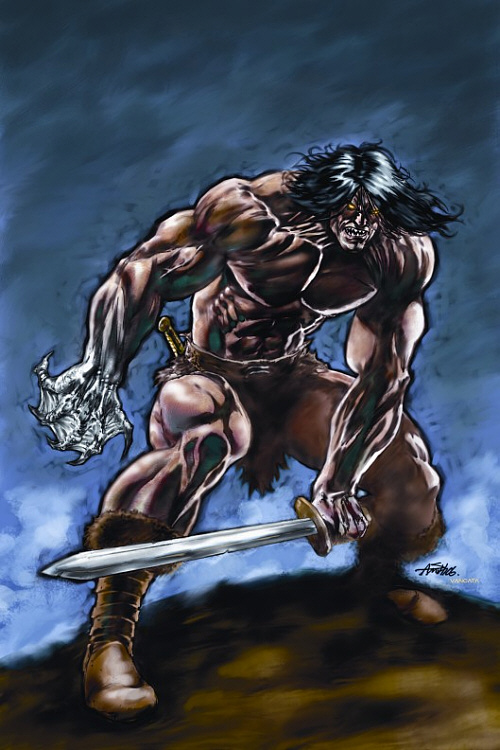
            He was the most Conan-like of the Adventure Line. The huge success of Marvel’s Conan the Barbarian was likely the impetus for spawning the entire Line. Claw had long black hair, spoke in pre-Shakespearean jibberish and fought demons and sorcerers.  Plus the stories and art were top-notch. What’s not to love?
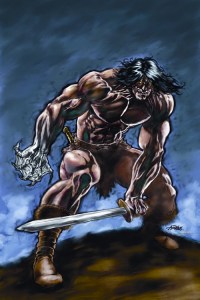
claw 

           David Michelinie is the writer throughout the series –and it is obvious he had his ideas for his excellent story arc set in his mind from issue one. Claw’s back story unfolds slowly – perhaps in retrospect too slowly. And much like the Cimmerian, he is not a noble warrior like Beowulf, or a champion of fairness and justice like Tor or the Avenger. But he has honor and will lend a helping, er, hand if he sees it is needed.  I don’t think we ever saw that in Stalker even when he WAS helping damsels in distress.

            The first seven issues were drawn by the legendary Ernie Chua, whose real name was Ernie Chan. If you saw a comic book cover in the 1970s and it was NOT done by Jim Aparo, the odds were fair it was done with his telltale signature mark on it. His drawings were dark and detailed – unlike the lighter touch of the later issues of Kong, for example.  The resemblance between our hero and the Cimmerian were likely intentional, but the minute details of musculature – whether human or demonic – as well as the tone and pacing gave the story the moody look of a DC horror magazine.

***

 SAMSUNG CAMERA PICTURES

            “The World Trembles Before the Blade of …” appears on the cover of every issue from #1-#7.

#1. June 1975, “The Sword and the Silent Scream”, Cover by Ernie Chua. David Michelinie (writer), Ernie Chua (a), John Albano Jr (i), Ben Oda (l), Joe Orlando (e). We meet Claw, real name Valcan, who walks the streets of Ithar, capital of the realm of Pytharia. During a meal a serving wench spills ale on him and tries to dry him off. She removes his single red gauntlet (this was long before Michael Jackson’s single white glove) and reveals his right hand – grey and webbed and ending in claws like that of a dragon. The Lord of Pytharia – Occulas of the Yellow Eye – has waited all his life for this man. It is prophesied that a man with such a hand will stop Occulas from ruling the known universe. A bounty is put on Claw’s head. And hand…

            We learn through flashback how Prince Occulas learns of the prophecy. He kills (presumably) Claw’s father – who has a similar hand – and mother, unknowingly leaving infant Valcan alive. Occulas also kills his own father to become king. A mysterious benefactor with a glowing white hand saves Claw – we see the baby’s right hand is identical to his father’s. Claw informs a female companion that he has no memory other than the past few weeks – when he entered Ithar. He knows not how his hand came to be as it is. 

            The companion? It was the serving wench from earlier in the story – when city guards chase Claw she leads him into a trap set by Occulas. Hiding in a temple, Claw is attacked by an ancient god, Kann, the all-consuming – a giant eye with venus flytrap-like appendages. Claw defeats the ancient god by grasping a support rod with his dragon-hand and piercing the god’s center with impossible aim and impossible force. Was it strength and ability through desperation or some other power emanating from his clawed right hand?

            The letter column contains a biography of David Michelinie.

This issue includes a full-page ad for Joker, Justice Inc, Claw the Unconquered and Ghost Castle, with a tease for Beowulf Dragon Slayer and Richard Dragon Kung Fu Fighter at the bottom.

 SAMSUNG CAMERA PICTURES


#2. August 1975, “The Doom That Came to K’Dasha-Dheen” (there’s a Howardian/Lovecraftian title if there ever was one – another reason fans of the Cimmerian were attracted to this book). Cover by Ernie Chua. David Michelinie (writer), Ernie Chua (a), Elizabeth Barube (i), Ben Oda (l), Joe Orlando (e). Hellhounds attack Claw and the assassin he is currently fending off. They are rescued by a rope dangling in mid air! They climb up to find the city of K’Dasha-Dheen floating amid the clouds. Actually, it is in between dimensions and requires sacrifices to keep it from crashing to the earth. Guess who the next two sacrifices are? Once safely back to earth, the assassin attempts to again kill Claw to collect the reward and is slain for his efforts.

            The letter column contains a biography of Ernie Chua.

            This issue contains the full-page ad for the DC Adventure Line.


#3. October 1975, “The Bloodspear”. Cover by Ernie Chua. David Michelinie (writer), Ernie Chua & Pat Boyette (a), Pat Boyette (l), Tatjana Wood (i) Joe Orlando (e). This issue is noted in price guides as containing nudity. It shows a naked lady with careful covering – tame compared to what we see nowadays… Claw rescues a beautiful maiden being attacked by lizard men while she is stuck in quicksand. He pulls the maiden, named Elathia, from the muck to reveal she is a centaur! She is, in fact, a human turned into a Centaur. A kindly wizard can turn her back if she retrieves Kyriach – the spear of the story’s title. Claw agrees to help. Fighting off monsters galore, Claw retrieves the spear. Once safely in Elathia’s hands, she uses the spear to assassinate Claw – you see, THAT was the bargain the wizard made with her. Claw’s armored hand grabs the spear with inhuman speed and strength and drains it of power – another manifestation of Claw’s power of which he is unaware. He kills Elathia. As she dies she thanks the gods she will finally turn back into a human. She does not. She was a centaur all along and tricked into this mission to kill Claw. The wizard? It was Miftung – the chief wizard of Lord Occulas of the Yellow Eye.

            The story in issue #2 had no threat by Occulas or Miftung – though they do appear in every subsequent issue. Smart move, even if #2 was a bit of filler. It kept the comic from being too repetitive. However, this issue stilled echoed #2 – an ally turns on Claw when all is safe … makes one hope this isn’t going to happen every issue.

#4. December 1975, “The Coming of N’Hglthss”, Cover by Ernie Chua. David Michelinie (writer), Ernie Chua & Pat Boyette (a), Ben Oda (l) Joe Orlando (e). Occulas threatens Miftung if he fouls up again and allows Claw to live. So he opens an interdimensional gate from which N’Hglthss (geshundheit) is “unleashed upon an unwary world … N’Hglthss, whose vile passage brings naught but death and decay … yet who cannot himself be touched by death … it had taken Avistar, the Burning Man, to reveal the only weapon effective against N’Hglthss :a silver sword called Moonthorn, whose origins lie buried deep in Claw’s unknown past … a blade attainable only by uniting the three facets of an arcane talisman known as the Grimstone …” (this was the description from issue #6 – ok, so I’m lazy, but they already did the work FOR me…).  This issue introduces Claw’s ally Ghilkyn, Prince of the Thousand Hills. He is an interdimensional traveler trapped on Claw’s world. During his travels he obtained small horns jutting from his forehead. For the first time in three issues, someone allies with Claw and does NOT try to kill him at the end of the issue.


#5. February 1976, “Grimstone Quest”, Cover by Ernie Chua. David Michelinie (writer), Ernie Chua (a), Joe Orlando (e). The first talisman is held by an ancient wizard. He will give Claw and Ghilkyn the talisman if they retrieve the crystal eyes of the Oracle. They must defend themselves from a giant lobster and a beautiful maiden to get it!

            The letter column contains a map of the known world. Gotta love maps – especially since this one was designed by David Michelinie and Debra Urlich, with some help from legends Tex Blaisdell and Joe Kubert!

            This was my first issue of Claw – I got it fresh off the presses! Literally! Most DC comics back then were printed at Sparta Printing in southern Illinois. Workers were allowed to take home bundles for their kids. My father worked for the Air Force, but he carpooled with a lady whose husband worked at Sparta Printing. “You have kids, here!” And thus my future was set in stone…


#6. April 1976. “The Sunset Doom of Dhylka-Ryn”, Cover by Ernie Chua. David Michelinie (writer), Ernie Chua (a), Joe Orlando (e). Claw and Ghilkyn seek the second talisman in the village of Dhylka-Ryn, a town tormented by a young villager that was bullied as a youth, until he found a certain talisman … during the battle Claw and Ghilkyn despair for their lives – they knew the end was near. Claw’s hand thrust upward and absorbed all the magical energy in an excellently drawn few panels. Another power has manifest from Claw’s demonic hand…

            The letter column announces the coming of a companion magazine – Starfire! I remember that comic. Fun stuff! I would have made an excellent addition to the Adventure Line. If it actually existed. And lasted…


#7. June 1976, “The People of the Maelstrom”, Cover by Ernie Chua. David Michelinie (writer), Ernie Chua (a), Joe Orlando (e). With this issue Claw becomes the longest running magazine of the Adventure Line – all the others by now had been cancelled; the last two being Beowulf, the last issue of which was the month before, and Tor, the last issue being the month before that. Claw bests even Warlord, which had since gone on hiatus months ago with its issue #2. Warlord would eventually win out … as will be explained in its entry. But for now the winner is Claw!

            Also with this issue, the cover price goes up from a quarter to thirty cents. Sales naturally plummet across the board…

            The final talisman is being used to keep an underwater city from being inundated by the sea, er, lake. The city is filled with an advanced civilization of pacifists. Claw tries to take the talisman; Ghilkyn tries to stop him and they cross swords. A small girl asks them to stop fighting. Claw realizes he will destroy these peaceful people and stops. Occulas again threatens Miftung to destroy Claw and the wizard sends a muck-thing from the seafloor to destroy our hero! The city gives Claw the talisman anyway – the needs of the many outweighing the needs of a few, and all that. Claw realizes this is not a civilization of cowards and that bravery comes in many forms.  They lock the talismans together and disappear into the void!

            The letter column announces Ernie Chua is leaving as of this issue to concentrate on his excellent work on the Batman titles.


#8. August 1976, “Master of the Seventh Void”, cover by Ernie Chua, David Michelinie (writer), Keith Griffin, Ricardo Villagran and Oscar Novelle & Luis Dominguez (Luis is mentioned in the letter column, but not in the splash-page’s credits) (a), Liz Berube (i), Joe Orlando (e). Another milestone issue – a new art team debuts. And they do an excellent job – they better, they had some huge shoes to fill. The first thing I noticed was Claw looked more like a Native American than a certain Cimmerian. The artwork certainly fit this excursion into weird worlds.

            Claw and Ghilkyn enter the seventh void. By page two Ghilkyn is thrust back to … well, who knows where, leaving Claw on his own…

            Tell you what, let me use the author’s own synopsis from #9. I’m lazy that way: “traversing that demonic plane alone, Claw had come upon the object of his worlds-spanning search – the enchanted silver0hued blade called Moonthorn. But Moonthorn had a guardian – the malevolent politician-cum-sorcerer (snicker) Mahan K’Handa … a creature whose corrupt soul lay captive in a crystal egg about his waist … a vulnerability Claw’s twisted right hand had somehow sensed and had crushed into oblivion allowing the elusive prize to fall into Claw’s grasp and allowed the Grimstone quest to at last end in success.” I will give my collection of Claw comics to the first reader who successfully diagrams that sentence. Now it is on to defeat the evil N’Hglthss (geshundheit)! Remember him? The readers are promised Claw’s origin next issue!


#9. October 1976, “Long Die N’Hglthss!” Cover by Ernie Chua, David Michelinie (writer), Keith Griffin & Bob Layton (a), Liz Berube (i), Milt Snappin (l), Joe Orlando (e). The South American Crusty Bunkers (a name given to a core of artists who occasionally helped out Neal Adams and Dick Giordano at deadline time…) are out. The artwork is still well done, but it has lost some of its more macabre qualities … perhaps because this issue takes place on Claw’s home plane. Perhaps. This is the last issue of Claw during its first run and with it, the last comic published as part of the Adventure Line. Next month, in a cover dated November, Warlord #3 is brought back from its hiatus and runs for the next twelve years. Warlord picks up the mantel after being dropped, but by now the Adventure Line had run its course.

            Ironically the issue contained a full-page ad for another non-imprint: the DC/TV Line! Shazam, Isis, Welcome Back Kotter and Superfriends! Don’t worry – it won’t be another blog series…

            Claw returns to his world to find Ghilkyn in pitched battle with mechanical hounds. The friends reunite and finally kill off N’Hglthss. Upon the death blow, Claw is whisked to another dimensional realm and his story is revealed. Claw’s ancestor was a seeker of knowledge. He unwittingly channeled a demon and before he could return the fiend and was cursed to forever have the inhuman power of the demon’s tainted right hand. A synopsis from Claw #10 (remember? I’m lazy – oh, and reread the tale of Claw’s parents’ death in issue #1, it will help with this next part): “… the orphaned child … (was) … raised by the Gods of Elder Light to be trained in all forms of weaponry and, after receiving a mysteriously sentient gauntlet to shield him from the diabolical influence of the hand, to be released to walk the world as an unwilling warrior against the Shadow Gods, creatures of inconceivable eveil whose struggle for control of the fifteen worlds threatens the cosmic balance itself … demons who have chosen as their own dark champion Occulas of the Yellow Eye, the same despot who had ordered Claw’s parents murdered and against whom Claw even how seeks retribution…”. Claw says farewell to his friend Ghilkyn and leaves for Darkmorn to exact his revenge against Occulas of the Yellow Eye. Meanwhile, surprise-surprise, Occulas threatens Miftung with his life for his incompetent wizardry.


#10. May 1978, “The Eater of Souls”, Cover by Joe Kubert, David Michelinie (writer), Keith Griffin & John Celardo (a), Mario Sen (i), Clem Robins (l), Paul Levitz (e), Joe Orlando (managing ed). HOLD IT! You just said the Adventure Line had run its course! The title was brought back (after Metal Men was cancelled and a slot was available) a year and a half later! THIS isn’t officially part of the Adventure Line anymore – why bother?

            …

            …

            meh.

            The author tells us a bit of the sales history of the title in the letter column and why this issue is something of a fill-in. The story intended for the December 1976 issue of Claw will be told in the next issue.

            Claw is attacked by another beastie invoked by Miftung and defeats it. {edit/paste} Occulas threatens Miftung with his life for his incompetent wizardry. During a Miftung-invoked storm, Claw takes refuge in a palace in which dwell Those Who Abide. Claw discovers that Those Who Abide are not, in fact, dudes, but men granted immortality by the Shadow Gods. But at a price – their bodies age if they do not regularly perform a human sacrifice. Guess who they’ve elected to be their sacrifice. You get a cheroot…


#11. July 1978, “Death at Darkmorn”, Cover by Joe Kubert, David Michelinie (writer), Keith Griffin & John Celardo (a), Carl Gafford (i), Ben Oda (l), Joe Orlando (e). The world map from issue #5 is reprinted in the letter column. This story, if last issue’s letter column was telling the truth, was slated for Claw #9 back in December of 1976 and has been in a vault languishing for the past 1-1/2 years. I am skeptical – the tenor of the artwork – the hue of it – seems more akin to issue #10 than #9. The author may have had the story  back in 1976, but the art didn’t look like something done in the weeks following issue #9.

            Claw is attacked by Occulas’s elite guard. {edit/paste} Occulas threatens Miftung with his life for his incompetent wizardry. Oh wait, his wizardry had nothing to do with the defeat of Occulas’ elite guard. He threatens the wizard anyway. Miftung makes the castle compound float to the clouds. Claw manages a foothold in the floating fortress and climbs his way into the castle. {edit/paste} Occulas threatens Miftung with his life for his incompetent wizardry and demands Miftung cast the Spell of transfiguration. Claw defeats a wax guardian and finally faces Occulas – who transfigured into a giant red-hued demon! Claw kills the demon but Occulas survives! The transfiguration was linked to Miftung’s life, not Occulas. Miftung, in his last bit of sorcery, teleports Claw back to his horse. He explains that with his death, all his magic ceases … including causing the castle to float. Claw watched the castle crash to the earth. He walks away with a victory, but an unsatisfactory one.


#12. September 1978, “The Slayer”, Cover by Joe Kubert, David Michelinie (writer), Keith Griffin & Bob Layton (a), Mario Sen (i), Ben Oda (l), Larry Hama (e), Joe Orlando (managing ed). Now the Michelinie/Giffin/Layton team WAS the same team as #9 … having the same art crew would better convince me that #11 had sat in a vault for eighteen months. But now that the talisman/Moonthorn/Occulas saga is over, it is time to move on…

            Claw is caught in a border war between Boske and Kyfirth. He is employed to teach fighting skills to the mercenaries, but not before he is tricked into losing his crimson glove. The demon hand slowly takes over his sense of honor and he begins to slay enemy and friend alike. When he realizes he is about to lose his humanity, he cuts off the demon hand.

            The letter column tells us of Trysannda – a female companion introduced in this issue. She isn’t. The column tells us that five letters were received. If they do not receive any more responses, the title may be cancelled again. It was.

            The issue contained news of the upcoming DC explosion! An event that would change comic book history forever!! Why are you snickering?

***

            Claw #13 and 14 were prepared but never published – except in the first “issue” of the famous-but-mostly-unseen Cancelled Comic Cavalcade… I took the descriptions of these issues from http://comicattack.net/2009/11/retcon-cancelled-comic-1/. As I have said in the past – if someone else has done the work for me … (Note: my additional comments are in italics)


#13. “Tthe Travelers of Dark Destiny” was written by David Michelinie with art by Romeo Tanghal and Bob Smith (with Mario Sen (i), Shelly Leferman(l), Larry Hama (e), Joe Orlando (managing ed)). Claw has lost the gauntlet that protects him from his demonic hand’s influence, and as the story opens, he’s recovering in a tavern after severing the appendage. He meets Trysannda, a beautiful sorceress, who is seeking his aid to destroy an evil wizard. Claw declines, citing his maimed state, but the two are forced to flee together. After they finally reach relative safety and set up camp for the evening, Claw’s hand catches up to them and reattaches itself to his arm while he sleeps. Realizing he cannot escape his curse, he must reclaim his stolen gauntlet to hold his hand in check. In a coincidence that can only happen in comics, the thieves who stole the gauntlet sold it to Dalivar the Unethical, the very same wizard Trysannda wishes to kill!

            Ironically, perhaps sarcastically, after telling us Claw had only received five letters, what would have been the letter column of #13 tells us that letters are “cascading in”. Publisher Marty Greenberg (of Gnome Press’ Conan and Fafhrd and the Grey Mouser books in the 1950s) has a letter published.


#14. “When the River of Ravenroost … Ran Red!” written by Tom DeFalco and illustrated by Romeo Thangal and Bob Smith (Shelly Leferman(l), Larry Hama (e), the colorist’s name was left blank – as it was likely not yet colored, nor was there a managing editor named as there was no indicia on the title page), opens with Claw and Trysannda arriving at Castle Ravenroost, Validarr’s stronghold (somehow, Dalivar has now renamed himself Validarr since the last issue!).  As Claw battles the elemental guardian of the gates, Trysannda is kidnapped by Validarr. Claw defeats the monster and storms the castle. Confronting Validarr, he comes almost within reach of his gauntlet but is defeated and thrown into the dungeons. Escaping, he finds Trysannda and saves her from a demon. The two flee deeper into the catacombs but end up in a bizarre realm called the Lair of Lunacy.

***

            Warlord was scheduled to run a back-up feature starring Kamandi. It didn’t pan out and something was needed for a back-up until a replacement was found. DC decided to wrap up the hanging threads of Claw’s cliffhanger from #12. Rather than reprint the issues from Cancelled Comic Cavalcade, they ran a new two-part sixteen-page story completing the cliffhanger … again … for the first time … in other words, from scratch. Scratch. Claw. Get it?


            Warlord #48, August 1981, “Curse of the Claw”, Jack C. Harris (writer), Tom Yeates (a), Jerry Serpe (i), Pierre Bernard Jr. (l), Michael C. Carmichael (Asst Ed), Ross Andru (e). Claw accepts his coming death until the clawed hand he lopped off back in 1978 reattaches itself. He curses the gods of light who come to him and convince him to be their champion and rule the known universes. He is to go to Ichar (the original run called the city Ithar) whence ruled his nemesis Occulas and conquer the demon horde attacking the city. The leader of the demon horde … um … has a human hand…

            Ironically, this issue of Warlord also has a preview of the upcoming Arak, Son of Thunder series by Roy Thomas and starring another red-hued barbarian who is compared to the Cimmerian. I always considered Arak to be Claw’s successor in DC’s sword and sorcery slot, although Arak is grounded in reality (taking place on earth during a specific period of history, meeting characters who actually existed, etc.). This preview, and the first several issues of Arak, were drawn by Ernie Colon and inked by Alfredo Alcada – who masterfully drew the first two (and best two) issues of Adventure Line alumni Kong the Untamed. The circle is thus complete.


            Warlord #49, August 1981, “Hands Across the Hells”, Jack C. Harris (writer), Tom Yeates (a), Jerry Serpe (coloring), Gaspar Saladino (l), Ross Andru (e). Claw and the demon fight for hours to a draw. Before Claw succumbs to fatigue, the wizardess Shalieka performs an incantation to switch their hands forever; although it is likely one shall die. Claw overcomes his opponent and slices off the human hand of the demon – who falls into the maw of the god of death. Claw realizes this hand is not “his”, but his ancient ancestor’s, and it crumbles to dust. Claw and Shalieka ride into Ichar/Ithar in triumph. In the distance, an avatar of the Shadow Gods commends Shalieka on job well done …

            Only one letter in Warlord’s letter column (in #53) made mention of these stories and was favorable – especially enjoying Yeates’ art.

***

            The character appeared in a cameo in Star Hunters #7 (October 1978) along with fellow-David Michelinie-creation Starfire (Star Hunters was also a Michelinie creation).

            This is the total of Claw’s appearances in the Bronze Age. Claw appeared through the DC universe since: in a cross-over miniseries with Dynamite’s Red Sonja, and in his own revived title as part of DC’s Wildstorm imprint (an actual imprint – as opposed to the DC Adventure Line) for six issues. Earlier, he appeared in Swamp Thing (with Adventure Line alum Stalker), the 2008 Wonder Woman story arc Ends of the Earth, along with Stalker and Beowulf, and in issue #1 of the series Time Masters Vanishing Point. His demonic gauntlet appeared in Justice League: Cry for Justice as the villain’s artifact.

            So with his (somewhat) amount of staying power we will likely see Claw again in the future. If you see any future appearances or even in his own title, pick them up! It’s fun while it lasts…

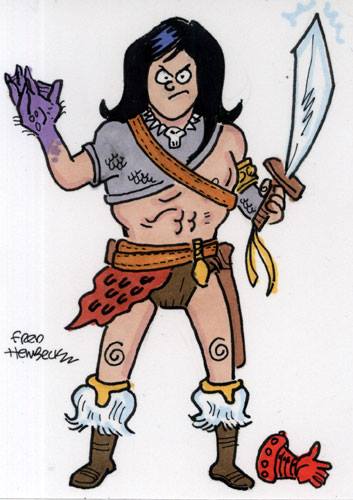
claw by hembeck

         This wonderful drawing was done by the legendary Fred Hembeck. Like him on Facebook and check out his many auctions on Ebay – where I found this sketch card. He has many, many cards featuring comic book characters and figures from literature to pop culture – from Shakespeare to the Three Stooges from Superman to the Beatles!

Original material copyright 2015 Michael Curry

Beowulf, Dragon Slayer: DC Adventure Line

“The First and Greatest Hero of Them All! Beowulf Dragon Slayer

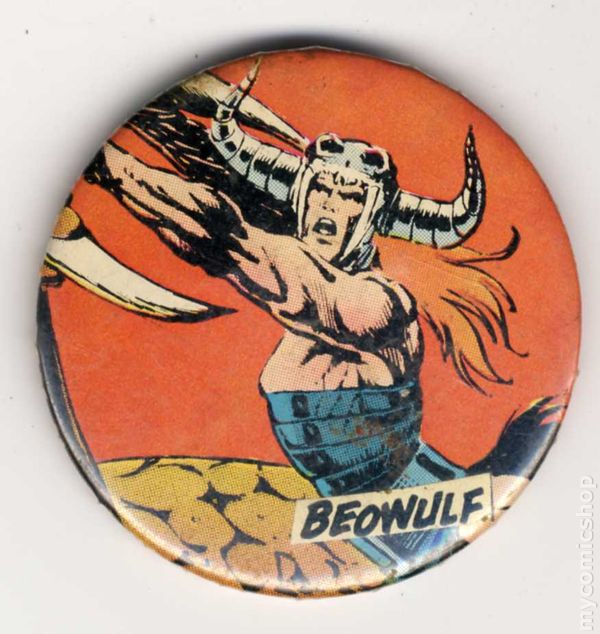
beowulf

            Anyone who took an English Lit class knows about Beowulf.

           It is the oldest known epic poem in Old English. It has been translated and reviewed and critiqued more than almost any other book. Recently JRR Tolkien’s estate published his translation of the story. This is fitting, as “Beowulf” was one of Tolkien’s favorite subjects and you can hear the story’s echo throughout “Lord of the Rings” and most fantasy epics since.

            In sum: hero Beowulf aids King Hrothgar in fighting Grendel, then Grendel’s mother, and – many years later after becoming king – gives his life defeating a dragon. Oh get off about spoiling the ending – it’s Beowulf … People have been saying “Don’t spoil the ending” for over a thousand years now. Well, back then they said “Gefyllan na asecgan hit” but you get the idea.

            As far as I can tell from my internet trolling, DC’s Beowulf Dragon Slayer is the first comic book adaptation of the character in a starring role.  I found that hard to believe – no one wrote or drew a version in the Golden or early Silver Age? The letter column of issue #1 says there were many poor comic versions in the past, but I can only find a few pre-1975 comics with Beowulf in them. Usually just in a short story ala Tower of Shadows #6 from Marvel (circa 1970) or cameos ala Charleton’s Hercules back-up feature “Thane of Bagarth” (with excellent early work by Steven Skeates and Jim Aparo – the first four installments (of 12) were released as its own comic in the 1980s with back-up features by Steve Ditko – look for it)!

***

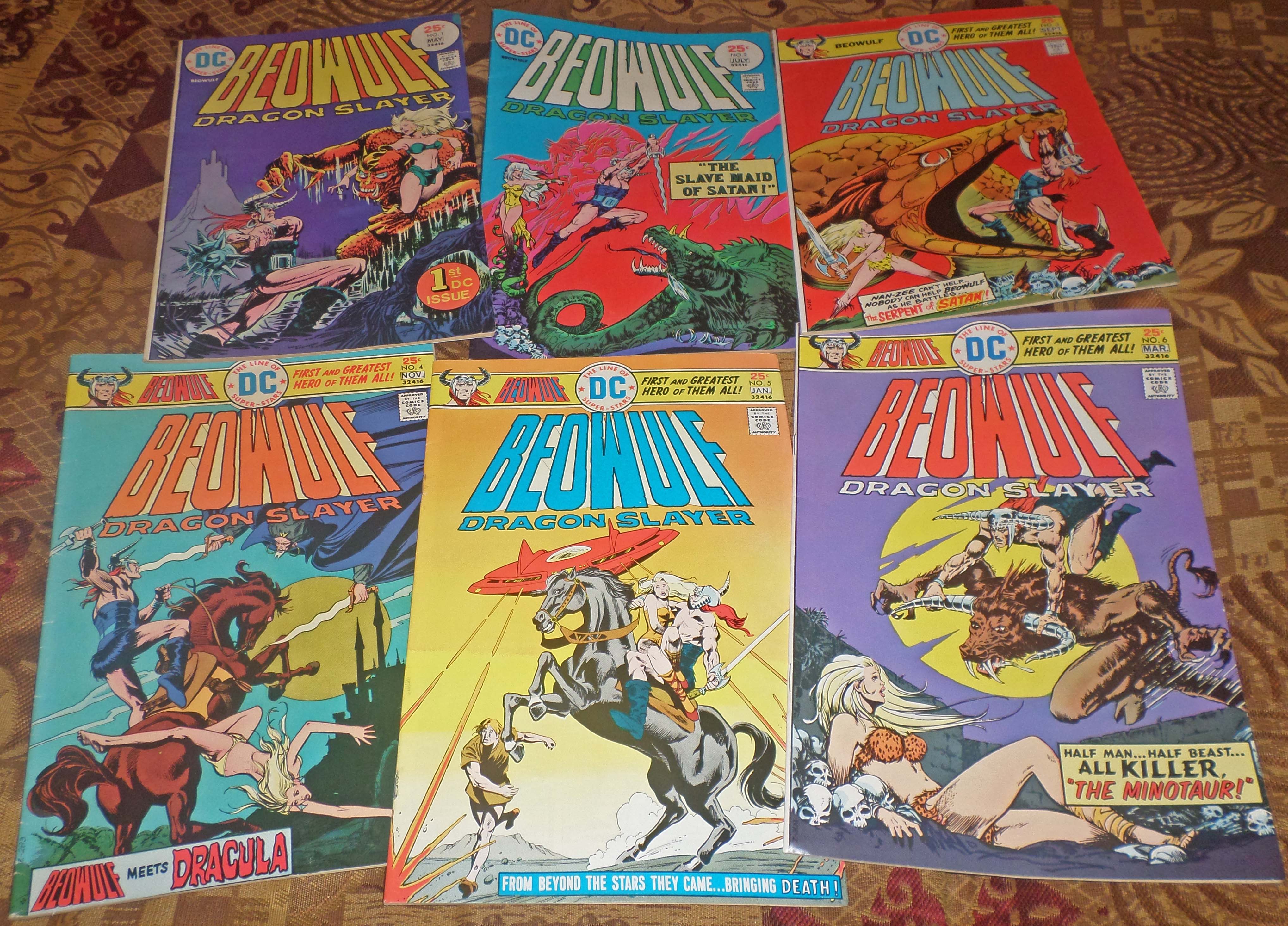
SAMSUNG CAMERA PICTURES

#1. May 1975, “The Curse of Castle Hrothgar”, Cover by Ricardo Villamonte, Michael Uslan (writer), Ricardo Villamonte (a), Denny O’Neil (e), Allan Asherman (asst ed). In a story not too far removed from the original epic tale, Grendel cannot stand the cheers and singing from Castle Hrothgar of the Spear-Danes. Beowulf hears that his father’s friend is in need of him. Beowulf heads to Hrothgar’s mead hall named Heorot (called “Castle Hrothgar” in the title and throughout the story). On the way to Hrothgar/Heorot, Beowulf rescues a female barbarian named Nan-Zee (named after Uslan’s lady-friend) from the thrall of Satan. Upon landing, they are hexed by a jealous Unferth and lured into a swamp where they are attacked by lizard men!

            Naming a character after one’s girlfriends is sweet, but the name is pretty glaring. It takes the reader out of the story and reminds him or her that this is, indeed, a story. But it is an excellent story, nonetheless with EXCELLENT artwork. It’s a dark comic with art from something out of their horror line. We have a lot of potential here!

            The letter column explains how DC developed Beowulf and how they will vary greatly from the poem – remember that. It’s VERY important!

            This comic contains a full-page ad for Claw and Tor.

#2. July 1975, “Slave Maid of Satan!” by the same team. Our heroes are drawn into Unferth’s quicksand trap and are attacked by lizard men. They sink down into the quicksand to find a portal to hell itself! They battle hellhounds, another slave maiden and a dragon before facing the vile spinner of lies himself! The dark one tells Beowulf and company they are pawns in his game. 

            Satan says the only way Beowulf can defeat Grendel is to drink the venom from the Black Viper of the Darklands AND to then eat the ambrosia of the Zumak fruit in the east. Satan whisks them back to Heorot where Grendel waits in ambush. Satan stops Grendel – it is not yet time…

            Beowulf leaves for his quest to find the venom and fruit. Hrothgar offers the services of the evil Unferth, a lurking warrior called the Silent One and a spooky wizard called the Shaper to go with our hero.

            Satan is mentioned more times in this comic than an hour-long sermon at a tent revival. It gets kind of silly after a while. Eventually you here his name pronounced as if by Dana Carvey as the Church Lady.

            The letter column explains how some of the characters were developed – including Grendel and how they strived to make him as un-Swamp Thing-like as possible. They succeeded! Grendel looked great!

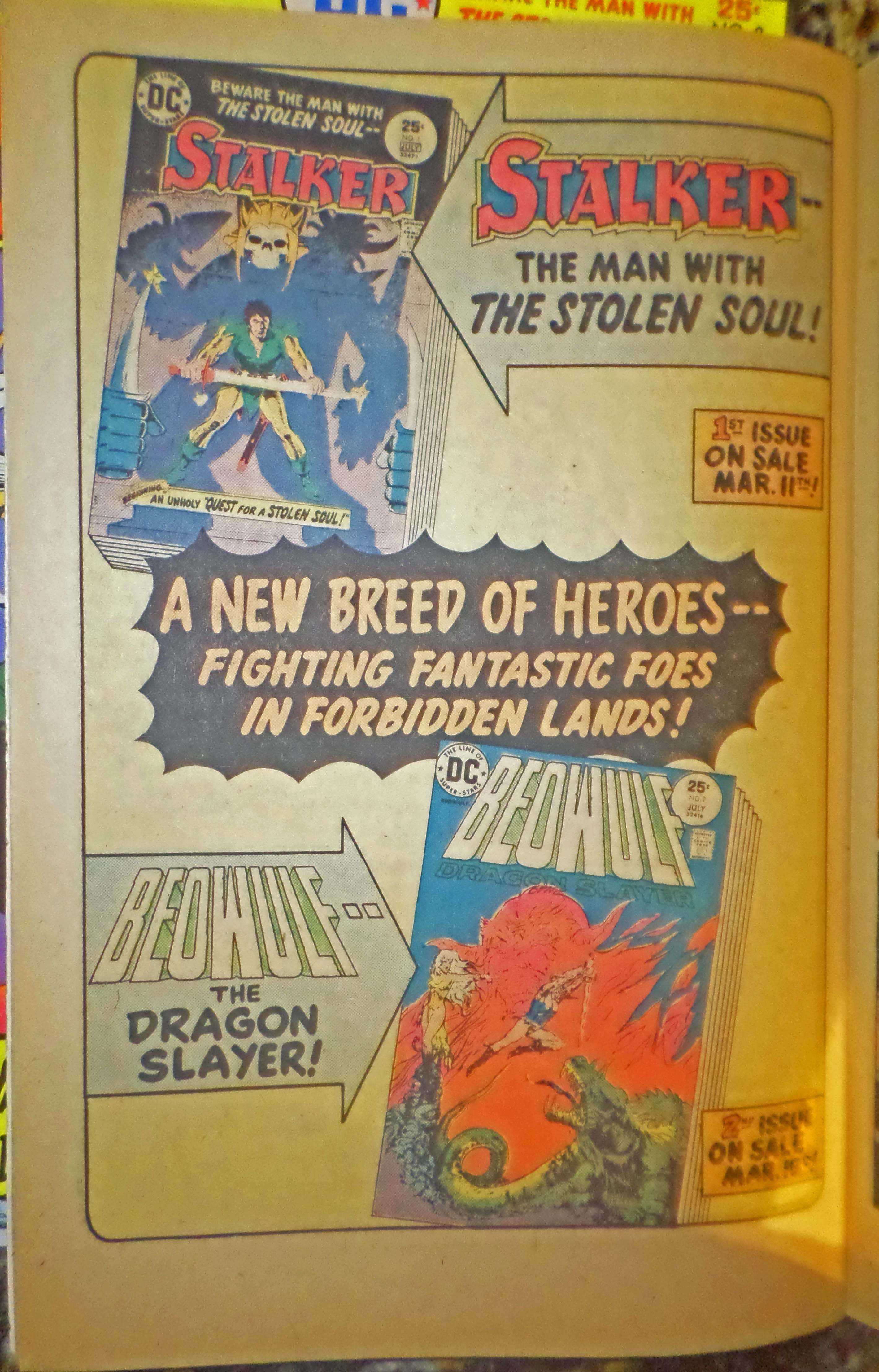
            This comic contains the full-page ad for this issue and Stalker #1.

SAMSUNG CAMERA PICTURES

#3. September 1975, “Man Apes and Magic” by the same team. Beowulf’s ship is attacked by a giant squid sent by Satan! They find the island on which lurks the Black Viper and are attacked by an evil fairy named Little Omen. Finally fighting off Little Omen, our heroes are then attacked by a tribe of pygmies – their chieftain finally stops the carnage and leads Beowulf to the pit of the Black Viper. Meanwhile, Grendal forces Satan to promise that Beowulf will return by the full moon or Grendel will destroy Satan’s kingdom! Beowulf defeats the Viper and drinks his venom.

            The art here is again spectacular, although some of the “hidden messages” are not so hidden and again reminds us we are reading a story. The Shaper casts a spell and his magic words are “Harry Houdini is that you” and “This is dedicated to Winsor McCay” backwards.

            “The Serpent of SATAN!” screams the cover … complete with echo effect and Dana Carvey’s twisted lips…


         “The First and Greatest Hero of Them All!” declares the tag-line on every cover for the rest of the series. This issue contains the full-page Adventure Line ad. 

#4. November 1975, “Valley in the Shadow of Death” by the same team. “Beowulf Meets Dracula” says the cover! Dracula? Yes, Dracula, whose Wallachian horde is attacking a desert kingdom where the lost tribe of Israel lives. Beowulf and company battle the tribe, then battle Dracula. In the midst of battle, Satan whisks Beowulf back to Heorot to await the attack of Grendel. Grendel kills Hondscio – one of Beowulf’s most loyal warriors. Beowulf attacks Grendel but is thrown back to the desert just as battle was joined. Dracula is killed by one of his own troop. Satan appears and makes Dracula a lord of the undead! Beowulf and the tribe’s chieftain shake hands – they have each won a battle and lost a great ally. Beowulf must continue on his quest.

            Beowulf’s diversion back to Heorot was strange even for this comic. It made no sense…

            Dracula? I can’t wait to see the latter column on this issue – if the writers of Tor and Kong complain about dinosaurs and cavemen together, what would they make of THIS? “…but Vlad the Impaler lived 800 years after this takes place!” And I can already read the responses: “Meh, what are you gonna do?”

            And there are more backward incantations – “Let’s see Conan top this”, etc.

            A good story, nevertheless. Fun stuff. But I must admit, Dracula’s appearance was somewhat jarring. It was nothing compared to the next issue…

#5. January 1976, “Chariots of the Stars”, Cover: Dick Giordano, interiors by the same team (story idea by Allan Asherman).  Beowulf and companions find a duplicate Stonehenge in the far east – complete with druids who wield a new magic called “science” to defeat our heroes. They awake on the druid priestess’ spaceship – yes, spaceship – and find themselves orbiting the earth. The aliens capture mighty warriors from earth’s past. Beowulf and Nan-zee fight their way free, also freeing the frozen warriors. They fight off the alien leaders Ishtar and En-lil. The ship crashes into Atlantis, activating the volcano on the island and sinking it. Beowulf, Nan-zee and one other warrior from the mists of time survive. Athena appears and whisks the warrior, Ulysses, back to his own time. He will awake thinking he had dreamt this while a prisoner of Circe. Before he goes, Ulysses tells Beowulf he can find the Zumar fruit in Crete.

            Yep, spaceships. Yep, Ulysses. This story had as much to do with the poem Beowulf as the character Ulysses had to do with the novel by James Joyce. In fact, it would have made as much sense if it was James Joyce instead of Ulysses. But so far the book has been great and whacked-out fun. Isn’t that what comics are all about? I’d rather read this again than most comics published today!

            A full page ad hypes three new titles – Adventure Line alum Warlord’s first issue, the woefully short-lived war title Blitzkrieg, and Hercules Unbound – which would have fit in nicely in the Adventure Line faux-imprint, although it was more related to the Earth-After-Disaster line, the flagship of which was Kamandi.

#6. March 1976, “Labyrinth of the Grotto Minotaur”, cover by Ricardo Villamonte, Michael Uslan (writer),  story idea by Allen Asherman, Ric Estrada (a), Ricardo Villamonte (i), Liz Safian (colors), Denny O’Neil (e), Allan Asherman (asst ed). Beowulf and Nan-zee land on Crete and enter the fabled Labyrinth where they face the deadly Minotaur before they can get the Zumar fruit. Meanwhile, Satan annointed Dracula to be his second in command, replacing Grendel, and orders the Lord of the Undead to attack Heorot. A jealous Grendel kills Satan and takes his place as the Lord of Evil.

            The letter column must have been preparing for the onslaught of complaints tying Dracula into the series – saying Beowulf is a hero for all the ages and so we shouldn’t be surprised if he meets heroes and villains from other ages. Okay…

            What a cliffhanger to end the series on!  I guess the only good thing about cancellation is we KNOW how it ends – just read the poem. The poem leaves out Dracula and spaceships, though.

            So we’ll have to use our imaginations: Beowulf fights Dracula with the aid of William Tecumseh Sherman and the Apostle Paul! Then on to defeat Grendel! The next several years’ worth of issues would show the battle with Grendel’s mother, if the comic survived the DC Implosion and then the Crisis. Would it have lasted that long? No, don’t be silly.

***

            The last issue of Beowulf was published in November of 1975 (despite the cover date). Most of the Adventure Line never made it into 1976 (Tor, Claw and Warlord were the only ones – Tor was cancelled after issue #6 released in January 1976.  After issue #2, Warlord would go on hiatus for most of ’76). Why did Beowulf bite the dust? It lasted longer than most of its brethren. The artwork was never less than fantastic! Why were sales low? Note that the only other Adventure Line books that survived – notably Claw – never veered from its roots. Claw never faced Dracula or a spaceship.

            Warlord brought in technology – but it never claimed to be based on a dark ages epic, either. Technology was not such a jarring surprise in Skataris and was part of Grell’s plan from the beginning.

            Stalker stayed to its roots, too.  But in four issues we never got to know or like the Man Without a Soul. We didn’t cheer him on and wish him success as we did with Claw or Beowulf. And he did not have the legacy of being a long-loved strip like Tor, with the power of Joe Kubert’s editorial muscle keeping it alive by linking it to Tarzan and Korak.

             Justice Inc? It always was an awkward fit in this non-imprint. It never had a chance to catch on.

            Kong watered down its potential-filled first two issues – the untamed had been tamed. 

***

            Beowulf appeared in the 2008 Wonder Woman story arc Ends of the Earth, where he unites with fellow Adventure Line alums Claw and Stalker.

            Beowulf was the back-up feature in the first four issues (#0-3) of DC’s New 52 comic Sword of Sorcery. DC’s first Sword of Sorcery book ran in 1973 with tales of Fafhrd and the Gray Mouser. Now why wasn’t that revived and put in the Adventure Line instead of Justice Inc? “WHAT!?” said the editors. “We don’t want to revive a cancelled comic – it was cancelled for a reason, you know!” I guess they were right and the New 52 editors should have listened: the New 52 Sword of Sorcery lasted only eight issues.

            Hey, want some fun reading? This is from a doctoral candidate, seriously: http://www.academia.edu/2470551/Making_the_Medieval_Modern_DC_Comics_Beowulf_Dragon_Slayer

            Wowsers!

Original material copyright 2015 Michael Curry

Tor: DC Comics’ Adventure Line!

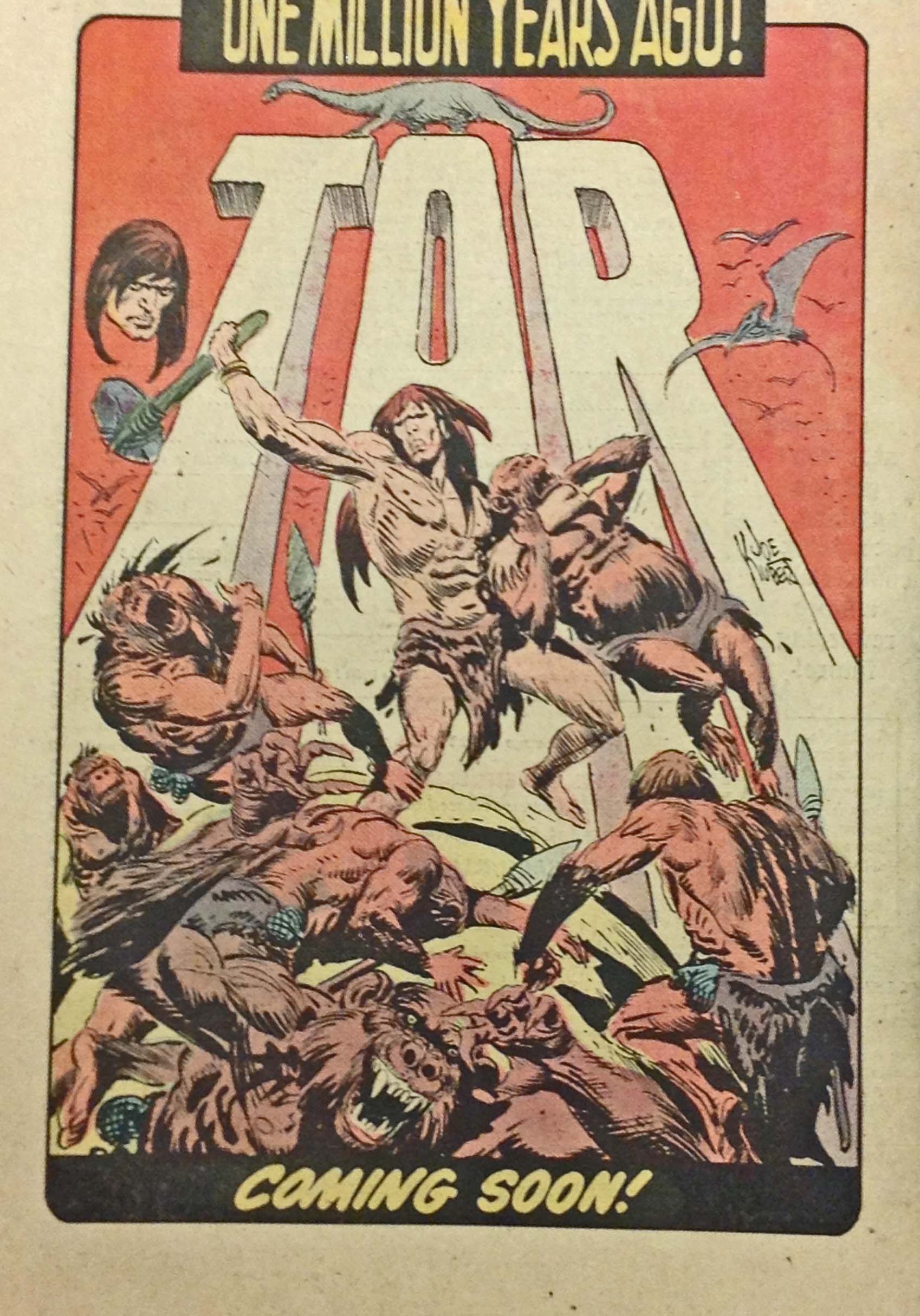
FROM THE WORLD OF A MILLION YEARS AGO: TOR

torad   

             Tor the comic book character has an interesting sixty-year history: Tor is a caveman from one millions years ago…

            Wait, there weren’t any humans (as is currently defined) a million years ago. Certainly not light-skinned, brown-haired cavemen like Tor. There were homo-erectus (snicker) and homo-mauritanicus, but not humans.

            Well, anyway, Tor the caveman from one million years ago fought other cavemen, dinosaurs…

            Wait, there weren’t any dinosaurs a million years ago. The last dinosaur died out sixty-five million years ago.

            Shut up.

tor 

           Tor the character debuted in the comic 1,000,000 Years Ago #1 by St. John Press in 1953. Issue #2 was renamed 3D Comics (renaming comics and continuing the numbering was pretty common until the late 1960s and happened even in the 1970s with Our Army at War turning into Sgt. Rock to name one – something to do with saving postage…) and then for issues three through five the series was remaned Tor. It lasted until October 1954.

           In 1975, as part of its Adventure Line, DC revived Tor with his creator at the helm. Back then a creator-owned character was to DC Comics what President Obama is to a Tea Party voter. And to allow a creator-owned character from ANOTHER publishing company!!? {THUD} “Sol? Sol Harrison’s collapsed! Call a doctor!!”

            But they did. Tor, a non-DC character, whose creator had control over his appearances and content, was given his own DC Comic in 1975. Perhaps it had something to do with that particular owner.

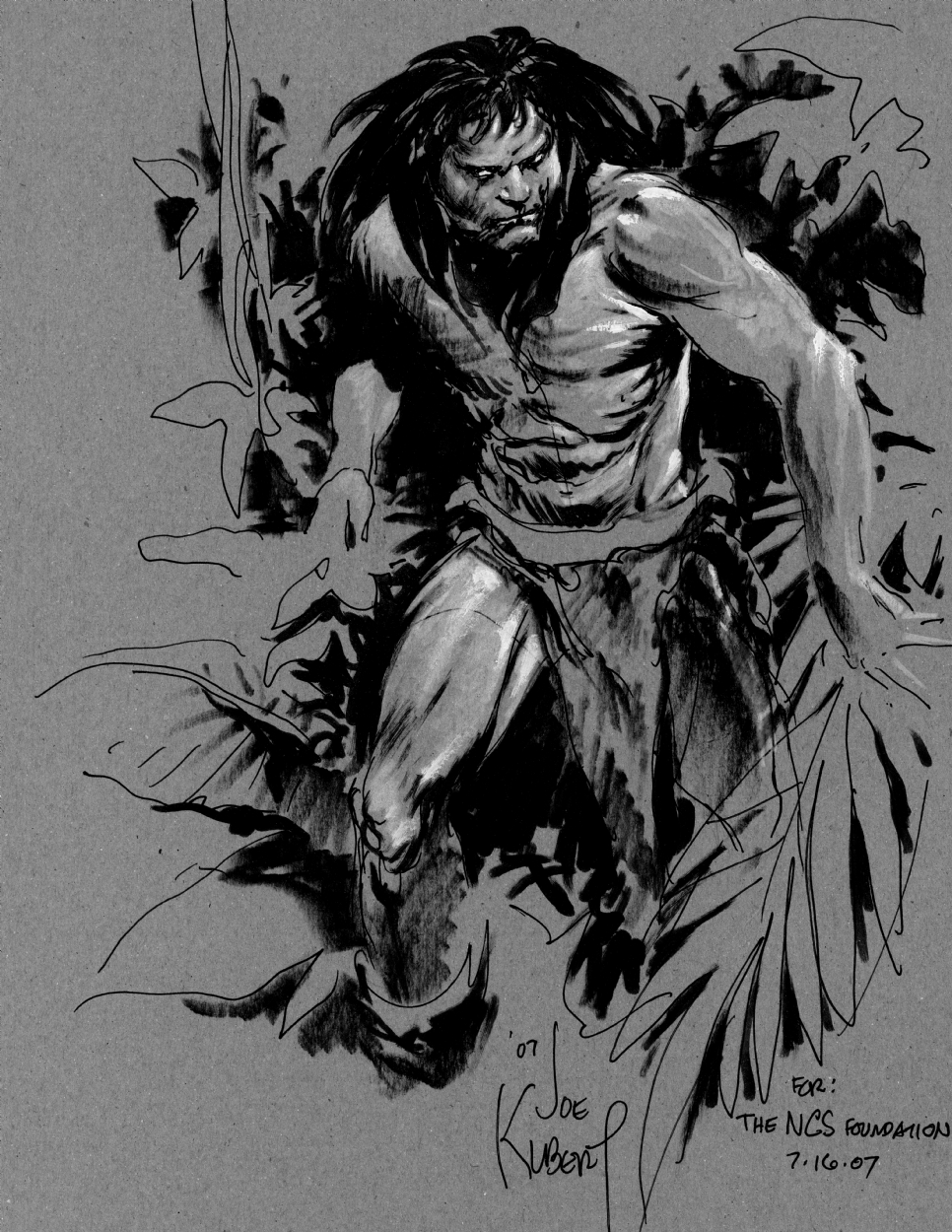
            If Joe Kubert drew newspaper comic strips in the 1920s and 1930s, his name would be mentioned in the same breath as Alex Raymond and Hal Foster.  War comic fans would argue Kubert’s best work was with Sgt. Rock and DC’s other war heroes.  Superhero fans would argue Kubert’s best work was with Hawkman.  Kubert became a legend in both these genres and also what would now be called “sword and sorcery” with Viking Prince in Brave & Bold.  His penciling would probably have even worked with Archie and Casper the Friendly Ghost!

            Kubert’s art is very stylized and yet very accessible.  His characters were realistically lean and muscular.  His women were curvy and beautiful.  When a character looked weary, his shoulders sagged and his arms hung limp at this side.  His action scenes were straight out of “Flash Gordon” and “Tarzan”.   When he had his few off-moments, he had the rushed and sketchy style for which he is the most criticized. 

***

SAMSUNG CAMERA PICTURES

            For simplicity’s sake – I will refer to the at-that-time two published versions of the comic as Tor (1953) and Tor (1975).

            The covers of Tor (1975) were great examples of Kubert in all their glory – although I noticed something … of the six issues – three had Tor rescuing a pretty blond. One had Tor fighting ape-men ala Tarzan, in another he rescued a baby from an erupting volcano and another he saved a tribesman with a pretty blond in the background. Four out of six with pretty blondes…

            Every issue reminds us of this dark and dangerous world – where death can come at you from every angle – be careful while walking in water or around rocky corners. Kubert does a superb job keeping up this moody paranoia!

            Later issues describes Tor as a man dedicated to justice and fairness and how rare that trait is among the first men – who are usually too busy just trying to survive!

            Every story was a reprint. Kubert contributed some new pages as bookends or story tags – usually drawings of the artist himself describing Tor and his environs above a splash page of Tor doing something cavemanish.

            “The World of a Million Years Ago” appears as a tagline on every issue. The word “From” was added at the front of that tag only in issue #1.

#1. June 1975, “The Beating”, Joe Kubert (w/a/e/cover), Carmine Infantino (i) (the strip reprint), Allan Asherman (asst. ed.); as a youth, Tor lives in a fishing village. He wanders into the mountain people’s  territory and is beaten by Kobar. Tor is later chased by an alligator-like phytosaur. Kobar, who considers Tor his slave, tries to protect his property by slaying the beast but nearly drowns. Tor rescues him. Their score is settled. Tor learns you can conquer an enemy by helping as well as hurting. The story is bookended by the adult Tor remembering this adventure while hunting food for his village (presumably written and drawn for this comic).

Kubert and Carmine Infantino (who inked) pushed a Tor comic strip in 1959 unsuccessfully. It was published in a fan magazine (Alter Ego) in 1968 and here in Tor (1975) #1. When DC’s Tor was released, Infantino was the publisher of the company.  This may explain why DC decided to publish a comic character whose bulk of profit, if any, would go to its creator. “Hey, Boss, can we publish my old Tor stories?” “No.” “I want to reprint that old strip you helped ink, too.” “Yes.”

Text page: Dinosaurs for Reel (a piece on stop-motion dinosaur movies through the years).

Another text page describes the origins of the Tor character and his world.

#2. August 1975. “A Million Years Ago,” Joe Kubert (w/a/e/cover, Allan Asherman (asst. ed.) – for all remaining issues); while fishing, Tor rescues a monkey-like creature he names Chee-Chee. Finding his fellow tribesmen – led by Klar – Tor sees another tribesman, Zul, under attack by a dinosaur. Against Klar’s orders, Tor rescues Zul. Later a humiliated Klar traps Tor, Zul stops Klar from killing Tor, Klar kills Zul in revenge. Tor kills Klar (need a scorecard?) and is thereafter banished from his tribe!

“Danny’s Dreams”, young Danny Wakely (get it?) is with his fellow students at the municipal museum’s dinosaur exhibit. Danny feels himself going back in time to the days of the caveman! He is chased by Cro-Magnons, attacked by a bear and a saber tooth tiger! The two beasts battle each other over this blond-haired, freckled meal. Danny escapes by inventing the wheel (tying together round rocks) and two-wheels his way to safety. He wakes back up to find the mummified remains of the bear and saber tooth – each died of their wounds – and a strange two-wheeled vehicle found nearby. Did Danny dream this or did he REALLY go back in time…?

Both stories are reprints from One Million Years Ago #1 (1953)

This issue featured the one-page Adventure Line ad.

Writer Don Glut (I assume that is THE Don Glut) had a letter published, thanking Joe Kubert for his original run of Tor and instilling in him a love of dinosaurs that encouraged his writing.

#3. October 1975. “Isle of Fire” (one of only two of the series in which the cover related to the story inside); Tor travels to a volcanic isle ruled by giant hairless red-skinned “fire-men”. Tor rescues their human slaves and kills the Fire-Men leader just as the volcano erupts and sinks the island. Reprinted from Tor (1953) #3.

“Danny’s Dreams” – Danny, as a caveman, and his tribesman’s raft (presumably not the raft Tor used in the prior story) sink in a storm. Danny lands on an isle of pygmies who are sensitive to loud noises. He helps them defeat a “giant” (normal-sized) man that is terrorizing their tribe. Reprinted from Tor (1953) #5.

Uber-fan Richard Morrisey has a letter published – his second in the Adventure Line.

#4. December 1975. “Black Valley”; a tribe routinely sacrifices their infant/toddler girls to the “gods” of the Black Valley. Tor discovers the gods are amazon women. Can Tor make peace between the tribes and the amazons? Can he rescue the latest sacrifice from a hungry saber tooth? This story has a GREAT two-page splash! Pretty rare for the early 1950s… Reprinted from Tor (1953) #3.

Feature: “Animals of 1,000,000 Year Ago” – the triceratops (wouldn’t this have fit better in issue #2 whose cover featured a triceratops?). Reprinted from 3D Comics (1953) #2.

“Killer Man” is a crippled tribesman who kills beasts for sport. The beasts are slaughtering the Rock People tribe in retaliation! (Letter writers complain about the lack of realism at featuring dinosaurs and men together – imagine their reaction to vengeful mammals!) The Rock People ask Tor to stop the Killer Man. Reprinted from 3D Comics (1953) #2.

Feature: The Caveman’s Escape by Allan Asherman. A text piece with photo stills from the movie “When Dinosaurs Ruled the Earth”.

#5. February 1976, “The Giant One”; Tor helps a tribes tormented and tortured by a Giant!

Feature: “Animals of 1,000,000 Years Ago” – the brontosaurus.

“Danny’s Dreams”; clubs can’t kill a bison, so Danny creates a bow and arrow that helps slay the beast – now the tribe has meat! He draws the bow and arrow on a cave wall to show the tribesmen how to make one. Danny awakes at a museum and sees his own drawings as an exhibit!

All three features were reprinted from 3D Comics (1953) #2.

#6. April 1976, for only the second time out of six – a story from inside the comic makes the cover. The stories in this issue are not titled. I’ve lettered them for convenience’s sake.

A.  Captured by Crater People (subterranean Neanderthals), Tor is sacrificed to the Killer Beast (a T-Rex). Even after beating the Beast, he is forbidden to leave! When he is the only one who helps the chieftain after he is attacked by a giant serpent, he is released because of his bravery. Reprinted from 3D Comics (1953) #2.

Feature: “History of Pre-Historic Animals” – the original bone-head: Pachycephalosaurus! Reprinted from Tor (1953) #4.

B.  Tor watches a triceratops battle a stegosaurus – the winner gets to drink from the water pond. The loser? Tor’s tribes’ meal! Um, what tribe? I thought he was banished… Reprinted from 3D Comics (1953) #2.

C.  Man (Tor) and beast flee from a massive forest fire. The only safe place? An island! But while there a turtle the size of a tank attacks Tor! Reprinted from 3D Comics (1953) #2.

***

            Tor was the last of the “failed” titles in the non-imprint Adventure Line. Beowulf lasted six issues, too, and its last issue was on the stands the month before. Warlord #2 was published the same month as Tor #6 – April 1976. This meant it was published around January 1976.

             Tor was an oddity among the other Adventure Line brethren – it was a reprint series publishing a rare comic that few readers had ever seen.  Joe Kubert linked the book in the letter columns with Tarzan and Korak. Books he published with DC always had an automatic audience. But it didn’t last. Korak would also fold within the year. What would happen in a few issues when the reprints ran out? Would Kubert have done new stories? Did he reprint what was available and voluntarily folded the comic? Perhaps. If he wanted to do new stories, he could have – and used the older reprints as back-ups.

            DC reprinted these stories (and presumably the rest of the 1953 run) in trade paperback and even hardback over the years. In 1993 new stories by Kubert were published by Marvel (of all people) under their Epic imprint.

            The two paragraphs describing Joe Kubert’s art is from my free ebook Brave and Bold: From Silent Knight to Dark Knight, available at Smashwords, Kobo, and through Barnes and Noble here: http://www.barnesandnoble.com/w/the-brave-and-the-bold-michael-curry/1120872264?ean=2940046443011

             I hope you enjoy it, and I hope you enjoy this blog series!

Original Material Copyright 2015 Michael Curry

Stalker: DC Comics Adventure Line

stalker

STALKER: BEWARE THE MAN WITH THE STOLEN SOUL

                I loved this comic. I still have issue #1 from when it was first published (and Justice Inc too, by the way). It enthralled me as a youngster. Steve Ditko & Wally Wood’s combined art was stupendous. The scene where the demon takes Stalker’s soul is breathtaking. As an adult, thanks to ebay and other internet stores, I finally collected the rest of the series. Nothing was concluded, of course. But I got them! Despite my love of the first issue, I could see its limitations.

Trouble was, until the end of the four issues it had only one plot – Stalker wanted his soul back. This sets up a one-note plot which, if resolved, ends the story. Gilligan gets off the island, Stalker gets his soul back – show’s over. Still, it worked for “The Fugitive”…

SAMSUNG CAMERA PICTURES

But with Conan the Barbarian dominating the sword and sorcery genre in comic books, and other pretenders doing fair if not well – such as Claw the Unconquered – there just wasn’t room for the weird comic about the man with the lost soul. Perhaps he was too much of an anti-hero. Later interpretations of him as a supervillain make me sad.

                Too bad, the four original issues were real gems.

***

SAMSUNG CAMERA PICTURES

“Beware the Man with the Stolen Soul” appeared on every cover.

#1. July 1975, “Quest for a Stolen Soul”, Paul Levitz (w/creator), Steve Ditko/Wally Wood (a), Joe Orlando (e); an abandoned boy living as a street rat yearns to be a sword-wielding knight! He begs that land’s Baroness to train and serve her as a warrior. She instead uses him as a slave. He escapes and begs the god of warriors Dgrth to be made a warrior. Dgrth agrees – the child will be given inhuman martial skill in exchange for his soul. Deal! Wait, you want the soul NOW and not when I die? Wait! Too late! Stalker threatens to kill the Baroness in one year – making her remaining year of life a torment – and slays his former slave-master. He feels no joy or satisfaction as he has no soul. He vows to get his soul back!

                A full-page house ad for Stalker and Beowulf Dragon Slayer is in this comic.

                The text page includes a bio of Paul Levitz and a map of some of Stalker’s world! A map! No fantasy epic is complete unless it contains a map!

                How I yearn to see the tale of vengeance against the Baroness in the next year. The editor says in a letter column that by issue #7 Stalker will be in the northern lands wherein lie dragons. Issue #7, on a bi-monthly schedule – would be the year anniversary. Did the Baroness hie herself to northern lands? What a great multi-parter that would have been – Stalker tracking down the Baroness across the map!

#2. September 1975, “Darkling Death at World’s End Sea”, (same team); F’lan, the prior of Dgrth’s temple at World’s End Sea, knows where lay the gateway to Dgrth’s domain. Stalker is captured by F’lan, who will sacrifice the marked one to Dgrth. Stalker escapes with the help of Merilla on the promise Stalker will take her with him.

                The Ditko/Wood art is just as good as the first issue – the World’s End Sea is just that! Just past the shoreline the sea drops off into eternity. Grand stuff!

                The full-page Adventure Line ad appears in this issue.

#3. November 1975, “The Freezing Flames of the Burning Isle”, (same team); The Burning Isle, on which – so Stalker learned from F’lan – hides the portal to Dgrth’s realm. Stalker befriends Srani, a witch banished to the island one year ago. She tells that the gods and demons man worships were in fact ancient aliens from the stars who were themselves banished from this island to their various domains. Is Srani more than she seems?

                The letter column says this could be Stalker’s last issue depending on the sale numbers.

                My copy of this issue is a Mark Jeweler variant: a cardboard insert advertising Mark Jewelers was distributed on or near military bases. Not only did this soldier defend my freedom, he bought a dandy comic book too!

#4. January 1976, “Invade the Inferno”, (same team – the letter column reveals Ben Oda and Joe Letterese (l), Tatjana Wood, John Albano Jr & Carl Gifford (i) through the series); Stalker invades hell, fights its minions and raises an army against Dgrth. Stalker confronts the demon and demands the return of his soul. He cannot return it – only Dgrth’s death can free Stalker’s soul; and only when a god is forgotten can it truly die. Then Stalker shall slay all evil until his soul is returned. So he vows!

                The letter column says this issue wraps up the first part of the series in case of cancellation. They were right! 

***

If the series had continued it would thus head to other plots – now Stalker seeks to destroy all evil rather than “just” getting back his soul: a MUCH more open storyline with lots of potential (“The Fugitive” wasn’t just him hunting for the one-armed man – there were lots of great stories in between…). Perhaps he can still find his humanity by helping others – even if his reasons are selfish. Perhaps he would have found allies or (gasp) friends.  How a man with no soul would handle allies and friends would make for some interesting character development – even for only a panel or two, as was normal with 1970s comic books.

If it had only taken less than four issues to get to that point. Between the art and that storyline it might have attracted some attention.


                Stalker appeared in JSA Returns as a demonic supervillain, in Swamp Thing (with Adventure Line alum Claw), and in the 2008 Wonder Woman story arc Ends of the Earth as the villain – battling the Amazon with Claw and Beowulf at her side. Stalker replaced Beowulf as the back-up feature in issues #4-7 of the DC New 52 magazine Sword of Sorcery.

                My favorite of the Adventure Line books, if only sentimentally. The art is breathtaking!  It’s Ditko & Wood, folks! DITKO! WOOD!

Original material copyright 2015 Michael Curry

Kong the Untamed – DC Adventure Line

kong

“Enter the Primitive World of … KONG the Untamed

   SAMSUNG CAMERA PICTURES             Thus read the heading of DC’s Kong the Untamed. Not to be confused with the big gorilla from Skull Island. Now THAT would have made an interesting comic book.

                This Kong was interesting too. The text from the first issue’s letter page tells us the DC editors decided to try to revive the caveman again in comic book form. They tried some years back with Anthro. He debuted in Showcase and lasted six issues of his own comic in 1967.

                Not that these were bad issues. In fact, the series started out with quite a pedigree and lots of potential. Alcala’s art, a staple of horror comics from DC and Marvel, gave the series a dark and ominous feel – you never knew what was around the corner. In fact, the first two issues seemed to be an attack followed by a chase followed by an attack. It was of limited appeal and limited scope. Nowadays it would have made an award-winning 12-issue miniseries.

                Later issues lightened the look and the tone. Gerry Conway, fresh from his writing duties on Amazing Spider-Man, gave the book a “Lost World” tone by bringing in dinosaurs (something the letter columnists begged not to happen) and a Romeo-Juliet-like romance. After the dark and brooding first two issues, it turned into Kazar-lite.

***

                #1.  July 1975, “Kong the Untamed” by Jack Oleck ( w ), Alfred Alcala (a), Joe Orlando (e), cover by Bernie Wrightson. Born with blond hair to Attu, Kong is prophecy reborn! A mighty warrior and leader he shall be! Trog the One-Eyed, the tribal chieftan is jealous and fearful of the stripling and banished his mother and newborn child. As Kong grows on the outskirts of the tribe – he learns to hunt, forage and fight! When he asks to play with the children of his tribe, he is pelted with stones. When he is older, a teenager, he is attacked by a Beast Man (a Neanderthal – Kong and his tribe are Cro-Magnon). A capture/escape/chase commences between the tribe, the Beast Men and Kong and his mother. Eventually the tribe catches up with Attu and kills her. Kong vows revenge against Trog and the gods who cursed him with his blond hair!

                Wrightson’s dark cover set the tone for the issue maintained by the art of Alcala, known for his art in horror books for Marvel and DC. The writing and art show us a dark and cruel world at the dawn of man. Whether the comic would last for dozens or hundreds of issues is doubtful; but the debut showed great potential.

                #2. September 1975, “Blood Brother” by the same team. Cover by Wrightson. This comic features the full-page ad touting their Adventure Line!

                Kong is attacked by wolves. The rock he throws in defense causes a spark. When he is safe, he learns to make fire! Kong is captured by the same tribe of Beast Men from issue #1 but is rescued by Gurat – the Beast Man he bested last issue. Gurat respects the yellow-haired stripling! The two outcasts join together to fight off Gurat’s Beast Men tribe and a deer-hunting Cro-Magnon tribe and become as brothers. This looks like the beginning of a beautiful friendship.

                #3. November 1975. “The Caves of Doom” by the same team, but with scripts by Gerry Conway. Cover by Bill Draut.

                A cave provides shelter from a storm until Kong and Garut are captured by Kong’s former tribe! In escaping, they go deeper into the cave until they find a hidden valley of living dinosaurs and spear-toting humans! It is revealed that Trog is Kong’s father.

                Uber-fan the late Richard Morrisey has a letter in the letter column – the only one with negative things to say about the book. Although it is better than Tor, he says, he predicts a swift death due to its lack of scope. At least it doesn’t have men fighting dinosaurs. In this issue, Kong and Gurat fight a dinosaur…

                #4. January 1976, “Valley of Blood”, Gerry Conway ( w ), Tony Caravana (a), Jo Ingente (i), Joe Orlando (e), cover by Bill Draut.

                Kong and Gurat are attacked by a human in this valley of dinosaurs! A spear hits Gurat and is left for dead by a river as the stranger takes Kong to his village. Kong, after the required fistfight, eventually befriends his apologetic captor, named Rolan. This new village is led by Priestess Jelenna in a society ruled by women! Jelenna strikes Kong for his male-centric views and Kong swears revenge (after getting revenge on Trog of course. Kong is getting an enemy’s list as long as Nixon’s by now…). Kong helps Rolan kill a Spiketail (a dinosaur) to win the hand the priestess’ daughter Sharra. 

                #5. March 1976. “Bones of the Martyr”, Gerry Conway ( w ) David Wenzel (i), Bill Draut (i) – although comic lists both as illustrators and does not say who drew and who inked, Joe Orlando (e), cover by Bill Draut and David Wenzel.

                Rolan tries to foment a revolt of the village men against Jelenna. Sharra sides with her mother and the other women as Rolan is put to death. Meanwhile, Gurat is captured, and then befriends, by a pteradactile-riding tribe of Cro-Magnons. They attack their sworn enemies – Jelenna’s village – and rescue Kong. It doesn’t end in a cliffhanger, but I wonder where the series would have gone …

***

                Anthro outlasted Kong by one issue – two if you count his Showcase debut. So much for bringing back the caveman. Maybe they should have tried a comic starring a big gorilla instead…

Original Material Copyright 2014 Michael Curry