What Am I Reading? The Last Witch of Cahokia

What Am I Reading? The Last Witch of Cahokia

 LastWitch_front-Cover2-160x225

            The Last Witch of Cahokia (ISBN 9780979473746 Redoubt Books/Bluebird Publishing 2013) by Raymond Scott Edge concludes the trilogy of books beginning with Flight of the Piasa (“Flight”) and continuing with Witches of Cahokia (“Witches”).

            Here are the blogs for the previous two novels:

            You can read my review of Flight of the Piasa here: https://michaelgcurry.com/2014/07/03/what-am-i-reading-flight-of-the-piasa-by-raymond-edge/

            And my review of Witches of Cahokia here:

https://michaelgcurry.com/2014/08/02/what-am-i-reading-witches-of-cahokia/

            It is possible to read all three books alone, but this last book is really based on the events of the second. The first book is complete. The second is also complete, although the story of Snow Pine may confuse you if you do not read the first. But Last Witch (as I will refer to the third book in this little review) is based on the events of the second book: it will be difficult to read alone – although it also tells a complete tale.

            Four tales, in fact. It picks up in the days and weeks of Cahokia in all of its threads.

            1) Daniel French and his conflict with the Illini Confederation of the twenty seven female pre-Columbian skeletons.

            2) Josh Green’s “revenge” against the professors and university that wronged him,

            3) Fred Eldridge’s trip to China to examine an ancient Native American buffalo hide, and

            4) Shen Fu’s journal of meeting Wind Sage and their return to China in the early to mid-fifteenth century.

SPOILERS AHEAD

            We meet for the third time the family and friends of Daniel French. He has two problems – the first problem was introduced in Witches – the Illini Confederation demands the immediate reburial of the twenty-seven female bodies found near Cahokia Mounds.

            Daniel has meetings and discussions with the Illini Confederation and his Provost. This is a good and canny way of bringing in an Info Dump. “As you know, Bob, NAGPRA was passed in 1990 and it provides …” Subjects ranging from digs at Native American burial sites to the Mormon religion is discussed this way. The previous books had their info dumps as well, some awkward – discussing archaeological terms with fellow archaeologists – but the author whimsically gets around the awkwardness with an aside such as, “…ask a professor a simple question and you get a lecture.” A good way to get around a writer’s unavoidable conundrum.

            Daniels’ other problems deals with a mysterious character knows only as Ghost Dancer. Well, the readers know he is Josh Green, but the characters do not. Josh dug up the remains of Elijah Parish Lovejoy.

            As you know, Bob, Elijah Lovejoy was an abolitionist journalist who was killed by a pro-slavery mob in 1837, making him a martyr to the cause. See what I mean by unavoidable? His gravemarker is a nice historical site in Alton and many a speech and many a political announcements have been made there in the past nearly-two centuries. Josh sets up photo ops of the remains at various Native American massacre sites in the west and mid-west – as if he had stolen a garden gnome. He photographs the bones and mails the postcards to Daniel and the press.

            This is the “revenge” of which I speak. We follow Josh across the country in his ghoulish protest. Eventually he meets and befriends a Lakota family – Margaret, her brothers Peter, James and John and their father Poker Joe. Margaret helps Josh dry out and help redeem him. He goes through the ceremony to marry Margaret (who is excellently written as a strong and independent woman), become a member of the Lakota people, returns the Lovejoy remains, and takes up the argument against archaeological study of Native American remains.

            Throughout the book (and even on the back cover) was the mantra: “If I dug up your great-great-grandfather that would be sacrifice. If you dug up mine, that would be science, How can that be right?” the issue is discussed thoroughly through the book – particular at its end.

            The premise of course, couldn’t be further from wrong. Our European ancestors are frequently dug up and examined:

            Earlier this year ten skeletons from the Viking era were excavated in Flakstad, an island in the Norwegian Sea – some intact, some without heads – thought to be owners buried with slaves based on their diets revealed through isotope analysis.

            Also, eight graves were excavated dating from the early twelfth century in Brandenburg, Germany after being initially dug up by badgers.

            In 2008 a Templar Knight was found buried in an underground tomb near Rennes-le-Chateau in France. Did the Masons demand immediate reburial?

            The body of Sir Hugh Despenser the Younger was excavated at Hulton Abbey in Staffs, England – he is believed to be the lover of King Edward the First – hence his mutilated state.

            Then there was the news of finding King Richard III’s body under a car parking lot in early 2013. Did the royal family demand his immediate reburial?

            The point of Native Americans is that the European excavations are not put on display in museums and gift shops or held by private collectors. True – they bodies are or will be reinterred and given the respect due. Therein lay the difference, I think.

            But it brings up a point that was nagging me while reading the debate: Josh/Joseph’s stand is no different than his anarchic beliefs with the CRA – now he has an adopted family of Native Americans and the public opinion of guilty white folks to back him up. He is trying to accomplish the goals of the CRA but now through the sheen of respectability and precedent.  I didn’t buy it.

            But the author is to be commended for causing that reaction out of this reader – not condemned. This isn’t a mistake or an error on his part. To make me react this way to a fictitious character in a fictitious setting is the goal of every good writer.

            So what is the solution? The book provides one and, wisely, the solution is presented by Josh-Joseph. Thus expunging his earlier villainy in the eyes of the reader. Well, I’m with Daniel on this one; I still don’t trust him…

            In China, Fred and Marge Eldridge befriend Ben Wang, his wife Ah Cy and their daughter. Fred (and we) learns of Chinese culture as he examines the buffalo hide telling the tale of the White Buffalo Calf Women from Witches. The Cult of Ku, the bringing and cultivating of corn and the Viking rape – all events we the readers are aware from the prior book – are reviewed and examined with skepticism by Eldridge. Again Eldridge is brought to life and is a three-dimensional character as opposed to the nay-saying curmudgeon of Flight. Fred helps Ben and Ah when Ah becomes pregnant with their second child – verbotten in China – and his solution is written well. “Human rights” is the topic of discussion in these parts of the novel. What happens when my “pursuit of happiness” conflicts with others? What if there is no creator? Or there is a conflict as to who the creator is? How can these truths be self-evident if they have NOT been endowed?

            In a coincidence that only happens in novels, Fred is contacted by the same man who gave Daniel the transcript that made up the bulk of Flight – that told the tale of Sun and Snow Pine and their voyage to America and, eventually, to the cliffs of the Mississippi where the Piasa is painted.  This time he has a manuscript telling the tale of the Last Witch of Cahokia as told by a scholar names Shen Fu who travels with Admiral Zhu Wen, whom we met near the end of Witches. The last witch, who was unnamed save she was called She-Who-Waits, is given the name Wind Sage and travels with them back to China with the buffalo hide and Sun Kai’s manuscript in tow.

            It is tempting to parallel this part of the novel with Flight, but Shen Fu’s manuscript takes up only about 30+ pages of the book’s 244. It brings a nice conclusion to the witch’s line and it is fun reading Eldridge’s reaction to the manuscript. Comparing his skepticism with Daniel’s acceptance of Sun Kai’s manuscript in Flight is fun. Many times in Flight, Eldridge said to throw it out, it was fake, no one at the time wrote like that, etc. But here he was just as enthralled as Daniel with his manuscript – he asked about the historical events of the manuscript – even visited the village/city Shen Fu and Wind Sage lived. Stood on the Great Wall as they did and where they did. The writer did a good job showing the shoe on this particular foot.

END OF SPOILERS

            Last Witch pours a lot of information and brings up moral questions absent from the first two books. Between the info dumps and the morality discussions and, literally, lectures we are provided with enough information to take sides on the issues and be firm in our convictions. But we also find ourselves cheering on the peacemakers and hope they can find enough common ground to provide a reasonable solution – and hope we can do so in real life too.

            It is a novel of redemption and forgiveness and puts us in the middle of the debate between the search for knowledge versus respect for a culture’s beliefs.

            The author avoids the usual traps in books such as these – bad allegories, awkward info dumps, etc. Such things make a book preachy rather than entertaining. Witch is not preachy and VERY entertaining. I cared what happened to the characters – I hated to put it down at the end of a chapter during bedtime!

            The info dumps here are well done, although at times repetitive – the fact that the Cahokia Mound people have no known direct descendents and the Illini moved into the area centuries later is now etched in my brain.

            But that is a minor complaint – I loved all three books and will return to them in years to come. All three are quick and enjoyable reads.

            I hate to be petty, but there is one typo repeated from Flight in Witch … it’s “Shaggy” from “Scooby Doo” not “Scruffy” from “Scooby Do”. Although it‘s nit-picking, to a couch-potato boomer like me it might as well be in red type!

            Please don’t let things like that stop your enjoyment of these books. It didn’t stop me.

            Last Witch is still a Redoubt Book but published through Bluebird Publishing. My copies of the first two books were not so published. Thus the typeset and interiors of Last Witch is different from the first two. It certainly does not affect the readability of the story, but the difference is notable.

            Check the author’s website for his blog entries regarding his trip to China here: http://www.redoubtbooks.com/Author_s_Notebook.html

            Support independent authors! Support local authors! Read their books! Tell others to read their books! Post positive comments online if you enjoy it! Please?


Michael Curry


Thoughts on Guardians of the Galaxy…

Guardians of the Galaxy: not a review, just some thoughts…

                 What gives, Mike? You boast that your blog is about comic books, science fiction, fantasy and all things nerdy and what have we gotten lately? Reviews of historical fiction, updates on your book Abby’s Road (now available as a Nook and in paperback from Amazon – gee, this corporate whore stuff is getting easier and easier!) and blogs about your health!! Where’s the nerdly goodness!?

                OK, OK, good point. This will make up for it. It has Marvel, Star Wars, Superman, lots of memes and links to websites – geeky enough for ya?

guardians2

                Along with .02% of the world’s population, I saw Guardians of the Galaxy this weekend. I enjoyed it very much – I will likely get the blu-ray when it comes out and will look forward to its inevitable sequels.

                The web is filled with reviews of the movie – Entertainment Weekly gave it a wonderful review and an A- rating. That’s the magazine’s highest rating possible for a non-Harry Potter or non-Tom Hanks movie. This blog review is probably the best and closest to the truth:

http://terribleminds.com/ramble/2014/08/03/an-academic-critique-of-the-film-guardians-of-the-galaxy/

                (really captures the feeling while watching it, doesn’t it?)

                So I’m not going to review the film itself – there’s plenty of those out there. Instead I’ll share the thoughts that popped in my mind before and during the film whilst munching my popcorn.

                1) this is Marvel’s first foray into its current movie blitz with unknown characters. I’m a big comic book fan, but even I did not know much about these characters. My Marvel Universe knowledge is not as great as some, I will admit. And my knowledge of current comicdom (especially with the “Big 2”: Marvel and DC) is certainly lacking. But if you are stuck on a game show question regarding DC in the 1970s, phone-a-friend me.

                We’ve seen all the Marvel big guns lately from the various film companies that own the rights – X-Men, various Avengers (Thor, Captain America, Iron Man) and Spider-Man. (And I think it’s time – especially considering the success of Guardians – to give serious thought to a Fantastic Four redo).

                I wouldn’t put the Guardians even on Marvel’s second tier – they’re third or fourth-rate characters down there with the Squadron Supreme, Omega the Unknown and Night Nurse (don’t ask).

                “Horse Hockey!” you say. “I’m a huge fan of the Guardians! And they have a fan base that makes the Legion of Superheroes pale in comparison!” I’m glad you enjoy it; and no, they don’t.

                I barely knew most of the characters: Star Lord was more a science fiction than a superhero character from the Marvel magazine line. Gamora was a secondary character from Jim Starlin’s superb Warlock saga. Drax was a villain who fought Captain Marvel (Marvel’s Captain Marvel, not the Shazam guy), Rocket Raccoon came along during the 1980s when I stopped reading most “Big 2” comics who was in (I think) the Hulk comics. Groot was in a few Marvel horror comics in the 1950s and 1960s: one of a long line of atomic monsters with names akin to onomatopoeias of bowel movements (“Behold the Terror of Vluum!” or “And Now Comes Splart!”).

                And this is ME, who is a bit of a comics historian! I, along with most movie audiences, walked into this film with NO expectations or knowledge of the character’s history. Captain America these folks ain’t. No baggage or history to fume over. “But Bucky was a kid!” “Nick Fury’s BLACK!!??”

                THESE were my Guardians, published at the beginning of my comic book fandom:

guardians

                Recognize and remember any of them? Frankly, neither do I.

                So if the producers wanted to coast – they certainly could have. With expectations much lower than with the Avengers (expectations they met, by the way), there was no reason they needed to put on their A-game. Let’s have some fun, make a good story, use the budget we have and be satisfied with a job well done. The movie-goers would say, “It has a lot of heart and I liked it.”

                But they put on an A-game. They put as much time and consideration into all parts of the movie as they have with each of the Marvel franchise movies to date. Instead of making a movie that was good (“At least it was still better than the two Hulks”), they made a movie as good as Avengers or Winter Soldier.  They kept the fun in while telling a good story, too. The movie goers said, “It has a lot of heart and I LOVED it!”

                Putting humor in a science fiction movie is a dangerous thing to do. It could very quickly turn campy. But here (as with any good story) the humor was driven by the characters. The storyline was played straight – the humor came from the character’s reaction to their situation. This is where most humor works well and kept us riding along. It kept us connected in this alien setting.

                2) Comparisons to DC comics movies.

rocket

                I hate to join in on all the DC comics bashing, but dammit DC deserves it. I saw Guardians with a friend who saw the movie earlier that weekend. He commented that when he left Man of Steel, the audience was still woeful during the “happy” ending and bloggers argued over the movie’s merits and controversial ending (the destruction porn, Superman doesn’t take a life, etc.). People left Guardians smiling and the blogs continued the raves. You leave Guardians feeling good – you just spent a fun two-plus hours enjoying yourself. No one left Man of Steel feeling good.

                3) A peaceful world attacked by a brutal and near-omnipotent overlord and his powerful minions. Spaceship dogfight battles! Swordfights! Blasters blasting! Wretched hives of scum and villainy!

star wars

                The producers of the new Star Wars movie are tugging at their collars right now. “Eep.” Stop production right now, take pad and pencil and everyone – that means you, too, Hamill, Fisher and Ford (someone may have to help Harrison limp along) – go see it and take notes. And don’t sit near the producers of the upcoming Superman vs Batman movie – you’re there to learn how it’s done, not to listen to them mope about “but at least we have a built-in audience of basement-dwellers …”

                4) There are lots of 1970s tunes on the soundtrack. I didn’t like that too much when I first heard about it – it would lend to camp – but it fit. It gave us a connection to the main character (the only earthling) and linked us normal earthlings to the story. It was also cannily explained in the movie too. I liked that – too many movies forget about things like that!

                But it got me thinking about creator’s rights. During the movie and afterward I said how ironic that David Bowie and Eric Carmen will probably make more money from this film than Jim Starlin (who created Thanos and Gamora) and Bill Mantlo (Rocket Raccoon) will.

                This story is making the rounds:

http://io9.com/marvel-screened-guardians-of-the-galaxy-for-the-co-crea-1615584469?utm_campaign=socialflow_io9_facebook&utm_source=io9_facebook&utm_medium=socialflow

                The brother sounds a bit too satisfied, doesn’t he? He was likely blinking “SOS” into the camera.

                Go see it. Enjoy yourself during a movie. That will make for a nice change, won’t it? Go home and read about the actors and the history of the characters and the movie. Give Bill Mantlo the exact amount you spent on admission and snacks as a donation. He needs it. http://gregpak.com/love-rocket-raccoon-please-consider-donating-to-writer-bill-mantlos-ongoing-care/

                Then eagerly await the sequel. I’ll be in line with you.

                 One final thought: 

firefly


Original Material 2014 Michael Curry


What am I Reading? Witches of Cahokia

What Am I Reading? Witches of Cahokia

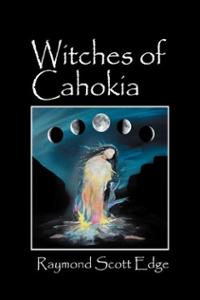
 witches

            Witches of Cahokia (ISBN 978-0-9794737-2-2, Redoubt Books, 2009) by Raymond Scott Edge is a direct sequel to his Flight of the Piasa, although it can be read without having first read the prior book.

            You can read my review of Flight of the Piasa here: https://michaelgcurry.com/2014/07/03/what-am-i-reading-flight-of-the-piasa-by-raymond-edge/

            As with Flight … it tells two stories – Snow Pine and her descendants living amongst what will become the Cahokian Mound people of the Mississippi River north of what is now St. Louis; and archaeology professor Daniel French, his (now) wife Lauren and his mentor, Dr Fred Eldridge.

            Unlike Flight, the story of the ancient cast is told as a narrative – not as an epistolary last will and testament. In Flight the majority of the book favors the ancient cast’s story. Witches is more balanced between the two stories – leaning more heavily on the ancient cast especially in the first half of the book and then on the modern cast in the last half of the book – particularly as one plot winds down and the other picks up.

 SPOILERS AHEAD

             The story of Snow Pine and her descendants begin exactly (is it too much of a pun to say “literally”?) where Flight leaves off – with the death of her husband Sun Kai in the cave complex near present-day Alton.

            We learn Snow Pine’s side of the story during Sun’s search for her in Flight: how she was taken captive and sold to the Trading People, married Beaver Lodge, befriended his head wife Fawn Heart, and otherwise became part of the village due to her amazing healing techniques. She had a child with Beaver Lodge and called her Ming.

            She is eventually ostracized because she helped heal members of the Osage tribes who were at war with the Trading People. She went to live in the valleys and caves near Sun Kai’s grave and the Piasa painting on the cliffs of the Mississippi River. She is considered a witch as her legend grows and is left alone by all sides of the conflict.

            She continues to heal anyone who asks – friend or foe. This includes a young Osage warrior, Young Wolf, who falls in love with Ming (this takes place over several years). His mother, Buffalo Woman, joins Snow Pine and they and other Trading People and Osage women form a society called the Daughters of White Buffalo Calf Woman.

            They heal; they watch the migration of tribes and buffalo and report it to Snow Pine. She advises them to tell their hunters where the buffalo are migrating. In exchange, the Daughters look for any strangers during their travels that look like her. She is convinced her people will come for her and Sun – just as Sun predicted on his deathbed. Eventually all this information is written on joined pieces of buffalo hide.

            The Daughters meet every year at the winter solstice; every year they repaint the Piasa bird.

            But time ends all things – Snow Pine passes her leadership of the Daughters to Ming, who passes it to her daughter Cassie (named after Snow Pine’s ancient ancestor Cassandra). Cassie then gives the leadership role to Fawn Heart’s great-granddaughter Raven.

            Raven has a vision to go south to gather a crop of golden kernels, later called mahiz, that will sustain her people. She, her brother Wildcat and others head to (I assume) Mexico to gather maize. On the way they meet people both friendly and hostile. They rescue two children, a girl Mala and a boy He Looks Up, who were about to be sacrificed to the southern tribes’ god. Mala and He Looks Up are raised by the Trading People. He Looks Up brings his religion with him and it eventually takes over the Trading People’s lifestyle, changing it forever.

            This part of the story is one of the more shocking and unexpected plot twists and I will say no more for fear of spoiling a splendid turn in the tale.

            Note all this would still be in the “BCs” – Emperor Chin’in, a contemporary of Snow Pine and the reason she ended up with the Trading People, died in 210 BC; so three or four generations after that would still put us before the birth of Christ.

            A few chapters later, after we visit the storyline of the modern cast, we meet Forest Water and her daughter Timid Girl.  A strange visitor comes to the town. Could these be the strangers foretold by Snow Pine? Forest Water invites the stranger to her valley home. He rapes her. He is a Viking named Thornfield Skullsplitter. As she gets her revenge Forest Water is grateful that he is not of Snow Pine’s people.

            Some chapters later we meet Zhu Wen. He sails the world under the orders of Zheng He, an admiral during the Ming dynasty who sailed to east Africa and, some argue, landed on American shores. In Witches, Zhu Wen sails up the Mississippi River until he gets to the deserted mound city of Cahokia.

            Zheng He died in 1433, around the time of the end of the Cahokian Mound culture – the author did an excellent melding these facts together.

            He sees the Piasa and is shocked to spot a dragon from his own culture painted on a cliff face on the other side of the world. The White Buffalo Calf Woman named She Who Remembers spots his ship and knows Snow Pine’s people have finally returned as prophesied. She gives Zheng He Sun Kai’s journal and the buffalo hide of her coven, with fourteen hundred years of information. This finally answers a thread left from Flight – what happened to Sun’s journal and how did it get back to China?


            “Meanwhile” Daniel French’s story picks up ten years after the end of Flight – Daniel and Lauren are now married and have children. Both Daniel and Lauren are professors of archeology at SIU-Edwardsville, supervised by their former professor Fred Eldridge.

            Road construction unveils a pair of female skeletons from ancient times. Construction halts until the skeletons are examined. Eldridge sends Mr. & Mrs. French along with assistants Josh Green & Jenn Rauch. Unfortunately these two lovers have just joined the Creative Artifacts Society – an anarchic group of Luddites who bury false evidence at such construction and archeology sites to halt the destructive advance of society.

            The author makes no bones about the CSA’s villainy; their leader is a charmless terrorist who disappears quickly. I wonder if he will appear in the third book. Josh and Jenn plant an anachronistic buffalo hide amongst the finding at the construction site and the Frenchs and their friend, Jared Davidson, investigate. When they get too close, Josh and Jenn frame Jared for an attempted rape as their distraction. Eldridge must deal with the accusation and not only its affect on Davidson but on the department. Josh makes things more difficult by staging protests demanding Davidson’s removal from the university.

             More time is spent with Eldridge in this book – we meet his wife and learn a bit of his background – and we see more of him than the cynical curmudgeon from Flight. He still lectures and suffers no fools, but especially at the end, we see his love for his trade. You can hear the giddiness in his voice during his phone call to Daniel at the end of the book.  He goes to China at their invitation to examine a strange Buffalo hide the government has been keeping for quite some time…

            This presumably sets of the third book, but without doing it as a cliff-hanger.  If the story ended here, the reader would be satisfied.

 END OF SPOILERS

             There is foreshadowing of the next book, but it does not end in a cliffhanger. It ends the way stories end in life – some threads end (the CSA’s framing of Dr. Davidson, but not without consequences to Davidson, Josh or Jenn) and other threads begin (the Illini Confederation’s restraining order to stop any further investigation of the bodies found). I assume all these threads will be picked up and explored in the third book.


            Time was handled well – eventually, although as a reader it was frustrating at times. The readers know these women lived before the time of Christ as does their second and third generations, yet it seems as if the archeologists consider them part of the Cahokian Mount culture from a thousand years later. Only late in the book is something said about the time differences between the multiple generations of bodies found. A quick line earlier in the story (“…these could be from a thousand years earlier or more…”) would have helped that nagging criticism.

             Daniel and Lauren are just as likable as in Flight. They have aged and grown more confident in themselves and their skills as is expected. The growth in character of Eldridge is the most pleasant of all – we grow to respect his intelligence and authority rather than the somewhat-two-dimensional foil of Flight whose job seemed to be to consistently poo-poo anything Daniel had to say.  Note that Eldridge’s “two dimensionality” wasn’t as apparent while reading that first book. The impression the character made in Flight wasn’t necessarily the correct one. Then again, he wasn’t as central to that story as he is to Witches.

             New characters: Jared Davidson is a welcome addition and is written as a good and loyal friend. Josh is written as the smart-ass infallible know-it-all most college students are at that time in their lives (Daniel at that time in Flight was filled with doubt and less of a smart-ass, but he’s an exception). Jenn is a tool.

             I enjoyed Flight very much. I enjoyed Witches even more. It is a better book. The modern-day characters are given more to do than just be our guide to the story from the ancient past – they are given their own drama to allow their good and bad personalities a chance to be shown and to grow. Plus the epistolary style of the first book lends to a lack of immersion in the story, I think. Reading a “letter” – even an excellent one like Flight, in which the “letter” is a long narrative – is still reading a letter. That willing suspension of disbelief is harder to do than with a story set presently. You know the letter-writer will survive at least long enough to write the letter! In a current narrative, not so much. In fact, some of the deaths – whether naturally or at the hand of man (or woman or child) is sudden and shocking. I know we’re talking about fictional people who lived two thousand years ago, of course they are dead by now (and of course they never existed to die in the first place), but for the reader to be saddened even a little at their deaths – or be shocked when they are killed – shows good writing. We care what happens to them. The fact that the modern cast may have found their remains and their writing gives the reader a sense of closure.

             One last book in the trilogy is left. I’ll start it soon and hope to finish it before my Christmas “break” from reading (I always stop and read holiday fare between Thanksgiving and New Years – starting with A Christmas Carol, L Frank Baum’s Life and Adventures of Santa Claus, Tolkien’s Father Christmas Letters and whatever else strikes my fancy.

            I’ll definitely blog about the third book when finished.

             Support independent authors! Support local authors! Read their books! Tell others to read their books! Post positive comments online if you enjoy it! Please?

 Michael Curry

Reading is in my Blood (Sugar): Diabolical Diabetes Part 2

Diabolical Diabetes Part Two: Reading is in my blood (sugar)

chocolate-sculpture-book

            My doctor said I had to get my blood sugar down from the 300s to normal levels. It would affect my kidneys, eyes and other organs as I slogged my way through my 50s.

So I said to myself, “Okay, let’s do it.” And when faced with something of which I know little and want more information, I do what man has done since the days of the caveman – I read a book about it! 🙂

My doctor recommended Sugar Busters (or The New Sugar Busters! Cut Sugar to Trim Fat) by H Leighton Steward, Morrison C Bethea, Sam S Andrews & Luis A Balart, ISBN 0-345-45537-1 by Ballentine, 2003. Since my wife works at a library, it is fairly easy for me to get and read such things.

It starts with explaining refined sugars and enriched flour and how bad such things are for us – and strictly eliminates them. My wife refers to the book as “Sugar Nazis” and I agree. But I am also an all-or-nothing sort of person and I need such absolutes. At least for now. No white bread. No bread at all if I can do it.

In later chapters it compares itself to other “diet plans” – if only to avoid copyright infringement. And it spends some time on the famous Atkins Diet. I find the differences between the two small. Atkins says no carbs, Sugar Busters says carbs in moderation and “good” carbs – the aforesaid brown rice and whole wheat.

What helps for the rest of you is that the “diet” doesn’t concern itself just with diabetes, but childhood obesity and women’s weight issues. This plan can be done by the whole family.

That’s because it is chocked full of recipes. It tells you what kinds of food to stock (whole wheat flour, veggies, fruits) and what to throw out – white flour, sugar, etc. And then it includes lots of recipes – including recipes from famous restaurants and chefs from across the country. I especially like the fresh spinach salad with bacon. I add a bit of Dijon mustard to the vinaigrette. Yummy.

An interesting takeaway is this: eating fruit 30 minutes before a meal helps with the fruit’s digestion. It’s filled with good tidbits like that.

My doctor made a good suggestion. Well, no wonder; she also has excellent taste in patients, too …

***

            My wife recommended The Insulin-Resistance Diet by Cheryle F Hart & Mary Kay Grossman, ISBN 978-0-07-149984-2 by McGraw-Hill, 2008. She thought it was less intense than the “Sugar Nazis”. And it is. It’s a book for the rest of us who do not have the willpower to cut off our beloved bread and sweets entirely. I needed the intensity to get my blood sugar down. But once down – or as down as a diabetic can be – how to I keep it down even when I am bad? And I know I will be bad. After a week or so of “boot camp” – I wanna pizza and a Snickers bar.

This book’s mantra is balance. Balance is the key. The call it the Link and Balance See Saw. I see it more as an apothecary scale. Neutral foods – veggies, etc. – in the middle, with carbs and proteins on either end. If the meal or things you are eating are balanced – it’s good for you.

It provides an extensive list of foods by category – carbs, proteins and neutral. It even includes commercial products – name brand cereals and fast food entrées!

Balancing carbs to protein is about 2 to 1, slightly more to the carbs (2.14 to 1 from some of their examples – I keep it at 2 to 1). If a product has, say, 18g of carbs, but also has 9g of protein – this is balanced and good for you. On weekends I enjoy instant (plain) oatmeal with some cinnamon and Splenda in it. With this balance system – I also cook two slices of bacon or sausage patties for the protein and eat that with the oatmeal. Any excuse to eat bacon.

This has really gotten me looking at the nutritional labels on foods. Especially fast foods. Look at a Subway sandwich – I get the flatbread with tuna with plenty of veggies, mayo, hot sauce and pepper jack cheese. 40g carbs (yow!) minus 2g fiber (see Diabetes Breakthrough) balanced with 20g protein. Balanced.

It also includes lots of recipes as well as how to Link and Balance with commercial products like Hamburger Helper. The section on what to look for in menu items in specific types of restaurants is interesting too (Chinese, Mexican, Italian, etc.).

And no eating just before bed. Cholesterol collects when you sleep. If you go to bed with a full tummy, it can raise your cholesterol. This was always a problem for me.

The book has testimonials or life-stories, which I ignore. “Remember Susan, the receptionist from the beginning of this Chapter?” No, and I could care less.

A better book than Sugar Busters for later use; less militant and more techy and number-crunchy, which is fun! That’s not to say Busters is not a good book, it is! It’s what I needed for the first month or so, Insulin Resistance is what I can use afterward to keep my blood sugar under control after the Busters boot camp lowered it to normal levels.

***

            And speaking of boot camp, this brings us to The Diabetes Break-Through by Osama Hamdy & Sheri R Colberg, ISBN13:978-0-373-89284-6, Harvard Health Publications/Harlequin Health, 2013.

This is a very regimented and controlled eating plan. It tells you what to eat and when (and how) to exercise. Like Sugar Busters, someone who needs the discipline and has the willpower and self-control to follow it to the letter will benefit by this book.

During Week 1 you will eat this and here’s how you will exercise. During Week 2 you will eat this and exercise thusly…

The menus are not draconian and suggest the same foods as the other two books. You may eat a tablespoon of peanut butter on a slice of whole wheat bread, for example.

The book explains measurements in general terms – a cup is about the size of your fist, my thumb a tablespoon and my thumb’s tip a teaspoon. That was my favorite bit taken from the book.

I like that it lists specific diabetic-friendly meal-replacement shakes and frozen dinners. The next day I was putting them in my grocery cart and have been dining on them ever since.

Here I learned that my glypizide can sometimes cause weight gain. Hmm.

Not as many recipes as the other two books, but plenty of exercise instructions and illustrations – much more so than the previous two books.

The layout is very strict and militant – which are not words I would use to describe the diet itself. Fortunately I am past the first month of getting my blood sugar down to manageable levels, so I do not need the strict instructions of the first few weeks. As with Insulin Resistance, anyone who loves techy number-crunching will like the structure of the book – if not the diet itself!

It mentions a way to look at the nutrition chart that the others do not. You subtract dietary fiber from the total carbs – they don’t really count as carbs. You can also subtract one-half of the sugar alcohol from the total carbs, too. Look at the Atkins’ Peanut Butter Granola Bar (which I eat for breakfast on hectic week-days) – 18g carbs, but 5g is fiber and 11g is sugar alcohol. This makes the bar, according to this book, effectively only 8g of carbs. Considering its 15g of protein, this is REALLY good for me according to the Insulin Resistance Link and Balance See Saw. Why does no one else mention this? A web search seems to confirm this idea of net carbs – WebMD has a nice page about it. They warn to be careful of such labels as “net carbs” though.

***

            So I use all three books – their recommendations for food, eating out, checking the labels, buying groceries, etc. The books share common ground but are unique enough to get something out of each of them. Somewhere among the three lie the truth, I think. I just have to ignore the individual hype.

Next time I will tell you how it is going…

Wish me luck!

To Be Concluded

Copyright 2014 Michael Curry


Abby’s Road available as an ebook!

Abby’s Road, the Long and Winding Road to Adoption is now available as an ebook at the Smashwords store! Unfortunately, it will be 24 hours or so until it is available on Barnes & Noble and Apple books. Kindle and paperback through Amazon will still be a few weeks – although Smashwords DOES have a Kindle button … hmmm … In the meantime, download a sample and enjoy it while you wait for your preferred format! Thanks everyone for their encouragement and support. I hope you enjoy it!

https://www.smashwords.com/books/view/457270

frontcover

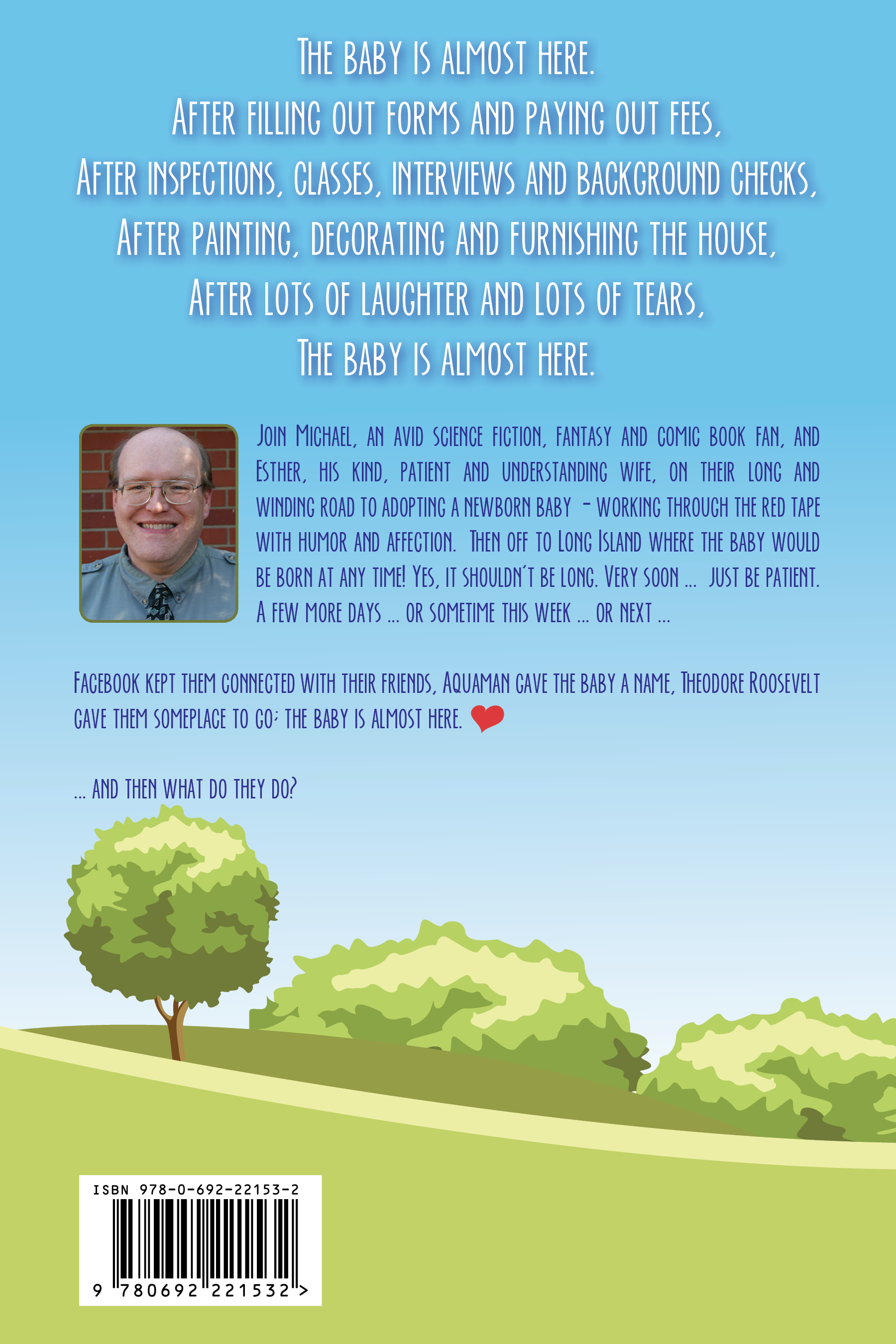
Abby’s Road leads a couple through their days of infertility treatments and adoption. It is told with gentle (and sometimes not-so-gentle) humor from the perspective of a nerdy father and his loving and understanding wife.  Join Mike and Esther as they go through IUIs and IFVs, as they search for an adoption agency, are selected by a birth mother, prepare their house, prepare their family, prepare themselves and then wait for their daughter to be born a thousand miles from home.

backcover

“Once upon a time, there was a mommy and a daddy who loved each other very much. And they wanted to have a baby of their very own, but they couldn’t even though they tried and they tried.

“So they decided to adopt a baby. They talked to some very nice people who help mommies and daddies like them.

“And they met a very nice man and woman named Valerie and David who were having a baby but couldn’t be the baby’s mommy and daddy. So they picked Mommy and Daddy to be their baby’s mommy and daddy.

“So when it came time for the baby to be born, the mommy and daddy took a long plane ride to Long Island, New York where they waited and waited, and they waited and waited, and they waited and waited until finally the baby was born.

“The next day they went to the hospital to see the baby, but they couldn’t hold her. They could only look at her through the nursery window lying in her teeny tiny little baby bed. But the day after that they got to go back.

“They got to hold the baby. They got to dress the baby. They got to name the baby Abigail, put her in a car seat, put her in the car and take her back to the hotel where they were staying.

“And after a few more days they took a long train ride home where they lived happily ever after.  The End.”

Thanks everyone for their encouragement and support. I hope you enjoy it!

Copyright 2014 Michael Curry

What am I Reading? Propositum by Sean P. Curley

What am I Reading? Propositum by Sean P. Curley


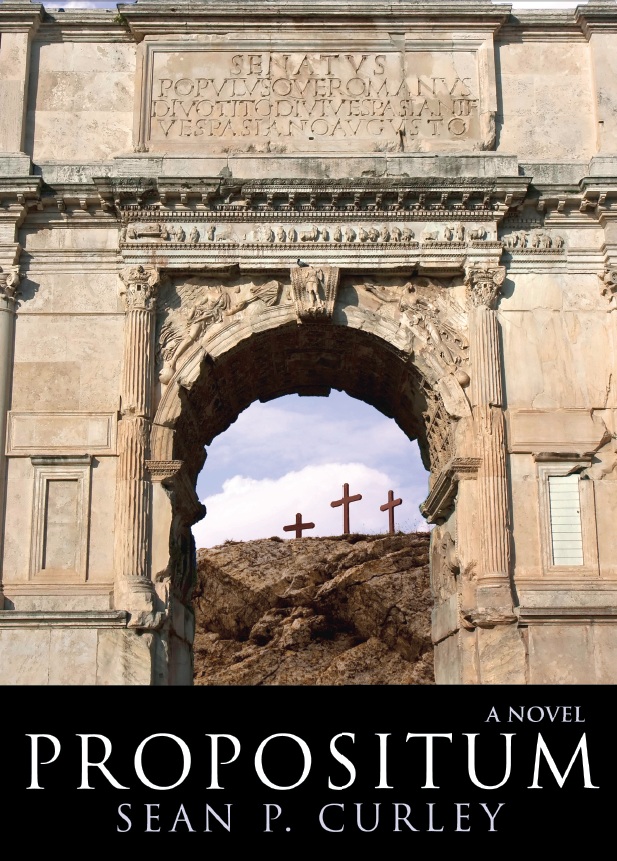
peopositum

Propositum by Sean P. Curley ISBN Paperback: 978-1-60047-762-1; Digital: 9781301786299 was released in 2007. I purchased it in 2013 but did not read it until summer of 2014.

The author describes the book on his web page and Facebook page: “A rich landscape of characters with ambition and guile who conspire to form Christianity. They manipulate the Jewish High Council, the Roman Senate, Caesars, and history to create a new religion. But why did they do it? http://curley.me/propositum

“If Jesus did not exist, then how did Christianity form?

“Inside a rich landscape of the failing Roman Republic and a tumultuous Jewish population is an ambitious and visionary ex-Senator who conspires with Paul of Tarsus to create something… better.
This provocative historical novel melds the birth of Christianity with recent scholarly works and delivers a shocking, but plausible, story of Christianity’s formation and the Christ myth.”

The Christ Myth Theory has been postulated since the late 1700s. Its Wikipedia entry is: http://en.wikipedia.org/wiki/Christ_myth_theory

SOME SPOILERS

Propositum is a dramatization of the Christ Myth Theory. Proculus, a retired Senator living in Judea with his Jewish wife June, is the author of the theory. He believes the RomanRepublic is dying and very quickly turning into an empire. As such, they will be a danger to his beloved Judea – who, as a people, will not accept Rome (or anyone) as their despotic rulers. Eventually an Emperor will not tolerate the Jews being exempt from taxes every seven years; and with emperors proclaiming themselves and their kin gods … well, the whole “Thou shalt have no other gods before me” thing will make life in Judea a little awkward.

Awkward is putting it mildly. Proculus believes the disputes will lead to outright war; a war that will not go well for Judea.

How will he save his wife’s people? His friends? If he can spread Judaism through the empire- inculcate it so thoroughly that it supercedes the other religions – including the emperors’ self-created deities – that a war or conflict would be impossible.

But how can that be done, Proculus thinks. The tenants of Judaism do not easily lend themselves to proselytizing. Dietary restrictions. Clothing restrictions. Laws about what to do and not to do on the Sabbath.

Circumcision.

Yea, that might be a problem … “We have to lop off what now? Umm, thanks, but I’d rather not…”

Proculus sees the problem. Not only will he need to find a way to get permission to convert Gentiles (a big enough hurdle), but to allow the converted Gentiles to eschew some of the more draconian and undesirable rules of Judaism. The more desirable it is, the more converts there will be. The more converts there will be, the less likely a Roman Empire would desire a civil war.

It may not restore the Republic, but it will save Judea from destruction because they wish to follow dogma.

He enlists the aid of his friend Maximus, a retired general. With both their contacts still in Rome, they hope to be able to manipulate and cajole enough politicians and power brokers to allow them to continue to spread their new and improved version of Judaism.

But neither of them would be taken seriously as ministers of this Jewish reboot. They need a more believable figurehead.

Proculus’ friends in Tarus have a son named Saul. Saul spent most of his childhood preparing to study and become a Pharisee. Unfortunately, he flunked out. Fortunately, it instilled in him not a hatred, but a bitterness of all things Pharisaic.

Saul recommends emulating the beliefs of the Essenes. Proculus assigns Saul to find out as much as he can about the sect and report back to him. Saul learns of the Teacher, who espoused what Proculus is planning one hundred years before. Saul jots down the sayings and beliefs of the Essenes and their Teacher in what he calls the Book of Q.

Meanwhile, Emperor Tiberius dies and Proculus and Maximus go to Rome to suss out the two new possible emperors. They decide Caligula would be the less tolerant of the two and help manipulate his way to the throne.

When Caligula becomes emperor, Proculus convinces him that, since he is a god, his likeness should be in every temple. Even Jewish temples. But that is strictly forbidden by the Jews. Caligula doesn’t care. Proculus is pleased. The threat of war with Rome will goad the higher Jewish counsels to approve Proculus’ plans to convert the Gentiles.

Saul finds a perfect personification of their beliefs in John the Baptist and listens to him preach, but he is killed before Saul can actually meet him.

They decide to make the Teacher a more modern figure rather than someone who died in the previous century. They name him Jesus – a common and untraceable name.

Saul takes Proculus’ suggestion to change his name to Paul and his home from Tarus to Tarsus to avoid questions about his true past. He finds others who embrace his beliefs – Silas, Barsabbas, James, Cephas also called Peter, and small, wiry John.

Whole families are brought into the new religion. One baby, Theophorus, was the first generation to learn about the new way from the crib. I had to look him up on Wikipedia to discover who he was.

A new emperor, Claudius, ascends the throne. He will be much more tolerant of the Jews. This will not do. By now Maximus and Proculus are joined by Maximus’ daughter Curia who keeps the leaders apprised of events in Rome. We read as she marries and has two children.

The religion continues to grow. Paul writes epistles to the leaders and the communities that have established temples and churches. Proculus grows older, but more confident that his plan will succeed.


A new emperor, Nero, ascends the throne. He will be much less tolerable of the Jews. Proculus visits him and is worried – perhaps he will go too far.

The Pharisees start to push back. They allowed the conversions of the Gentiles, but not all of the changes to their sacrosanct laws. Paul and his followers are arrested. Some are killed. Paul adds details to the life of Jesus – he was killed by the Pharisees. This turns the crowds against their mockers and in their corner.

More friends and followers are made; some friends and followers die.

Rome attacks Judea. Well, that may eliminate the threat of the Pharisees. Paul is in jail? Well, after he finishes a few more letters … they NEED a good martyr…

END OF SPOILERS


Propositum is a thoroughly researched and very entertaining historical novel. You get the feel of what life was like at the time – how someone from the era lived, what they ate, how they traveled, etc. In most respects the characters are realistic and likable. Yes, Proculus is a likeable fellow despite what he hath wrought. You want to dine with him and his wife. You admire Maximus’ strength and courage. You even root for Paul to succeed after his first faltering attempts at public speaking.

The few action scenes are very well done and usually involve Maximus: his thwarting assassination attempts on the emperors, his leading troops during the sack of Jerusalem (including some wonderfully written spy work).

But the book usually consists of meetings. Paul reports and updates Proculus and Maximus on the goings on in the soon-to-be Holy Land. Curia reports on the goings on in the Senate and the dealings of the Emperor. This leads to one of the flaws of the book.

I’m the last person who should be critiquing a book – but Propositum sometimes suffers from the old writer’s trope “show – don’t tell”. The book has a LOT of “tells”. Paul discusses people he meets – friends and foes – his ideas to move the propositum forward. That sort of thing.

The “shows” are done quite well – Paul’s first attempts at preaching, Maximus going with him on one journey and arranging a few miracles credited to Paul, Peter’s ministry and its results, Proculus’ meetings with Senators and Emperors, the aforesaid sacking of Jerusalem, the burning of Rome and its effect on the cast, Paul’s vision on the road to Damascus (side note – it was fun reading and second-guessing what the author decided “really” happened and who “really” existed – John the Baptist was a great example) . All well done.

If the “tells” were turned into “shows” it would have doubled the length of the book. That would not be a bad thing – I would have loved to have spent more time in this world with these characters. Why not show us Paul in the crowd listening to John the Baptist and his thoughts about him rather than have us sit with Proculus as Paul tells us about hearing John minister?  Do you see the difference?

One great thing about the book is that during it all we still root for Proculus even thought some of his decisions cause some horrific results. He single-handedly caused strife between Rome under Caligula and Judea. He fomented anti-Jewish fervor during the Roman fire in the time of Nero.

There were other, smaller, moments that I truly enjoyed. Paul’s misogyny was present from the beginning, and his growing dislike of Curia was fun to read. Curia’s growth from a reluctant participant to the head of the order was well done.

My favorite moments involve Paul – his first poorly-done ministries, his growth as an apostle, the slow realization that he is a tool being manipulated and his inevitable acceptance that his usefulness is finally over.

One review mildly critiques the book: “Nearly every plan is executed perfectly”. Although we are shown Paul’s tough time with his first attempts at ministering and we see some disastrous results with Paul and Peter against pro-Pharisee groups; that is true. Proculus’ manipulation of the Roman government and particularly the Emperors and wanna-be emperors would make the Illuminati and Bilderburg Group members jealous.

The book spans 40 years. Perhaps this criticism could be avoided by showing us how long this timespan is. Perhaps Proculus is frustrated at times – he realizes he will not live to see his plan in complete fruition, but he can still regret it not going faster. Common history tells us Constantine was the first Christian Roman Emperor, so Proculus’ plan (let’s pretend for a moment Propositum’s story is true) about 250 years to complete. It took Islam only 100 years to take firm root throughout Arabia.

This would add more pages to this lovely book. Add to that the “shows” mentioned earlier and Propositum could clock in at 400 to 500 pages instead of 270. Fine by me. The author may groan, though!

The book should get as much attention as Dan Brown’s DaVinci Code. Even more so. There should be publicity galore for this book and the subject getting the attention it deserves. There is no subject so controversial it should not be discussed. So-called Christians should be damning Sean to hell and in the very next breath saying they will pray for his soul. All while burning the book.

Christians whose faith is strong will not have that faith shaken by reading Propositum, and they will get to read a good “what if” historical novel, get a scholarly feel for what life was like in the middle and near east two millennia ago, and – if they choose to ignore the basic premise of the book – get a realistic idea of what the early church must have been like. Premise or not, Paul and the earliest Christians probably went through exactly what is told (not always shown) by the author: hostile crowds, argumentative authorities and occasionally a convert.

I bought my copy through Apple’s I-Store. It was my first fiction novel e-book. It is available in paperback and hardback directly from the author’s website and Amazon. Buy it, read it, enjoy it, discuss it.

The author promises a sequel this year – with Curia and her by-now grown son at the helm of a new religion. An aging Proculus will undoubted have something to say! I can’t wait to read it!

 Paul

            Here is the opening chapter of the book: http://curley.me/propositum/sample.html#.U7ndiUC4O8A


            Copyright 2014 Michael G Curry

What am I Reading? Flight of the Piasa by Raymond Edge

What Am I Reading? Flight of the Piasa by Raymond Scott Edge


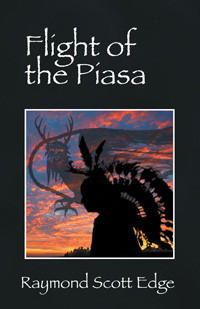
piasa_bird

Dr. Raymond Scott Edge runs a booth near the Knight’s Pub at the St. Louis Renaissance Faire.  The Knight’s Pub is where by brother-in-law’s group 3 Pints Gone performs. While waiting for their set, I checked out Dr. Edge’s booth. One of his more fun items for sale (I presume it is for sale) is a water basin with bronze handles. If you vibrate the handles with your palms, the water “dances” in the bowl. I’ve managed to do it once. It is fun to watch people try it out.

This past summer I noticed something different at his booth. Books. Three books. Dr. Edge wrote them and sold them along with his usual fare. His fare at the Faire, get it?

I was intrigued by the titles of his second and third books concerning the native mounds of Cahokia. I love learning about the Mound People and theories about their lives.

His books concerned a modern archeologist in the present investigating mysteries from the Mound People’s past. We talked for some time – I am also a writer, I said, and I also have a story in the horror vein about a modern man investigating a mystery from the Mount People’s past. His stories are not horror, but more in the “DaVinci Code” genre. Not an action thriller with exploding vehicles and nipples, but more of a modern and historical novel.

I bought all three books. He gave me a synopsis of his fourth. I can’t wait. In the meantime, I’m enjoying his releases.

As I finish a book, I’ll review it here. First up is “Flight of the Piasa” (ISBN 978-0-9794737-0-8; Redoubt Books)

book cover

SOME SPOILERS:

“Flight of the Piasa” weaves together two stories. The first deals with Daniel French, a graduate student in archaeology. We meet him as he tries to hold together his first class under the watchful eye of stern professor Eldredge. Daniel does a fair job but is frustrated by the professor’s criticism. He and his girlfriend Donna spend some time wandering the cliffs near Alton, IL – where Daniel was raised – to take his mind off his educational woes. The see the Piasa – the pre-Columbian Native American dragon painted on the cliff face. He theorizes it may be of Chinese origin – a theory his professor rebuffs. While they explore a cave – they find a skeleton and an ancient coin with Chinese markings on it.

He shows the coin to a Chinese friend and fellow student for his opinion. Coincidentally, another Chinese graduate student gives Daniel a manuscript translated from a 500-year-old text that was itself translated from an even older text.
The text makes up the bulk of the book. It is an epistolary biography of Sun Kai, childhood friend and general (more or less) for Lord Chin – we in the “real world” call him Zheng of Qin or Qin Shi Huang, the first emperor of the Qin (Chin) Dynasty that ruled from 220 – 210 BCE. Sun helps Chin/Zheng/Qin conquer the last province not under his control to unify the country that still bears his (Chin’s)name.
Sun rules a city in a far province and falls in love with Snow Pine – a slave taken as a child from a nomadic people who, we later learn, may be the descendants of an ancient Greek-era people. A very famous ancient Greek-era people. They still use Greek fire; they still sing of Zeus – they are now called the Praxans.
“Meanwhile”, if such a term is appropriate, Daniel’s relationship with Donna fades and he falls for Laura, a fellow archaeology graduate student and expert on these certain ancient Greek-era people. Don’t take that to be snarky – Daniel and Laura’s meeting, and their affection, is canny and realistic.
The Praxans nearly conquer Sun’s troops and his land, but Sun finds the encampment of the Praxan women and children in a fun and well-written bit of espionage.
Sun is later commanded by the emperor to sail the seas to find the home of the Praxan gods – who will bestow upon the now-mad emperor the secret of immortality. Sun agrees, if only so he can escape his and Snow Pine’s certain death at the hands of Zheng and his Legalist toadies.
They sail to India and Africa and eventually end up in the Americas, where the explorers are killed – Sun being the only survivor, or so he believes. While he recuperates in a cave he writes the manuscript that we and Daniel now read.
Sun’s search for Snow Pine’s killers takes him along the coast and upstream of a great river. Eventually he finds a large village and discovers that Snow Pine may be alive. He waits in a cave above the river-side village to find his love.
When he is nearly discovered he creates the ruse of a demonic bird to scare away the curious. He even paints a huge portrait of the winged creature on the cliff face…
The rest will reveal the ending. Daniel and Laura take this manuscript to their professor for his thoughts. He is skeptical.
The book does not seem to end on a cliff-hanger, but the preview of his next book reveals that the stories of the characters from both eras will continue.

END OF SPOILERS

What a fun book, well-researched and a quick cliff-hanging read. We care about Sun more so than Daniel, I think. I also think that is intentional – Daniel is our host in introducing Sun and Snow Pine’s world; a world excellently realized. The author wrote two more – continuing both stories. I look forward to them both.

The book is available at Amazon. Get it, share it, buy more copies, gift them.

MICHAEL G CURRY


Ten Reasons Why I Love America!

Ten Reasons Why I Love America

  alex_ross_justice_society

          This weekend we celebrate the 238th anniversary of the adoption of the Declaration of Independence. As we try not to set ourselves aflame, we think about our beloved home and ponder its magnificence.

Here are ten reasons why I love my country. I hope you enjoy them.

  1. Every kind of weather and every kind of environment. Like 100-degree heat? We got that. Like below-zero temps? We got that. Purple mountain’s majesties? Check.  Fruited plains? Check. Urban blight? Check. Suburban sprawl? Check. I’m losing momentum here…
  2. We’ll eat anything. From Pink Slime to High Fructose Corn Syrup, the lines at the fast food drive-throughs block the highway. And health-food adherents – don’t laugh. You’re snacking on curry-flavored kale chips while you read this, aren’t you?
  3. Full Faith and Credit. This really is one of the genius bits of the constitution that binds the Republic together. Let’s suppose the governor of Colorado is still pissed at Washington over the Super Bowl. He passes a law saying a Washington state driver’s license is not valid to drive in his state. Or it’s outright illegal for a Washingtonian to enter the Colorado border. Well, he can’t do it. Every state has to honor the laws and judgments of other states.  Unless you’re gay and want to get married…
  4. The Interstate System. Oh you might be stuck behind a semi for five miles or so until he decides to pull over (they do that on purpose, you know), and the Autobahn is better, and it’s not the if-it-doesn’t-go-by-it-then-it’s-not-worth-seeing of the London Tube (actually a bit of the opposite) … um, so why is this on my list?
  5. Diversity. If America is known for one thing it is our vast diversity. Culturally, philosophically … ethically … There are some citizens who enjoy being so diverse that they want everyone to be just like them! Just. Like. Them.
  6. Someone, somewhere, shares your views. This ties into the previous point. If you think Masons created Bigfoot as a way to spy on loggers, there is probably someone out there that believes it too. The internet has helped bring these folks together. So if you think the moon landing is fake and/or professional wrestling is real you are not alone. No matter how crazy and fact-less; if there are enough of you, you can form your own political party. Some have already.
  7. We hate soccer. It’s bad enough we love to watch millionaires hit a ball with a stick. It’s bad enough we love to watch millionaires touch the skin of a pig on the Sabbath. But kicking a ball down a seemingly three-mile-long-grassy field without touching it? No way!
  8. Eternal and Unshakeable Optimism. Only an American considers purchasing a weekly lottery ticket as the sole source of a comprehensive retirement plan…
  9. We have no long-term memory, and our short-term memory is pretty crappy, too. Every four years we throw out the bums in charge of the country. For over two hundred years the newly-elected leaders were the same set of bums we threw out four years before. And that’s just politics – I could do a whole blog on Hollywood stars’ screw-ups and redemptions {kaff-Mel-Gibson-kaff}
  10. The Grand Canyon. All kidding aside, you have to admit, it’s pretty cool.

Have a happy 4th!

captain_america___usa_girls

 Original material copyright 2104 Michael Curry


Part Two of “Come and Watch us Sing and Play”; the Monkees Live in St. Louis!

(Part Two of) Come and Watch Us Sing and Play

          The Monkees at the Fabulous Fox Theater, June 5th, 2014

St. Louis, Missouri

1110421_ET_1107_monkees_reunion_02_DPB

The concert started with the screen tests aired as bits during their TV show (there were no never-seen-before bits on the screen), followed by the theme song and opening video of their show. I’m kind of glad they didn’t perform it.

  1. Last Train to Clarksville (from The Monkees – first album)
  2. Papa Gene’s Blues (from The Monkees – first album)

3.      Your Auntie Grizelda (from More of the Monkees)

  1. The Kind of Girl I Could Love (from More of the Monkees)
  2. She (from More of the Monkees)
  3. Sweet Young Thing (from The Monkees – first album). This was the first of many times Pete played banjo. Ironically, days before I was listening to George Harrison’s Wonderwall Music on which Peter played the banjo. Legend says his track was not included on the album – but it was in the movie – but I hear banjo…)
  4. I’m a Bleeder – er – Believer (from More of the Monkees)
  5. (I’m Not Your) Stepping Stone (from More of the Monkees)

Here was the first “break” featuring many video clips of the show – including Mike’s rapid-paced singing of his own “Different Drum”.

A wonderful part of the show was dividing the sets into their respective albums. The next set featured (mostly) songs from their most popular album Headquarters, unless otherwise noted:

9.      You Told Me

10.    Sunny Girl Friend

11.    You Just May Be the One

12.    Mary Mary (from More of the Monkees) (with this song Mickey took over the drums – I watched and he did very well – and the other drummer did percussion)

13.    Girl That I Knew Somewhere (B-side of A Little Bit You, a Little Bit Me)

14.   Shades of Grey (this song had a particularly great video montage – although it did distract from the band – it was here Mickey’s teasing Pete’s hair during the chorus). This was the first Davey song, although he co-sung it with Peter.

15.   Randy Scouse Git (this was preceded by the clip from the British TV show Til Death Do Us Part that inspired the title. The show was Americanized by Norman Lear and renamed All in the Family. So during a trivia night if you ever want to link the Monkees with Archir Bunker … here is it!

16.    For Pete’s Sake

17.    No Time

Video clips during this set break were clips of the show in Spanish.

18.    The Door Into Summer (from Pisces, Aquarius, Capricorn & Jones Ltd … pant pant, hereinafter “Pisces”)

19.    Words ((from Pisces)

20.    Tapioca Tundra (from The Birds, the Bees and the Monkees)

21.    Going Down (B side of Daydream Believer)

The video screen showed clips of their movie “Head” … oh dear god in heaven are they going to do songs from “HEAD”!!??

The movie was awful, but the soundtrack was the best thing they ever did. It should air with Sgt. Pepper as examples of sixties pop/rock. I’m not kidding.

This was the best part of the show.

22.    Porpoise Song. Oh my god, they did the Porpoise Song. If anyone recorded this that loud voice in the audience singing along was me.

23.    Can You Dig it

They showed the video of Nilsson’s Daddy’s Song with Davy singing. The CD has a bonus track of Mike singing it. I liked that version better. So much so that I forgot that the “official” singer was Davy!

24.    CIRCLE SKY!!! (caps intentional – by now my sister and nephew asked me to sit down and stop embarrassing them. I never. NEVER. thought I would hear this song live. I hoped that someday I might see a solo set by Mike Nesmith, but this was a thrill.)

25.    As We Go Along (and by now the people sitting next to me were reacting and ushers had to be called. This is one of my favorite “deep tracks” by the Monkees. Hardly anyone knows about this beautiful Toni Stern/Carol King tune)

26.    Long Title: Do We Have To Do This All Over Again

After this wonderful set more videos aired as we headed for the big finish…

27.    What Am I Doing Hanging Round? (from Pisces. THIS is my favorite Monkees song. I was sooo glad they did it. Plus they did it at a slower tempo than the original. Overall the “new” live arrangements were superb, sometimes better than the originals)

28.    Daydream Believer (from The Birds, the Bees and the Monkees). This was sweet. Each of the surviving members took a verse, with Mike Nesmith taking the last. His velvety voice fit perfectly.

Encore:

29.    Listen to the Band (from The Monkees Present) (this was accompanied by a video of the song that I never knew existed)

The band members were introduced.

30.    Pleasant Valley Sunday (from Pisces). You knew this song was coming. It was one of their biggest hits and one of my favorites. Damn fun to play on the guitar, too.

I asked my sister how the show compared to the others. I expected the ones with Davy to be more Vegas-y. Lots more showmanship, horns, dancing, etc. I pointed out Mickey’s dancing during “Going Down” as an example of “Vegas-y”.

No, she said, those featured rock bands and were done in similar styles as this. The first tour with Mike Nesmith featured some of his solo songs. Ooo, I would have liked to hear some Nesmith tunes – Joann, for example.

She said there was more banter between the band members in their 2012 tour. There was some here, but not as much. I don’t mind that – I go to a show to watch them play. They can banter on Letterman…

The audience went bananas throughout. And there was quite an age mix – older men and women and small kids. Nothing like the Wiggles show, mind you, but there were kids under ten there. They used to introduce “…Believer” with “we used to do this before Shrek did…”

We need to start a petition to either make them put out a live album or a studio album of these arrangements pronto. Who’s with me?

Gentlemen, you were never jokes; you were never Beatle rip-offs. Bravo for Peter’s jibe about “we were accused of not being the Beatles, along with three million other bands…”

Thank you for nearly fifty years of wonderful music. And thank you for performing it for one night!

I am so glad I went – what a wonderful show. If you can, go see them. As Davy Jones’ death proved, we might not have many more chances to see them. In other words – you’d better get ready; they may be coming to your town.


Here’s another great review of the show: http://www.thetelegraph.com/news/lifestyle-news/1414036/The-Monkees-turn-back-the-clock-in-fun-energetic-show


Copyright 2014 Michael Curry