I am proud to annount my Kindle ebook “What Bankruptcy Can’t Do” is highlighted on DIY Daily –
Thanks to paper.li for highlighting my ebook!

I am proud to annount my Kindle ebook “What Bankruptcy Can’t Do” is highlighted on DIY Daily –
Thanks to paper.li for highlighting my ebook!


Three of the most famous – and funny – comedians of the 20th Century were George Burns, Jack Benny and Bob Hope. They and their wives adopted all their children.
November is National Adoption Month. November 11th is Veteran’s Day. Who else would make the perfect Spotlight?
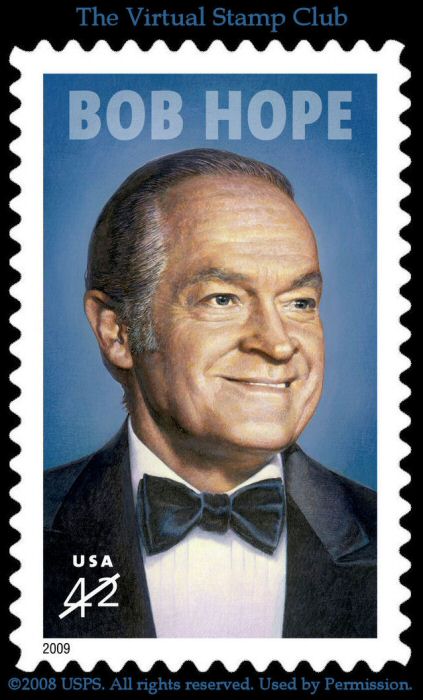
Really? You want to know about Bob Hope? There have been as many words written about Bob Hope as there are miles he travelled entertaining the world. Okay, here goes:

From Wikipedia:
Bob Hope, (born Leslie Townes Hope, May 29, 1903 – July 27, 2003) was an English-American comedian, vaudevillian, actor, singer, dancer, athlete, and author. With a career spanning nearly 80 years, Hope appeared in over 70 films and shorts. In addition to hosting the Academy Awards 19 times (more than any other host), he appeared in many stage productions and television roles and was the author of fourteen books. The song “Thanks for the Memory” is widely regarded as Hope’s signature tune.
Born in London, England, Hope arrived in America with his family at the age of four and grew up in Cleveland, Ohio. He began his career in show business in the early 1920s, initially on stage, and began appearing on the radio and in films in 1934. He was praised for his comedy timing, specializing in one-liners and rapid-fire delivery of jokes—which were often self-deprecating, with Hope building himself up and then tearing himself down. Celebrated for his long career performing United Service Organizations (USO) shows to entertain active service American military personnel—he made 57 tours for the USO between 1941 and 1991—Hope was declared an honorary veteran of the United States Armed Forces in 1997 by act of the U.S. Congress. He also appeared in numerous specials for NBC television, starting in 1950, and was one of the first users of cue cards.
He was married to performer Dolores Hope (née DeFina) for 69 years. Hope died at the age of 100 at his home in Toluca Lake, California.
From Legacy.com:
The nation’s most-honored comedian, a millionaire many times over, was a star in every category open to him — vaudeville, radio, television and film, most notably a string of “Road” movies with longtime friend Bing Crosby. For decades, he took his show on the road to bases around the world, boosting the morale of servicemen from World War II to the Gulf War.
He perfected the one-liner, peppering audiences with a fusillade of brief, topical gags: “I want to tell you, I was built like an athlete once – big chest, hard stomach. Of course, that’s all behind me now.”

All four Hope children were adopted from The Cradle in Evanston, Illinois. A brief search of the internet is confusing: one site says Nora Hope was born in 1930 and another that she was adopted in 1946. This could make her 16 when she was adopted by the Hopes. Family photos dispute this. I will thus avoid dates:
Linda Hope is the holder of her father’s legacy – producing many of his last specials and controlling the releases of his work for home viewing.
William Kelly Francis Hope, an actor.
Anthony J Hope died June 28, 2004. He worked in Washington as an attorney.
Eleanora (“Nora”) Avis Hope.
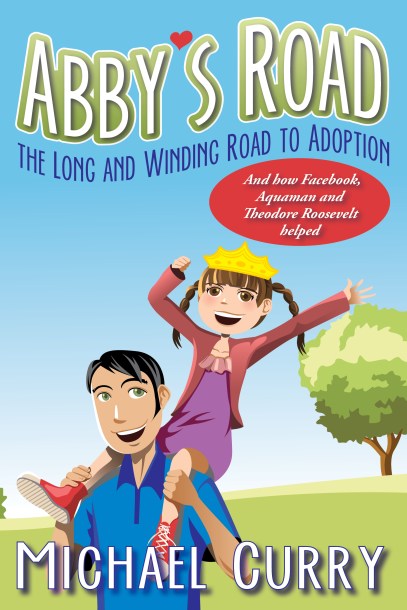
The cover of Abby’s Road
“Abby’s Road, the Long and Winding Road to Adoption and how Facebook, Aquaman and Theodore Roosevelt Helped” leads a couple through their days of infertility treatments and adoption. It is told with gentle (and sometimes not-so-gentle) humor from the perspective of a nerdy father and his loving and understanding wife.
Join Mike and Esther as they go through IUIs and IFVs, as they search for an adoption agency, are selected by a birth mother, prepare their house, prepare their family, prepare themselves and wait for their daughter to be born a thousand miles from home.
WINNER: 2015 Reader’s Favorite Book Award Finalist, Non-Fiction Humor
WINNER: Honorable Mention, 2015 New York Book Festival!
WINNER: Honorable Mention, 2014 Great Midwest Book Festival!
Abby’s Road is available at Amazon, Barnes and Noble, and at Smashwords.
Copyright 2016 Michael Curry

Three of the most famous – and funny – comedians of the 20th Century were George Burns, Jack Benny and Bob Hope. They and their wives adopted all their children.
From http://www.biography.com:
For more than 50 years, comedian Jack Benny was a star of radio, the stage and screen. His radio show, The Jack Benny Program, was a forerunner of the sitcom genre.
Jack Benny was born on February 14, 1894 in Chicago, Illinois. Benny came of age during WWI. He developed an ear for music and played the violin. He enjoyed entertaining people and in the 1920s became a successful vaudeville player with a knack for comedy. By the late 1930s, he had become the king of radio with his own show, The Jack Benny Program. In 1950, he started appearing on a television version, which alternated weekly with his radio show. The TV show ended 15 years later, after which Benny made guest TV appearances until he died, on December 26, 1974 in Beverly Hills, California.
His first radio program was in 1932; his last television program was 1965. Always with good to excellent ratings. Such a 33-year run seems unimaginable today.
From the blog “A Shroud of Thoughts” – http://mercurie.blogspot.com/2014/02/the-120th-birthday-of-jack-benny.html
Jack Benny would leave behind a legacy that only a very few other comedians could match. The Jack Benny Program was pivotal in the development of the situation comedies of radio and television, evolving from the sketch and variety format familiar from vaudeville into the sitcom format we recognize today. What is more, it is one of the few radio sitcoms that successfully made the transition from radio to television, running for fifteen years on the new medium.
Jack Benny would also have a lasting impact on future generations of comedians. The influence of Jack Benny can be seen in comics and actors as diverse as Johnny Carson, Phil Hartman, Eugene Levy, Kelsey Grammar, and Jerry Seinfeld.
Of course, Jack Benny’s greatest legacy may well be the works he left behind. His radio show is still widely available, on CDs, in digital form, and through streaming media on the internet. His television show is also widely available, with possibly the entire run available on DVD and many episodes available through streaming media. While many classic radio and television stars have long been forgotten, Jack Benny remains recognizable even to people who were born long after his death. One hundred and twenty years after his birth, Jack Benny is still regarded as one of the greatest comics of all time.
***
Actually, Jack Benny left two legacies: his comedy and his daughter.

Joan Benny was born in 1934 as Joan Naomi in New York City. She was adopted by Jack Benny and his wife Mary Livingston at the age of three months in September of that year. They decided to adopt after Mary’s second miscarriage. From Joan’s book Sunday Nights at Seven, 1990, Warner Books:
“I became curious and asked the obvious questions: Who were my real parents? Why didn’t they want me? (My adoptive parents answered) “We don’t know who they are, we don’t know where they are now, and they couldn’t keep you because they couldn’t afford a baby and wanted you to have a good home … Besides, you are luckier than other children – most parents can’t pick the child they want, but we chose you and we wanted you very much.”
“Abby’s Road, the Long and Winding Road to Adoption and how Facebook, Aquaman and Theodore Roosevelt Helped” leads a couple through their days of infertility treatments and adoption. It is told with gentle (and sometimes not-so-gentle) humor from the perspective of a nerdy father and his loving and understanding wife.
Join Mike and Esther as they go through IUIs and IFVs, as they search for an adoption agency, are selected by a birth mother, prepare their house, prepare their family, prepare themselves and wait for their daughter to be born a thousand miles from home.
WINNER: 2015 Reader’s Favorite Book Award Finalist, Non-Fiction Humor
WINNER: Honorable Mention, 2015 New York Book Festival!
WINNER: Honorable Mention, 2014 Great Midwest Book Festival!
Abby’s Road is available at Amazon, Barnes and Noble, and at Smashwords.
Copyright 2016 Michael Curry
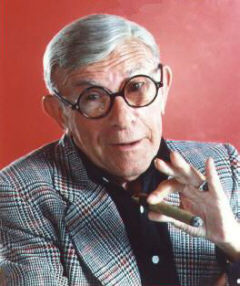
Three of the most famous – and funny – comedians of the 20th Century were George Burns, Jack Benny and Bob Hope. They and their wives adopted all their children.
From Wikipedia:
George Burns (born Nathan Birnbaum; January 20, 1896 – March 9, 1996) was an American comedian, actor, singer, and writer. He was one of the few entertainers whose career successfully spanned vaudeville, radio, film and television. His arched eyebrow and cigar-smoke punctuation became familiar trademarks for over three-quarters of a century. He and his wife, Gracie Allen, appeared on radio, television, and film as the comedy duo Burns and Allen.
When Burns was 79, he had a sudden career revival as an amiable, beloved and unusually active comedy elder statesman in the 1975 film The Sunshine Boys, for which he won the Academy Award for Best Supporting Actor. Burns, who became a centenarian in 1996, continued to work just weeks before his death of a cardiac arrest at his home in Beverly Hills.
The man even had hit records in the 1970s and successful books in the 1980s.
His popularity never faded – because of his caustic, timely and timeless wit.
If you want to see how funny a 93 year old man can be – google “George Burns Johnny Carson 1989”.
***
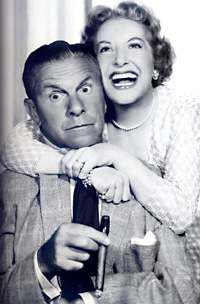
No bio of comedian George Burns would be complete without a brief word or two of his partner Gracie Allen (July 26, 1895 – August 27, 1964). George Burns said he asked Gracie “How is your brother?” and it gave them a 20-year career. She burned the Thanksgiving turkey because the instructions said to cook twenty minutes per pound and she weighed 120 and …
Say goodnight, Gracie…
***
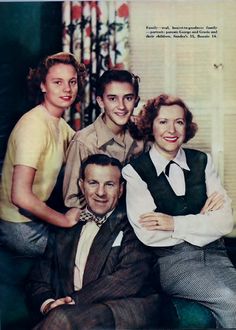
Burns & Allen adopted two children:
Sandra Jean was adopted by Burns and Allen in 1934 at 13-months old. She died in 2010.
Ronnie Burns was five weeks old when he was adopted in Chicago on September 27, 1935. George Burns said he was the sickliest baby up for adoption from the agency, and Gracie chose him because she thought he needed their help (per Burn’s excellent book Gracie: A Love Story). He died November 14, 2007.
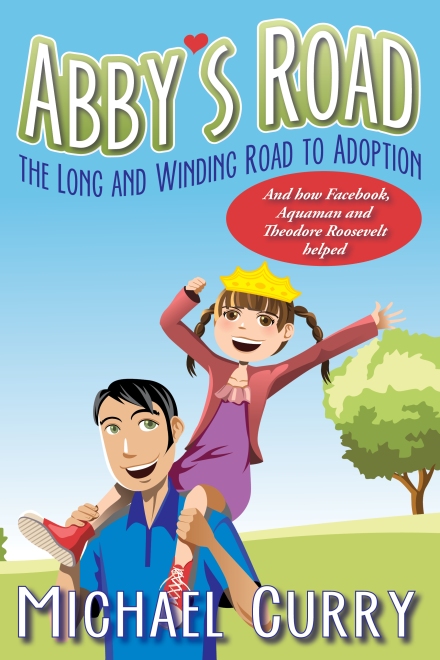
The cover of Abby’s Road
“Abby’s Road, the Long and Winding Road to Adoption and how Facebook, Aquaman and Theodore Roosevelt Helped” leads a couple through their days of infertility treatments and adoption. It is told with gentle (and sometimes not-so-gentle) humor from the perspective of a nerdy father and his loving and understanding wife.
Join Mike and Esther as they go through IUIs and IFVs, as they search for an adoption agency, are selected by a birth mother, prepare their house, prepare their family, prepare themselves and wait for their daughter to be born a thousand miles from home.
WINNER: 2015 Reader’s Favorite Book Award Finalist, Non-Fiction Humor
WINNER: Honorable Mention, 2015 New York Book Festival!
WINNER: Honorable Mention, 2014 Great Midwest Book Festival!
Abby’s Road is available at Amazon, Barnes and Noble, and at Smashwords.
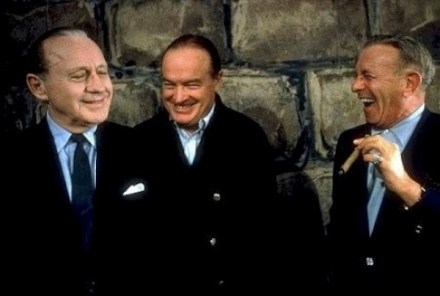
November is National Adoption Month. This blog series focuses on three legendary comedians connected not only by fame and their craft, but also because of their children …
For most of the twentieth century if you asked who were the best (or at least most famous) comedians you would be told, not necessarily in this order, George Burns, Jack Benny and Bob Hope.
Each one would be a face on a comedian’s Mount Rushmore.
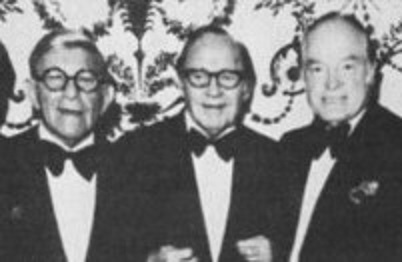
Each one garnered success in every venue of their careers: vaudeville, radio, television and film (don’t let Benny’s self-deprecation fool you – he parleyed his filmography into comic gold. And “To Be or Not to Be” is actually a great film!).
Each was, to some extent, ignored, forgotten or even vilified by the generations after them. Despite this, their brand of comedy has survived the test of time. Watching each of them at their peak (and George Burns had more than one) still provides genuine laughter.
Each of them adopted their children. Their wives – Gracie Allen (who at one point was more famous – and funnier – than her husband), Mary Livingston and Dolores Hope – had no children naturally with their husbands, and each couple decided to adopt.
This three-part blog series will not go into the “why” they adopted. In those pre-internet and 24/7 celebrity days the reasons were personal and remained so. Were there health reasons – were one or both unable to conceive? Gracie’s Wikipedia entry says they were unable to conceive, but there is not citation.
They were all very close friends (the Benny/Burns friendship would nowadays be called a “bromance”) – did they ever discuss it? When the first one to adopt a child did so, did the other two jump on the bandwagon? Celebrities adopting children in the 1930s was trendy. …
We may never know. What we DO know is that these three legends of comedy brought laughter and joy to millions for over three-quarters of a decade in the twentieth century; and also gave children who did not share their DNA a family and a home.
More to come …
“Abby’s Road, the Long and Winding Road to Adoption and how Facebook, Aquaman and Theodore Roosevelt Helped” leads a couple through their days of infertility treatments and adoption. It is told with gentle (and sometimes not-so-gentle) humor from the perspective of a nerdy father and his loving and understanding wife.
Join Mike and Esther as they go through IUIs and IFVs, as they search for an adoption agency, are selected by a birth mother, prepare their house, prepare their family, prepare themselves and wait for their daughter to be born a thousand miles from home.
WINNER: 2015 Reader’s Favorite Book Award Finalist, Non-Fiction Humor
WINNER: Honorable Mention, 2015 New York Book Festival!
WINNER: Honorable Mention, 2014 Great Midwest Book Festival!
Abby’s Road is available at Amazon, Barnes and Noble, and at Smashwords.
Copyright 2016 Michael Curry

https://www.amazon.com/dp/B01M4L0BXS
A new short story just in time for Halloween!
Mealfeasance Here
What stalks this town?
Judge Lamentations Dewe was a Royal Witch Hunter duly appointed by His Majesty. His brief was to judge and, if necessary, execute the laws against witchcraft, cannibalism, sorcery and other unholy mannerisms used as tools of the devil at the turn in 17th century England..
But when he arrives in Bradford-on-Tyne, he finds a town haunted by a force that might mean the village’s doom … as well as his own!
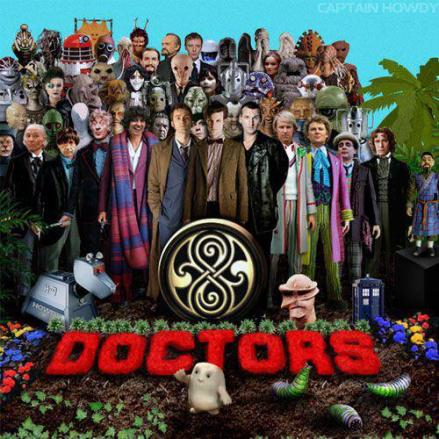
(Yes the title is stupid, but in over 300 songs performed, the Beatles had NO song title with the word Who in it!)

Were the Beatles fans of “Doctor Who”?
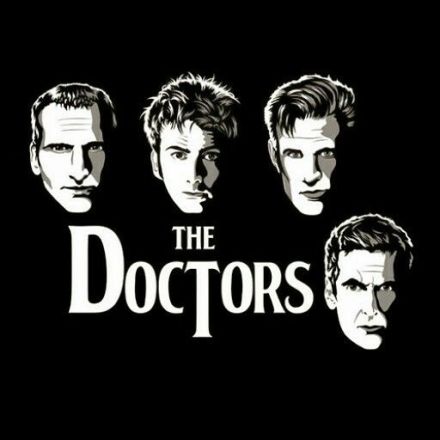
The internet says yes. And remember what Abraham Lincoln said, “If it is on the internet, then must be true.”

I found no leanings yea or nay in the various bios I read in over 40+ years. They were fans of comic books, yes, but nothing on Doctor Who.
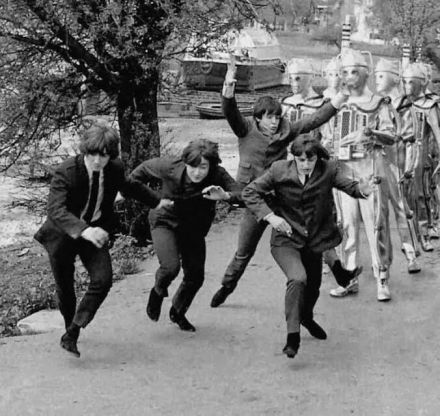
Nor do the websites saying the Fabs were fans of the show have sources backing them up. Various Beatle bios (as a group or individuals) are silent.
The interweb says there were plans on the Fabs appearing live in the episode called “The Chase”, but their manager Brian Epstein vetoed it. The git…
***
“Doctor Who” first aired on November 23, 1963. The Beatles second album, With the Beatles, was released the day before. By this time the Fabs performed in the Royal Variety Performance (November 4th) and will, on the 29th, release their single “I Want to Hold Your Hand”. They had finished a tour of England, Wales and Northern Ireland. They actually had a day off from performing. Whether they tuned into the debut of a children’s science fiction show is unknown … but unlikely.
***
That’s not to say they didn’t watch the show in the years afterward. “Doctor Who” was immensely popular and, as is the case today with popular shows, the Fabs may have HEARD of it. They may have even watched it to see what all the hubbub was about …
***
On the other hand, “Doctor Who” definitely knew about the Beatles:
As mentioned, the unverified story is that the band was to appear in the 1965 episode “The Chase” as old men. But instead the show’s characters watched a recording of the Beatles performing Ticket to Ride – itself a clip from the program “Top of the Pops”. Ironically, in this early era most BBC television shows were taped over after broadcast. Episodes – even entire series – were forever lost. This is why some early Doctor Who episodes are missing – a few recovered only when a rare copy pops up in a TV executive’s attic in Australian or Canada. “The Chase” is one that survived, and thus so did the only known clip of the Beatles on “Top of the Pops”.
In the 1967 episode “Evil of the Daleks”, Paperback Writer was playing in the background of a café.
These two examples tend to point toward the Fabs being fans of the show. They (or at least Brian Epstein) would not have allowed their songs to be played otherwise, yes?
In the 1987 episode “Remembrance of the Daleks” (but set in 1963) Ace walked into a bar where Elvis Presley music was playing, and promptly switched it to the Beatles’ “Do You Want to Know a Secret?” Later in the episode, “A Taste of Honey” played.

***
Other Beatle references:
The Second Doctor, the Third Doctor, and Jo Grant all quoted the song I am the Walrus in the 1973 anniversary episode “The Three Doctors”.
In the 1985 episode “Revelation of the Daleks”, the DJ had posters of the Beatles in his studio.
In the 1989 episode “Ghost Light”, the Seventh Doctor told Ace “It’s been a hard day’s night.”
***
That was the TV show, as for the Doctors themselves …
Christopher Eccleston, born in Lancashire, played the Ninth Doctor. He told the producers that he could not do a standard BBC accent, so his thick northern accent was given a one-off line that I still love: (I paraphrase): “If you are from outer space, why do you speak with a northern accent?” “Well, every planet has a north, doesn’t it?”


He has performed as John Lennon twice.
“Lennon Naked”, a 2010 made-for-television biopic covers the years 1967 (after a brief intro in 1964) to 1971 (with some flashbacks). Among the highlights, the film recreates the photographing of the cover of “Two Virgins”. This means we get full-frontal. Oh joy, we get to see Doctor Who’s shlong. Frankly? He has nothing to be ashamed of.
Milton Berle would be jealous.
He next performs as Lennon in the audio CD of 2013’s The John Lennon Letters. He reads John’s letters in character and it is a wonderful listening experience. Look for it if your library system has audio CDs.
***
Another “Doctor Who” connection is the made-for-TV biopic “John & Yoko, a Love Story” from 1985. It covered the couple’s entire relationship from 1966 to 1980. I was one of the twenty-three people who saw the movie on TV instead of Monday Night Football, where the Miami Dolphins handed the Chicago Bears their only defeat that season (the Bears eventually won the Superbowl against the Patriots).

Mark McGann played John. Mark is the brother of Paul McGann, the Eighth Doctor.


Peter Capaldi (the Twelfth Doctor) played George Harrison.


***
I am Who as you are Who as Who are you and we are all together …
Nah, I like the other title better …
***
Original Material Copyright 2016 Michael Curry
Michael Curry is a life-long Beatles fan and has written the short story “The Day John F Kennedy Met the Beatles”, available here on Amazon Kindle.

Paul McCartney, the Life
By Phillip Norman
A review, part two
Some time is spent on Paul (and the other Beatles’) reaction to John Lennon’s murder. Paul’s reaction (“it’s a drag”) has haunted Paul to this day, but Norman goes into detail explaining why Paul said it. He was obviously shell-shocked and it was the only way NOT to lower the careful shield with which Paul surrounds himself.
At this point the book spends less time reviewing his albums and their tracks – focusing on only a few select tracks that have more meaning to Paul’s life at the time (“Get It” was called a weak track for what would be a starring vehicle for Carl Perkins; “Little Willow” written for Ringo’s children after the death of their mother.
Finally, a complaint about the book: pages were spent on the album Off the Ground while the superior prior album Flowers in the Dirt was only given a brief mention and then only connected to his return to touring. There was no analysis of Paul’s writing with Elvis Costello (only his third credited writing partner after Linda and you-know-who). The album contained the song “Put It There” with the lyric “Put it there if it weighs a ton…” one of his father’s favorite phrases repeated throughout the first half of the book. I find that omission strange.
The last quarter of the book focuses on Paul’s interest in the Liverpool Institute for the Performing Arts and his entry into the classical music oeuvre (a word used, if not frequently, then more than usual in a biography).
The Beatles Anthology, his later albums, his on-and-off relations with George Harrison and Yoko Ono, and Linda’s cookbook and line of commercial vegetarian dishes were also given their due.
Paul’s (and Linda’s) vegetarianism were detailed many times through the book.
The last quarter also focuses on death; on the end of things.
The chapters on Linda’s fight with cancer were moving. Her concern over her children was similar to that of Paul’s mother for him and his brother. The author made a point of showing that echo. Paul’s statement on her last moments brings tears.
Paul’s childhood friend, Ivan Vaughn (who shared a birthday with Paul) was almost more so. The author reprints a poem Paul wrote that also brings a tear.
And then George Harrison died.
Odd that Paul’s father’s death in the mid-1970s did not bring on such emotion from Paul or the author. So much of Jim McCartney’s life filled the book – his remarriage, his adopted step-daughter (who provided a lot of commentary through the book), the racehorse Paul bought for him, his various homes, etc. This may be intentional and not an implication of coldness on Paul’s part.
His marriage and divorce from Heather Mills is treated fairly – the author quotes directly from the court documents. Being a book on Paul – and by now the reader can tell where the author’s sympathies lie – Heather comes out of these Chapters as the villain of the story. Here we see a more “tell-all” style than anywhere else in the book by the author including Mills’ quotes about Paul and his children and their retorts.
Paul’s flings and affairs are spoken of frequently during the Beatle years. But after marrying Linda, though, there is no infidelity! None. Not even Heather Mills accuses him of fooling around with other women. For Paul to so strongly adhere to his marriage vows is very much in his character.
Here we read about Macca – the nickname the author uses to describe Paul in his darker moments: his few bouts with public intoxication, his row with a photographer and a fan, his firing employees that were with him for over a decade.
The book ends with Paul’s happier third marriage to Nancy Shevell, a friend of his and Linda’s for many years.
In the last chapters Norman gushes over Paul’s children. The reader is unsure if the concern for Heather and James is Paul’s or the author’s. Regardless, we are relieved to learn of their success.
By the way, James’ album Me is good stuff!
Likewise, the readers are also left unsure if the proud boasting of Mary’s and, especially, Stella’s successful careers outside of their famous parents’ shadows are Paul’s or the author’s. (Heather and James also have successful careers, but the author intimates their success came with more struggles).
That’s what good writing does.
Beatrice is not ignored, but is barely mentioned, but that is because she (and the grandchildren) is not yet an adult and is none of our business.
The book shows us Paul’s generosity as a lovable public figure and his coldness as a businessman. He becomes the most irate when something opens a crack in his carefully and sternly-controlled public image or when his equally-protected family privacy is revealed even slightly (the very public divorce with Heather Mills certainly revealed cracks he would rather we not see).
An excellent book. After the introduction, I feared the book would be a simple recitation of Paul’s deeds and accomplishments.
Although not a reference book, it DOES list in detail the events in Paul’s life with an eye to the man who lost his mother at 14 while striving to find and maintain his lost family while living in the glass bubble of Beatlemania and its subsequent fame, from the the Ashers to the Eastmans.
I listened to the audio CD performed by Johnathan Keeble. It was an excellent series of CDs. The narrator performed the voices instead of doing a strict read-through, but it enhanced the story rather than distracted (as such performances can do). His imitation of Paul was quite good (the other Beatles not so much). Keeble does a wonderful northern/scouse accent. As is usual with narrators that perform a book rather than just READ it, his female impersonations can be distracting with two exceptions. His near-whisper of speaking as Linda captured her shyness and likeability. His Heather Mills was crass and pointed.
Paul McCartney the Life is a long read but worth it. Put it on your shelf with the best of the Beatle-related books. It’s a keeper. One hopes that when … the end … finally comes Norman will be around to give a final update.
Many years from now.
***
Paul McCartney the Life by Philip Norman, 978016327961, 818 pages by Little, Brown & Company, published May 3, 2016.
Original material copyright 2016 Michael Curry
Michael Curry is a life-long Beatles fan and has written the short story “The Day John F Kennedy Met the Beatles”, available here on Amazon Kindle.

Paul McCartney, the Life
By Phillip Norman
A review, part one
The author’s name should be familiar to hardcore Beatle fans or Beatle historians.
He is the author of Shout, still a definitive biography of the group. It went to press shortly before John Lennon’s murder in 1980 and was published soon thereafter. The book was a smash hit – it would have sold well despite the timing of its release; it was a good book – and was timely bolstered by the author’s seeming assertion that the group was John Lennon plus three session men. McCartney bristled.
The Lennon lovefest continued with the author’s John Lennon, the Life; again relegating McCartney to that of a lucky hanger-on.
When the author was hired to write Paul McCartney, the Life, the author expected no cooperation from the Macca machine. But to his surprise, he received, if not Paul’s blessing, at least an affirmative nod. The author was given permission to speak to family, current and former employees and fellow musicians.
(Note I left out the word “friends”. Although the author neither says not intimates the fact, after reading the book it seems Paul has no friends other than his very tight-knit family spanning four generations. There’s nothing wrong with keeping yourself to yourself, but it is telling to his personality that there is no Eric Clapton to his George Harrison or no Harry Nilsson to his John Lennon. He had Linda, his kids, his brother, and his dad, aunts, uncles and Ringo – who counts as a brother. That’s all he needs.)
Anyone who called Paul (or his office) to verify Norman’s claim was told, “It’s up to you, but Paul doesn’t mind if you speak to him.”
There are only archival (by that I mean previously published) interviews with Paul, his children, his wives and Ringo. Otherwise the author interviewed nearly everyone else!
Norman explains this in the long introduction; along with his first meeting with Paul when he (Norman) was a reporter in the 1960s. He got to hold Paul’s Hoffner violin bass (Paul tossed it to him – the author describes his mortal fear of dropping it). The author admitted his bias toward Lennon and promised to write a fair book on Paul.
He succeeds.
Paul does not have many demons (unlike Lennon), but he does have his warts. These are shown in the book, but not in a tabloid way. They are explained and in the end the reader is left feeling sympathetic.
Paul comes off as a workaholic musician who autocratically keeps a tight rein on his music and image. The only other part of his life that matters is family – where he is a doting husband, father, grandfather, son, brother and nephew.
Paul McCartney the Life is as thick as a cinder block and could stop a bullet. Very little of Paul’s life is left out. Being able to surprise hard-core Beatles fans is a good trick in these later years – but you’ll find SOMETHING you did not know within its covers.
Norman explains how Paul’s love of family was rooted from the beginning with his kind father and mother. His mother’s death was a touching early moment and referred to throughout the rest of the book/the rest of Paul’s life. It weighed on his soul as much as the death of Julia Lennon did to John’s, but not as publicly.
The author also details whence Paul’s love of music came. Not just rock and roll, but varying genres thanks to his father, Jim, who played in his own jazz band.
The Beatle years were given their respectful due and comprised the second quarter of the book. The only tabloid-y part of the book came from Paul’s love affairs during the years before Linda.
Much is made of Paul’s non-Beatle interests during the 1960s and emphasizes that he was the first to experiment with things usually attributed to John: Paul was the first to tinker with avant-garde music and film, collect art (he drew and painted, too). He was interested in the latest fashion trends and was the first of the Fabs to grow a moustache (but, always being image-conscious, until the Beatles were finished he NEVER had his hair in anything but variations of the Beatle-cut).
The author describes Paul’s lawsuit to break up the corporate stranglehold of the Business Beatles in grisly detail as well as his public feud with Lennon. The author postulates that if Paul’s kind song “Dear Friend” had appeared on the album “Ram” rather than “Wild Life” it would have saved both sides a lot of hard feelings. I agree.
He began the 1970s with songs and albums that gave the people what they wanted – Beatle-like pop. After a few mis-starts, he formed Wings, a group that were what he wanted the Beatles to become – a performing band.
Here the author begins going into material that most Beatle biographies only gloss over – the story of Wings. He details their gigs. Band members get brief biographies. The making and charting of albums and singles are detailed and reviewed.
He also details the rapprochement with his “estranged fiancé” John.
Paul’s time in a Japanese jail for possession of marijuana is detailed (Norman should be complimented for writing of Paul’s copious history with the weed. His – and Linda and other – drug use is detailed but told in complete neutrality and with no judgment).
The Japan arrest marked the end of Wings (the other band members were forced to leave the country and Paul, at the time, saw that as a betrayal), the end of touring for many years, the end of arena-rocker Paul of the 1970s. Later that year came another ending.
My review continues next time.
Paul McCartney the Life by Philip Norman, 978016327961, 818 pages by Little, Brown & Company, published May 3, 2016.
Original material copyright 2016 Michael Curry
Michael Curry is the author of the short story “The Day John F Kennedy Met the Beatles” available here on Amazon Kindle.
 Currytakeaways