Unnecessary Farce, Act One

 banner

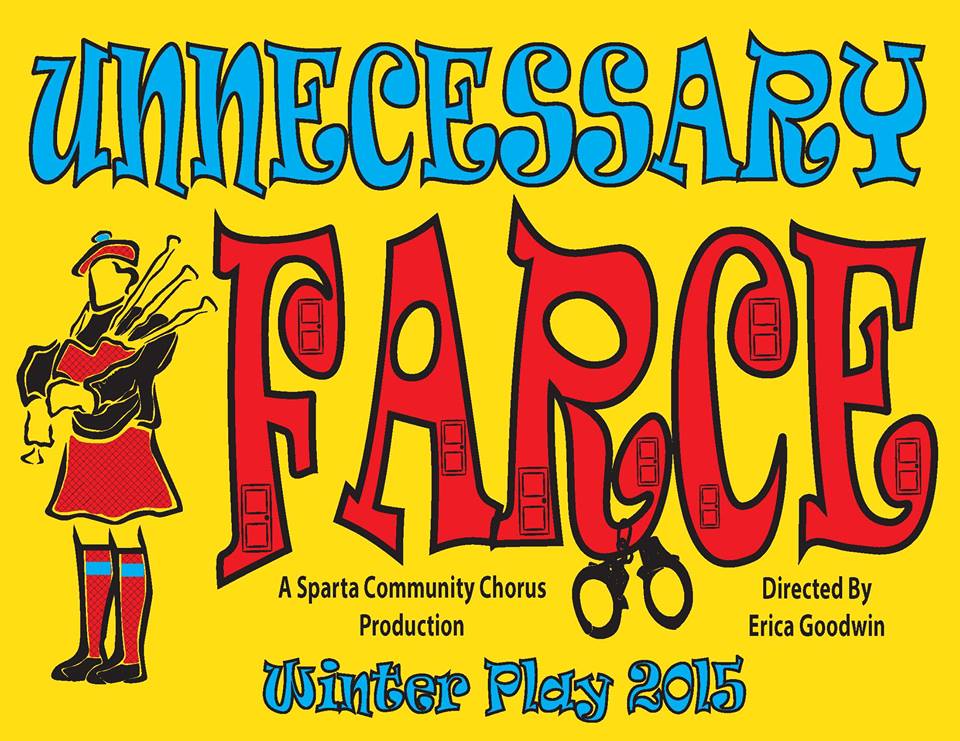
             This year’s Sparta Community Chorus’ winter play is “Unnecessary Farce” by Paul Slade Smith. The play was announced last fall and I considered trying out for a part. I watched the few versions of the play on YouTube and thought it was funny.

            The director, Erica, played my sister in last year’s play, “Murder in the Magnolias”. I saw her when I went to see the Chorus’s fall musical “Legally Blonde” – which was excellent, by the way – and she asked if I wanted to try out. I said I would like the part of the Scottish hit man. She said she liked that idea – she doesn’t know anyone that can do a Scottish brogue. I told her she dinnae hae t’worry ‘bout dat, lassie.

            Last year my grade school and high school and childhood neighbor Stephanie directed “Murder” … I blog about that here: https://michaelgcurry.com/2014/01/04/40/

            In sum, she mentioned this was the play on her Facebook page. I mentioned I still had the script from our attempt to do it in high school. She said I should try out. I said the dress in act two probably wouldn’t fit me anymore. I tried out anyway and got the part! Two parts, really. Actually, four. I explain why in the blog and a bit later here…

            I made a lot of nice new friends in my first play since 1981 and relished the idea of working with them again.  And although it kept me away from my family during half the week, I enjoyed it thoroughly!

            The try-outs were January 2nd and I met a lot of the same people I worked with in last year’s play. This play has parts for only four men and three women.

poster 1

            The website for the author describes it thusly:

“Two cops. Three crooks. Eight doors. Go. In a cheap motel room, an embezzling mayor is supposed to meet with his female accountant, while in the room next-door, two undercover cops wait to catch the meeting on videotape. But there’s some confusion as to who’s in which room, who’s being videotaped, who’s taken the money, who’s hired a hit man, and why the accountant keeps taking off her clothes.”

poster 3

From the “Unnecessary Farce” webpage:

The play received its premiere at the BoarsHead Theater in Lansing, Michigan on October 27, 2006, under the direction of Kristine Thatcher – and has had over 145 productions to date.

Paul Slade Smith is a writer and actor based in New York and Chicago. As an actor, he will next appear on Broadway in the new musical Finding Neverland, which goes into previews March 15th. His past performing credits include the national tours of Wicked and The Phantom of the Opera, and productions at American Repertory Theatre, Chicago Shakespeare Theater, The Goodman and Steppenwolf. Paul is at work on his next play, A Real Lulu. For more information, visit http://www.paulsladesmith.com/

poster 2

            I tried out for, and got, the part of the hit man. Todd the Assassin. Also called the Scotsman or the Highland Hit Man. I speak in a thick brogue and some of my lines are complete gibberish. “Aw cripes, fer cryin’ Christmas oon a bike!” “Ye woulds be auld at the horn to teel it fest!” The lines are written phonetically and reading through it the first time was very hard to do. I found it easier to read the “translation” in italics after the line and say that with a brogue instead. It took a few weeks to get the lines down and now I have to practice saying them faster.

            I also have to pay more attention to the dialouge around me. Much more so that the play last year. Last year’s play, “Murder in the Magnolias” was a spoof of “southern” plays ala Tennesee Williams and my characters (I played two – and one had multiple personalities so I was playing FOUR characters, really) said mostly non-sequiturs that had nothing to do with the real dialouge.

            In other words, in THIS play when the character Frank says, “The mayor had an appointment with Ms. Brown…” I say, “The half-naked accountant?” (earlier she was caught indelecto and is still in her slip when I come in). Whereas in “Murder” I would have responded with something like “As I went for my daily constitutional in the garden, a groundhog ran over my left foot!”

            That makes it easier and harder. Easier in that the lines flow like real dialouge and makes it easier to memorize and remember my cues. Harder in that if I flub up a line, I flub other people’s next lines, too!

            We are also discovering how hard it is to find even a prop set of bagpipes! Ebay has a broken set of pipes for $50.00 opening bid. Fortunately we will be able to get a nice Highlander outfit from a costume shop in St. Louis for rent during the show.

poster 4  

          Later on I can give you more details on how the play progresses. So far I have been to only one rehearsal (my character doesn’t show until late in the first act, so I’ve been able to play hooky the first week and the director was sick for one day…!), but that one rehearsal was a hoot! This will be a very funny play and I so look forward to it!

Part two of The Hobbit: Battle of the Five Armies review…

A review of The Hobbit: Battle of the Five Armies

from Seven Chapters, shown in Three-D

Part Two

(one last time)

Hobbit 2

            War between elves, dwarves and men is about to begin…

            Quick! Read my blog of Part One of this review: https://michaelgcurry.com/2014/12/28/a-late-review-of-the-hobbit-battle-of-the-five-armies/

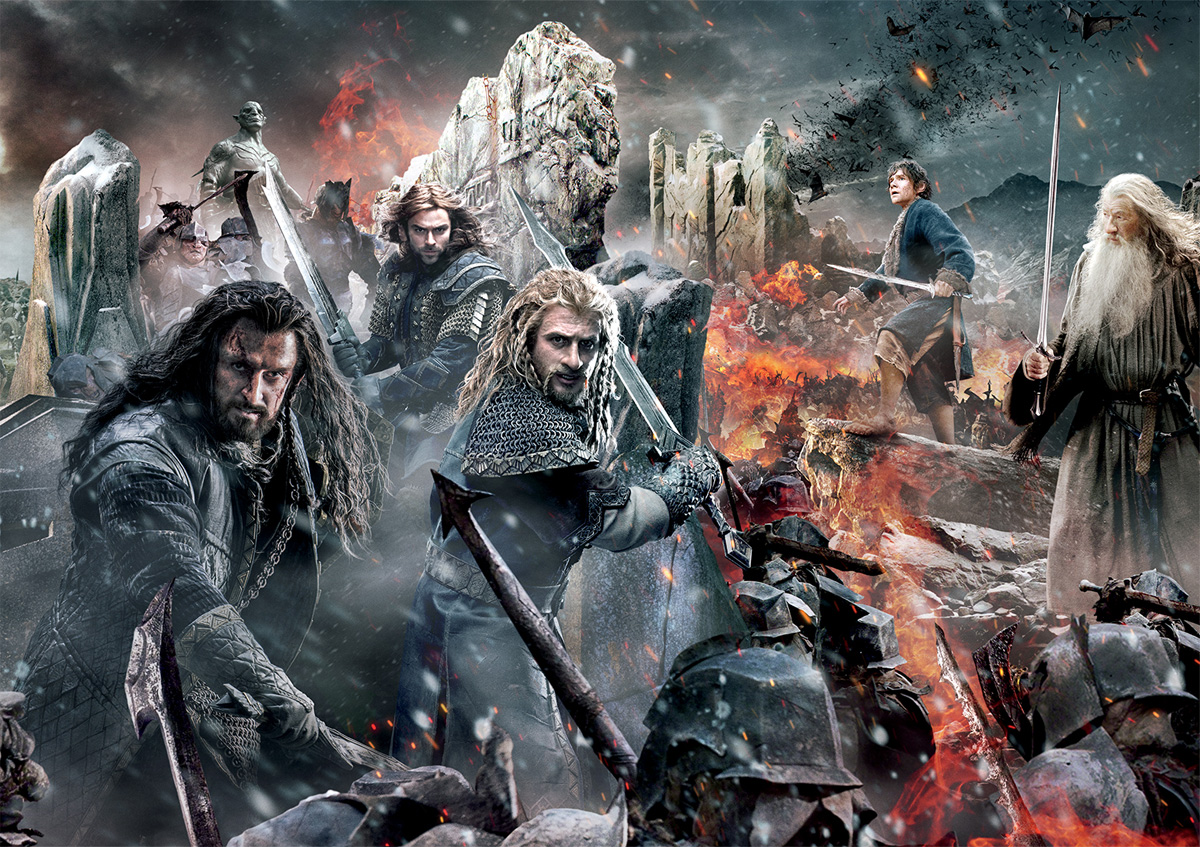
            An army of elves and remaining Laketown humans line the fields in a scene reminiscent of the Battle of Helms Deep in “Two Towers”. When Thorin’s cousin Dain and his dwarves of the northern Iron Hills crest the mountain and march to the Elf/Man army, we share Bilbo’s despair that war cannot be avoided.

            Dain, by the way, is marvelously played by comedian Billy Connolly.  His presence steals every scene – an incredible feat for such an epic movie! Plus he rides a war pig (Jackson resisted the One-Ring-level urge to play the Black Sabbath song…) and tells the elves to sod off! What’s not to love?

            Just before the three armies come to blows, the orcs attack from underground tunnels. D&Der will thrill at the sight of purple worms bursting through the earth’s crust. Movie fans will have traumatic “Dune” flashbacks.  “I will kill him!” MacLachlan! Is … is that Picard? Sting! {SLAP} Oh, sorry … thanks …

            The scene of the dwarves holding the line against the oncoming orcs is thrilling – the dwarves and elves unite against a common enemy. If there weren’t just six people in the theater that day, I probably would have cheered!

            In Jackson’s non-novel storyline, Legolas and Tauriel travel to Gundabad, an orc stronghold to the north, and find a second orc army coming from the north to form a second attack wave. They arrive to warn the Three Armies just before the second wave hits.

            Thorin and company are still held up in Erebor, refusing to help even his cousin. The three armies are being decimated, but still Thorin does nothing. We find Thorin deep in the dwarven compound and watch his internal struggle. He finally comes out of the Dragon Sickness to help his family and friends.

            He takes three of his companions to the fortress of Azog “to cut the head off the snake” to paraphrase Gandalf.  We watch Thorin and Azog’s final battle (Azog killed Thorin’s grandfather, remember…). Fili and Tauriel resolve their affection with one another – both events done with a sense of finality – especially if you know what was going to happen (I am so glad I read the book before seeing the movie).  The inevitable knowledge of the fate of some of the dwarven company made me sad during the movie.

***

            (MILD SPOILER) Near the end, the fifth army of the title appears to save the day. No surprise, it is the same “army” who saved the day in three of the past five LOTR movies…).It’s getting to be a bit of a joke … but Beorn’s appearance was cool!(END OF SPOILERS)

***

            The aftermath, while not as sad and wistful as “Return of the King” is so, nonetheless. This really is our last visit to Jackson’s Middle Earth and we say goodbye to our friends. But seeds are planted foreshadowing the “LOTR” movies. Thranduil and Legolas make an uneasy peace: father telling son to seek out Rangers from the North, one in particular named Strider, whose real identity Legolas must discover himself; Gandalf tells Bilbo to take care of the ring (in the book Bilbo reveals he has a magic ring early on; in this movie series it was always a secret).

            The movie series ends as it begins, with Ian Holm as Bilbo writing his memoir “A Hobbit’s Tale, or There and Back Again”

***

            People who do not like the genre will probably not like the film. But they didn’t like the LOTR movies either. “Return of the King’s” Oscar sweep won’t happen here. As epic as these Hobbit movies have been, they were made to complete the circle.

            In previous blogs I discussed the detractions of this second series of Middle Earth movies: the necessity of making it three films to keep the money machine rolling, etc. But I didn’t think of such things watching this movie. I went in expecting to enjoy it and I did. Obviously, as is always the case with multi-part movies, if you have not seen the first two, I’d recommend renting them and watching them first. You’ll be lost.

            The chase scenes that plagued the first two movies are not present here. The battles probably go on longer than necessary (most notably Thorin/Azog), but they are divided out proportionately and I never got the urge to go out to the lobby for a while.

            One thing missing in this movie that was prominent in the prior five Jackson/Tolkien epics was the celebration of the small. All through LOTR was the idea that even a little person can make a big difference. My blog of the movie “An Unexpected Party” was rife with the joy of the small.  And although Gandalf mentioned that theme in his parting words to Bilbo, it was there in words only. Like “Return of the King”, here we faced a battle that would be sung about for ages. Unlike “Return…”, the very small had no part. It’s the fault of the novel, really. Bilbo got knocked out early on and had to be told how the battle ended. Not quite the case in this movie, but still … one small person (embodied by Bilbo in this series and Frodo and Sam in the first) made no difference in this movie. And not just in the actual battle – his attempts at brokering peace failed; his attempt at breaking Thorin of his Dragon Sickness failed.

            “Return of the King’s” climax was not only a battle to end an age, but also featured a pair of small everyday people saving the world. In “Battle of the Five Armies” the climax featured kings battling kings.  A grand feast, but I yearned for the small tasty dessert at the end.

            I left the theater knowing I enjoyed a complete story, but also knowing it was prequel …

            Put another way: the novel The Hobbit is a satisfying and complete read.  Although I will probably read LOTR in the near future I was not filled with the desire to read it immediately after putting The Hobbit down.

            The movie “The Hobbit”, although completely satisfying, is not satisfyingly complete.

            The LOTR movie trilogy was always in the background;  always there to compare itself with the Hobbit trilogy. As good as “The Hobbit” trilogy is – and it will stand the test of time as well as the LOTR movies – it will always stand in the shadow of its bigger cinematic brother. Something the novel does not suffer.

            Put yet another way: this movie was a great set-up for the LOTR movies – now one can spend an entire weekend watching the six movies instead of “just” an entire day. And as fun and complete and satisfying as it was – it is still also a great set-up for the LOTR movies.  A great opening act is still just the opening act …

 Hobbit 1-1

***

            Did 3D help the movie? No. This was my first 3D film since the trend returned with “Avatar” and I was not too impressed.  Two scenes were incredibly well-done, I will say: the battle with the Nazgul and Legolas’s fight on the stone bridge.  If the whole movie were of that caliber I would go buy a 3D television – do they still sell those?

            Otherwise it looked as if I was watching a Viewmaster reel. Things in the front were too blurry and some obvious takes – Thorin holding his sword toward the camera as he walked – took the magic away by reminding me I was in a theater watching a movie in “3D!!! (insert echo)”

            And 3D ruins any forced perspective. The magic of suspended disbelief in Peter Jackson’s six movies were based not only on CGI but on forced perspective. Here when a human talks to a dwarf or hobbit you can see how far away they are from each other due to the 3D/Viewmaster perspective.  A shame.

***

            So go see “Battle of the Five Armies” – enjoy visiting with old friends one last time – just like the advertising campaign says.  We probably won’t see another treatment of LOTR or the Hobbit on this scale in our lifetimes. At first I was upset that I had to see this last movie alone. In the prior five films I was surrounded by my family and friends.  But as the movie started I realized I was still among some very old and dear friends … and enjoyed it immensely!


Original Material Copyright 2014 Michael Curry

A late review of The Hobbit: Battle of the Five Armies

A review of The Hobbit: Battle of the Five Armies

from Seven Chapters, shown in Three-D

Part One

(does any of this add up?)

 Hobbit 2-1

                This review contains mild spoilers of the movie as well as MAJOR spoilers of the five prior Tolkien movies by Peter Jackson … I tried to make this pretty safe to read. Keep in mind, this movie is based on a work that is seventy years old, available free online and is a major piece of fiction in Western Civilization, to complain that I “ruined” your pleasure by revealing facts of the movie is just plain silly.

                If you don’t know the outcome of the story by now, or that Darth Vader is Luke Skywalker’s father, the chick in “The Crying Game” is really a man, Rosebud was a sled, and/or continue to be tricked by any plot twist of a movie from M Night Shamalamadingdong movie; you need to crawl back into your cave…

                Note: to avoid confusion, book titles are underlined, “movie titles” are in quotes…

***

                Just as you should watch the first two films before seeing this movie, you need to read my blogs about the prior films first!

https://michaelgcurry.com/2013/01/03/114/

https://michaelgcurry.com/2013/12/29/42/

***

Hobbit 1

            Christmas Eve day we planned on seeing the third movie of Peter Jackson’s version of “The Hobbit”. This third installment is called “The Battle of the Five Armies”.

            On the way to the theater my daughter’s day care called and said she was running a fever. We brought her home, gave her some medicine (her pediatrician called back right away and called in a prescription quite quickly!) and she felt better by Christmas Day. During the 24th she was quiet and mellow and spent most of the afternoon lying on the couch or snuggling with Mommy and/or Daddy.

            Just before her afternoon nap my wife said I could go see the movie by myself if I wanted to. I didn’t. I wanted to see it with her. But all I would otherwise do that day, just as my little girl would do, is to sit around the house and lie quietly … I was going to see the movie again on New Year’s Eve Day when my wife worked and I did not … it would give me a chance to do some last-minute Christmas shopping when it was over.

            Well, why not?

            We missed the 10:00am show, but there were more at noon and 1:30. The noon showing was in 3D. I had never seen a modern-day 3D movie – the last one I saw was one of the Nightmare on Elm Street thingies from the 1980s. And the noon showing would get me out of the theater sooner and home by four or so …

            Again, why not?

            I watched the first Hobbit movie many times in the theater and on blu-ray, and although I have the second one in disc, I had yet to watch it! I haven’t seen it since it was in the theaters! The weekend before I watched the second movie again. Because of the new material in the movies and the cliff-hanging ending of the second movie, I was afraid I would be a bit lost watching this third movie at first. I’m glad I watched “The Desolation of Smaug” to refresh my memory.

            Earlier in the month of December, on a whim, I decided to re-read The Hobbit novel -I had not read it since I was in New York during the birth of my child; and then it was only the second time I read the book (I have read Lord of the Rings five or six times by now…). I finished it that weekend – the evening after I finished the book I watched the second movie.

            “Why!?” the nay-sayers shout. “This travesty has nothing to do with the book!” Not altogether true. The movies are wonderful fun. There are new scenes and characters, true, but as I said in my previous blogs … who cares? Who wouldn’t want to spend more time on Middle Earth and meet new friends?

            And I’m glad I read the book again. It helped me remember what happened – Thorin’s gold-fever and who survived (and who didn’t survive) the battle.  The deaths of some of the friends we made during this series is fore-ordained – what about our new friends? Whither their fate? Hmm?

            “Battle of the Five Armies” picks up right after “Desolation of Smaug” ended. Smaug wings his way to Laketown – convinced they were in on the dwarves incursion into his mountain. Bard, the human fisherman/smuggler descended from the ruler of Dale (thus making him an early draft of Aragorn), is locked away in a Laketown cell.

            Smaug’s attack is awesome in the adult sense of the word.  Terrifying. Stephen Frye returns as Laketown’s Master whose escape tries to provide comic relief, but we are too swept up in the townspeople’s attempt to flee to really laugh at the Master and his toady Alfred’s cowardly acts.  Alfred becomes a thorn in Bard’s side throughout most of the movie. Not as inherently evil as Wormtongue from “Two Towers”, but just as oily …

            Bard escapes, finds his family, retrieves the black arrow and faces Smaug. The result is similar to the book and to anyone who saw its obvious foreshadowing in “Desolation…”.

            Then the credits roll…

            The next third of the movie builds up the war envisioned in the title.  As in the novel, Bard and the Laketowners make refuge on the shore and ask Thorin’s company for reparations. We see Thorin’s descent into gold fever (or dragon sickness as it is called in the movie) as he refuses to keep his word to the Laketowners. His fever grows as he demands his company find the legendary Arkenstone amongst the treasure hoard, eventually suspecting even his kinfolk of duplicity – an act unthinkable in dwarves to their allies and kin.

            Thranduil, the elven king from Mirkwood, and his army of elves appear with supplies for the Laketown refugees.  Rather than being beneficent, as in the novel, Thranduil comes to the Lonely Mountain to get back his people’s diamond jewels kept there.  Thus he and Bard demand what they think is rightfully theirs.  The audience believes this, too.  The film does a convincing job showing us Thorin’s greed without making him a true villain.  Bilbo and the other company often remark (even to the great King’s face to their peril) that this is not the Thorin they knew and followed loyally.  We side with the men and elves, but sympathize with the dwarves.

            Orc armies are marching to Erebor (the Lonely Mountain). In the novel, they marched when they learned Smaug was dead and his treasure hoard was up for grabs! Here, the reasons link in with the ”Lord of the Rings” movie trilogy …

            When we last left Gandalf in “Desolation…” he was the caged prisoner of the Necromancer, revealed to be Sauron.  He watches Azog’s orc army march to Erebor at Sauron’s command. The Lonely Mountain is of strategic importance (Sauron has no need for coins and baubles). It is the initial step in his conquest of the West.

            Gandalf escapes in a thrilling battle between the Ringwraiths and the White Council. After five movies we finally get to watch Elrond and even Saruman kick ass. Galadriel’s confrontation with Sauron is terrifying and well done – reminding us of the glimpse of her true power in “The Fellowship of the Ring”. The look on Saruman’s face when Sauron appears makes the movie fans giggle in delight: is this the point he begins to turn to the dark side? Has it happened already and he stops fighting when his master is revealed?

            Bilbo attempts to negotiate a peace, by “betraying” Thorin. By now we are, of course, on Bilbo’s side here, so the betrayal was from Thorin, not the hobbit. The negotiation tactic does not work, Thorin is even MORE infuriated and he and his dwarven companions prepare for war…

            In honor of the movies, this review is split into two unnecessary parts … 

             … to be continued…

Original Material Copyright 2014 Michael Curry

A Christmas Carol at the Fabulous Fox; a review

A Review of A Christmas Carol

The Nebraska Theater Caravan, Fox Theater, St. Louis, Missouri

cast

On December 13, 2014 my wife and I attended a performance of “A Christmas Carol” at the Fabulous Fox Theater in St. Louis, MO as performed by the Nebraska Theater Caravan.

“The Nebraska Theater Caravan is the professional touring wing of the Omaha Community Playhouse” says their website: http://www.nebraskatheatrecaravan.org/

“In 1979 the Caravan started touring the Charles Jones adaptation of ‘A Christmas Carol’ nationally with one company touring the Midwest. Three years later in 1982 another company was added to tour the East Coast and a third to tour the West Coast in 1987.”

It was my second trip to the Fox this year – I went this summer with my sister and nephew to watch the Monkees! That blog/review begins here: https://michaelgcurry.com/2014/06/09/come-and-watch-us-sing-and-play-the-monkees-live-in-st-louis/

Before that I had not been to the Fabulous Fox since seeing … “A Christmas Carol” as performed by the Nebraska Theater Company back in 1988 (or 1989)!

I don’t remember much of that production. My sister and father remember is being amateurish.  I remember enjoying the music and their handling of the Ghost of Christmas Yet to Come (a huge hulking thing with long arms likely operated by a man inside on a stand with pool cues for arms).

I remember my mother taking our photograph (my sister and I) amidst the holiday-decorated-yet-maintaining-their-Edwardian/Persian splendor of the Fox Theater. That I remember clearly. The play itself? Not so much…

I wonder why I do not remember. In December 1988 I had moved to Carbondale from Springfield ten months prior and worked as an overnight disc jockey. I would have been more looking forward to a solid night’s sleep than an evening’s entertainment. If it were in 1989 I had just started law school and recovering from my first final exams. My lapse of memory is more explicable in that case…

If it were as bad as my sister and father remembered I certainly would have remembered that, too; if only because I would continue to skewer it to this day! I don’t remember my mother discussing it. I imagine she loved it if for no other reason that my father didn’t. And as is always the case with my mother I would give all I have except my wife and daughter to be able to ask her even just that trivial question.

So driving to the theater I worried – what if this thing stinks? I’d be out the cost of tickets, the motel, the cost of gas – just to see a piece of tripe that a high school could do better (to paraphrase my dad)?

I needn’t have worried.

Check the blogs with the Christmas tag and you will see how much I love “A Christmas Carol”.  https://michaelgcurry.com/2014/12/04/christmas-reading-a-christmas-carol/

A multi-blog review of many adaptations of “A Christmas Carol” begins here: https://michaelgcurry.com/2012/12/02/131/

I start reading the book every evening of Thanksgiving, if possible, and can usually finish it by that Sunday night (I used to be able to read it in one sitting pre-daughter); and love watching all the adaptations. Even the stinkers.  I was looking forward to seeing as good stage production of the story – what would they include? Exclude? Did they add anything as so many of the movies/TV specials do?

This version is a musical. Not a musical as in the excellent 1970 movie with Albert Finney and Alec Guinness as Marley (every time I see his entrance I cannot help but say, “Go to Degobah, Scrooge, and learn from Yoda … sorry, wrong ghost…”) in which the lines are sung and/or a song conveys the feeling of the song. This musical is peppered with carols from the time – Victorian England (and before).

The songs were the highlight of the show – it was the only part of the prior production I recall, remember – opening the curtain with “God Rest Ye Merry, Gentlemen” – a canny choice (I don’t mean that in a bad way). The main cast rarely joined in the carols – it was the background cast – townsfolk, party guests, etc.

The song list included Gloucestershire Wassail (a song prominent in the pitch-perfect George C Scott television Carol), The Boar’s Head Carol (my wife knew this rare tune from her madrigal days), the usual choices of The Holly and the Ivy and Here We Come A-Wassailing. Dancing Day was a treat – a song one rarely hears on the radio amidst the third-airing-in-as-many-hours of Feliz Navidad … the only time I heard it is when I played it myself as a DJ. Particularly Paul Winter’s version on my NPR show. Lovely tune!).

Coventry Carol was especially beautiful.

The sets were lovely and well-made. There were four basic sets: the curtain opened on the Londontown street on which set the office of Scrooge and Marley and their neighbor, a toy shop. A soup cart and a woolen clothier cart bookended the entryway into the neighborhood. The poulterer was on the backdrop.

Twirling the storefront of Scrooge and Marley revealed the inside of Scrooge’s office. Two tables and chairs were wheeled in.

The toy store was turned revealing Scrooge’s fireplace. The same backdrop was used for Scrooge’s office, the Cratchit’s home and Scrooge’s bedroom. Those were wheeled offstage for Fred’s home and Fezziwig’s office (the tables and seats from Scrooge’s office were wisely recycled.

Sets were moved about the stage professionally and without incident. My sister recalls Marley falling against the fireplace which shuddered revealing its plywood-cheapness – much like the walls shuddering while slamming doors on “Plan Nine From Outer Space”. No such thing happened that night.

And costumes were lovely – pure Victorian splendor. It would fit in with any production of Oliver, a Sherlock Holmes or Jack the Ripper tale.

The story itself was adapted very well considering the limited set. The play opens on the Londontown street, as mentioned, with Fred greeting the other businessmen and women in front of his uncle’s counting house.  This sets up his generous and friendly nature.

The sets twirl and move to the inside of Scrooge’s office. Here we meet Scrooge and Bob Cratchit. Freezing Bob is threatened with unemployment as he sneaks to the coal bin, Fred and his uncle exchange their unpleasantries, and the two Charity Men (as they are called in the Playbill) are unceremoniously booted with all the familiar dialogue. Child carolers invade the office and are chased off by Scrooge. He physically carries one girl and dumps her in the doorway.  “You’ll want the whole day, tomorrow, I suppose …” etc. A twirling of the set allows Scrooge to go outside and demand payment of back rent from the various businessmen and women. “One more day, sir, please.” “It will cost you another half-crown, or I’ll take the entire cart! Sign here…”

To Scrooge’s chambers: Marley’s face appears on the wall thanks to a projection and comes through the fireplace – Scrooge goes to the smoking fireplace and opens the way for his fellow actor. Marley is bathed in keep green. Very well done lighting effect here. They include the toothpick scene deleted from many versions (“… but I see it nonetheless…”).

The Ghost of Christmas Past is played by Kristen Conrad – she is an adult wearing a bright red Victorian dress (she is neither a child nor a crone or a mix as in the book). Young Scrooge, teen Scrooge rescued by sister Fan, Fezziwig’s party (at which Scrooge and Belle become engaged – he gets on his knees at the end of the scene and presents her a ring), Scrooge’s and Belle’s breakup. The only missing bit – and this part usually is – is the “extinguishing” of the Ghost’s light with the huge candle-snuffer.  Like some adaptations, Belle is Fezziwig’s daughter – this isn’t in the book but adds more pathos to Scrooge fall into coldness.

The Ghosts and Scrooge travel on his bed. It is the only piece of scenery not pushed or pulled into and out of scenes by the cast. It must have a small electric motor underneath. It was moved throughout quietly and expertly.

The Ghost of Christmas Present was dressed in all his green Father Christmas glory – huge beard, fur-trimmed robe, etc. He even had what looked like real candles on his crown of holly! The Cratchit home, Fred’s party. Missing were the usual suspects in this part of the story (Christmas Present certainly gets short shrift during most tales …): the blessing of poor tables, the political “debate” between the Ghost and Scrooge, the men almost fighting in the street, the coal miners, the lighthouse keepers, the ship at sea and Ignorance and Want.

The Ghost of Christmas Yet to Come was described previously – the businessmen discussing his death (“…only if lunch is provided…”), the Cratchits mourning the loss of Tiny Tim, Scrooge facing his own tombstone. Instead of the scene with the undertaker, washerwoman and charwoman at Old Joe’s fence, it takes place in Scrooge’s room with only the washerwoman and the charwoman stripping the blanket, the bed curtains and Scrooge’s purse from the body lying on the bed.

Scrooge awakes Christmas morning and asks a girl (not a “fine lad”) to buy the prize turkey. During a musical interlude there is a cute scene of the girl “pounding” on the door of the poulterer’s on the backdrop. The poulterer tosses her out twice before she shows him Scrooge’s money – she’s NOT kidding! Scrooge leaves his office and forgives the debt of the businessmen and women on his street. He offers a huge sum to the Charity Men to atone. He sees Fred walking down the street, meets his niece and finally accepts his invitation to dinner. Scrooge, Fred, his wife and the businessmen and women help Scrooge take all the toys and clothing (purchased from his former debtors) to the Cratchits, where he doubles his salary, vows to make Tim well and God Bless Us Everyone.

Here the scene (and the show) ends. The book ends at Scrooge’s office but all those scenes take place at Cratchit’s home. Because of the limitation of the stage, doing those scenes at the Cratchit’s makes sense – and many movie and television adaptations use that tactic as well. It was a canny move and not unexpected.  Scrooge offers to pay for a doctor he knows to visit Tim the next day. This has been in a few movies, but not in the book – only that Scrooge vowed to help Tim become better.

This adaptation by Charles Jones is quite good. The variations from the book – the things left out and the things included – are not jolting. Only purists also offended by the film and television adaptations will not like it. Plus the inclusion of authentic carols from the period adds to the pleasantries.

I can’t emphasize how lovely the music and singing is. A Coventry Carol was the highlight of the evening.

The acting was very good, too. This is probably the only fault I found, but my lack of utter enjoyment is solely my own. Let me explain:

I should have known I was not about to see a serious treatise of the book. Most of the other media’s adaptations have bits of humor, yes: George C Scott’s mumbling at the Ghost of Christmas Yet to Come that he is “devilishly hard to have a conversation with…” still makes me laugh out loud. But even then it is subtle.

That this play would have over-the-top humor and that the acting would be melodramatic was a surprise to me. But I soon got over that and once I realized the cast wanted to have fun and wanted us to have fun I enjoyed it. If I wanted to sit in the audience nodding with stern face I would attend Shakespeare-in-the-park.

One issue I could not overcome was the melodrama. The Fox Theater is well equipped with a modern sound system; we can hear you. You don’t have to shout (and in some cases shriek) your lines. There were times Scrooge forgot the sound system and went back to his booming baritone mid-sentence.  The playbill said the actor also performed in “1776”. He would have been great cast in any role in my favorite musical – I wonder what he played? My bet? Delaware’s Col. McKeon or South Carolina’s Rutledge.

scrooge

            Scrooge was excellently played by Paul Kerr. He is in the photographs I swiped from Google. I liked his Scrooge! A lot! He wasn’t a miserly penny-pincher. Even the best adaptations make that mistake. Scrooge is not Jack Benny having a bad day. Miserliness is only a part of the problem: coldness of the soul is the problem.

Kerr’s Scrooge is mean, impatient and sarcastic as well as being stingy. Dickens describes Scrooge as having not much wit, but Kerr’s does and it fits the character here. His sometimes over-the-top performance fit the fun times had by the cast and audience. The humor was never inappropriate to the play. There were no nods to a modern audience so prevalent in humorous versions of Carol.

“Merry Christmas,” said the carolers.  “Merry GO AWAY!”  shouted Scrooge from his window.  “Leave me alone,” he barked at a persistent beggar.  In his chambers he faced away from his fireplace, pulled up his nightgown and rubbed his butt to the warm fire. Who doesn’t do that? He groaned every time he sat down to slurp his gruel.

The other cast also performed splendidly.  The Ghosts were glowingly condescending. The Cratchits sympathetic and likable.  The few actors who overacted so much as to shock Shatner  weren’t onstage long enough to grate and overshadow otherwise fine performances.

Primarily here I mean Jon McDonald.  His portrayal of an overzealous Fezziwig (his biggest role) made me tolerate his over-exertion, but his over-the-top silliness as one of the Charity Men made us laugh at him, not his lines.

The screechiness of the washerwoman and the charwoman made their lines nearly indecipherable. If one is not familiar with the story one would have no idea what they were saying.

And I do not know who the character was in the scene at Fred’s house during the party game Yes and No. After many guesses of what manner of undesirable creature Topper was thinking of, an actress took center stage and sang her answer in a high squeal. One presumes she said, “Ebenezer Scrooge” – if only because that was the answer in the story and the rest of the cast reacted as if that is what she said, but her manner of delivery – intending to make me laugh, made me scratch my head at their gibberish.

But as I said, those moments were thankfully few and far between in this lovely performance. It’s the same old story: what’s better than a perfect evening? An otherwise perfect evening with only one thing wrong that I can nitpick the rest of my days…

Children – not small children the age of my daughter, but children old enough to know and appreciate the story – will LOVE it! Even the over-the-top performances (I suspect those are done with the children in mind). And there were lots of youngsters in the audience that night. It was a good mix of ages, gender and social strata in that night’s audiences. Blue jeans and suits and ties all present.

I noted on the way home that it was odd with all the racial trouble St. Louis/Ferguson was facing lately we were looking at an all-white cast, Tim Abou-Nasr as Topper notwithstanding.

And, by the way, Tim did a wonderful job making Topper a pleasant character. In Patrick Stewart’s woefully unloved TV movie version, the producers of the film did something no other version has done with Topper – create a character in “A Christmas Carol” more unlikable than Scrooge. If this were a modern version he would be played by Bill Cosby. But not this version, not played by Tim. Bravo…

My wife said it reminded her of the musical “Scrooge” from 1970. I agree. Scrooge going from store to store collecting the mortgages (I even whispered “Thank you very much” to my wife during this scene); the toys sent to Cratchits on Christmas morning.  Well, why not? If you are doing to emulate and be reminiscent of another version of “A Christmas Carol” they picked a good one!

This troupe plays until December 23rd in Colorado, according to their website. They will tour the US next year as they have for many decades. Will they be in St. Louis or Cape Girardeau as they were this year? I hope so!

There is no guarantee it will be the same actors in the same parts, but go see it regardless.

Take your children.

Enjoy the play, enjoy the music, enjoy the holidays…

And God bless us, every one!!

 tiny tim

Photographs were obtained through Google images and are copyrighted by their respective holders (not known) and used here under the Fair Use Doctrine as commentary and criticism.

Original material copyright 2014 Michael Curry
Christmas reading: Letters from Father Christmas by JRR Tolkien

Christmas Reading: Letters from Father Christmas

tolkien cover

Did you know JRR Tolkien wrote a Christmas book? Well, he did and he didn’t. Taken from Wikipedia:

The Father Christmas Letters, also known as Letters from Father Christmas, are a collection of letters written and illustrated by J. R. R. Tolkien between 1920 and 1942 for his children, from Father Christmas. They were released posthumously by the Tolkien estate on 2 September 1976, the 3rd anniversary of Tolkien’s death. They were edited by Baillie Tolkien, second wife of his youngest son, Christopher. The book was warmly received by critics, and it has been suggested that elements of the stories inspired parts of Tolkien’s Lord of the Rings.

The stories are told in the format of a series of letters, told either from the point of view of Father Christmas or his elvish secretary. They documented the adventures and misadventures of Father Christmas and his helpers, including the North Polar Bear and his two sidekick cubs, Paksu and Valkotukka. The stories include descriptions of the massive fireworks that create the northern lightsand how Polar Bear manages to get into trouble on more than one occasion.

The 1939 letter has Father Christmas making reference to the Second World War, while some of the later letters featured Father Christmas’ battles against Goblins which were subsequently interpreted as being a reflection of Tolkien’s views on the German Menace.

The letters themselves were written over a period of over 20 years to entertain Tolkien’s children each Christmas. Starting in 1920 when Tolkien’s oldest son was aged three, each Christmas Tolkien would write a letter from Father Christmas about his travels and adventures.  Each letter was delivered in an envelope, including North Pole stamps and postage marks as designed by Tolkien.

Prior to publication, an exhibition of Tolkien’s drawings was held at the Ashmolean Museum. These included works from The HobbitLord of the Rings, and The Father Christmas Letters.  The first edition was by Allen and Unwin on 2 September 1976, three years after Tolkien’s death. The Houghton Mifflin edition was released later that year on 19 October. It was the third work by Tolkien to be released posthumously, after a collection of poems and the Guide to the Names in The Lord of the Rings. Edited by Baillie Tolkien, the second wife of Christopher Tolkien, it includes illustrations by Tolkien for nearly all the letters; however, it omitted several letters and drawings.

When the book was republished in 1999 it was retitled Letters from Father Christmas and several letters and drawings not contained in the original edition were added. One edition in the early 2000s featured the letters and drawings contained in individual envelopes to be read in the manner they were originally conceived to be.

The reception to the first two works published posthumously had been warm, which was subsequently thought to be due to Tolkien’s recent death. The response to The Father Christmas Letters was much more measured and balanced. Jessica Kemball-Cook suggested in her bookTwentieth Century Children’s Writers that it would become known as a classic of children’s literature, while Nancy Willard for The New York Times Book Review also received the book positively, saying “Father Christmas lives. And never more merrily than in these pages.” In 2002, an article in The Independent on Sunday described the work as rivalling “The Lord of the Rings for sheer imaginative joy”.

Paul H. Kocher, whilst writing for the journal Mythprint, suggested that the creatures in The Father Christmas Letters may have been a precursor to those which appeared in Tolkien’s later works such as the Lord of the Rings trilogy, a view which was shared by Laurence and Martha Krieg in the journal Mythlore.  For example, the 1933 letter features an attack on Polar Bear by a band of goblins.  The Kriegs suggested that the wizard Gandalf may have been developed from Father Christmas

***

tolkien-xmas-letters

I agree. Tolkien’s love of the fantastical and his Middle Earth mythology cannot be avoided in the book. Father Christmas even mentions giving copies of The Hobbit to the children as gifts in the 1937 letter. Elves become more and more prominent as the years progress and the battle with the goblins is an obvious dress rehearsal for things to come.

But the book is filled with whimsy and delight. Remember – this was meant for his children, not for publication.  You can feel the love and humor in every letter. The last letter is even quite sad – Father Christmas admitting that this is likely his last letter to the youngest child.

I did not even know of the existence of this book until a few years ago. I found a copy on Ebay and have read it every year. I found two copies actually – the first printing and a later one with more letters and even photographs of the envelopes he created.

It gives me great ideas for letters from Santa to my daughter!

This work is certainly not as dark and epic as LOTR or even the Hobbit, and the critics are correct – this book can stand proudly on the shelf with those classics!

This book is NOT in the public domain but can be easily found on Amazon or Ebay. Examples of a letter and artwork can be found here: http://www.openculture.com/2013/12/read-j-r-r-tolkiens-letter-from-father-christmas-to-his-young-children.html

tolkien-letter

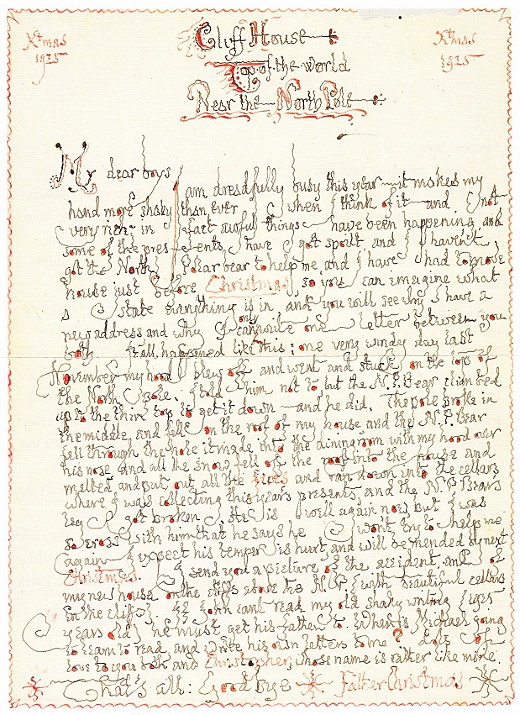
Cliff House

Top of the World

Near the North Pole

Xmas 1925

My dear boys,

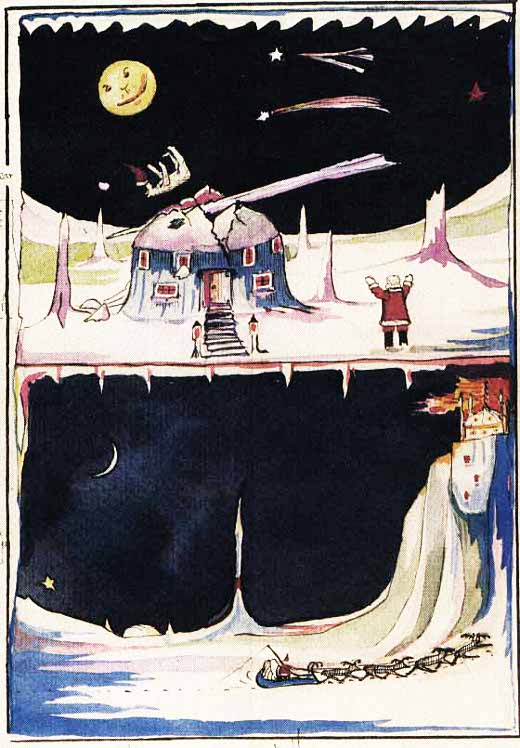
I am dreadfully busy this year — it makes my hand more shaky than ever when I think of it — and not very rich. In fact, awful things have been happening, and some of the presents have got spoilt and I haven’t got the North Polar Bear to help me and I have had to move house just before Christmas, so you can imagine what a state everything is in, and you will see why I have a new address, and why I can only write one letter between you both. It all happened like this: one very windy day last November my hood blew off and went and stuck on the top of the North Pole. I told him not to, but the N.P.Bear climbed up to the thin top to get it down — and he did. The pole broke in the middle and fell on the roof of my house, and the N.P.Bear fell through the hole it made into the dining room with my hood over his nose, and all the snow fell off the roof into the house and melted and put out all the fires and ran down into the cellars where I was collecting this year’s presents, and the N.P.Bear’s leg got broken. He is well again now, but I was so cross with him that he says he won’t try to help me again. I expect his temper is hurt, and will be mended by next Christmas. I send you a picture of the accident, and of my new house on the cliffs above the N.P. (with beautiful cellars in the cliffs). If John can’t read my old shaky writing (1925 years old) he must get his father to. When is Michael going to learn to read, and write his own letters to me? Lots of love to you both and Christopher, whose name is rather like mine.

That’s all. Goodbye.

Father Christmas

On Christmas Eve we are planning on seeing the final Hobbit movie. This will get you in the mood!

Original material copyright 2014 Michael Curry

Christmas Reading: Life & Adventures of Santa Claus

l&asanta

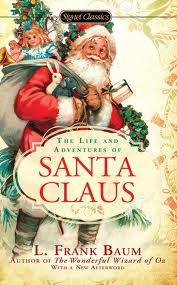
One of the three books I make a point to read during Christmastime is The Life & Adventures of Santa Claus by L. Frank Baum.  It was published in 1902. He had already published the first two of his books set in the merry old land of Oz and those, his books on nursery rhymes and this biography of Claus helped firm his reputation as a writer of children’s stories.

             I mentioned this book a bit when I did my last National Adoption Awareness Month Spotlight – a whimsical biography of Kris Kringle from this book and the animated classic “Santa Claus is Coming to Town”. It partly inspired me to do this blog …

            The book has an excellent Wikipedia page: https://en.wikipedia.org/wiki/The_Life_and_Adventures_of_Santa_Claus

            This is a condensed version from Wikipedia:

Santa Claus, as a baby is found in the Forest of Burzee by Ak, the Master Woodsman of the World, and placed in the care of the lioness Shiegra. The Wood Nymph, Necile, breaks the law of the forest and takes the baby because she desires to raise a child of her own as mortals do, convincing Ak that since he made the law, he can allow an exception, and agrees to have both Necile and Shiegra care for the baby. Necile calls him Claus, meaning “little one” in the old Burzee language.

necile

He becomes well known for his kind acts toward children, including given them presents of carved animals called “toys”. Soon, the immortals begin assisting him, the Ryls coloring the toys with their infinite paint pots (the first toy was not colored).

The Awgwas, evil beings who can turn invisible, steal the toys that Claus is giving to the children, because the toys are preventing the children from misbehaving. This leads to Claus making his journeys by night and descending through chimneys when he is unable to enter the locked doors.

awgwar

As his fame spread far and wide, he became recognized as a saint, earning the title “Santa” (“Saint” in most Romance languages). Rumors Claus would have disagreed with say that naughtiness will make him stop bringing toys, but Claus “…brought toys to the children because they were little and helpless, and because he loved them. He knew that the best of children were sometimes naughty, and that the naughty ones were often good. It is the way with children, the world over, and he would not have changed their natures had he possessed the power to do so.

“And that is how our Claus became Santa Claus. It is possible for any man, by good deeds, to enshrine himself as a Saint in the hearts of the people.”

***

            At the time there was no real lore about the jolly old elf – drawings by Thomas Nast and others and the poem “A Visit from St. Nicholas” by C. Clement Moore.  This was long before Rudolph and the various movies and children’s television shows, so Baum had a blank canvas with which to work.

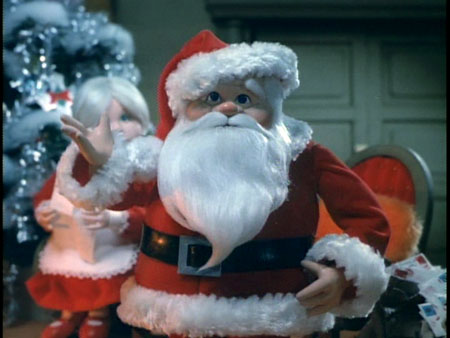
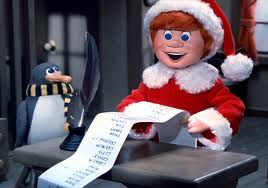
            It is high fantasy and firmly set in the imagination of Baum’s style. It’s a beautiful and charming book to read to yourself or a young one. He may ask you where Topper the Penguin or the Winter Warlock are … you’ll have to explain this is another version of where Santa came from.  Odd that in both this book and the iconic TV show “Santa Claus is Coming to Town” the young Claus is a foundling waif taken in my a magical people…

            Ironically, the production company that made “Santa Claus is Coming to Town” – Rankin/Bass – known also for “Rudolph the Red-Nosed Reindeer”, “Frosty the Snowman” and their progeny – also produced a stop-motion version of “Life and Adventures…”. It was the companies last stop-motion holiday special.

            The book is in the public domain and can be read online or saved as a pdf file. I found a copy here: http://www.ibiblio.org/ebooks/Baum/Santa_Claus.pdf

It is good practice for people not used to ebooks. Then you can purchase one of my three books available online (crass commercialism is also a Christmas tradition!): 

Abby’s Road, the Long & Winding Road to Adoption and how Facebook, Aquaman and Theodore Roosevelt Helped;

Toddler TV: A Befuddled Father’s Guide to What the Kid is Watching; and

The Brave & the Bold: From Silent Knight to Dark Knight, an index to the DC comic book.

Original material copyright 2014 Michael Curry

 

 l&asanta

One Last National Adoption Awareness Month Spotlight – an international icon!

santa

November is National Adoption Month! For this last Spotlight, we focus on a holiday icon!

 Kris and topper

Culled mostly from Wikipedia:


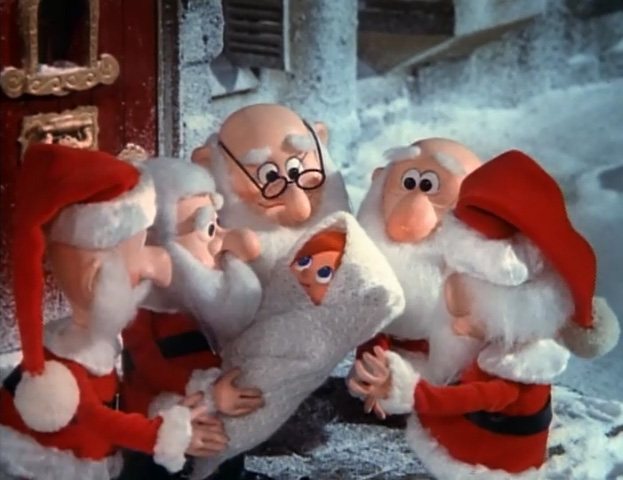
In the gloomy city of Sombertown, ruled by the ill-tempered Burgermeister Meisterburger (voiced by Paul Frees), a baby arrives on his doorstep, with a name tag reading “Claus” and note requesting that the Burgermeister raise the child as his own, despite the Burgermeister’s objections. He then orders his right-hand man and lawkeeper Grimsley (also voiced by Paul Frees) to take the baby to the “Orphan Asylum.” On the way there, a gust of wind blows both sled and baby far away, to the mountain of the Whispering Winds. There, the animals hide him from the Winter Warlock (voiced by Keenan Wynn), a powerful wizard who dislikes anyone trespassing his land. The animals then bring the baby to the other side of the mountain to an elf family by the name of Kringle. Led by Tanta Kringle (voiced by Joan Gardner), the elf queen, they adopt the baby and name him “Kris”.  The rest is a holiday classic!

elves

So put one foot in front of the other to get the DVD today!


In “serious” literature, L Frank Baum (does the name sound familiar – he wrote books about a certain land that lies somewhere over the rainbow) wrote in “The Life and Adventures of Santa Claus” that the foundling waif was instead adopted by the fairy/nymph Necile. It’s a great book and I read it every Christmas season (along with “A Christmas Carol”, too).

Necile 

Be sure to visit Abby’s Road on Facebook for more Spotlights including Lance Armstrong, Nancy Reagan, Steve Jobs and Gary Coleman (never thought you’d see those people in the same sentence, did you?)!


This is the last blog spotlighting famous adoptees for National Adoption Month! Next month I’ll have more news on Abby’s Road and my new books! Also lots of comic book reviews, a review of the last Hobbit movie and other nerdly goodness!


The cover of Abby's Road

The cover of Abby’s Road

“Abby’s Road, the Long and Winding Road to Adoption and how Facebook, Aquaman and Theodore Roosevelt Helped” leads a couple through their days of infertility treatments and adoption. It is told with gentle (and sometimes not-so-gentle) humor from the perspective of a nerdy father and his loving and understanding wife.

Join Mike and Esther as they go through IUIs and IFVs, as they search for an adoption agency, are selected by a birth mother, prepare their house, prepare their family, prepare themselves and wait for their daughter to be born a thousand miles from home.


Winner, Honorable Mention, 2014, Great Midwest Book Festival


Abby’s Road is available at Amazon here: 
http://www.amazon.com/Abbys-Road-Long-Winding-Adoption/product-reviews/0692221530/ref=cm_cr_pr_top_recent?ie=UTF8&showViewpoints=0&sortBy=bySubmissionDateDescending


at Barnes and Noble here: 
http://www.barnesandnoble.com/w/abbys-road-the-long-and-winding-road-to-adoption-and-how-facebook-aquaman-and-theodore-roosevelt-helped-michael-curry/1119971924?ean=9780692221532


and at Smashwords here:
 https://www.smashwords.com/books/view/457270


Copyright 2014 Michael Curry


National Adoption Month Spotlight: Soon-yi Previn

November is National Adoption Month! Throughout the month I’ll feature famous folk who have been adopted!

 Culled mostly from IMBD:

 Soon yi previn

Soon-Yi Previn was born on October 8, 1973 in Korea and at age 8 was adopted by Mia Farrow and André Previn.

She is an actress and married Woody Allen on December 22, 1997. Their union caused a controversy, as he started their love affair while still being “a couple” with Farrow in 1992.

They have two children. They adopted two daughters, Bechet Dumaine Allen, and Manzie Tio Allen.


Be sure to visit Abby’s Road on Facebook for more Spotlights including Kelly Preston, Newt Gingrich and Gary Coleman (never thought you’d see those people in the same sentence, did you?)!

  cover

“Abby’s Road, the Long and Winding Road to Adoption and how Facebook, Aquaman and Theodore Roosevelt Helped” leads a couple through their days of infertility treatments and adoption. It is told with gentle (and sometimes not-so-gentle) humor from the perspective of a nerdy father and his loving and understanding wife.

Join Mike and Esther as they go through IUIs and IFVs, as they search for an adoption agency, are selected by a birth mother, prepare their house, prepare their family, prepare themselves and wait for their daughter to be born a thousand miles from home.


Winner, Honorable Mention, 2014, Great Midwest Book Festival


Abby’s Road is available at Amazon here: 
http://www.amazon.com/Abbys-Road-Long-Winding-Adoption/product-reviews/0692221530/ref=cm_cr_pr_top_recent?ie=UTF8&showViewpoints=0&sortBy=bySubmissionDateDescending


at Barnes and Noble here: 
http://www.barnesandnoble.com/w/abbys-road-the-long-and-winding-road-to-adoption-and-how-facebook-aquaman-and-theodore-roosevelt-helped-michael-curry/1119971924?ean=9780692221532


and at Smashwords here:
 https://www.smashwords.com/books/view/457270


Copyright 2014 Michael Curry


Scott Hamilton: the adoption (skating) circle is complete

I have more National Adoption Month Spotlights on the Abby’s Road Facebook Page (please friend me!) and relatively few blogs. One of the posts was Scott Hamilton. Just after my Spotlight post he made headlines for a wonderful thing. He adopted two children from Haiti! You can read about it here: http://www.today.com/parents/scott-hamilton-opens-about-adopting-two-kids-haiti-1D80310020

hamilton2

For THAT, he deserves a blog post!

National Adoption Month Spotlight on Olympic Gold Medalist Scott Hamilton: born August 28, 1958 in Toledo, Ohio.He was adopted at the age of six weeks by Dorothy McIntosh and Ernest S. Hamilton and raised in Bowling Green, Ohio.

hamilton

Be sure to visit Abby’s Road on Facebook for more Spotlights, including Nancy Reagan, Gary Coleman and Steve Jobs!


“Abby’s Road, the Long and Winding Road to Adoption and how Facebook, Aquaman and Theodore Roosevelt Helped” leads a couple through their days of infertility treatments and adoption. It is told with gentle (and sometimes not-so-gentle) humor from the perspective of a nerdy father and his loving and understanding wife.

Join Mike and Esther as they go through IUIs and IFVs, as they search for an adoption agency, are selected by a birth mother, prepare their house, prepare their family, prepare themselves and wait for their daughter to be born a thousand miles from home.

 cover

Winner, Honorable Mention, 2014, Great Midwest Book Festival


Abby’s Road is available at Amazon here: http://www.amazon.com/Abbys-Road-Long-Winding-Adoption/product-reviews/0692221530/ref=cm_cr_pr_top_recent?ie=UTF8&showViewpoints=0&sortBy=bySubmissionDateDescending


at Barnes and Noble here: http://www.barnesandnoble.com/w/abbys-road-the-long-and-winding-road-to-adoption-and-how-facebook-aquaman-and-theodore-roosevelt-helped-michael-curry/1119971924?ean=9780692221532


and at Smashwords here: https://www.smashwords.com/books/view/457270


Copyright 2014 Michael Curry


To be the Man … you have to Adopt the Man!

November is National Adoption Month! Throughout the month I’ll feature famous folk who have been adopted!

 ric flair

Culled mostly from IMBD:


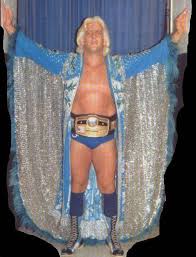
Ric Flair, or Richard Morgan Fliehr, was born February 25, 1949 in Memphis, Tennessee. In the opening chapter of his autobiography To Be the Man, he notes that his birth name is given on different documents as Fred. His adoption was arranged by the notorious Tennessee Children’s Home Society (from which Christina Crawford was also adopted), later shut down for adoption fraud. The opening chapter of his autobiography is titled “Black Market Baby”). After his father completed his residency, the family settled in Edina, Minnesota, where Rick lived throughout his childhood. Wooooooo!


Be sure to visit Abby’s Road on Facebook for more Spotlights including Scott Hamilton, Nancy Reagan, Steve Jobs and Gary Coleman (never thought you’d see those people in the same sentence, did you?)!


The cover of Abby's Road

The cover of Abby’s Road


“Abby’s Road, the Long and Winding Road to Adoption and how Facebook, Aquaman and Theodore Roosevelt Helped” leads a couple through their days of infertility treatments and adoption. It is told with gentle (and sometimes not-so-gentle) humor from the perspective of a nerdy father and his loving and understanding wife.

Join Mike and Esther as they go through IUIs and IFVs, as they search for an adoption agency, are selected by a birth mother, prepare their house, prepare their family, prepare themselves and wait for their daughter to be born a thousand miles from home.

 Winner, Honorable Mention, 2014, Great Midwest Book Festival


Abby’s Road is available at Amazon here: 
http://www.amazon.com/Abbys-Road-Long-Winding-Adoption/product-reviews/0692221530/ref=cm_cr_pr_top_recent?ie=UTF8&showViewpoints=0&sortBy=bySubmissionDateDescending


at Barnes and Noble here: 
http://www.barnesandnoble.com/w/abbys-road-the-long-and-winding-road-to-adoption-and-how-facebook-aquaman-and-theodore-roosevelt-helped-michael-curry/1119971924?ean=9780692221532


and at Smashwords here:
 https://www.smashwords.com/books/view/457270


Copyright 2014 Michael Curry