It’s a bird … it’s a plane … it’s …. a Bicentennial Banner blog!

DC SALUTES THE BICENTENNIAL

#30

Action Comics #461

actioncomics461

Published monthly, thirty cents, July

Cover artist: Bob Oksner

Editor: Julius Schwartz

            Action Comics? Really? You need me to give a background of Action Comics? Okay, okay … Issue # 1 was cover dated April 1938 and featured the debut of that literary iconic trope – the superhero. He was and is called Superman. He was not a masked crime fighter inspired by the pulps like Crimson Avenger, but more in line with the pulp’s Doc Savage or Hugo Danner (the prototype superhero from the novel “Gladiator” by Phillip Wylie) in that he was a perfect human specimen. Only a bursting shell could pierce Superman’s flesh; he was faster than a speeding bullet, more powerful than a locomotive, able to leap tall buildings in a single bound. Look! Up in the sky!

            Rather than a Doc Savage clone, he wore a colorful costume and cape ala the pulp detectives of the day. He was a hybrid of these two styles of hero and transcended them both.

            Superman was on the cover of the first issue (in the iconic pose of his smashing a car to bits) and did not appear on the cover again until #7, and then again not until #10.  But based on the sales of the issues on which he WAS the cover feature, the star of this anthology comic was obvious. After #13 he was on the cover (even if it was just a blurb) on every issue until the 1980s, when it changed to a weekly format.

            Action Comics also saw the debut of Lois Lane and Superman bad guys Lex Luthor, Brainiac and the Parasite as well as other DC/National heroes such as Zatara, Vixen (although she should have debuted in her own comic cancelled in the DC Implosion) and Supergirl.

***

“Kill Me or Leave Me”, Cary Bates ( w ), Curt Swan (a), Tex Blaisdell (i)

            This story is continued from the previous issue and continues in the next, concluding in the issue after that (where Superman, with amnesia, witnesses the signing of the Declaration of Independence – the comic that was actually on the stands on July of 1976 as opposed to the cover date). Still, with a little manipulating it could have had the Bicentennial banner, yes?  I owned the next two issues after this when they were published.

 karb-brak

            Villain Karb-Brak is convinced Steve Lombard is Superman and attacks him. Superman, meanwhile, saves a Senator from flame-thrower-wielding terrorists and hies to the Galaxy Building just in time to save Lombard. They battle.

            As in the previous issue, Superman gets feverish around Karb-Brak, who touches Superman and causes the gym in which they fought to explode! Superman saves Lombard and Karb-Brak. Karb-Brak, in his human identity of Andrew Meda (get it?) walks away.
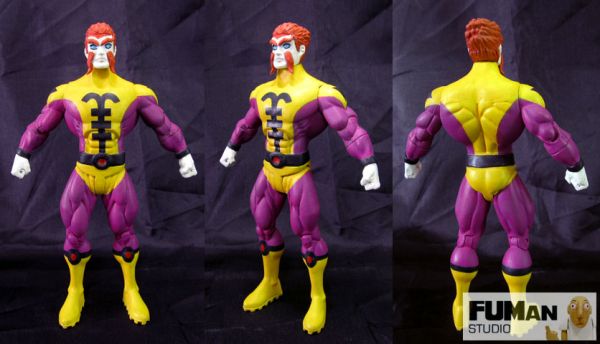
karbbrak

            Karb-Brak reveals his origin: He is banished from his home planet in the Andromeda galaxy because he is allergic to everyone on the planet – a planet of super-powered beings. But the planet of his exile – earth, obviously – has a being whose powers are similar to his own. When Superman approaches, he becomes allergic. If he does not eliminate Superman, he will die.

            With Lombard no longer on his list of Superman’s secret identity, Karb-Brak goes to suspect #2: Clark Kent. Using his psi-machine, Karb-Brak mentally manipulates Clark’s friends and other citizens of Metropolis into falling in love with Kent. They fawn over him, want pieces of his clothing and treats him like a 1970s rock star. Kent is chased into a park and attacked by Karb-Brak, where Clark accidentally hurts bystanders while protecting his identity. His guilt and concern hold him back as Karb-Brak continues the assault.

            The crowd cheers on Clark Kent – they now realize he really is Superman – and he fights back. The psi-machine worked too well. Karb-Brak returns to his psi-machine to make the public cheer him instead of Kent. Superman knocks out Karb-Brak, and uses the psi-machine to make the public forget his dual identity and the fight in the park.

            Karb-Brak is now too weak to fight Superman and gives him an ultimatum: stay on earth and I die or leave earth forever and let me live – which will you choose, hero, which will you choose?

***

The Toughest Newsboy in Town”, Elliot S! Maggin (w), Curt Swan (a), Tex Blaisdell (i)

            This is a solo Perry White story. Perry was the editor-in-don’t-call-me-chief of the Daily Planet – Clark, Lois and Jimmy’s boss. He first appeared in November 1940 in Superman #7. Before that time, Lois and Clark worked for George Taylor of the Daily Star. The explanation of the switch was never given at the time, but retconned in the 1970s as part of the Earth-One and Earth-Two lore.

            After Easter dinner, Perry’s gathers his four grandchildren to tell them of his amazing exploits.

            In 1934 Perry was hawking papers when a man gave him a quarter for a two cent edition! Perry recognized him as missing toy company heir Victor Larson. Perry followed Larson to his office where he kept a man named Doctor Norton hostage. Victor ran up gambling debts with the mob and is in hiding; Norton has designed an atomic bomb and Larson is trying to torture the plans out of him. Perry jumps through the window and eventually knocks out Larson. Poor Norton dies of a heart attack in the meantime. Perry writes his first story (the atomic bomb angle was nixed) and got a job reporting for the Daily Planet instead of selling it.

            One newspapers headline (partly covered) touts “Giordano wins art …” The editor of this Earth-One Daily Planet was not named in this story – was it George Taylor?


Superman in Action: letter column for Action Comics #457 (which introduced Pete Ross’ son Jon). Brian Scott of Streator, IL (positive), Mike White of Mackinaw, IL (positive), Mark Schneider of Concord, Mass (negative as to the Superman feature, but positive on the Green Arrow back-up), and Dan Cardenas, San Luis Obispo, CA (positive) contributed.

***

Join me next time for DC’s Bicentennial issue #31: Adventure Comics #446


Original Material copyright 2015 Michael Curry

Images used are copyright their respective holders and reproduced here under the “Fair Use” doctrine of 17 USC 106 & 106a for the purposes of criticism and comment.

Detective Comics #461: the Dark Knight Bicentennial Banner blog continues!

DC SALUTES THE BICENTENNIAL

#29

Detective Comics #461

Detective_Comics_461

Published monthly, thirty cents, July

Cover artist: Ernie Chua

Editor: Julius Schwartz

            The first issue of Detective Comics was published in March 1937 as an anthology comic book specializing in hard-boiled detective stories akin to the pulp magazines that were its inspiration. Despite retooling and renumbering for publicity and sales’ sake, the comic has been in publication ever since!

            It is the comic book that DC Comics took its name from. So really the company is called Detective Comics Comics. I know, nowadays it’s called DC Entertainment. Fine. I still sometimes refer to it as National. I’m old.

            The most obvious claim to fame of Detective Comics was the debut of Batman in #27 (May 1939). But Detective also featured the debut of Robin, Commissioner James Gordon, the Martian Manhunter, Simon and Kirby’s Boy Commandos, Batgirl (the 1960s version), Walt Simonson’s Manhunter, Batwoman, Bat-Mite, the Crimson Avenger, ManBat, and Batvillains the Penguin, the Riddler, Two-Face,  Killer Kroc, the Calculator, and Blockbuster.

            Sadly, despite some incredible stories and art, Detective Comics at the time of the Bicentennial was at its nadir. Within two years there will be serious talk of cancelling their namesake comic. Fortunately it merged with Batman Family into a Dollar Comic and survived the DC Implosion. Batman’s immense popularity in the coming years made the idea of cancelling the magazine laughable. It’s still out there, renumbered as part of DC’s “New 52” publicity stunt, but still one of only six of the thirty-three comics published under the Bicentennial banner still published as an active title.

***

“Bruce Wayne – Bait in a Trap”, Bob Rozakis and Michael Uslan ( w ), Ernie Chua/Chan (a), Frank McLaughlin (i)

            This story is continued from the previous issue and concludes in the next. I owned that third issue when it was published.

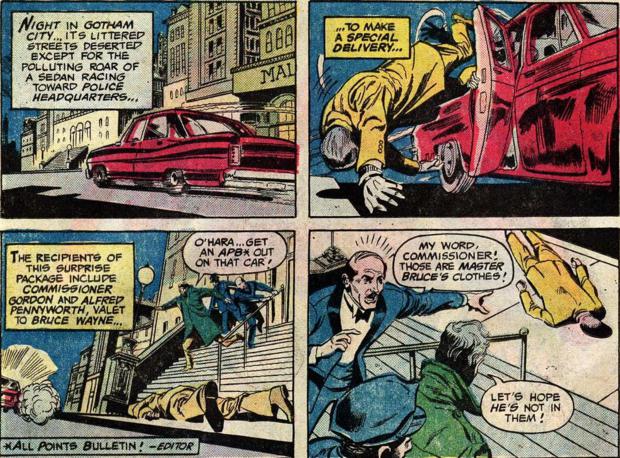
            Captain Stingaree believes Batman to actually be three different men; as part of a corps financed by Bruce Wayne. He kidnaps Bruce Wayne and alerts Commissioner Gordon and Alfred to that factby exploding a dummy in Wayne’s clothing on the front steps of police headquarters.

bruces clothes

            Batman appears (to the delight of a stunned Alfred) and vows to “rescue” Bruce Wayne. Batman later explains that he easily escaped a holding cell meant to keep in a frivolous playboy, not a dark avenger of the night! Mud from the kidnap scene leads Batman to Gotham’s sewers. Stingaree blocks the exits and unleashes swarms of rats to attack Batman. He escapes, but the next chamber is flooded and he and a scuba-equipped Stingaree fight it out, both falling unconscious and whisked to a drain leading to the Gotham river (eww…).  Stingaree awakes first and hauls Batman off to his lair.

underwater fight

             Bruce Wayne appears at police HQ and tells Gordon and Alfred that Batman rescued him. But … but…

            Stingaree, only now discovering Wayne’s escape, approaches the captive Batman and unmasks him – revealing him to be Batman #2: Robert Courtney! We readers who did not read part one gasp in astonishment and say, “Umm, who?”

            All will be revealed in the next issue. Granted it’s been nearly 40 years but I don’t want to spoil the ending. If you REALLY want to know, email me. Or look up the ending online…

***

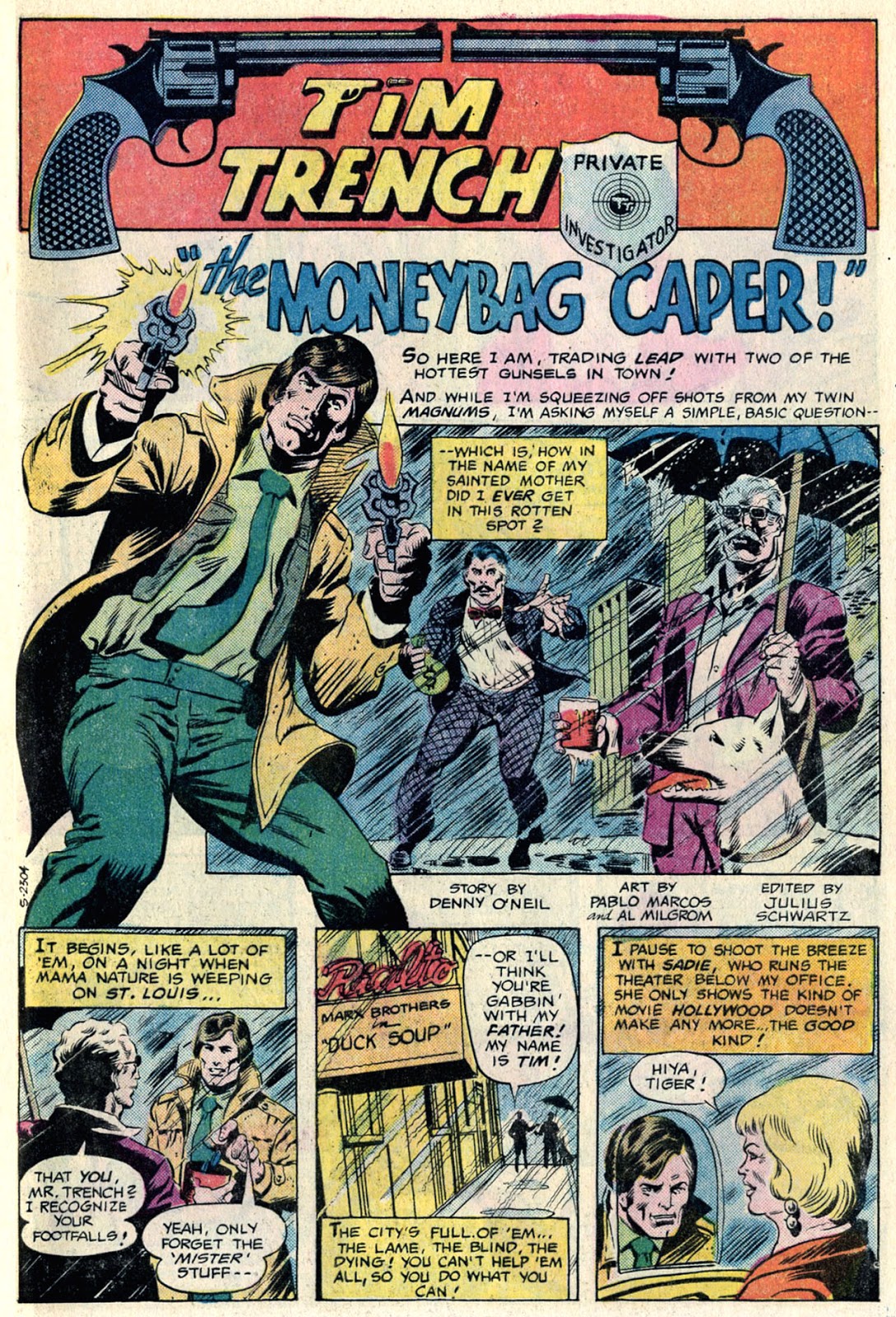
The Moneybag Caper”, Denny O’Neil ( w ), Pablo Marcos (a), Al Milgrom (i)

Trench Tec 461

            St. Louis private investigator Tim Trench appeared in three issues of the “all new” Wonder Woman (#179-181 – not counting a later reprint issue) helping her and I-Ching during her non-powered Diana Rigg phase. He had two solo stories in Detective Comics (460 and 461) and did not appear again until 2006 when he was killed off in 52 #18. His Wikipedia entry also says he was a member of the Hero Hotline, but the Hero Hotline, nor the Grand Comics Database or DC Comics Database, mention this.

            He was a two-fisted old-school private dick. You could almost hear the saxophone music playing in the background of his two solo stories. He was such a caricature he could only be described in metaphor. If he was a brand of toilet paper he’d be taken off the market – he was rough and tough and wouldn’t take crap off of anyone…

            Tim enters his office to find one of Big Willy Cline’s hired goons. But wait, this isn’t a hit – the goon, Manooch, says Cline has a job for Trench! Since his “bank account is lower than a snake’s belly”, he says he might be interested.  Seems Big Willy tried to double cross the other gangs and got caught. He offers Trench 500 big ones to see him safely to the airport.

            A car tries to run over Trench, Cline, and Manooch. Trench knocks a blind man out of the way but too late to save Cline, who is shot by a man in the car. Trench shoots back – killing the driver and the shooter. He socks it to Manooch, who dove out of the way before the car hit. He was in on it!

            Meanwhile, the blind man walks away with the $500 cash. That’s okay: Trench didn’t earn it anyway…


Batman’s Hot Line: letter column giving universal praise for issue #457, “No Hope for Crime Alley,” a story that has become a Bronze Age classic. All five letters praised the story – the first three writers calling it a masterpiece. Adam Castro of New Rochelle, NY, David B. Kirby of Richmond, VA, Paul Emrath of Milwaukee, WI, Louis A, Latzer of St. Louis, MO and Elizabeth Smith of Tacoma WA contributed. The latter was the only letter writer to also praise #457’s back-up Elongated Man story.

***

Join me next time for DC’s Bicentennial issue #30: Action Comics #461


Original Material copyright 2015 Michael Curry

Images used are copyright their respective holders and reproduced here under the “Fair Use” doctrine of 17 USC 106 & 106a for the purposes of criticism and comment.

An Unexpected (#174) Bicentennial Banner Blog!

DC SALUTES THE BICENTENNIAL

#28

The Unexpected #174

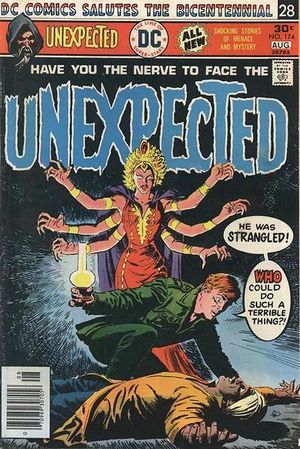
The title is prefaced with “Have You the Nerve to Face …”

Unexpected_174

Published bi-monthly, thirty cents, August

Cover artist: Luis Dominguez

Editor: Murray Boltinoff, Asst. Ed: Jack C. Harris


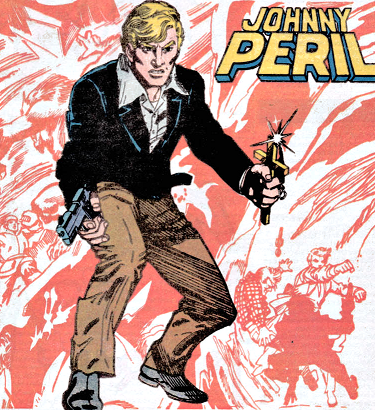
            Tales of the Unexpected was a science fiction anthology debuting in March of 1956 and lasting until issue #222 (May 1982). It changed its title to The Unexpected as of issue #104 in January 1968 and slowly changed formats from science fiction to horror. Online comic shops and guide books refer to this series as “Unexpected, The (1968)”. It became a Dollar Comic with issue #189 (February 1979) and merged with The Witching Hour and House of Secrets until issue #195 (February 1980) before returning to its standard format. The Witching Hour/House of Secrets merger was abandoned as of issue #206 (January 1981). Most of these last issues featured the adventures of Johnny Peril, detective of the occult.

2914904-johnny_peril_01

Before that, the only lasting feature of note was in the mid-1960s with Tales of the Green Glob.

green glob

            I’ll bet you weren’t expecting that…

***

“Gauntlet of Fear”, George Kashdan (w), Don Perlin (a)

            Dr. John Terril, world-renowned psychiatrist, is hired to analyze the paranoid president of a foreign republic. He is informed by Scorbo, the president’s lackey and an obvious germophobe that there really IS a plot to kill the president (it is not said what his position is or relation to the president)! If Terril can withstand the Gauntlet of Fear, he can infiltrate the organization led by the Great Bajir. He is thrown into an underwater cave and attacked by a giant squid and piranhas. He panics, faints and wakes up in a cell. Scorbo is really the Great Bajir and he is brainwashing Terril into one of his thralls to kill the president!

            The brainwashing continues: bats, spikes and skulls haunt Terril. Even the roaches in the cell panic him. But he has an idea. He starts crawling in his cell like a baby. Bajir enters his cell, thinking his plan worked. Terril tosses handfuls of roaches onto Bajir, panicking HIM! The thralls see their master in panic and snap back to their old selves and hurl Bajir from the window of his castle.

***

“Sands of Time”, writer unknown, Rich Buckler (a).  A man sentenced to be executed at dawn escapes. But while escaping he suffers a severe bullet wound. He breaks into a cabin to hide out the day. He shoots a clock, “You won’t be able to tell me the time anymore!” Collapsing from the pain and too weak to move, he then shoots a giant hour glass. “You won’t be able to tell me the time, either.” The sand slowly falls onto his face. By dawn, the sand suffocates him. He died at dawn anyway…

***

“The Long Arms of Death”, Weshley Marsh (Murray Boltinoff himself) ( w ), Fred Carillo (a)

            Gerald is the new English secretary to millionaire Raj Simha of an unnamed Indo-Asian country. Gerald is warned to stay away from the Raj’s daughter Kaleli. But Gerald delivers flowers and breakfast in bed to Kaleli, walks with her in the garden and falls in love.

            Simha refuses to allow Gerald to marry and forbids any further contact.

            Gerald steals money and gems from Simha’s vault to raise enough money for two tickets back to England. Simha catches Gerald and is killed. Simha’s guards attack Gerald but are pulled back by many arms. It is Kaleli – she is the ten-armed goddess of death – Kali! She hugs Gerald with all her arms, crushing him. She tells the guards to call the police and report two dead bodies…


Unexpected Mail: the letter column does not necessarily comment on previous issues, but instead, like Ghosts, readers submit brief tales that fit the genre of the comic. Damian Brokaw of Denver, CO tells us of pygmy chimpanzees – the possible missing link! Janet Fadel of Hollywood, CA notes that issue #172 features an exorcism as well as an article about the upcoming film “Exorcist 2” and discusses the film, Robert W. Chan of Edmonton, Canada writes about a 1969 case in Louisiana when water turned blood red.  Ronald Vias of Dover, NJ discusses an Allied WWII plan to plant incendiary devises on nocturnal animals and bats and sic them on Nazi strongholds.  Other articles discuss upcoming movies about the Loch Ness Monster and “Dr. Black and Mr. Hyde”.

***

Join me next time for DC’s Bicentennial issue #29: Detective Comics #461


Original Material copyright 2015 Michael Curry

Images used are copyright their respective holders and reproduced here under the “Fair Use” doctrine of 17 USC 106 & 106a for the purposes of criticism and comment.


GI Combat #192: More bicentennial banner blogging

DC SALUTES THE BICENTENNIAL

#27

GI Combat #192

GI_Combat_Vol_1_192

Published monthly, thirty cents, July

Cover artist: Luis Dominguez

Editor: Murray Boltinoff, Asst. Ed: Jack C. Harris

            GI Combat was another comic acquired by DC when they bought out Quality Comics. I wrote this in my reviews of the Bicentennial issues of Blackhawk and Freedom Fighters … Quality Comics was a successful comic book company during the medium’s golden age. It introduced Kid Eternity, the Blackhawks, the much-lauded Spirit and Plastic Man to comics. The company closed shop in the mid-1950s and the catalogue of characters was bought by DC/National. They continued only four of Quality’s titles: GI Combat, Plastic Man (although DC would not publish a Plastic Man comic until the 1960s), Blackhawk, and Heart Throbs – all but the latter were still being published by the time of the Bicentennial (Plastic Man would get much more popular in the coming decades).

            GI Combat debuted in October 1952 featuring US soldiers fighting godless commies across the globe. It later featured stories set during World War Two. The first DC issue was #44 (January 1957).

            It was a standard anthology with standard war stories, but eventually a starring feature took over as lead.  The Haunted Tank debuted in issue #87 (May 1961) and continued as the main feature until they shared cover billing with The Mercenaries in the comic’s later issues.

Haunted_Tank_001


            Confederate General J.E.B Stuart’s ghost is sent to guard his descendant and name-sake Jeb Stuart during his battles on the European front in World War II. In one story I remember fondly, Stuart’s tank is destroyed and replaced by a Sherman. “Sherman!” The ghostly Stuart was aghast that his descendant would use a tank named after a Union general! A great story, but I cannot find the specific issue.

            With issue #201 (May 1977) GI Combat became a Dollar Comic with increased page count and all-new stories such as Tales of the OSS. It returned to “normal” size with # 282 (March 1986) – making it one of the last Dollar Comics. By now the Haunted Tank was occasionally replaced as the lead feature by The Mercenaries, a fighting troupe set in modern times. The last issue was #288 (March 1987). It was the second-most successful war comic DC produced next to Sgt. Rock.

            The comic is also notable for being the debut vehicle for The Losers, who moved to their own starring feature in Our Fighting Forces. “The Rock”, a one-shot character, arguably the prototype of Sgt. Rock, had his one appearance in a 1959 issue.

            GI Combat was revived as part of the “New 52” line, but was cancelled after seven issues. The Haunted Tank was also revived with Stuart, the WWII descendant, haunting his granddaughter in modern times. A few other revivals also proved unsuccessful.

***

“The General Has Two Faces”, Bob Kanigher ( w ), Sam Glanzman (a)

            The Haunted Tank crew is tasked with killing Field Marshall Erwin Rommel. A squadron of tanks and planes would be expected and fought off, but a single recon tank might make it through.

            As the tank crosses a bridge, it is attacked by two fighters. Jeb is severely injured, leaving Gus to take command and stop the fighter planes. He sees JEB Stuart, who warns him of dangers to come. The other crewmen, Rick and Slim, think Gus is imagining things just like their commander.  They destroy the Krauts and cross the bridge.

            But the tank’s treads bust and they have to hoof it with their injured commander (note the change to a WWII-like vernacular…). They are met by the teenage students of an all-girl school at the Van Maltz castle, led by its Baroness. Helga is angry that the Baroness would allow verdamt Amerikaische soldats into their home. She is locked away until she calms down and the Haunted Tank crew are fed and healed. Jeb and the Baroness share a kiss.

            Someone releases Helga, who immediately gets “help”. The next morning Helga sits in the lead tank of a squadron attacking the school. Sitting beside her in command – Rommel!

            Jeb shoots at the tanks with a crossbow using dynamite sticks instead of bolts – blasting the tanks to smithereens! Rommel’s lead tank makes it to the drawbridge where a mysterious figure is cranking the handle to lift the wooden bridge. Rommel shoot and kills the figure, but too late! The tank falls into the moat – killing all. Jeb discovers the mysterious figure was the Baroness. She saved her enemies from her own people.

            Later the crew discovers it was NOT Rommel in the tank at all, but a double instead.

***

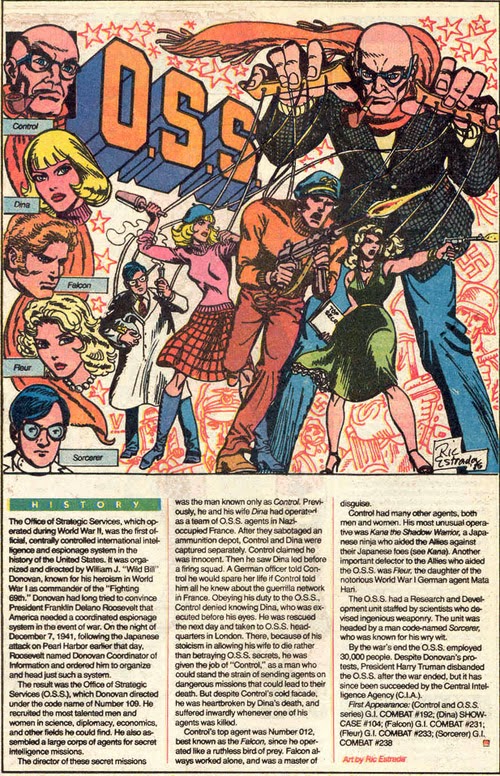
ww-oss

OSS: Office of Strategic Services is a top secret branch of military intelligence. These spy tales were featured throughout GI Combat, especially in its Dollar Comic days. It was also given its own lead feature in the last issue of Showcase (#104). The feature debuts here! Other than the Joker’s Daughter in Batman Family #6 and Earth Man, kind of, in Superboy starring the Legion of Superheroes #218, these three were the only “debuts” featured in the Bicentennial comics.

Target for Tonight – Me!” Bart Regan (w), Ric Estrada (a). Victor Lazlo (intentionally to be confused with Paul Henreid’s character from Casablanca …) and two others parachute into occupied Czechoslovakia. His companions are shot while landing and he is captured and taken to Gestapo HQ (which is made to look like a hospital and therefore, not bombed by allied aircraft) and searched. He is Czech and returned to exact revenge on the Nazis for killing his Jewish wife. He is interrogated and ordered to be hung from the gallows when an Allied bomb raid destroys the headquarters and everyone in it – including Lazlo. Seems the Nazis missed the transmitter implanted in his forehead by the OSS. He was captured intentionally and offered his own life to defeat the damned Boche!


Let’s Make Tracks: letters for #286. A positive letter from Michael Lapsley of Morrow, GA asking about prior crewmembers of the Haunted Tank, Paulo Mariorann of Parma, Ontario asked about the Haunted Tank’s theater of operation – various places in Europe in one issue and Burma the next? The editor explains (as with Sgt Rock) these stories are not in chronological order, Mike Karvalas of Chicago, IL questioned the Tank being in Greece, explaining that there were not many US soldiers in Greece – the editor explains that the Haunted Tank crew were some of the few, Tom Kelleher of Norwalk, Conn. Criticized JEB Stuart’s old man appearance when he was a relatively young man – he is a ghost, says the editor – and he looks like a ghost!

***

Join me next time for DC’s Bicentennial issue #28: The Unexpected #174


Original Material copyright 2015 Michael Curry

Images used are copyright their respective holders and reproduced here under the “Fair Use” doctrine of 17 USC 106 & 106a for the purposes of criticism and comment.


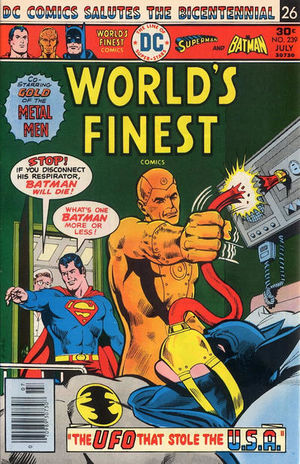
World’s Finest Comics #239: Bicentennial banner blog continues!

DC SALUTES THE BICENTENNIAL

#26

World’s Finest Comics #239

World's_Finest_Comics_239

Published nine times a year, thirty cents, July

Cover artist: Ernie Chua (unsigned – very unusual for him). Inked by John Calnan

Editor: Murray Boltinoff

            World’s Finest Comics began life as 1939 New York World’s Fair Comics and 1940 New York World’s Fair Comics. Those were one-shot anthologies released by National Comics featuring their star attractions – in 1939’s issue that meant Superman, Slam Bradley, the Sandman and Zatara. 1940 starred Superman and Batman (and Robin, don’t forget Robin) in the same book, although in separate stories, along with stories of Hourman, Slam Bradley, Johnny Thunderbolt and Red, White & Blue. The comics were so successful the company decided to make it a continuing quarterly comic called World’s Best Comics with #1 dated Spring 1941. As another company already was publishing a Best Comics, National changed the title to World’s Finest Comics with #2 (Summer 1941) to avoid their getting a taste of their own litigious medicine.

            It was a successful anthology featuring separate tales of Superman, Batman (and Robin, don’t forget Robin), Johnny Thunder, Red, White & Blue, the Crimson Avenger, and others; but always featuring solo tales of the company’s Big Two: Superman and Batman (and Robin, don’t forget Robin).

            Sales in superhero comics slumped over the years, causing cancellations of most magazines and cutting of page counts in the survivors. There was only room for one feature in World’s Finest now, who should it be? Should either Superman or Batman (and Robin, don’t forget Robin) be relegated to a back-up strip? Or ousted altogether?

            The powers-that-were came up with a brilliant idea – team up their two biggest stars in one story! Thus the Superman/Batman Team (and Robin, don’t forget Robin) was born in issue #71 (July 1954).

            Except for a brief time in the early 1970s (issues #198 – 216) – where Superman instead teamed up with other DC characters in an imitation of The Brave and the Bold, the magazine remained a vehicle for the Superman/Batman team. Robin? By this time Robin had grown and was more or less on his own. Robin appearing in World’s Finest after the switch back to Superman/Batman was rare. He did team with Superman in one of the non-Batman issues: #200 in fact…

            With issue #244 (May 1977) World’s Finest returned to its anthology roots by becoming a Dollar Comic and featuring additional stories starring, among others, Green Arrow, Black Canary, Wonder Woman, the Creeper, the Vigilante and Shazam/Captain Marvel.

            The comic reverted back to “normal” size with issue #283 (September 1982) and lasted until issue #323 (January 1986).  By this time Batman was budding into his “brooding sociopath” persona with which came a dislike of Superman, his “old friend”. The editors and writers gleefully took advantage of the rift between the two characters for the next twenty years.

            World’s Finest was revived as a mini-series in 1990 and the title Superman/Batman ran from 2003 – 2011 for 87 issues. Batman/Superman – the flip made quite likely to boost sales – is a “New 52” title. World’s Finest itself became a “New 52” title with DC’s reboot of their line featuring stories of the Power Girl/Huntress (and Robin, don’t forget … oh never mind) team.

            As an anthology in its Golden Age, World’s Finest featured the “best” of National Publications, so no new heroes or supporting characters of note debuted. The comic did introduce two durable villains: the Scarecrow and the Composite Superman (a man with Superman’s costume on the right side and Batman’s on the left, with all the powers of the Legion of Superheroes … you read that correctly…).

***

“The UFO That Stole the USA”, Bob Haney ( w ), Curt Swan and John Calnan (a), Jack C Harris (Asst. Ed.)

            People who started reading comic books only since the 1980s missed out on the glorious writing of Bob Haney. I regret never having had the chance to meet him and shake his hand and tell him how much I enjoyed his work – especially his long runs in The Brave and the Bold and World’s Finest Comics. He died in 2004. Websites are devoted to his range of work.

            Oh sure he has his detractors – even his biggest fans (like me) cringe at some of his quirks – his apparent hatred of Plastic Man, for example. But mostly he is criticized for his utter lack of continuity. His work stood so much in its own bubble it was designated as being in its own alternate universe – designated as Earth B. Haney’s job was to tell a story – and if regular continuity or character canon had to be changed or ignored, it was. If a factoid had to be put in that only appeared in that issue and never again to appear in that character’s history, so be it. Bruce Wayne was a US Senator for a time. He had more wards after Dick Grayson (most of them were imprisoned or killed) and never mentioned again. These were called Haney-isms.

            But they were fun, and kept the story going. Face-palm moments? Oh to be sure. But I’d rather read a comic written by Bob Haney than most anything released today. He made comics fun to read. That was the whole point, isn’t it?

***

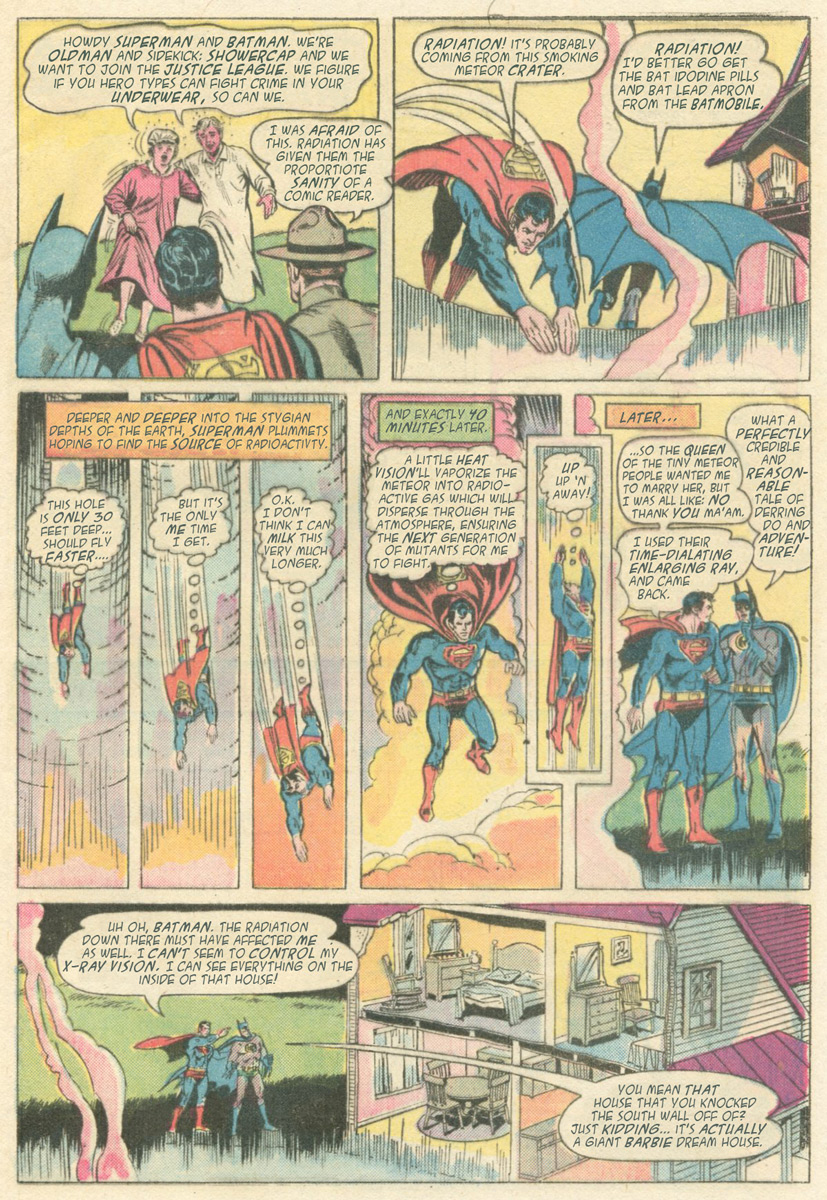
            Superman and Batman investigate a rural farm outside of Gotham City. Where one half of the farmhouse stood is now a huge smoking pit, the house neatly cut in two. The farmer and his wife hysterically babble about their horse and someone stealing fish and are taken to a hospital. Superman investigates the pit – it goes down for miles and before he can reach bottom notes that the tunnel is hotter than the core of the sun (Wait, wouldn’t that turn the earth to a cinder? Shut up.)!  Whatever did this is obviously of extraterrestrial origin (Well, not necessarily … I said shut up.).

Worlds-Finest-239-03

            Batman enlists a police sketch artist to draw the farm couple’s rants. He draws a spaceship destroying their house and stealing their fish pond and horse.

            They return to the farm to find a crowd of UFO “crackpots” including a boy who finds a clue – a map identifying other possible targets. Also in the crowd is Gold of the Metal Men, disguised as a human. The heat from the pit melts his disguise and the crowd, thinking him an alien, pushes him into the pit! (Wait, if it’s hot enough to melt Gold’s disguise, why aren’t the crowd blistering and getting hot? Because gold melts at a lower … I said shut up!). Superman rescues him before he melts away.

            Why is Gold there? He is a UFO buff, you see. A fact never revealed before or again in Metal Men lore. It is this issues’ Haney-ism.

            ( What kind of bull– … Shut up, I said!)

            Since the map the young boy discovered is made of a metal not found in this solar system, Superman heads to space to find the planet of its origin. Batman discovers that the metal did NOT come from the aliens’ home planet, but was mined elsewhere.  Batman drives to a nearby space observatory to radio Superman – if he finds the metal’s home planet, he will be accusing the wrong planet’s inhabitants!

            But the aliens shoot at the Batmobile from the sky, knocking Batman out. He is saved by Gold and taken to a hospital. Superman and Gold, aware that the aliens may be watching and listening, pretend to Kervorkian Batman by pulling his plug and killing him (ala the cover)!

Worlds-Finest-239-14


            Actually Superman substituted a dummy Batman, threw Gold into the atmosphere where as thin gold foil he could block the alien scanners (but Gold wouldn’t have the mass to cover the entire … I’m warning you!) and whisked Batman to his Fortress of Solitude where they compare notes.

            They find the alien spy satellite and triangulate the home planet. Superman takes off to exact revenge. After he leaves, the house, the pond and the horse are returned intact (But how could the house be made whole if it was sliced … That’s enough!) The aliens meant no harm, but how to tell Superman that? Gold spins into space where Batman sends a message via Morse code to Superman (but the mass thing again … Zip it!).

            Meanwhile, Superman has already deflected a deadly beam shot from the alien planet. When he gets Batman and Gold’s message, he confronts the aliens. No, they meant no harm to Earth – they were merely testing their weaponry for their attack upon their enemies on the planet of Pyra. Oh well, that’s okay then, says Superman. He flies into space and redirects the deadly beam back to Pyra. He explains that the beam is now so diluted it will only stun them. This is also apparently acceptable to our heroes…

            He warns the aliens never to experiment with weapons meant to destroy another civilization on Earth again. The aliens cheerfully agree: “You are an intelligent and all-powerful being. We bow to your wishes!”

            Ah Bob Haney, god rest your saintly soul…

            (But … sorry, story’s over!)

            And while we’re at it, it is always good to see Curt Swan art … he is never anything less that perfect! (I agree … it’s too late to suck up now)


From the World’s Finest Fans: letters for WF #236, guest starring the Atom. A positive letter from David Trenton of New York, NY, J. Charles Backman of Sterling Heights, MI criticized the incorrect use of Morse code in that issue, John Baker of Baltimore, MD asked about where the headshots on the cigar-band cover came from (from various back issues and promo drawings) and Fred Schneider of New York, NY wrote a positive letter.

***

Join me next time for DC’s Bicentennial issue #27: GI Combat #192


Original Material copyright 2015 Michael Curry

Images used are copyright their respective holders and reproduced here under the “Fair Use” doctrine of 17 USC 106 & 106a for the purposes of criticism and comment.
 

Celebrating the 200th issue of … every comic book ever!

200 and counting!

My 200th blog. That may not be a big deal for writers who blog every day – they’d hit 200 by July of their first year of blogging. But it’s a big deal for me! That’s a lot of writing!

Ironically I am in the middle of a blog series commemorating the comic books released by DC comics during the US Bicentennial of July 1976. If you collected 25 of the 33 comics published with the Bicentennial banner cover and you will get a free Superman belt buckle.

A comic book reaching its 200th milestone is a big deal. Probably more so nowadays with the constant rebooting and relaunching of titles, it is not likely we’ll see many comics go all the way to number 200. It still happens, though: Marvel’s Ultimate Spider-Man released its 200th issue on June 2014.

#200 anniversary issues were usually a larger-than-normal-sized comic (with a larger price tag of course) and a special story or the rip-roaring conclusion of a story arc. But that was usually in the bronze age and beyond. Earlier comics (before 1970) usually didn’t care about their 200th issue.

Some of these comics didn’t even mention their 200th anniversary issue other than their standard numbering:

Action_Comics_200

Action Comics: January 1955

Adventure_Comics_200

Adventure Comics: May 1954

Detective_Comics_200

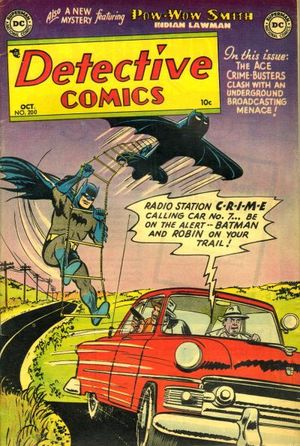
Detective Comics: October 1953

House_of_Mystery_v.1_200

House of Mystery: May 1972. Great cover by Neal Adams here.

Strange_Adventures_200

Strange Adventures: May 1967

300px-Star-Spangled_War_Stories_Vol_1_200

Star Spangled War Stories: July 1976.

This in particular was a real shame at a missed opportunity. Dated July 1976, the 200th anniversary of the USA and this landmark was not even mentioned in a cover blurb, only the letter column gave it some attention.

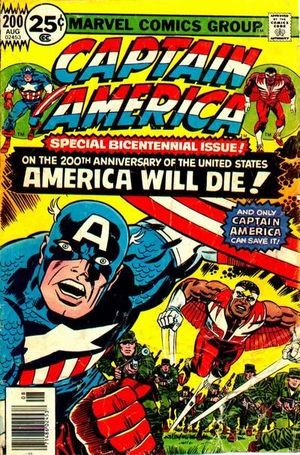
Compare that to Captain America #200 with an August 1976 cover date:

 Captain_America_Vol_1_200

Others included:

Blackhawk_Vol_1_200

Blackhawk: September 1964

Millie_the_Model_Vol_1_200

Millie the Model: February 1973

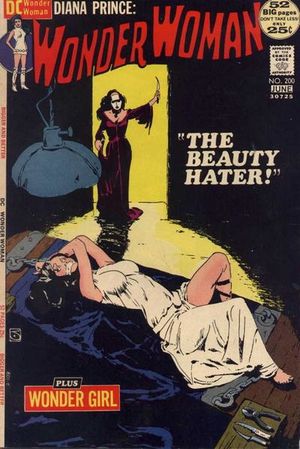
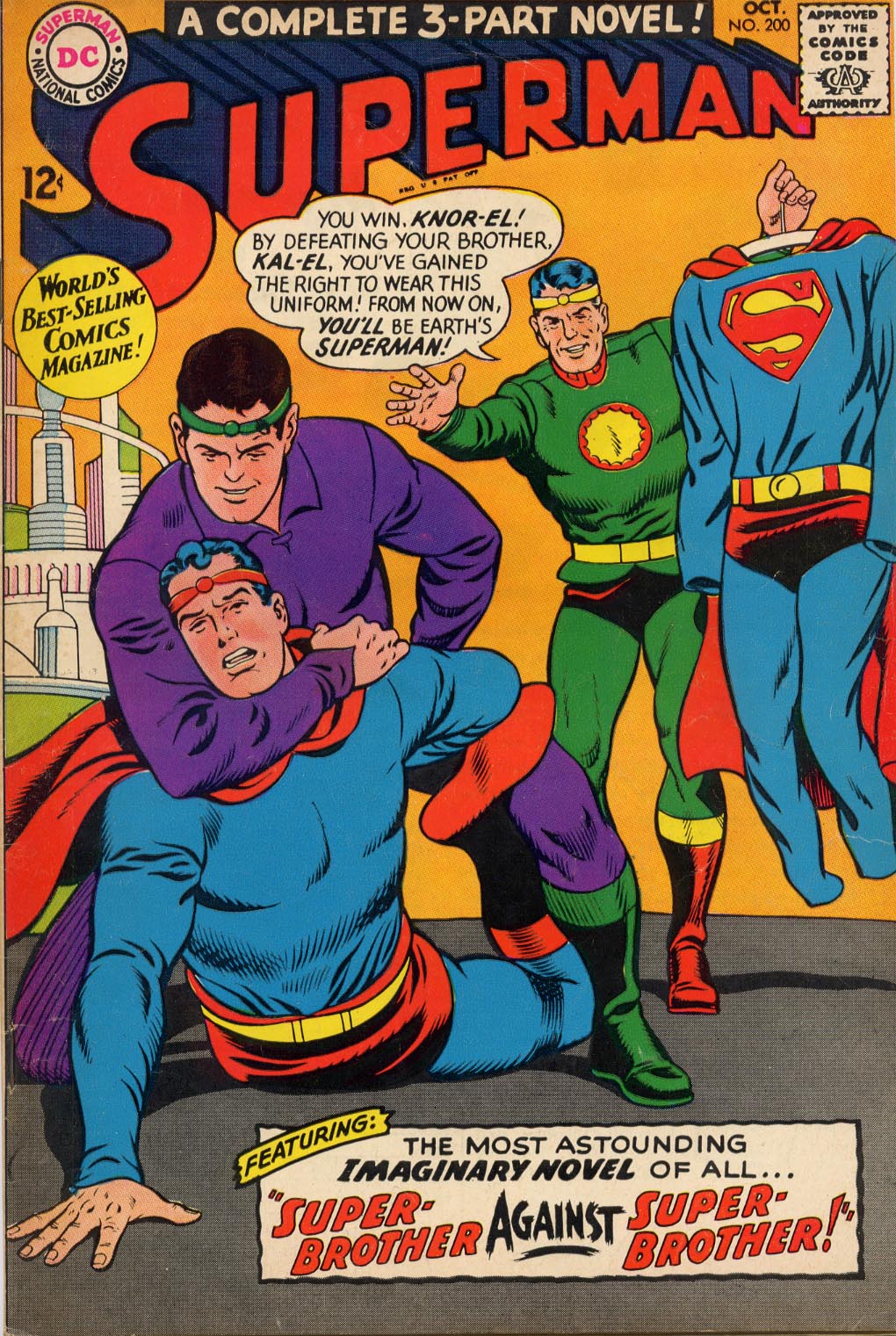
and Superman: October 1967 and Wonder Woman: June 1972 (reprinted below)

Older Archie comics were not known for celebrating their 200th issues:

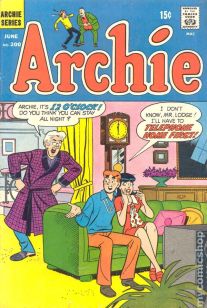
869981

Archie: June 1970

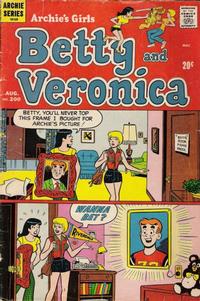
Betty & Veronic

Archie’s Girls Betty & Veronica: August 1972

Laugh Archie

Laugh: November 1967

Pep

Pep: December 1966

Jughead

Jughead: January 1972

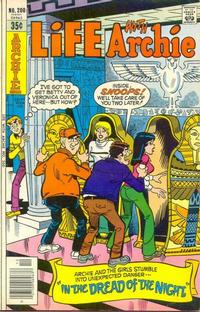
Life with Archie

Life with Archie: December 1978

betty-and-me

Betty & Me: August 1992


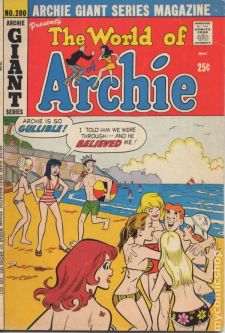
Cotber 72

October 1972


May 2005

May 2005

Again, this could be a Bronze Age or later thing … in fact, only Betty & Me from 1992 gives the anniversary even a cover blurb.

Harvey comics? Only three of the comics they published made it to 200: their two main stars Richie Rich and Casper. And … Sad Sack!

Richie RichJuly 68Casper

But other Harvey comics? Wendy the Good Little Witch made it to the 50s in number of issues, Little Dot over 100…

The big two – Marvel & DC – being mostly in the superhero vein, were the ones who celebrated 200th anniversaries the most. Three characters – Superman, Wonder Woman and the Flash – had two eponymous comics hit #200.

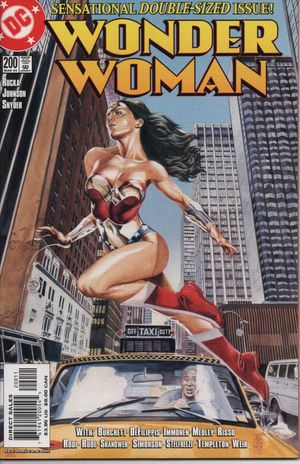
Wonder_Woman_Vol_1_200Wonder_Woman_Vol_2_200

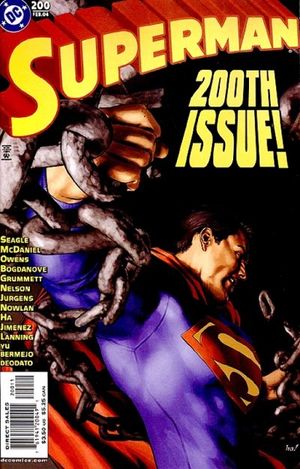
Superman 200Superman_v.2_200

Flash_v.1_200Flash_v.2_200


Other DC comics that hit #200:

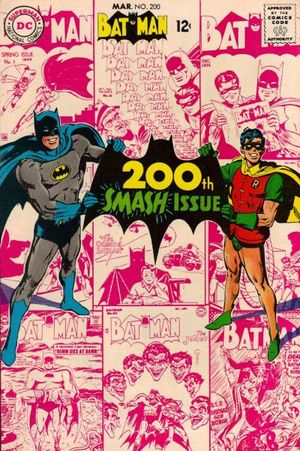
Batman_200

Batman: March 1968 (note this early celebration, but this was at the end of the Batman TV show craze …)

Green_Lantern_Vol_2_200

Green Lantern: May 1986

Our_Army_at_War_Vol_1_200

Our Army At War: December 1968

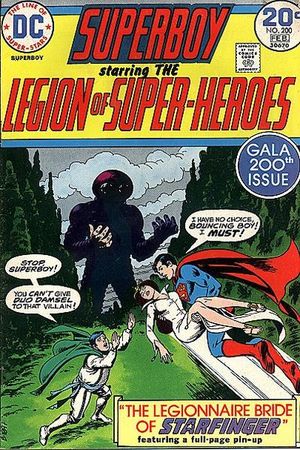
Superboy_Vol_1_200

Superboy starring the Legion of Superheroes 200: February 1974. Featuring the marriage of Bouncing Boy and Duo Damsel and starring all members, the Substitutes, the Wanderers and others!

GI_Combat_Vol_1_200

GI Combat: March 1977

Hellblazer_Vol_1_200

Hellblazer: November 2004

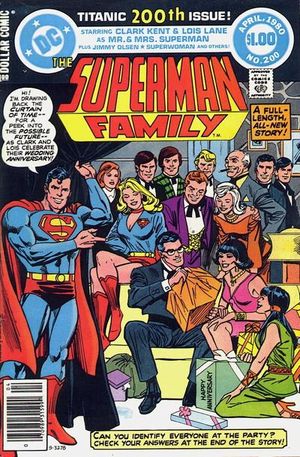
Superman_Family_Vol_1_200

Superman Family: April 1980

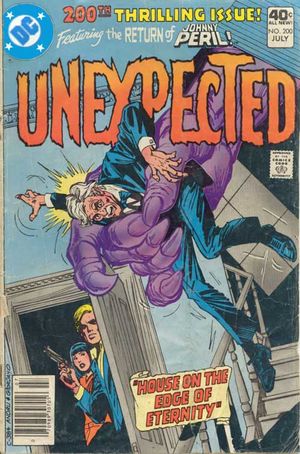
 Unexpected_200

Unexpected: July 1980

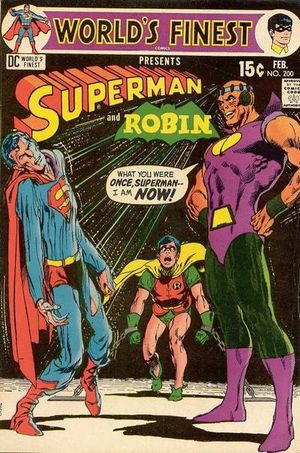
World's_Finest_Comics_200

World’s Finest: February 1971

Young_Romance_Vol_1_200

Young Romance: August 1974

(note these last two also had no real focus on their 200th issue)

***

 Marvel comics had their share of 200th anniversaries, too; aside from Captain America in August 1976:

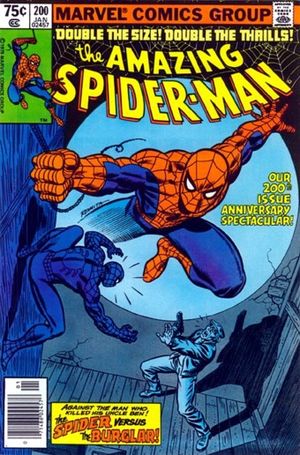
Amazing_Spider-Man_Vol_1_200

Amazing Spider-Man: January 1980

Avengers_Vol_1_200

Avengers: October 1980

Fantastic_Four_Vol_1_200

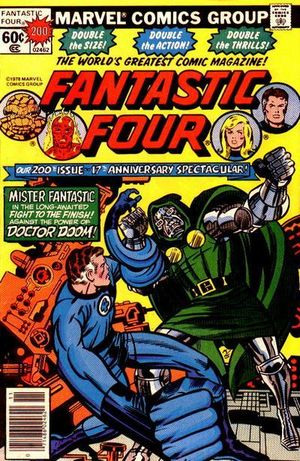
Fantastic Four: November 1978. This issue featured the “final” battle between Mr. Fantastic and Doctor Doom. Doom was killed at the end of this issue, true, but came back (as nearly all comics villains do) some issues later.

Incredible_Hulk_Vol_1_200

Incredible Hulk: June 1976

Kid_Colt_Outlaw_Vol_1_200

Kid Colt Outlaw: November 1975

Thor_Vol_1_200

Thor: June 1972

ConantheBarbarian200

Conan the Barbarian: November 1987

Daredevil_Vol_1_200

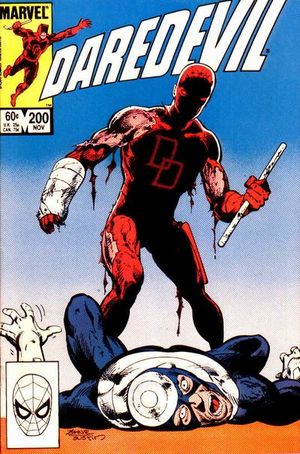
Daredevil November 1983

Iron_Man_Vol_1_200

Iron Man: November 1985

Marvel_Tales_Vol_2_200

Marvel Tales: June 1987

SavageSword200

Savage Sword of Conan: August 1992

The_Spectacular_Spider-Man_Vol_1_200

Spectacular Spider-Man: May 1993

Uncanny_X-Men_Vol_1_200

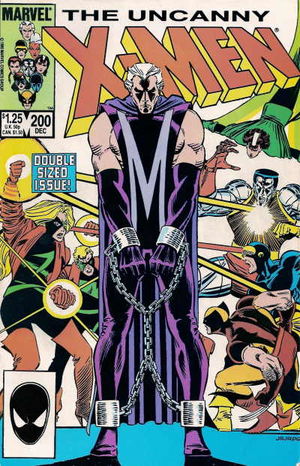
Uncanny X-Men: December 1985

What_If-_Vol_1_200

What If: February 2011

X-Factor_Vol_1_200

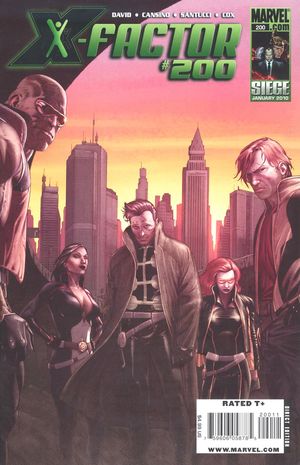
X-Factor: February 2010

X-Men_Vol_2_200

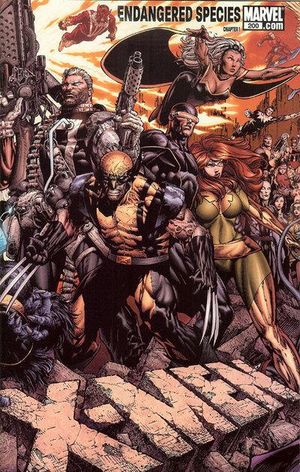
X-Men: August 2007

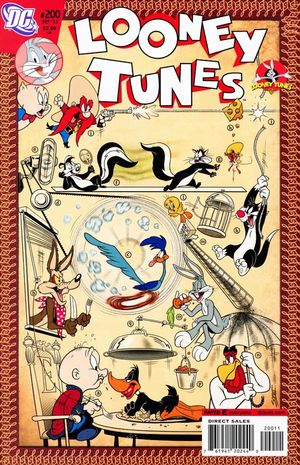
Other publishers: Looney Tunes: September 2011

 Looney_Tunes_Vol_1_200

and Charleton:

October 1972

October 1972

And more …

Spawn from January 2011 and Tarzan from June 1971…

And let us not forget one of the longest running comics of all time…


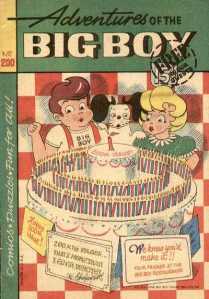
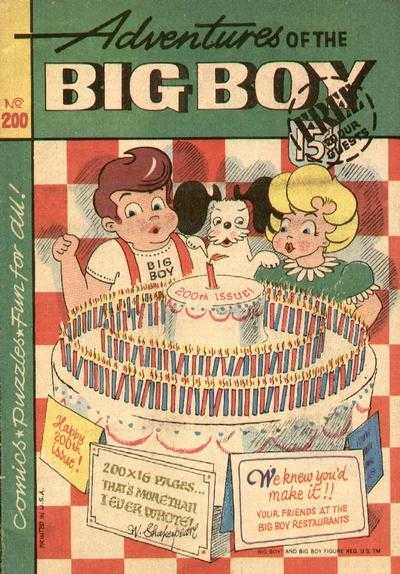
Adventures of the Big Boy

February 1974

And finally …

cerebus_200


My personal favorites?

 JLA_v.1_200

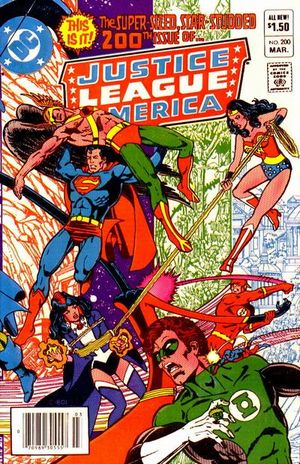
Justice League of America: March 1982. This comic featured all members of the JLA – the original team members were hypnotized into assembling pieces of a mcguffin that will bring one of their original villains back to full power. The subsequent members try to fight off the originals. Each battle is its own chapter with a different artist. In beautiful art by Joe Kubert, for example, Hawkman fights Superman. The Phantom Stranger/Aquaman/Red Tornado battle is the only artwork by Jim Aparo in Justice League of America. Lots of great art throughout.

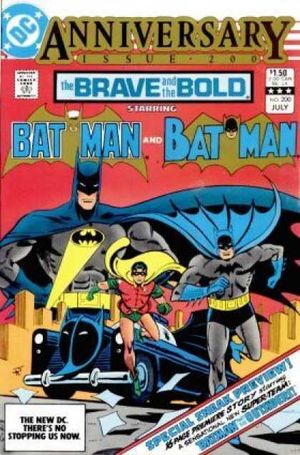
 Brave_and_the_bold_200

Brave & Bold: July 1983. The final issue of my favorite comic of all time. Let me cheat and use the review from my free ebook: The Brave & the Bold: From Silent Knight to Dark Knight, a Guide to the DC Comic Book.  Available here.

Batman & Batman (Earth Two), Smell of Brimstone, Stench of Death” Writer: Mike W. Barr, Art: Dave Gibbons.  …

               Earth-Two, 1955 (the year B&B began): After a series of robberies, Batman and Robin finally defeat Brimstone. Earth-Two 1983: Hate is all that has kept Brimstone alive. His hatred of Batman is so great; when he hears of Batman’s death, his mind passes into his Earth-One counterpart where another hated Batman still lives! Earth-One 1983: Brimstone causes riots in Gotham and eventually traps Batman in the same lava “hell pit” Batman escaped 28 years before! Can Batman escape – er – again – in time to save Gotham, catch Brimstone and find out who the heck Brimstone is? Well of course he can, but he never figures out Brimstone’s Earth-Two secret. And he never will.

               “Batman and the Outsiders”, Writer: Mike W. Barr, Art: Jim Aparo. Batman and the Outsiders protect Mikos from his own terrorist subordinates – who vow to kill Mikos (under his own orders) for the glory of the cause!

               Oft-requested Batmite finally appears in Brave & Bold in a one page comic.

               For the first time since Nemesis, new characters were introduced – Halo, Geo-Force and Katana.  They are the first new B&B superheroes since Metamorpho, who is also a member of the new Outsiders.

               One last team-up and one last try-out.  The try-out was a success: the Outsiders going on to their own series (replacing Brave & Bold on DC’s roster along with New Talent Showcase) and lasting for several years afterward. Later incarnations link the Outsiders (still featuring the resurrected Metamorpho) as a splinter group of the Teen Titans.  Appropriately, both groups began in Brave & Bold. The third incarnation harks back to the Batman-formed play-by-their-own-rules meta group.

               It was trendy at DC for a while to introduce new groups by mixing new characters and old. At times it worked brilliantly (the Teen Titans); at times it was an utter failure (the Justice League of America). The Outsiders were another success.

 ***

Have I missed any? Most assuredly: Dell 4-Color, other Looney Tunes comics, etc.  I hope I didn’t leave out your favorite! But Happy 200 everyone!

 ***

Excerpt from The Brave & the Bold: From Silent Knight to Dark Knight, a Guide to the DC Comic Book copyright 2014 and reprinted here with the author’s permission.

Otherwise, original material copyright 2015 by Michael Curry

Images used are copyright their respective holders and reproduced here under the “Fair Use” doctrine of 17 USC 106 & 106a for the purposes of criticism and comment.

Blackhawk #247: the Bicentennial Banner blog continues!

DC SALUTES THE BICENTENNIAL

#25

Blackhawk #247

Blackhawk_Vol_1_247

Published bi-monthly, thirty cents, August

Cover artist: Dick Giordano

Editor: Gerry Conway

            This paragraph is a repeat of my blog on Freedom Fighters #3. Quality Comics was a successful comic book company during the medium’s golden age. It introduced Kid Eternity, the Blackhawks, the much-lauded Spirit and Plastic Man to comics. The company closed shop in the mid-1950s and the catalogue of characters was bought by DC/National. They continued only four of Quality’s titles: GI Combat, Plastic Man (although DC would not publish a Plastic Man comic until the 1960s), Blackhawk, and Heart Throbs – all but the latter were still being published by the time of the Bicentennial (Plastic Man would get much more popular in the coming decades).

            Blackhawk debuted in Military Comics #1, August 1941 as ace pilots fighting the Nazi menace. Note this was before the US involvement in WWII. The group was given its own comic published in Winter 1944 beginning with issue #9 (retitled from Uncle Sam Quarterly – this was commonly done even as late as the 1970s to avoid postal fees and registrations, etc.). They still starred in Military Comics (renamed Modern Comics) until it was cancelled with issue #102 (October 1950).

            At one point the Blackhawks outsold every other comic book character other than Superman.

            DC Comics continued the series when it bought Quality and continued publishing the comic until 1968, canceling it after issue #243. During the mid-1960s the Blackhawks became costumed superheroes rather than ace pilots.

            The title was brought back with #244 in January 1976. Although still ace pilots, the series was set in modern times fighting modern menaces. This run ended with #250 (January 1977) and was successfully revived in later years (picking up with the original numbering) and also appearing in the anthology Action Comics Weekly in the 1980s.

***

 “Operation Overkill”, David Anthony Kraft ( w ), Ric Estrada and Al Milgrom (a), Liz Berube (c), Gaspar Saladino (l)

            I think this synopsis will take longer to read then the comic itself, as is usually with the masterful David Anthony Kraft, his comics are chock-full of plot and details!

            While debriefing their workout in their private training course, the Blackhawks are interrupted by the Duchess Ramona Fatale, also called Patch. She introduces her own team of lady commandoes and asks the Blackhawks to help her raid the HQ of Anton Vibrax – who murdered Patch’s troops in issue #244. Blackhawk allows only Andre to go with them, as he has worked with Patch’s commandos before.

patch


            Meanwhile, Blackhawk receives a message from their CIA contact asking them to escort a secret cargo from Greenland to Great Britain. They agree and take off – except for Hendrickson, who stays behind with his daughter, as he is getting too old for such adventures.

            The CIA contact reveals himself to be the villain Bio-Lord. The Blackhawks are flying into a trap!

biolord

            And indeed cyborgs blast two of the Blackhawks out of the sky (Olaf and Blackhawk himself) and capture the others mid-air. Blackhawk and Olaf are eventually also overcome and captured.

            Andre and Patch’s commandoes invade the headquarters of Vibrax’s master. Andre chastises the women warriors for using real bullets to kill instead of subdue. They find the HQ empty – it was a decoy. Andre again chastises them for taking lives for nothing!

            Andre learns of the other Blackhawk’s fate from Hendrickson and heads to Greenland. Hendrickson’s turns around to find his daughter, Elsa, pointing a gun at him and threatening his life!

            The Biolord explains to Blackhawk his evil scheme: he will detonate an anti-matter bomb and decimate Great Britain as part of his plot to destroy the human virus. Blackhawk breaks his bonds and rescues his troops, but not before the Anti-bomb is launched!

            To be continued…

            I started collecting Blackhawk with the next issue until its cancellation with #250.


Blackhawk By-lines: Letter discussing mostly issue #245. Assistant Editor Jack C. Harris introduces us to new writer David Anthony Kraft with a lengthy bio. Letters by Brian Dyke of Goodlettsville, TN (very positive) and Carlton McDaniels of New York, NY (negative – bemoaning that these new Blackhawks carry guns and kill their adversaries.

***

Join me next time for DC’s Bicentennial issue #26: World’s Finest Comics #239


Original Material copyright 2015 Michael Curry

Images used are copyright their respective holders and reproduced here under the “Fair Use” doctrine of 17 USC 106 & 106a for the purposes of criticism and comment.


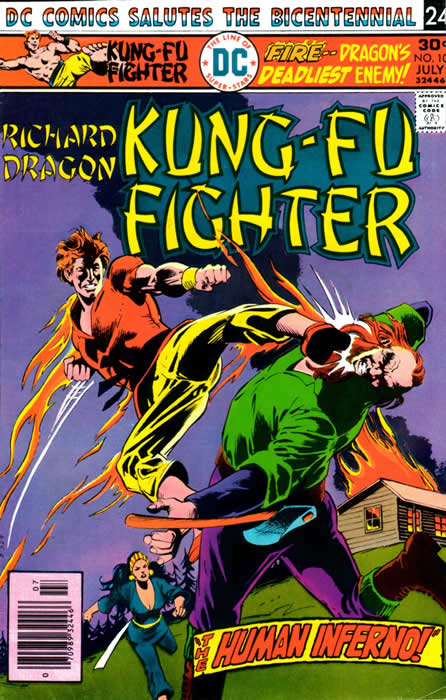
Richard Dragon, Kung-Fu Fighter #10: Bicentennial Fu!

DC SALUTES THE BICENTENNIAL

#24

Richard Dragon, Kung-Fu Fighter #10

Richard_Dragon_Kung-Fu_Fighter_Vol_1_10

Published monthly, thirty cents, July

Cover artist: Dick Giordano

Editor: Dennis O’Neil

            During the early to mid-1970s everybody was kung-fu fighting. The craze was fast as lightning. Both DC and Marvel jumped on the bandwagon – Marvel with its excellent Hands of Shang Chi, Master of Kung-Fu (which actually began as Marvel Special Edition #15 from December 1973) and its various spin-offs (Giant Size …) and magazines; and Iron Fist, martial arts set firmly in the superhero mode.

            Although a little slow to catch on to the craze, DC Comics jumped in with Richard Dragon, Kung-Fu Fighter. The character debuted in the 1974 novel “Dragon’s Fists” by Denny O’Neal and Jim Berry.

 dragon's fist

            They adapted the character into the comic book. The first issue was dated May 1975. Richard Dragon was a thief caught burglarizing a dojo. Its sensei trained him to use his talents for good. Literally, GOOD (the Global Organization of Organized Defense).  Good group, bad anagram.

            The comic ran for 18 issues through December 1977 and for a time was published monthly. In 1976 DC continued the craze with Karate Kid – martial arts set firmly in the superhero mode. Karate Kid’s Bicentennial issue (#3) has already been reviewed…

            By the time Richard Dragon, Kung-Fu Fighter ended, so had the Kung Fu craze. Good thing, too, I suppose: it was a little bit frightening…

***

“The Human Inferno”, Denny O-Neil ( w ), Ric Estrada and Jack Abel (a)

            The letter column admits this is a fill-in issue. This is one of the four Bicentennial issues I owned when they were new on the stands.

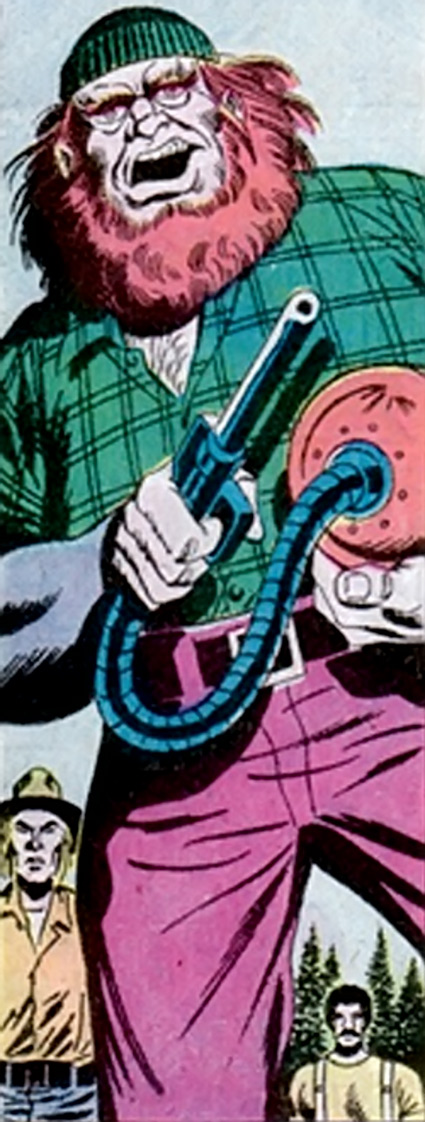
        Ben Turner (who would eventually become the Bronze Tiger) inherits a thousand acres of timber land. The lumberjack foreman is a murderous brute named Hatchett and vows to kill this new owner, as he did the previous owners, lest he cut into the lumberjack’s vast profits!

 hatchett 2hatchett


        Richard, Ben and Lady Shiva travel to the property and are promptly attacked by lumberjacks. Dispatching them, Ben meets his namesake nephew, who has been in hiding since Hatchett murdered his parents.

            Again attacked that night in their hotel, the quartet go to Hatchett for the final face-off. Our heroes make it to a log cabin which is set ablaze by the loggers. Ben, Benjamin and Shiva go through the front door to face a chainsaw-wielding maniac while Richard, badly burned, battles Hatchett.


The Dojo: letters answered (presumably) by Assistant Editors Jack C. Harris and Bob Rozakis. Letters by Bart Casey of Dayton, Ohio (very positive), Jim Humm of El Monte, CA (asking if Richard Dragon exists on the same earth as Superman and Batman – yes) and Judy Newton of Thompkinsville, RI (praising Shiva as a more liberated woman than Wonder Woman). Texts introduce us to Jack Abel and tells us that this is Denny O’Neil’s last issue as editor – Gerry Conway will be handling the editorial chores (at least for the next issue) and the writing will be taken over by David Anthony Kraft.

***

Join me next time for DC’s Bicentennial issue #25: Blackhawk #247


Original Material copyright 2015 Michael Curry

Images used are copyright their respective holders and reproduced here under the “Fair Use” doctrine of 17 USC 106 & 106a for the purposes of criticism and comment.

Tarzan Family #64: the Bicentennial blog continues!

DC SALUTES THE BICENTENNIAL

#23

Tarzan Family #64

TarzFam_64_WP

Published bi-monthly, fifty cents, August

Cover artist and Editor: Joe Kubert

            Tarzan Family began as Korak, Son of Tarzan from Gold Key Comics and first published in January 1964 until issue #45 in January 1972. DC Comics bought the rights to the Korak character as well as his more famous father and continued the son’s comic with the original numbering (#46) beginning in June 1972 until #59 (October 1975). The book was renamed Tarzan Family while continuing the sequential numbering until it was cancelled with issue #66, December 1976. This was part of a “Family Series” DC launched in 1975 as companions to Superman Family (which had debuted the year before – an amalgam of the Lois Lane, Jimmy Olsen and Supergirl titles): Tarzan Family, Superteam Family and Batman Family. They were “Giant” comics containing mostly reprints for fifty cents, with the lead story (and sometimes a second feature) as a new piece.

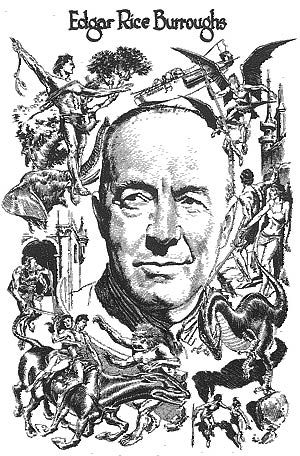
            Tarzan Family featured Korak in a new tale and reprints of a Tarzan Sunday strip as well as reprints of the comic book adventures of other Edgar Rice Burroughs creations such as Carson of Venus and John Carter of Mars from earlier issues of Korak or other DC comics.

burroughs-with-characters

            Korak the character, the son of Tarzan and Jane Porter, appeared first in the Tarzan novels and movies (although in the popular Johnny Weissmuller movies he was replaced by the adopted “Boy”).

***

            “The Gigantics”, Robert Kanigher ( w ),  Ruby Florese (a).

            Korak is still searching for his lost love Meriem, his search takes him to the peak of a high mountain where he is snatched up by giant Roc. The bird flies him to a hidden kingdom of giants. The King orders Korak be sacrificed, but his daughter is charmed by the little “doll” and wants him for her own. If the priests agree, she may have him.

korak

            Korak watches as a Vestal is sacrificed to the gods. If it rains, Korak may live with the princess; if it does not, he must be sacrificed.  There is much thunder and lightning, but no rain. Guards come to carry away Korak, but with the help of the princess’ diamond, he escapes. The princess puts Korak back into his cage and escapes with him into the wilderness.

            To be continued…

***

            “Lights of Doom”, Robert Kanigher ( w ), Noly Zamora (a)

            A John Carter of Mars tale. John Carter and Tanna, Princess of Barsoom are transported aboard an alien spacecraft. The aliens heal Carter and tell him to be their spokesman as they promise to cure all Barsoom of their ills in exchange for their fealty. He refuses, breaks free of their force field, takes command of the ship and crashes it back to the surface of Mars. As he and Tanna leave the ship, an ominous shadow covers them; they turn to face their new adversary …

            This was a new tale continued from the previous issue and to be continued … but never concluded … the storyline was never finished!

***

            “Battle with Bu-Gash”, Russ Manning (w/a)

            A reprint of a Tarzan Sunday newspaper strip with Joe Kubert art and story bookending the tale. There is no indication of where each week’s strip begins or ends; is it one strip per page? Heavily edited to fit the standard comic book page? Perhaps, perhaps not, but the storylines jump without much explanation…

            Tarzan rescues a bull elephant from the Sahara desert, leading it back to the jungle. He then rescues a baby gorilla from a Pangolin (a lizard). Tarzan fights off the baby’s father Do-Ag. While they battle, a rogue gorilla named Bu-Gash swings off with the baby and his mother. The baby falls and breaks its leg – certain doom to a species unable to heal one another. Tarzan mends the leg and Do-Ag and Bu-Gash do battle. Bu-Gash is defeated and flees the tribe.

            Meanwhile, Korak helps Nubilia become chieftess of a human tribe, having helped oust the tyrant chief Imbaza (the coup is never shown; presumably it was in a previous strip not published here). Korak questions how a supposedly peaceful ruler commits murder to obtain a throne.  Leaving the village, Korak watches a hippo save an antelope from the jaws of a crocodile – animals helping each other out of instinct? Can man learn this? Korak then swings into the midst of a battle between two apes vying to be king of their tribe. “Tarzan is coming, Leave us,” says one ape. “That is what I intend to do,” says Korak. 

***

            “Pirates of Venus”, Len Wein ( w ), Mike Kaluta (a)

            Carson of Venus tale reprinted from Korak, Son of Tarzan #50 (February 1973). Descending from the Venusian trees, Carson bids farewell to his dead friend Kamlot. But Kamlot is NOT dead – merely paralyzed from the spider-beasts venom! Together they kill a basto – a gigantic boar – for their meal! They are then both captured by Klangan – bat-winged creatures – and flown as captives through the forest to a vast Venusian sea.


The Ape Vine: a half-page letter column discussing mainly issue #62. Letters by Steve Kalaitzidis of Toronto, Ontario (spotting an error – John Carter fights a race from Edgar Rice Burrough’s Carson of Venus tales), Mark Schneider of Concord, Mass (positive, but criticizing the sameness of the Carter/Carson stories – the editor says considering the previous letter, that makes sense!) and David L Klees of Newton Centre, Mass (asking for a tabloid-size edition of the Hal Foster Tarzan strips – I would have agreed! They did a tabloid of Dick Tracy, why not a Tarzan reprint? Alas, it was never to be…). E. Nelson Bridwell answered the questions and announced this was Joe Kubert’s last issue as editor. Joe Orlando takes over with the next issue. After that, there would be only one issue left before cancellation.

***

Join me next time for DC’s Bicentennial issue #24: Richard Dragon, Kung Fu Fighter #10


Original Material copyright 2015 Michael Curry

Images used are copyright their respective holders and reproduced here under the “Fair Use” doctrine of 17 USC 106 & 106a for the purposes of criticism and comment.
 

Some thoughts on Avengers: Age of Ultron

age of utlron

                (I’ll keep the spoilers to a minimum and give you fair warning, but there’s nothing in this blog that you can’t find online elsewhere …)

I tend to see movies late in their runs. I don’t like crowded theaters so I usually wait until week two or three when the general masses have seen it once and the uber-fans have sated themselves during the week. Thus is this late review of Avengers: Age of Ultron.

And not a review as such, more like some random thoughts akin to my blog on Guardians of the Galaxy.

Avengers Age of Ultron is doing very well. It is the biggest money-maker of the year so far and has grossed a billion dollars internationally.

It certainly doesn’t need me blogging about it to hype it. Fans will go see it whether I like it or not. And I did like it. A lot.

It was just like an Avengers comic book from the 1970s.

But …

What is that nagging feeling I have in the weeks after seeing it? There was something about the movie while I was watching it and afterwards that keeps pecking … and I think I finally know what it is…

***

               I certainly loved more of the movie than I disliked: casting James Spader as Ultron was a genius move – the casting director deserves a bonus! He probably already has gotten more than the artists and writers who created the characters in the movie … but that is another argument.
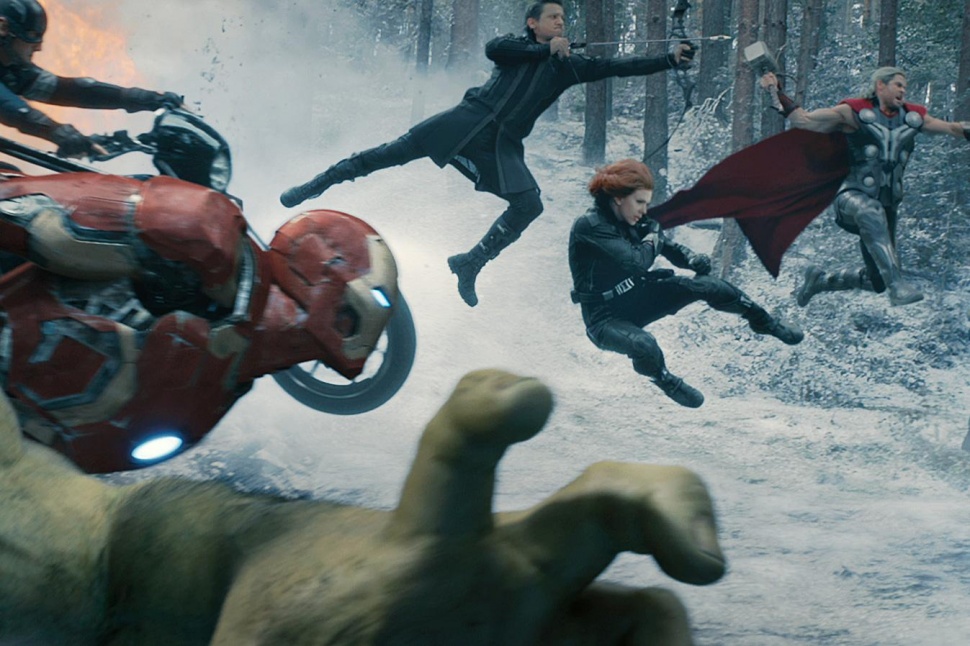
And the battle scenes and special effects are grand.

avengers

               I especially enjoyed the human elements of the movie – and the humanity shown by the characters – going out of their way to save innocent lives. Captain America’s line “I asked for a solution, not an escape plan” said more for heroism than any scene from the Man of Steel

Plus we finally get to see more of Hawkeye and his personal life – the one character from the first movie that had no real back story. An excellent one was provided.

The things I didn’t like about the movie were not what was niggling at me. These things didn’t ruin the movie for me; rather they made me go … “What?”

Maybe I wasn’t paying attention, but I was lost at the creation of Ultron. The McGuffin of this movie – apparently required in all Marvel/Disney movies – was the stone in Loki’s spear. Somehow the stone contained an artificial intelligence that Tony Stark and Bruce Banner injected into their Ultron defense system and thus activated him.

Somehow the system was imbued with Tony Stark’s personality (Ultron was referred to as an “anti-Stark” a few times). That left me scratching my head a bit. Was it because he took over Jarvis’ mentality and Jarvis had a bit of Stark’s personality? Did I miss or forget that from a previous Iron Man flick?

Regardless, it worked; James Spader’s voice-work perfectly emulated Robert Downey Jr’s vocal inflections and mannerisms. In another reality he could have been cast as Tony Stark/Iron Man. Brilliant stuff. And while he didn’t steal every scene he was in as was the case in the first movie with Tom Hiddleston as Loki, Spader/Ultron made a memorable villain.

(Small Spoiler Alert) And the romance between Black Widow and Bruce Banner didn’t bother me. After Star Trek 5: My Eyes! Out Vile Jelly!’s fling between Scotty and Uhura, nothing like that bothers me anymore…   But I will say this – if Scarlett Johansson whispered to me that it was sundown and started rubbing my hand the last thing I would do is calm down…

***

               But none of that bugged me. I put my finger on the problem some days later while trolling my wall on Facebook. “Did you catch these Easter Eggs in Avengers: Age of Ultron?” shouted one article. I did not read the article, because it was my eureka moment – the problem I had with the movie hit me:

Avengers: Age of Ultron spent so much time being the flagship of the future Marvel cinematic universe it forgot, at times, to be Avengers: Age of Ultron.

The movie was burdened with being the gateway to future Marvel movies. It gave the film an “in-betweenness” it would not have had otherwise. With the exception of Godfather II, most sequels stink, especially when compared to the first and sometimes third movie. Two words: Indiana Jones. Even The Empire Strikes Back suffered from its “in-betweenness”. Great as it was, it was still the opening act for the third movie (and what a stinker that ended up being). Like the Pirates of the Caribbean and Matrix franchises, Movie 2 was basically part one of two.

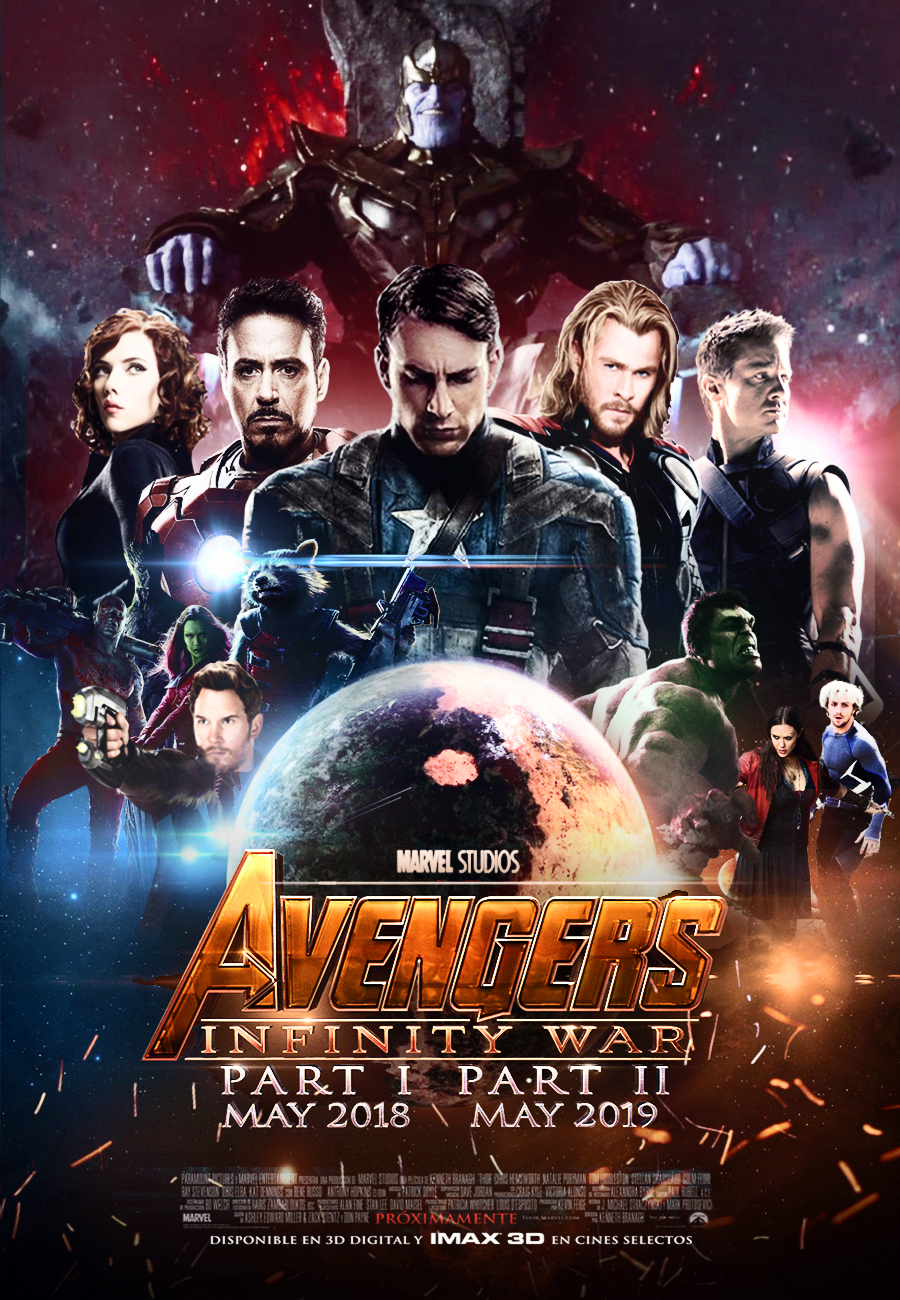
Even before Age of Ultron’s release we knew what was going to happen next. Not just the Ant-Man movie, but we knew the next Avengers film will adapt the fantastic Infinity War storyline – and do it in two movies! A Black Panther movie is in the works. Captain America’s next movie will adapt the equally fantastic Civil War storyline and may give the now-aging stars of the Captain America and Iron Man franchises an excuse to bow out with a bang. Literally.

civil-war

               Age of Ultron crams all that in. They do not take away from the film to do it; which is why it clocks in at two and a half hours.

And I’m not talking about the now-mandatory mid- and post-credit teasers. Those are just that – teasers to thrill you as to what comes next (except for Thor the Dark World – I stuck around twenty minutes for THAT!? I could’ve been home by now).

So there’s nothing wrong with end-of-the-movie teasers. “James Bond will return…”

Remember when I said the movie was much like an Avengers comic book in the 1970s? Back then the comics would have a panel or two foreshadowing what is to come. “Who is that mysterious figure lurking in Avenger’s mansion? We’ll find out next issue, pilgrim, ’cause right now it’s back to the ACTION…” Age of Ultron was burdened with them, and I do mean burdened:

Thor’s illusion leads us to the next two Avengers movie and foreshadows his own next film; Captain America’s illusion reminds us to watch the next season of Agent Carter; the ending of the movie  – heck, the entire introduction of the new Avenger members – sets up Civil War. Our heroes go to Wakanda and fight a bad guy (played by chameleon Andy Serkis) to set up the Black Panther movie.

infinity war

               Even before Age of Ultron was released we the people knew about the next Avengers and Captain America movies. By this time during the first Avengers movie we the people had no idea what the next movie was about – it wasn’t until August 2012 that were even given the title. Age of Ultron was the forgotten middle child even before it hit the theaters.

Oh, I’ll go see the next movies, don’t worry, but I wanted to see Age of Ultron.

Too many moving parts leading in too many directions. That was what was nagging me.

And even Age of Ultron’s post-credit teaser was a let down. What was the real difference between this one and the teaser from the first Avengers movie?

This was a meme posted on my Facebook wall:

 Shield

               And I responded: That’s the movies, though. If it were the TV show “Agents of Shield” it would be, “I’m here to ask you a question, but I won’t ask it until the end-of-season cliffhanger. When you answer six shows into the next season I will say, ‘and now for the follow-up question…’ which will not be asked until that next year’s cliffhanger, and if we’re renewed…” The movies aren’t getting that bad, but they planted those seeds too. It’s getting to that point.
Let the next few movies worry about themselves. And in the meantime, let me enjoy Age of Ultron.

 ***

Footnote: As is usual with sequels TV networks aired the first Avengers movie to whet our appetites. I Tivoed the movie and watched it with my 5-year-old-daughter. Her gasp when Thor was first on screen is a memory I will cherish to my dying day. She says Thor is the best good guy ever. She (along with billions of others) laughed when Hulk beat Loki into the ground – after many minutes of explaining that Loki was a bad guy) and still loves watching Thor, Iron Man and Hulk beat up the “big fish”. At first she called Iron Man Flash and now she’s reversed that.

Although she likes the scenes with Hulk, she is starting to identify with Black Widow. Thor is still her favorite. I hope it’s because Daddy cosplays as Thor…

thor

Original material copyright 2015 Michael G Curry